
Starting a business is an exhilarating journey, fraught with both immense potential and significant challenges. While the allure of innovation and market disruption often drives entrepreneurial passion, the bedrock of any successful startup lies in its financial viability and strategic financial planning. This is where a meticulously crafted business plan becomes not just a formality, but an indispensable tool—a compass guiding your venture through uncharted waters. Far from being a static document, a business plan, particularly one focused on the financial arteries of your startup, is a living blueprint for growth, a persuasive narrative for investors, and a crucial mechanism for making informed financial decisions. In the realm of startups, where capital is king and every dollar counts, understanding how to articulate your financial vision is paramount.

The Indispensable Role of a Business Plan in Startup Success
At its heart, a business plan for a startup is fundamentally a financial document. It’s the detailed exposition of how your idea will generate revenue, manage expenses, and ultimately achieve profitability and sustainability. For an entrepreneur, it clarifies the often-murky path from concept to commercialization, pinpointing critical financial milestones and potential roadblocks. For external stakeholders, particularly potential investors, lenders, and partners, it serves as the definitive statement of your venture’s financial health, potential returns, and risk profile. Without a clear financial narrative, even the most groundbreaking ideas struggle to attract the necessary capital to take flight.
More Than Just a Document: A Financial Roadmap
Think of your business plan as the financial GPS for your startup. It doesn’t just show you where you want to go; it maps out the most efficient, cost-effective, and profitable routes to get there. It forces you to scrutinize every cost, project every revenue stream, and anticipate every financial contingency. This rigorous process of financial modeling inherent in business plan development helps founders understand their capital requirements, identify potential funding gaps, and establish realistic financial goals. It encourages a proactive approach to financial management, laying the groundwork for budgeting, cash flow forecasting, and performance monitoring from day one. Without this roadmap, startups often drift, making reactive financial decisions that can quickly deplete resources and derail even promising ventures.
Attracting Capital: The Investor’s Perspective
For angels, venture capitalists, and traditional lenders, a business plan is their primary window into your startup’s investment potential. They are not just buying into an idea; they are investing in a financial future. Their due diligence will meticulously dissect your financial projections, revenue models, expense management strategies, and overall capital structure. A well-articulated business plan demonstrates a deep understanding of your market’s financial dynamics, a clear path to profitability, and a credible strategy for generating returns on their investment. It showcases your ability to think critically about money—how to raise it, how to spend it wisely, and how to multiply it. Without compelling financial figures and a robust financial strategy within your business plan, securing the necessary funding to scale becomes an insurmountable hurdle.
Core Components of a Financially Sound Business Plan
While a comprehensive business plan covers various aspects of your venture, its most critical sections are those that directly address the financial mechanics and monetary implications. Each component, from the executive summary to the detailed financial projections, must be infused with a strong financial perspective to paint a complete and compelling picture for any stakeholder.
Executive Summary: Your Financial Snapshot
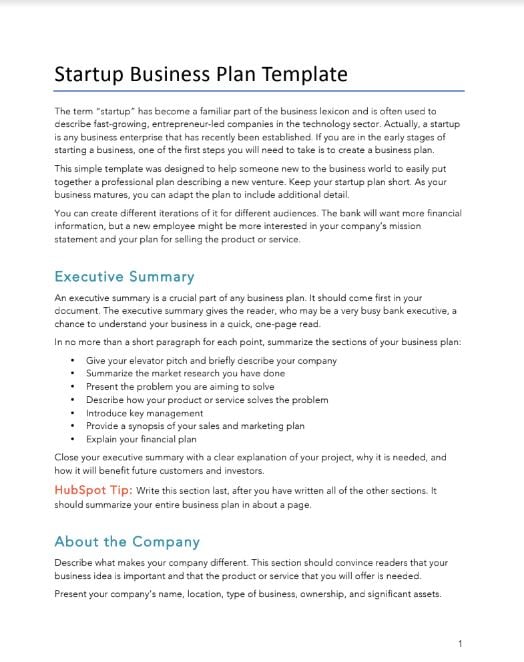
Often written last but read first, the executive summary must immediately capture the financial essence of your startup. It should concisely outline your funding needs, projected returns, target market size (and its financial opportunity), and your unique value proposition from a profitability standpoint. This is where you make your initial financial pitch, compelling the reader to delve deeper into the numbers. Highlight key financial milestones, such as projected revenue in the first few years, expected profitability timelines, and the potential ROI for investors.
Market Analysis: Sizing Up Revenue Opportunities
Beyond defining your target audience, the market analysis in a financially focused business plan quantifies the revenue potential. It involves:
- Total Addressable Market (TAM): The maximum revenue opportunity available.
- Serviceable Available Market (SAM): The segment of the TAM that your business can realistically reach.
- Serviceable Obtainable Market (SOM): The percentage of SAM you can realistically capture.
This section should also analyze pricing strategies within your market, competitive pricing, and how your proposed pricing model ensures profitability while remaining competitive. It’s about demonstrating that a significant, financially viable market exists for your product or service.
Organization & Management: Operational Costs & Structure
This section is less about resumes and more about the financial implications of your team and operational structure. It details:
- Personnel Costs: Salaries, benefits, and hiring plans, which directly impact burn rate.
- Legal & Administrative Costs: Ongoing operational expenses for legal, accounting, and administrative support.
- Organizational Structure: How the management team will drive financial performance and manage resources efficiently.
Every role and operational decision should be justified in terms of its contribution to revenue generation, cost reduction, or overall financial stability.
Product/Service Line: Pricing Strategy & Cost of Goods
Here, you describe your offerings but with a sharp focus on their financial attributes. This includes:
- Pricing Model: How you will price your products/services (e.g., subscription, per-unit, freemium) and the rationale behind it.
- Cost of Goods Sold (COGS) or Cost of Services (COS): The direct costs associated with producing or delivering your offering, crucial for calculating gross profit margins.
- Profit Margins: Projected gross and net profit margins, demonstrating the inherent profitability of your core business activities.
- Scalability: How your financial model supports scaling production/service delivery without disproportionately increasing costs.
Crafting Robust Financial Projections
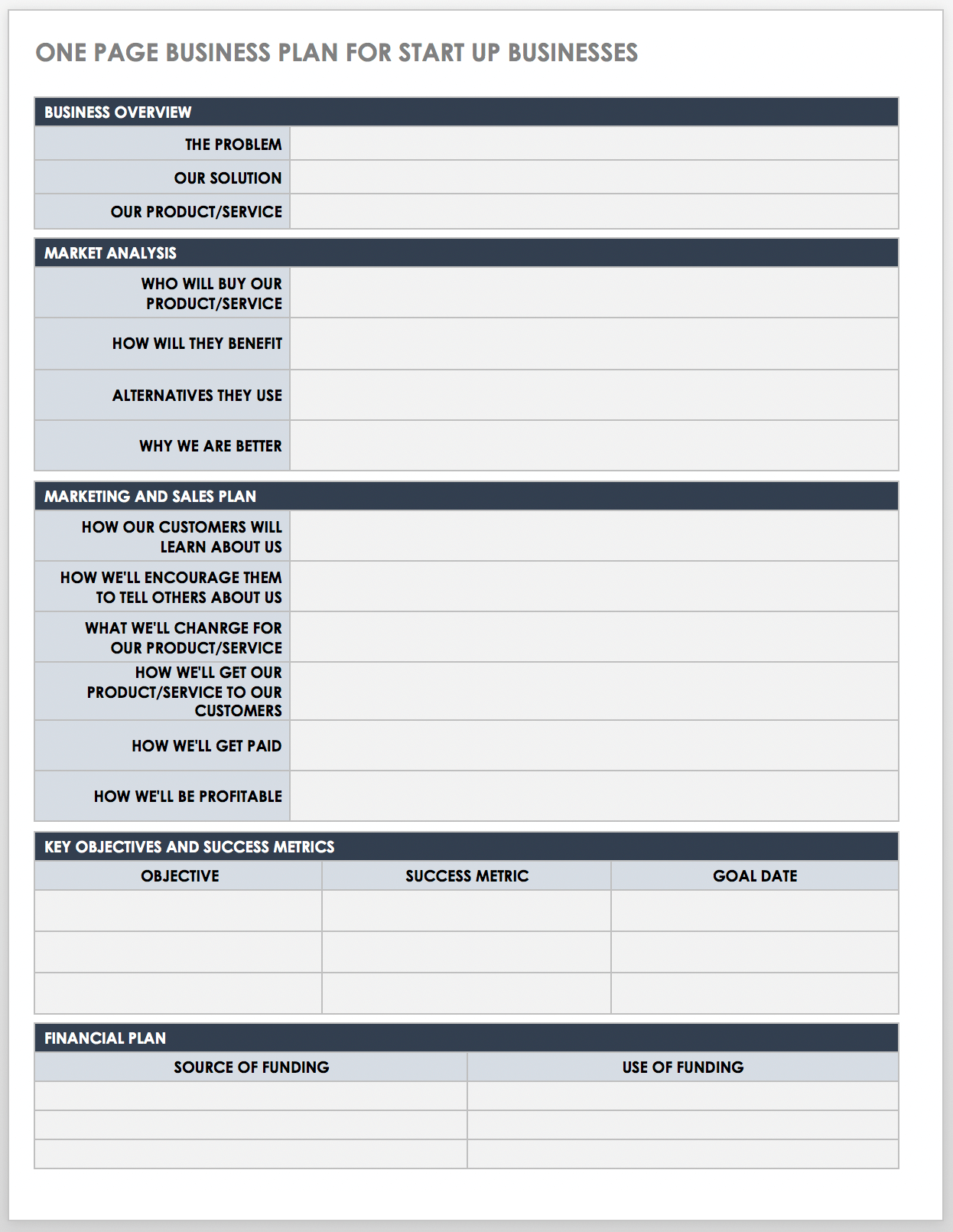
The financial section is the backbone of your business plan, providing a quantitative forecast of your startup’s financial performance. It requires meticulous research, realistic assumptions, and a clear presentation of key financial statements. This is where the rubber meets the road for investors and where you truly assess the financial viability of your venture.
Startup Costs & Funding Request: What You Need and Why
This is a detailed breakdown of all initial expenses required to launch your business, categorized into one-time costs (e.g., equipment, legal fees, initial marketing campaigns) and initial operating expenses until you reach profitability. Crucially, this section ties directly into your Funding Request, explicitly stating how much capital you need, what it will be used for, and the expected timeline for its deployment. Each dollar requested must have a clear purpose and a projected return.
Revenue Projections: Realistic Income Forecasting
Avoid overly optimistic revenue forecasts. Base your projections on thorough market research, competitive analysis, and realistic sales cycles. Include:
- Sales Forecasts: Unit sales and average selling price, broken down monthly for the first year, then quarterly or annually for the next 2-4 years.
- Revenue Streams: Clearly identify all sources of income (e.g., product sales, subscriptions, licensing, advertising).
- Assumptions: Document all assumptions behind your forecasts (e.g., market share capture rates, conversion rates, customer acquisition costs), as investors will scrutinize these heavily.
Expense Projections: Managing Your Burn Rate
Detail all operating expenses, both fixed (rent, salaries) and variable (marketing, raw materials). This includes:
- Operating Expenses (OpEx): Sales & Marketing, R&D, General & Administrative costs.
- Cost of Goods Sold (COGS): As discussed, the direct costs.
- Depreciation & Amortization: Non-cash expenses that impact profitability.
Accurately projecting expenses helps you understand your burn rate—the rate at which your startup consumes cash—and is vital for determining how long your initial funding will last.
Break-Even Analysis: Understanding Profitability Thresholds
A break-even analysis identifies the point at which your total revenues equal your total costs, meaning your business is neither making nor losing money. This critical metric demonstrates to investors when they can expect your business to become self-sustaining and begin generating profits. It requires understanding your fixed costs, variable costs per unit, and average selling price.
Cash Flow Statements: The Lifeblood of Your Startup
More than just profitability, a cash flow statement shows the actual movement of cash into and out of your business over a period. It’s crucial because a profitable business can still fail if it runs out of cash. This statement typically includes:
- Cash Flow from Operating Activities: Cash generated from day-to-day business operations.
- Cash Flow from Investing Activities: Cash used for or generated from investments in assets.
- Cash Flow from Financing Activities: Cash from debt, equity, and dividends.
Investors prioritize a healthy cash flow, as it indicates the liquidity and operational efficiency of your startup.
Leveraging Your Business Plan for Strategic Financial Decisions
Once complete, your business plan isn’t meant to sit on a shelf. It’s a dynamic instrument for continuous financial management and strategic guidance.
Guiding Operational Budgets
The financial projections within your plan form the basis for your operational budgets. They provide clear targets for revenue generation and spending limits for various departments. Regularly comparing actual financial performance against these budgeted figures allows you to identify variances, adjust strategies, and maintain fiscal discipline.
Monitoring Financial Performance and Pivoting
Your business plan should be a living document that you revisit and update regularly. As your startup evolves, market conditions change, and new data emerges, compare your actual financial results against your projections. This ongoing monitoring helps you spot trends, understand what’s working (or not working) financially, and make data-driven decisions on when and how to pivot your strategy to improve financial outcomes.
Preparing for Future Funding Rounds
A well-maintained business plan, regularly updated with actual financial performance and revised projections, is invaluable when seeking subsequent rounds of funding. It demonstrates financial acumen, adaptability, and a clear vision for continued growth and profitability, significantly bolstering your credibility with future investors.
Common Financial Pitfalls to Avoid in Your Business Plan
Even the most brilliant ideas can stumble due to financial missteps in planning. Being aware of these common pitfalls can save your startup from critical errors.
Overly Optimistic Revenue Forecasts
This is perhaps the most frequent mistake. Entrepreneurs, fueled by passion, often project unrealistic growth rates and market penetration. Always err on the side of conservatism, backing every revenue projection with solid market research, validated assumptions, and a clear understanding of sales cycles and customer acquisition costs. Unrealistic forecasts lead to undercapitalization and disillusionment.
Underestimating Startup Costs
Many founders fail to account for all the initial expenses, from legal fees and permits to website development and initial marketing spend. This can quickly lead to running out of cash before even launching or reaching initial revenue milestones. Create a comprehensive checklist of every conceivable expense and build in a contingency fund (typically 15-20% of total costs) for unforeseen expenditures.
Neglecting Cash Flow Management
Focusing solely on profitability while ignoring cash flow is a recipe for disaster. A business can show a profit on paper but still run out of cash if receivables are slow, or inventory is building up. Emphasize your cash flow projections and strategies for managing working capital to ensure liquidity.
Ignoring Market Dynamics and Competitor Pricing
Failing to adequately research how your target market values products/services and what competitors are charging can lead to pricing strategies that are either too high (losing customers) or too low (sacrificing profitability). Your pricing strategy must be competitive, reflect your value proposition, and, most importantly, enable healthy profit margins.
In conclusion, crafting a business plan for a startup is a deep dive into the financial soul of your venture. It’s about translating innovation into quantifiable value, articulating a path to profitability, and securing the financial lifeblood necessary for growth. By focusing intently on the monetary aspects—from meticulous financial projections to strategic resource allocation and robust risk management—you not only create a compelling case for investment but also lay an unshakeable foundation for enduring success.
aViewFromTheCave is a participant in the Amazon Services LLC Associates Program, an affiliate advertising program designed to provide a means for sites to earn advertising fees by advertising and linking to Amazon.com. Amazon, the Amazon logo, AmazonSupply, and the AmazonSupply logo are trademarks of Amazon.com, Inc. or its affiliates. As an Amazon Associate we earn affiliate commissions from qualifying purchases.