
Understanding how to calculate percentage increase is a foundational skill in personal and business finance, offering a clear lens through which to view growth, evaluate performance, and make informed decisions. Whether you’re tracking the upward trajectory of an investment portfolio, monitoring the expansion of your business revenue, or simply trying to comprehend a change in financial figures, mastering this calculation is indispensable. It translates raw numbers into a comparative metric, revealing the magnitude of change relative to the initial state, which is often far more insightful than merely observing the absolute difference.
The Fundamental Formula for Growth Analysis
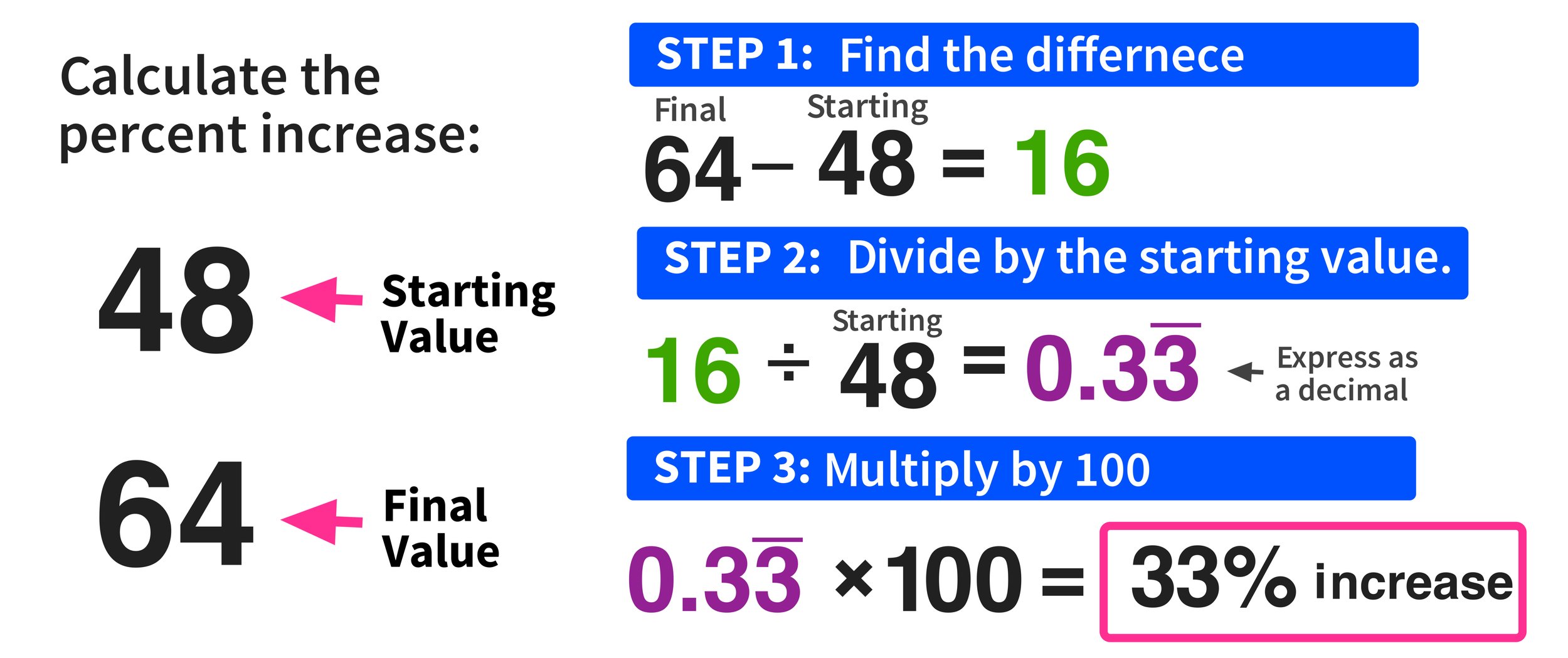
At its core, calculating the percentage increase between two numbers is a straightforward process, yet its applications are vast and varied. It provides a standardized way to measure growth, making it easy to compare different rates of change across various financial contexts. The basic principle involves determining the absolute increase, then expressing that increase as a proportion of the original number, and finally converting that proportion into a percentage.
Identifying Your Starting and Ending Points
Before any calculation can commence, you must clearly define two critical values:
-
Original Number (or Starting Value): This is the baseline figure from which the change is measured. In financial terms, this could be last year’s revenue, your initial investment amount, or your starting salary.
-
New Number (or Ending Value): This is the figure after the change has occurred. This might be this year’s revenue, your current investment value, or your adjusted salary.
It is crucial that the “New Number” is greater than the “Original Number” for a percentage increase. If the new number is smaller, you would be calculating a percentage decrease.
The Calculation Steps Simplified
The formula for percentage increase is as follows:
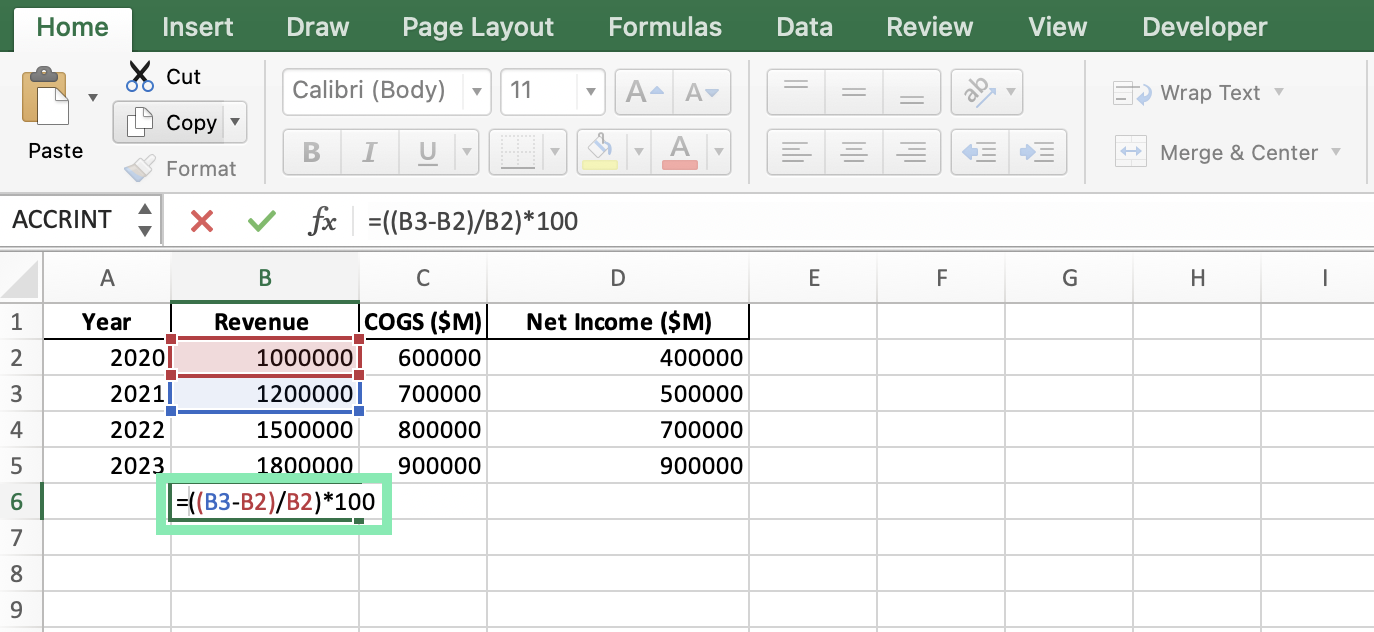
Percentage Increase = ((New Number - Original Number) / Original Number) * 100
Let’s break this down into actionable steps:
Step 1: Find the Difference (Absolute Increase)
Subtract the Original Number from the New Number. This gives you the absolute amount by which the value has increased.
Difference = New Number - Original Number
Step 2: Divide by the Original Number
Take the difference you calculated in Step 1 and divide it by the Original Number. This converts the absolute increase into a decimal representation of the increase relative to the starting point.
Relative Increase = Difference / Original Number
Step 3: Multiply by 100
Finally, multiply the result from Step 2 by 100 to express it as a percentage.
Percentage Increase = Relative Increase * 100
Example:
Imagine your savings account balance grew from $1,000 to $1,250 over a year.
-
Difference: $1,250 – $1,000 = $250
-
Divide by Original: $250 / $1,000 = 0.25
-
Multiply by 100: 0.25 * 100 = 25%
Your savings account experienced a 25% increase.
Real-World Applications in Personal Finance
For individuals, understanding percentage increase is not merely an academic exercise; it’s a vital tool for managing and growing personal wealth. It allows for a clearer evaluation of financial decisions and progress towards financial goals.
Tracking Investment Returns
One of the most common and impactful applications of percentage increase in personal finance is assessing investment performance. Whether you’re tracking stocks, mutual funds, real estate, or a diversified portfolio, knowing the percentage return helps you compare different investments regardless of their initial cost.
Example:
You invested $5,000 in a stock, and it grew to $6,200.
-
Difference: $6,200 – $5,000 = $1,200
-
Divide by Original: $1,200 / $5,000 = 0.24
-
Multiply by 100: 0.24 * 100 = 24%
Your stock investment yielded a 24% increase. This allows you to easily compare its performance to another investment that might have started with a different principal amount, for instance, a bond that grew from $10,000 to $11,500 (a 15% increase), clearly showing which asset performed better proportionally.
Monitoring Budgetary Changes
Regularly reviewing your budget involves analyzing changes in income and expenses. Percentage increase helps you understand how significantly certain spending categories have grown or how much your income has genuinely improved.
Example:
Last month, your utility bill was $150. This month, it’s $180.
-
Difference: $180 – $150 = $30
-
Divide by Original: $30 / $150 = 0.20
-
Multiply by 100: 0.20 * 100 = 20%
Your utility bill increased by 20%. This insight can prompt you to investigate the cause (e.g., higher usage, rate hike) and adjust your budget accordingly.
Analyzing Debt Reduction Progress
While the goal with debt is usually decrease, understanding the percentage increase in a positive financial metric related to debt management can be motivating. For example, if you make extra payments, you can track the percentage increase in the principal amount you’ve paid down over a period, demonstrating progress.
Example:
You made an extra principal payment, reducing your car loan principal from $10,000 to $9,500. This is a decrease, but let’s say you want to measure the “percentage of original principal paid off.” If you started with $10,000 and paid off $500, the percentage of principal paid off would be ($500 / $10,000) * 100 = 5%. While not a “percentage increase” in the balance, it’s an increase in the portion of debt eliminated, providing a positive spin on a reduction goal.
Business Finance: Beyond Simple Growth
In the realm of business, percentage increase is a cornerstone of financial analysis, allowing leaders to evaluate company performance, identify trends, and make strategic decisions. It moves beyond raw numbers to provide a standardized metric for comparison against industry benchmarks, competitors, or internal goals.
Revenue and Profit Growth
Tracking revenue and profit increases is fundamental for any business. It shows the health and expansion of the enterprise over time.
Example:
A company’s quarterly revenue grew from $500,000 to $625,000.
-
Difference: $625,000 – $500,000 = $125,000
-
Divide by Original: $125,000 / $500,000 = 0.25
-
Multiply by 100: 0.25 * 100 = 25%
The company experienced a 25% increase in revenue. This figure can be compared to previous quarters, annual targets, or industry averages to gauge success.
Similarly, if net profit increased from $50,000 to $70,000:
-
Difference: $70,000 – $50,000 = $20,000
-
Divide by Original: $20,000 / $50,000 = 0.40
-
Multiply by 100: 0.40 * 100 = 40%
The net profit saw a robust 40% increase, which might indicate improved efficiency or pricing strategies.
Cost Analysis and Efficiency Gains
Businesses also use percentage increase to analyze changes in operational costs. An increase in a specific cost category might flag an area for review and optimization.
Example:
The cost of raw materials for production increased from $2.50 per unit to $2.75 per unit.
-
Difference: $2.75 – $2.50 = $0.25
-
Divide by Original: $0.25 / $2.50 = 0.10
-
Multiply by 100: 0.10 * 100 = 10%
The raw material cost increased by 10%. This percentage highlights the impact on profitability and might necessitate negotiations with suppliers or exploration of alternative materials.
Market Share and Business Expansion
When a business expands its market reach or captures a larger portion of its target audience, percentage increase helps quantify this growth.
Example:
A company’s market share in a specific region expanded from 12% to 15%. Note that these are percentage points, but we can calculate the percentage increase of the market share itself.
-
Difference: 15% – 12% = 3 percentage points (or 0.15 – 0.12 = 0.03 in decimal form)
-
Divide by Original: 0.03 / 0.12 = 0.25
-
Multiply by 100: 0.25 * 100 = 25%
The company’s market share increased by 25% (meaning the 12% share itself grew by a quarter of its original value). This is different from saying it increased by 3 percentage points, emphasizing the proportional growth.
Common Pitfalls and Best Practices
While calculating percentage increase is straightforward, misinterpretations or specific scenarios can lead to skewed results or incorrect conclusions. Adhering to best practices ensures accuracy and meaningful insights.
Avoiding Negative Starting Points
The standard percentage increase formula is designed for positive original numbers. If the original number is zero, division by zero is undefined. If the original number is negative (e.g., going from a loss to a smaller loss, or from a loss to a profit), the calculation can yield misleading or difficult-to-interpret results. In such cases, it’s often more informative to discuss the absolute change or use different metrics, such as “change in basis points” or simply “swing from loss to profit.”
Contextualizing Your Percentage Increase
A percentage increase figure, while powerful, rarely tells the whole story. A 100% increase might sound impressive, but if it’s an increase from $1 to $2, its absolute impact is minimal. Conversely, a 5% increase on a multi-million dollar asset is substantial. Always consider the absolute numbers alongside the percentage to fully grasp the significance of the change. Also, consider the timeframe over which the increase occurred (e.g., daily, monthly, annually) to ensure fair comparisons.
Utilizing Financial Tools for Accuracy
For complex financial analysis involving large datasets or frequent calculations, leverage financial tools such as spreadsheets (Excel, Google Sheets), dedicated financial software, or online calculators. These tools can automate the calculations, reduce human error, and allow for quick scenario analysis. Most spreadsheet programs have built-in functions that make these calculations simple and efficient, enhancing both accuracy and productivity.

Mastering Percentage Increase for Financial Empowerment
The ability to accurately calculate and interpret percentage increase is more than just a mathematical skill; it is a critical component of financial literacy and empowerment. It enables individuals and businesses alike to quantify growth, assess performance, and make data-driven decisions that are essential for achieving financial goals. From understanding the true returns on your investments to dissecting the growth trajectory of a business, this simple yet powerful calculation provides clarity and confidence in navigating the complexities of the financial world. By consistently applying this knowledge, you gain a deeper understanding of financial dynamics, positioning yourself for greater success and sustained growth.
aViewFromTheCave is a participant in the Amazon Services LLC Associates Program, an affiliate advertising program designed to provide a means for sites to earn advertising fees by advertising and linking to Amazon.com. Amazon, the Amazon logo, AmazonSupply, and the AmazonSupply logo are trademarks of Amazon.com, Inc. or its affiliates. As an Amazon Associate we earn affiliate commissions from qualifying purchases.