
The Foundation of Financial Growth: Understanding Percentage Increase
In the intricate world of finance, from personal budgeting to large-scale investment strategies, understanding growth is paramount. The ability to accurately calculate percentage increase from two numbers isn’t just a mathematical exercise; it’s a fundamental skill that unlocks deeper insights into financial performance, economic shifts, and investment opportunities. Whether you’re tracking the appreciation of your stock portfolio, analyzing the rise in your living expenses, or evaluating the sales growth of a business, percentage increase provides a standardized, relative measure that absolute numbers alone cannot.
This calculation moves beyond merely stating an increase in units or dollars. It contextualizes that change, allowing for meaningful comparisons across different scales and timeframes. A $100 increase might seem negligible for a million-dollar investment but monumental for a $1,000 savings account. Percentage increase harmonizes these disparities, expressing growth as a proportion of the original value, thereby revealing the true impact and trajectory of financial changes. For investors, it quantifies returns; for consumers, it highlights inflationary pressures; and for businesses, it gauges market traction and operational efficiency. Mastering this seemingly simple calculation is, therefore, a cornerstone of financial literacy and strategic decision-making.
Deconstructing the Formula: Step-by-Step Calculation
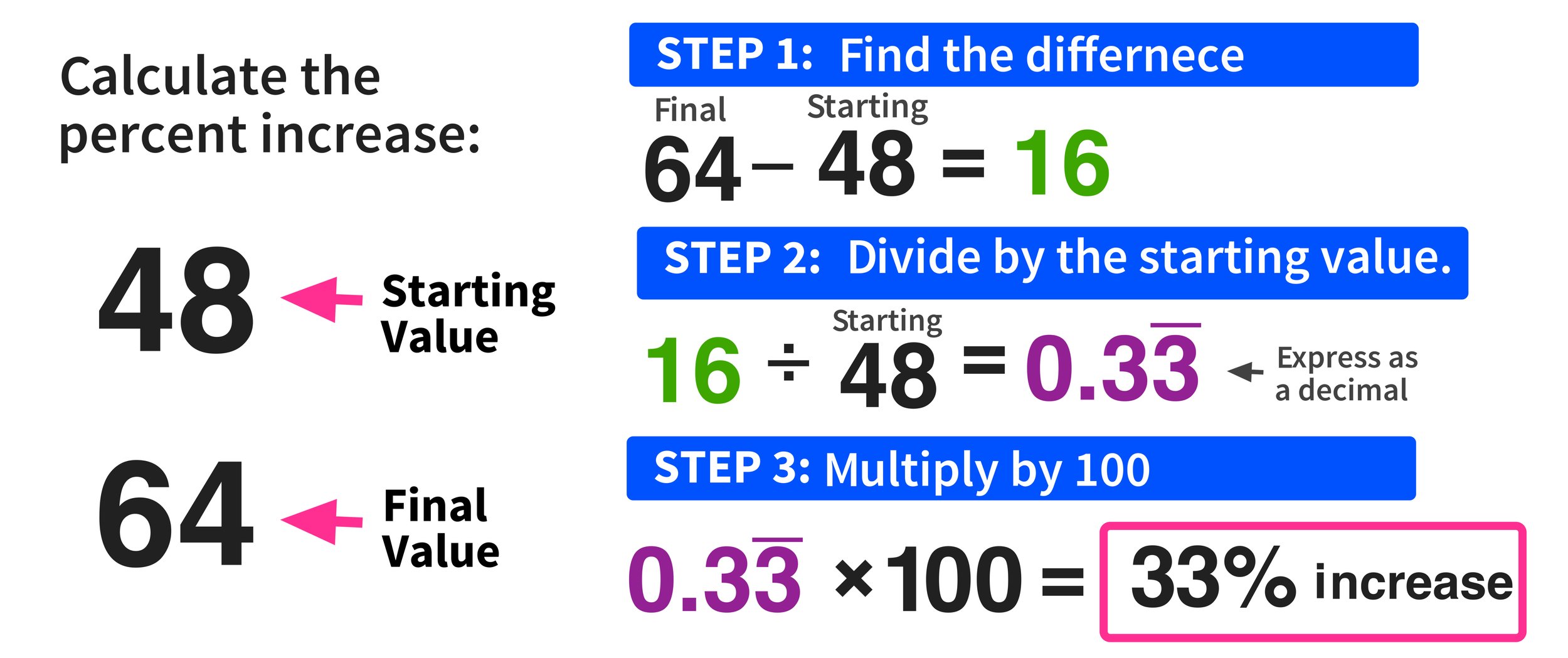
Calculating percentage increase is a straightforward process when broken down into its core components. The formula revolves around identifying the initial state and the final state, then determining the relative change. Here’s a systematic breakdown:
Step 1: Identify the Old and New Values
The first crucial step is to clearly define the two numbers you’re working with: the “old” value and the “new” value. The “old value” (also known as the initial value or base value) represents the starting point, the figure before the increase occurred. The “new value” (or final value) is the figure after the increase.
For example, in personal finance:
-
If your salary increased from $50,000 to $55,000, your old value is $50,000, and your new value is $55,000.
-
If an investment you made was worth $10,000 last year and is now worth $12,500, your old value is $10,000, and your new value is $12,500.
Accuracy in identifying these two numbers is foundational to the entire calculation.
Step 2: Calculate the Absolute Change
Once you have identified your old and new values, the next step is to determine the absolute difference between them. This is simply the new value minus the old value. This result represents the raw, numerical increase that has taken place.
Formula: Absolute Change = New Value – Old Value
Using our previous examples:
-
Salary increase: $55,000 (New) – $50,000 (Old) = $5,000 (Absolute Change)
-
Investment growth: $12,500 (New) – $10,000 (Old) = $2,500 (Absolute Change)
This absolute change tells you how much the value has gone up in real terms.
Step 3: Divide the Change by the Old Value
Now, to express this absolute change as a proportion of the original amount, you divide the absolute change by the old value. This step converts the raw increase into a decimal fraction that represents the relative growth.
Formula: Relative Change (Decimal) = Absolute Change / Old Value
Continuing with our examples:
-
Salary increase: $5,000 (Absolute Change) / $50,000 (Old Value) = 0.10
-
Investment growth: $2,500 (Absolute Change) / $10,000 (Old Value) = 0.25
The result at this stage is a decimal number. A value of 0.10 means the increase was one-tenth of the original amount, and 0.25 means it was one-quarter.
Step 4: Multiply by 100 to Get the Percentage
The final step is to convert the decimal into a percentage, which is a more universally understood way to express relative change. You achieve this by multiplying the decimal result from Step 3 by 100.
Formula: Percentage Increase = (Relative Change (Decimal)) * 100%
Completing our examples:
-
Salary increase: 0.10 * 100% = 10%
-
Investment growth: 0.25 * 100% = 25%
So, your salary increased by 10%, and your investment grew by 25%. This final percentage gives you a clear, concise, and comparable figure for the increase.
Summary Formula:
Percentage Increase = (($text{New Value} – text{Old Value}$) / $text{Old Value}$) * 100%
Real-World Applications in Personal Finance and Investing
The percentage increase calculation is indispensable for effective personal financial management and shrewd investing. It provides the clarity needed to make informed decisions about your money.
Tracking Investment Returns
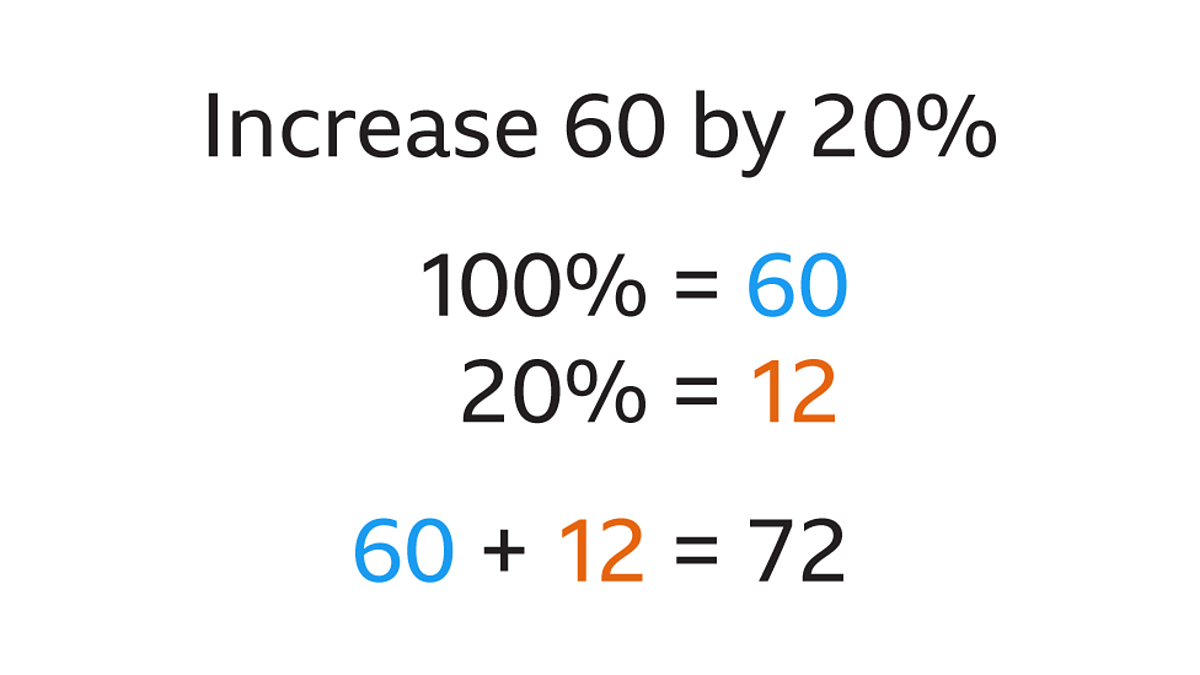
For investors, percentage increase is the primary metric for gauging the success of their holdings. Whether you’re analyzing individual stocks, mutual funds, or your entire portfolio, the percentage increase reveals the true rate of return. If your initial investment in a stock was $1,000 and it grew to $1,300, that’s a ( (1300 – 1000) / 1000 ) * 100% = 30% increase. This allows for straightforward comparison between different investments, even those with varying initial capital or timeframes (when annualized).
Beyond single-period returns, understanding percentage increase is a building block for more complex calculations like Compound Annual Growth Rate (CAGR). CAGR smooths out volatile year-to-year growth into a consistent average annual rate, offering a clearer picture of long-term investment performance. Recognizing a 15% annual growth rate is far more insightful than just seeing an increase in dollar value over several years.
Analyzing Budgetary Changes
For personal finance, percentage increase illuminates how your income and expenses are evolving. When your grocery bill jumps from $100 to $110 per week, you can quantify that as a 10% increase, demonstrating the impact of inflation on your household budget. Similarly, understanding that your electricity bill increased by 5% year-over-year helps you identify areas for potential savings or adjustments to your spending habits.
Conversely, percentage increase is vital for tracking positive changes, such as salary raises. A 7% pay raise is a clear indicator of improved earning power. For those with side hustles or online income streams, calculating the month-over-month or year-over-year percentage increase in revenue is key to understanding growth trends and scaling efforts. This analytical lens helps you maintain financial discipline and adapt to changing economic realities.
Evaluating Loan and Debt Changes
While often used for positive growth, the concept of percentage change also applies to negative shifts, helping to understand the proportional impact. Though a percentage decrease is often reported separately, understanding that an increase in interest rates on a variable loan can lead to a percentage increase in your overall debt burden is crucial. However, typically, percentage increase is more directly applied to the growth of assets rather than the expansion of liabilities for a clearer picture of net worth.
Business Finance Insights: Beyond Personal Growth
In the realm of business, percentage increase is a critical analytical tool used across every department, from sales and marketing to operations and executive management. It provides a standardized language for discussing performance, setting targets, and evaluating strategic initiatives.
Measuring Sales and Revenue Growth
One of the most common applications in business finance is tracking sales and revenue growth. Businesses constantly monitor their sales figures, calculating percentage increases year-over-year (YoY), quarter-over-quarter (QoQ), or even month-over-month (MoM). For instance, if a company’s revenue grew from $1 million in Q1 to $1.2 million in Q2, that’s a 20% QoQ increase. This metric is essential for assessing market demand, the effectiveness of marketing campaigns, and the overall health and expansion of the business. Consistent, positive percentage growth in revenue is a key indicator of a thriving enterprise and often correlates directly with investor confidence and stock performance.
Assessing Profit Margin Improvements
Beyond top-line revenue, businesses are intensely focused on profitability. Percentage increase is vital for analyzing changes in gross profit margin, operating profit margin, and net profit margin. If a company can increase its gross profit margin from 30% to 33%, it signifies a significant improvement in its ability to manage production costs relative to sales. This 3 percentage point increase in margin actually represents a ( (33 – 30) / 30 ) * 100% = 10% percentage increase in the margin itself. Such analyses help identify operational efficiencies, pricing strategies, and supply chain optimizations that directly impact the bottom line.
Understanding Market Share Expansion
For competitive industries, understanding market share is paramount. While market share itself is a percentage, a company’s goal is often to achieve a percentage increase in that share. If a company goes from holding 10% of the market to 12%, that’s a 2 percentage point increase in market share. More importantly, it’s a ( (12 – 10) / 10 ) * 100% = 20% percentage increase in its market share. This calculation helps businesses evaluate their competitive position, the success of expansion strategies, and their relative growth against competitors.
Cost Analysis and Efficiency Gains
Businesses also use percentage increase (and decrease) to monitor and control costs. Tracking the percentage increase in raw material costs, labor expenses, or overhead year-over-year helps management identify inflationary pressures or areas where spending might be getting out of hand. Conversely, if new processes lead to a 15% reduction in production waste, quantifying this as a percentage decrease in costs (or increase in efficiency) highlights successful cost-saving initiatives and contributes directly to improved profitability.
Common Pitfalls and Best Practices
While calculating percentage increase is fundamental, there are nuances and common errors that can lead to misinterpretations if not properly understood.
The Importance of the ‘Old Value’
A common mistake is using the wrong denominator in the calculation. The “old value” must be the base from which the increase is measured. If you accidentally use the new value or an average, your percentage increase will be incorrect. This is particularly relevant when dealing with “base effect” scenarios, where a small absolute change can result in a dramatically large percentage increase if the initial base was very small. For instance, growing from $10 to $20 is a 100% increase, which sounds impressive, but the absolute change of $10 might be less impactful than a $100,000 increase from $1 million (which is only a 10% increase). Always ensure the denominator accurately reflects the starting point.
Percentage Points vs. Percentage Increase
This distinction is crucial in finance, especially when discussing interest rates, market share, or other pre-existing percentages. If an interest rate increases from 5% to 7%, that is a 2 percentage point increase. However, the percentage increase in the interest rate itself is (($7% – 5%$) / $5%$) * 100% = 40%. Failing to distinguish between these two can lead to significant misunderstandings about the true magnitude of change. A 2 percentage point increase might seem small, but a 40% percentage increase in the cost of borrowing is substantial.
Annualized vs. Period-Specific Growth
When analyzing financial data, it’s important to differentiate between an increase over a specific, short period (e.g., a single month) and an annualized rate. A 2% increase in a stock’s value in one month might seem modest, but if that growth were to continue consistently for 12 months, the annualized return would be far greater (though simple multiplication, 2% * 12 = 24%, oversimplifies compounding). Financial reporting often annualizes returns to allow for consistent comparisons across different investment horizons. Always clarify the period over which the percentage increase is being measured to ensure valid comparisons.

Contextualizing the Numbers
Finally, a percentage increase, while powerful, should always be interpreted within its broader financial context. A 50% increase in profit from a startup might sound amazing, but if the initial profit was only $100, the absolute increase is just $50. Conversely, a 5% increase for a multi-billion dollar corporation could represent hundreds of millions in additional revenue. Always consider the absolute numbers alongside the percentages. Moreover, compare the calculated percentage increase to relevant benchmarks such as inflation rates, industry averages, or competitors’ performance to determine if the growth is genuinely strong or merely keeping pace with economic conditions. This holistic approach ensures that percentage increase serves as a truly insightful tool for financial analysis rather than just a standalone statistic.
aViewFromTheCave is a participant in the Amazon Services LLC Associates Program, an affiliate advertising program designed to provide a means for sites to earn advertising fees by advertising and linking to Amazon.com. Amazon, the Amazon logo, AmazonSupply, and the AmazonSupply logo are trademarks of Amazon.com, Inc. or its affiliates. As an Amazon Associate we earn affiliate commissions from qualifying purchases.