
Why Mastering Percentage Increase is Crucial for Your Finances
In the complex landscape of personal finance, investing, and business management, understanding how to calculate a percentage increase is not merely an academic exercise; it’s a fundamental skill that empowers informed decision-making. Whether you’re tracking the growth of your investment portfolio, analyzing a salary raise, monitoring business revenue, or assessing the impact of inflation on your purchasing power, the ability to quantify growth proportionally is indispensable.
A percentage increase provides a standardized way to compare changes, making disparate financial figures relatable and comprehensible. It moves beyond raw numbers to show relative growth, which is often far more insightful. For instance, knowing that your stock portfolio increased by $1,000 might sound good, but knowing it increased by 15% tells you much more about its performance relative to your initial investment, benchmarks, or other opportunities. This proportional understanding allows individuals and businesses to set realistic financial goals, evaluate performance against targets, and make strategic adjustments with greater confidence.
For investors, calculating percentage increase is essential for assessing returns on equity, bonds, or real estate. Business owners rely on it to measure sales growth, profit margins, and market share expansion. Individuals use it to understand the real value of their income raises after accounting for taxes or to compare price changes for major purchases. Without this core competency, navigating financial data becomes akin to sailing without a compass, making it difficult to discern true progress or identify areas needing attention.
The Fundamental Formula: A Step-by-Step Guide
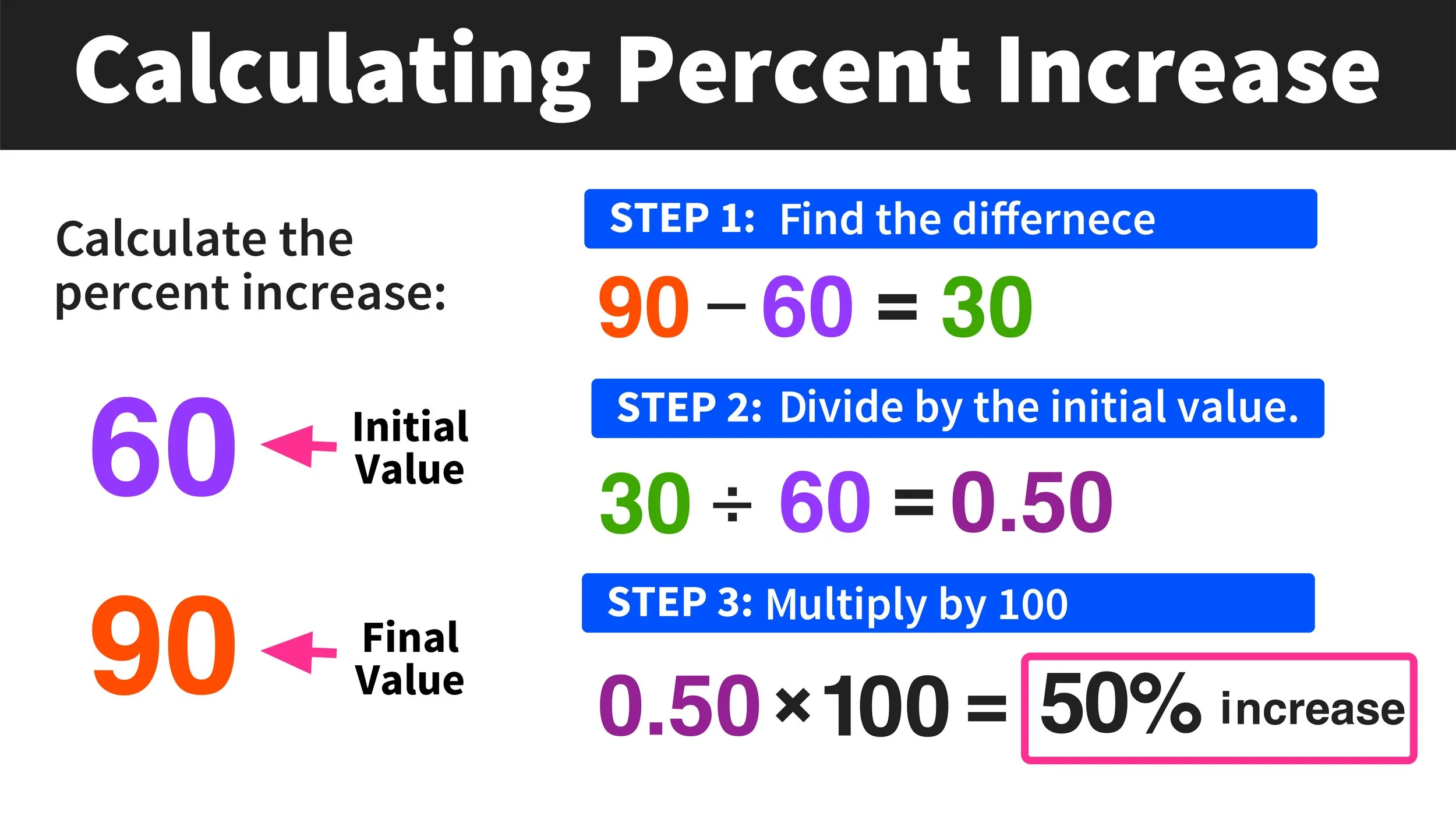
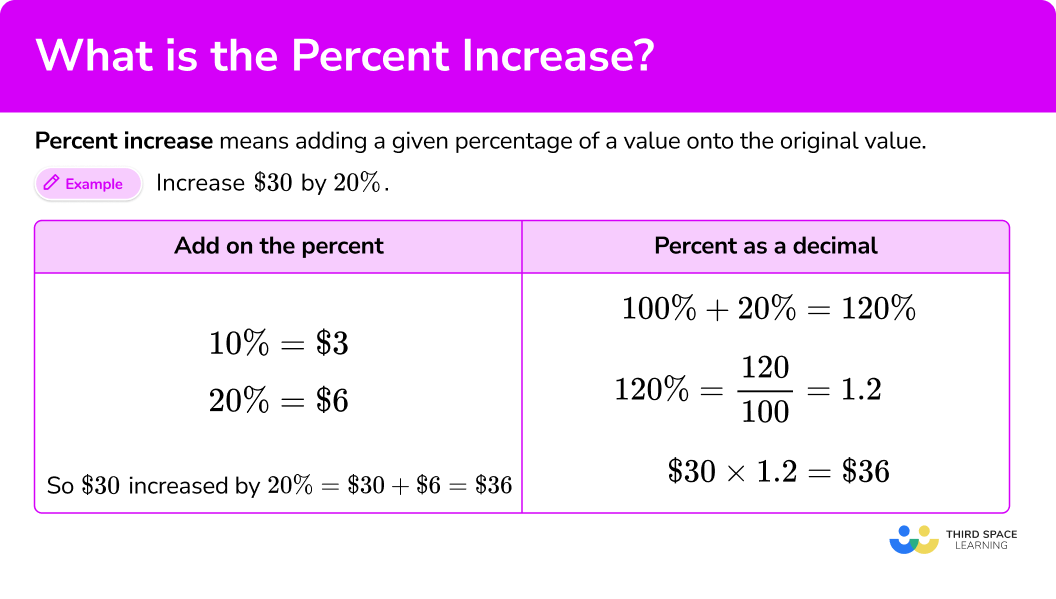
Calculating a percentage increase involves a straightforward formula that quantifies the relative change between an initial value and a final, larger value. This process translates an absolute gain into a proportional measure, universally understood as a percentage.
The core formula is:
$$ text{Percentage Increase} = left( frac{text{New Value} – text{Old Value}}{text{Old Value}} right) times 100% $$
Let’s break this down into simple, actionable steps:
Step 1: Identify Your “Old Value” and “New Value”
The “Old Value” (or initial value) is your starting point – the baseline number from which the increase occurred. The “New Value” (or final value) is the larger number after the increase. It’s critical to correctly assign these values, as reversing them will lead to an incorrect calculation (or a percentage decrease).
- Example: If your investment was $10,000 last year and is now $12,000, then the Old Value = $10,000 and the New Value = $12,000.
Step 2: Calculate the Absolute Increase
Subtract the Old Value from the New Value. This will give you the raw numerical difference, representing the actual amount of the increase.
-
Calculation:
New Value - Old Value -
Example:
$12,000 - $10,000 = $2,000(The absolute increase is $2,000).
Step 3: Divide the Absolute Increase by the Old Value
This step determines the proportion of the increase relative to your original starting point. The result will be a decimal number.
-
Calculation:
(Absolute Increase) / Old Value -
Example:
$2,000 / $10,000 = 0.2
Step 4: Multiply by 100 to Express as a Percentage
Finally, multiply the decimal result by 100 to convert it into a percentage. This makes the figure more readable and universally comparable.
-
Calculation:
(Decimal Result) × 100% -
Example:
0.2 × 100% = 20%
Therefore, in this example, your investment experienced a 20% increase. This step-by-step approach ensures accuracy and clarity in all your financial calculations.
Real-World Financial Applications of Percentage Increase
The ability to calculate percentage increases is not merely theoretical; it underpins numerous practical applications across personal and business finance, offering critical insights for decision-making.
Investment Growth and Returns
For investors, understanding percentage increase is fundamental to evaluating portfolio performance. It allows you to compare the growth of different assets, measure returns against benchmarks, and assess the effectiveness of your investment strategies.
-
Tracking Portfolio Performance: If you invested $5,000 in a mutual fund and it grew to $5,800 over a year, the percentage increase is
(($5,800 - $5,000) / $5,000) * 100% = 16%. This 16% return allows you to compare its performance to other investment vehicles or the broader market. -
Real Estate Appreciation: Suppose you purchased a property for $300,000 five years ago, and its current market value is $375,000. The percentage appreciation is
(($375,000 - $300,000) / $300,000) * 100% = 25%. This insight helps evaluate the investment’s long-term viability and potential for wealth creation.
Personal Budgeting and Income Analysis
For individuals, percentage increase helps in understanding changes in personal financial situations, from income adjustments to expense fluctuations.
-
Salary Increases: If your annual salary was $60,000 and you received a raise to $63,000, your percentage increase is
(($63,000 - $60,000) / $60,000) * 100% = 5%. This figure is vital for understanding your net income growth and adjusting your budget accordingly. -
Expense Tracking: Monitoring household expenses is crucial. If your monthly grocery bill went from $400 to $450, that’s a
(($450 - $400) / $400) * 100% = 12.5%increase. Identifying such proportional changes helps you pinpoint areas where spending is rising faster than anticipated, allowing for timely adjustments to maintain your budget.
Business Finance and Performance Metrics
Business owners and financial analysts extensively use percentage increase to gauge operational success, track growth, and make strategic business decisions.
-
Sales Growth: A company reporting sales of $500,000 in Quarter 1 and $650,000 in Quarter 2 experienced a sales increase of
(($650,000 - $500,000) / $500,000) * 100% = 30%. This metric is crucial for evaluating marketing strategies, product demand, and overall market performance. -
Profit Margin Improvement: If a business’s net profit was $50,000 last year and grew to $70,000 this year, it reflects a
(($70,000 - $50,000) / $50,000) * 100% = 40%increase in profit. Such an analysis is key to assessing operational efficiency, cost management, and the effectiveness of revenue generation efforts. -
Customer Acquisition Cost (CAC) Efficiency: If a company spent $10,000 on marketing to acquire 100 new customers last month (CAC of $100) and this month spent $12,000 to acquire 150 new customers (CAC of $80), the efficiency has decreased in terms of raw cost, but improved in terms of customers acquired per dollar. If you look at the total customers acquired, there’s a
((150 - 100) / 100) * 100% = 50%increase in customers. Looking at the CAC, it’s actually a(($80 - $100) / $100) * 100% = -20%change, indicating a 20% decrease in cost per customer, which is a positive efficiency gain.
Understanding Economic Indicators
Percentage increase is vital for interpreting macroeconomic data that impacts everyone’s financial health.
-
Inflation Rates: The Consumer Price Index (CPI) measures the average change over time in the prices paid by urban consumers for a market basket of consumer goods and services. If the CPI increases from 100 to 103, it signifies a 3% inflation rate, meaning that goods and services are 3% more expensive on average. Understanding this helps you gauge the erosion of purchasing power and plan for future expenses.
-
Interest Rate Changes: While often reported in absolute terms (e.g., “interest rates rose by 0.25%”), the proportional change in interest rates can have a significant impact on loan repayments or savings growth. For example, a bond yield increasing from 2% to 2.5% might seem like a small absolute change, but it’s a
((2.5 - 2) / 2) * 100% = 25%percentage increase in yield, which is substantial for income investors.
Common Pitfalls and How to Ensure Accuracy
While the calculation of percentage increase is mathematically straightforward, several common pitfalls can lead to inaccuracies or misinterpretations in financial contexts. Being aware of these ensures your analysis is both precise and meaningful.
Confusing Percentage Increase with Percentage Change
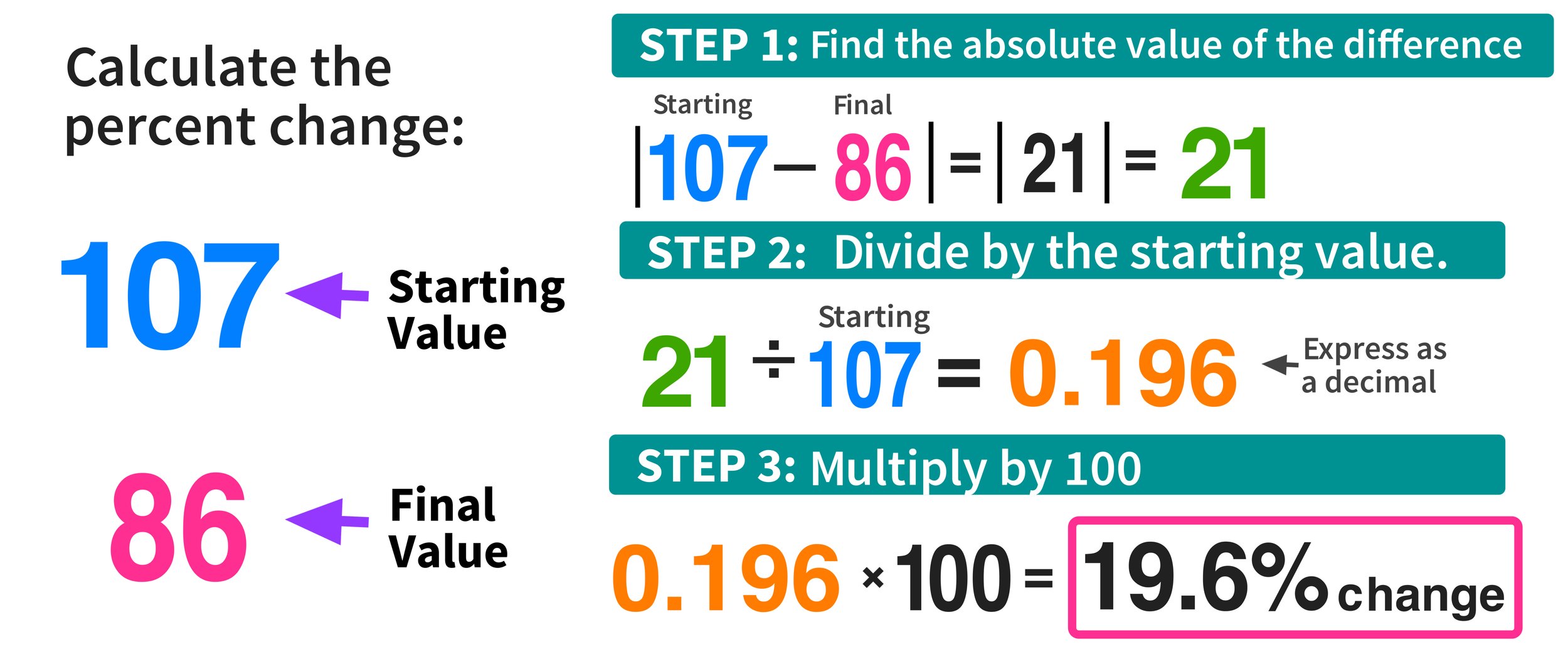
It’s crucial to distinguish between a percentage increase and a general percentage change. The formula for increase specifically assumes the new value is greater than the old value. If the new value is less than the old value, you are calculating a percentage decrease, which will yield a negative result using the increase formula. While mathematically correct, presenting it as an “increase” when it’s negative can be misleading. Always clearly state if it’s an increase or decrease.
Incorrectly Identifying the “Old Value” and “New Value”
A frequent error is interchanging the Old Value and New Value. The Old Value must always be the baseline or starting point from which the growth is measured. Using the New Value as the denominator will fundamentally alter the meaning of your calculation. For example, if a stock went from $50 to $60, the increase is (($60-$50)/$50) * 100% = 20%. If you mistakenly used $60 as the denominator, you’d get (($60-$50)/$60) * 100% = 16.67%, which is incorrect for measuring the increase from $50.
Misinterpreting the Base Value
Sometimes, the base value isn’t explicitly clear. For instance, when discussing “percentage points” in interest rates, a rate increasing from 2% to 3% is a 1-percentage-point increase. However, the percentage increase in the rate itself is ((3% - 2%) / 2%) * 100% = 50%. The context determines whether you’re looking for an absolute change in percentage points or a relative percentage change. In finance, precise language is paramount.
Rounding Errors Impacting Precision
When dealing with large financial sums or making multiple calculations in a chain, premature rounding can introduce significant errors. It’s best practice to carry calculations out to several decimal places before rounding the final percentage. For example, if an investment of $1,000,000 grows by 0.12345%, rounding to 0.12% too early might understate the actual dollar gain by hundreds or thousands.
Not Accounting for Inflation or Other External Factors
While the percentage increase calculation itself is purely mathematical, its financial interpretation should often consider external factors. An investment returning a 5% percentage increase might seem good, but if inflation was 3% during the same period, the real increase in purchasing power is closer to 2%. A true insightful financial analysis goes beyond the raw percentage increase.
Leveraging Financial Tools for Enhanced Analysis
While understanding the manual calculation is essential, modern financial management benefits immensely from leveraging various tools designed to automate and streamline these processes. These tools not only save time but also reduce the likelihood of human error, especially when dealing with complex datasets or frequent calculations.
Spreadsheets (Excel, Google Sheets)
For most personal and small business finance needs, spreadsheet software like Microsoft Excel or Google Sheets is invaluable. They offer powerful functions to automate percentage increase calculations.
-
Simple Calculations: If your Old Value is in cell A1 and your New Value is in cell B1, you can simply type
=(B1-A1)/A1into another cell and format it as a percentage. This instantly calculates the increase. -
Batch Processing: For tracking multiple investments, expenses, or sales figures over time, you can set up columns for Old Value and New Value, then drag the percentage increase formula down the column, instantly calculating increases for dozens or hundreds of entries.
-
Scenario Analysis: Spreadsheets allow you to easily change values to see the immediate impact on percentage increases, useful for planning and forecasting different financial scenarios (e.g., “What if sales increase by 10% next quarter?”).
Online Calculators and Financial Websites
Numerous websites offer free, simple percentage increase calculators. These are excellent for quick, one-off calculations or to double-check your manual figures. While not suitable for comprehensive analysis, they provide immediate results and can be a handy resource for basic financial queries. Many reputable financial news sites and personal finance blogs integrate such tools for user convenience.
Specialized Financial Software
For more sophisticated financial management, such as robust investment portfolio tracking, business accounting, or advanced financial modeling, dedicated software offers built-in features that go beyond basic percentage calculations.
-
Investment Platforms: Brokerage accounts and investment management platforms often display percentage gains and losses for your holdings automatically. They can calculate annualized returns, compound growth, and compare your portfolio’s performance against market indices with sophisticated percentage metrics.
-
Accounting Software: Business accounting software (e.g., QuickBooks, Xero) can automatically generate reports showing percentage changes in revenue, expenses, and profit margins over various periods, providing critical insights into business health and trends.
-
Financial Planning Tools: Apps and software designed for personal financial planning can track your net worth growth, income increases, and spending changes in percentage terms, often presenting data in visually appealing charts and graphs.
While these tools automate the arithmetic, the underlying understanding of what a percentage increase represents remains paramount. Tools are only as effective as the financial literacy of the user. By understanding the core calculation, you can intelligently apply and interpret the results provided by these digital aids, transforming raw data into actionable financial insights.
aViewFromTheCave is a participant in the Amazon Services LLC Associates Program, an affiliate advertising program designed to provide a means for sites to earn advertising fees by advertising and linking to Amazon.com. Amazon, the Amazon logo, AmazonSupply, and the AmazonSupply logo are trademarks of Amazon.com, Inc. or its affiliates. As an Amazon Associate we earn affiliate commissions from qualifying purchases.