
The landscape of morning television has undergone a radical digital transformation. Gone are the days when catching The Today Show required a physical television set and a coaxial cable connected to a wall outlet. As the flagship morning program of NBC, The Today Show has evolved into a multi-platform digital experience that leverages cutting-edge streaming protocols, cloud-based distribution, and high-definition mobile integration. For the modern viewer, “watching” the show is no longer a passive act of turning a dial; it is a tech-driven engagement that involves selecting the right software, optimizing hardware for low-latency delivery, and understanding the infrastructure of modern content delivery networks (CDNs).

Leveraging the NBCUniversal Ecosystem: Peacock and App Synchronization
At the heart of the modern viewing experience is the shift from linear broadcasting to IP-based streaming. NBCUniversal has centralized its content strategy around the Peacock streaming service and the dedicated NBC app. These platforms are not merely repositories for video; they are sophisticated software environments designed to handle millions of concurrent live streams while maintaining high-fidelity audio and video synchronization.
The Software Architecture of Peacock
Peacock serves as the primary digital hub for The Today Show. From a technical standpoint, Peacock utilizes a dynamic bitrate streaming model. This means the app constantly monitors your internet bandwidth and adjusts the video quality in real-time to prevent buffering. When you tune into the live feed of The Today Show, the platform utilizes the H.264 or H.265 (HEVC) video codecs to compress the high-definition signal coming from Studio 1A in Rockefeller Center.
For users, this translates to a seamless experience across different network conditions. On a fiber-optic home network, Peacock will push a 1080p signal at 60 frames per second, ensuring that the fast-paced transitions of morning news remain fluid. On a 4G LTE mobile connection, the software intelligently scales down to 720p or 480p, prioritizing audio continuity over visual sharpness to ensure the news is never interrupted.
Cross-Device Continuity and User Profiles
One of the most significant technological advantages of watching via an app is the implementation of cross-device continuity. By utilizing cloud-based user profiles, the NBC ecosystem remembers your viewing habits. If you begin watching The Today Show on an Apple TV in your living room and need to leave for your commute, you can open the Peacock app on an iPhone or Android device and resume exactly where the live broadcast is. This synchronization relies on low-latency metadata exchange between the client device and the server, ensuring that your “Live” marker is consistent across the entire hardware ecosystem.
Cord-Cutting Infrastructure: Virtual Multichannel Video Programming Distributors (vMVPDs)
For many viewers, the goal is to replicate the traditional cable experience without the legacy hardware. This is where Virtual Multichannel Video Programming Distributors (vMVPDs) like YouTube TV, Hulu + Live TV, Fubo, and Sling TV come into play. These services function as digital intermediaries that receive a direct feed from NBC affiliates and redistribute it over the open internet.
Analyzing Latency in Live News Streaming
One of the primary technical challenges of watching live news like The Today Show on a vMVPD is latency—the delay between the actual event in the studio and the image appearing on your screen. In the world of tech, this is often referred to as “glass-to-glass” latency. Traditional cable usually has a delay of 3 to 5 seconds. Streaming services, historically, have suffered from delays of 30 seconds or more.
However, modern advancements in Chunked Transfer Encoding for MPEG-DASH and Apple’s Low-Latency HLS (LL-HLS) have significantly reduced this gap. High-end services like YouTube TV now achieve latencies that rival traditional cable. When choosing a platform to watch The Today Show, tech-savvy users look for those utilizing these low-latency protocols, as it ensures they are receiving news updates as close to “real-time” as the digital infrastructure allows.
Cloud DVR: The Evolution of Storage Technology
A major tech feature of vMVPDs is the Cloud DVR. Unlike the physical hard drives in old TiVo boxes, Cloud DVRs store recordings on remote servers. When you “record” The Today Show on a service like Hulu + Live TV, you aren’t actually downloading data to your device. Instead, the service flags that specific broadcast segment in its central storage for your account. This allows for “unlimited” storage capacity and the ability to skip commercials using a 15-second or 30-second skip logic programmed into the app’s interface. This shift to server-side recording has eliminated the hardware failure risks associated with local spinning disks.
Hardware Optimization: Choosing the Right Streaming Client
The software is only half of the equation; the hardware used to decode the stream is equally vital. Whether you are using a dedicated streaming stick, a smart TV, or a mobile device, the internal processor’s ability to handle video decoding determines the smoothness of the morning news.
Smart TV Operating Systems vs. External Streaming Sticks

Most modern viewers watch The Today Show via Smart TV platforms like Tizen (Samsung), webOS (LG), or Android TV. While convenient, integrated Smart TV processors often lack the longevity and processing power of dedicated external hardware.
Devices like the Apple TV 4K, Roku Ultra, and Amazon Fire TV Stick 4K Max utilize high-performance ARM-based processors that are specifically optimized for video rendering. These gadgets feature dedicated hardware decoders for the AV1 codec, a modern, royalty-free video coding format that provides better compression than older standards. For the viewer, using a dedicated streaming client often results in faster app load times, more responsive navigation through the Today Show segments, and superior image processing that can upscale a 1080p broadcast to 4K using AI-driven algorithms.
Networking Requirements for High-Definition Broadcasts
To watch The Today Show in high definition without interruption, the underlying network hardware must be robust. While a standard 25 Mbps connection is technically sufficient for a single HD stream, the introduction of WiFi 6 and WiFi 6E has revolutionized home streaming. These newer standards operate on the 6GHz band, reducing interference from neighboring networks and household electronics.
For the most stable connection, many tech enthusiasts prefer using an Ethernet connection via a Power-over-Ethernet (PoE) adapter or a direct LAN port on the streaming device. This bypasses the inherent instabilities of wireless signals, ensuring that the morning’s weather and news segments are delivered with a constant, high bitrate.
Digital Security and Global Access: Utilizing VPNs and Secure Protocols
In an era of increasing digital vulnerability, the way we access media must be viewed through a lens of security. Furthermore, for viewers traveling abroad, accessing a localized NBC feed involves navigating complex geographic restrictions and digital rights management (DRM).
End-to-End Encryption and Privacy in Streaming
When you stream The Today Show, your data is protected by various layers of encryption. Transport Layer Security (TLS) ensures that the communication between your device and the NBC servers is encrypted, preventing third parties from intercepting your viewing data or account credentials. Additionally, modern streaming apps utilize Widevine or FairPlay DRM systems. These technical frameworks ensure that the content is only decrypted at the moment of playback on an authorized device, protecting the intellectual property of the broadcast while maintaining user privacy.
Overcoming Geographic Restrictions via Secure Tunnels
For users outside the United States, watching The Today Show often requires the use of a Virtual Private Network (VPN). A VPN creates an encrypted tunnel between the user’s device and a server located within the U.S. By masking the user’s true IP address with a domestic one, the VPN allows the streaming app to bypass regional “geofencing.”
However, not all VPNs are created equal for streaming. Technologically advanced VPNs utilize specialized protocols like WireGuard, which offers high speeds and low overhead, essential for maintaining a live video feed. Furthermore, high-end VPN services use “obfuscated servers” to prevent streaming platforms from detecting and blocking the VPN connection, ensuring a consistent and secure viewing experience regardless of physical location.
The Frontier of Live News: ATSC 3.0 and the Future of Broadcasting
While streaming is the current gold standard, the technology of over-the-air (OTA) broadcasting is making a significant comeback through the ATSC 3.0 standard, also known as “NextGen TV.” This is the first major upgrade to broadcast technology since the transition from analog to digital.
NextGen TV: Merging Internet and Broadcast
ATSC 3.0 is fundamentally different because it is built on an IP-based backbone—the same language used by the internet. For The Today Show viewers, this means that a standard digital antenna can now deliver 4K Ultra HD video and Dolby Atmos audio without requiring an internet connection.
The “tech” magic of ATSC 3.0 lies in its ability to blend broadcast signals with internet-delivered data. A viewer could be watching the main broadcast via the antenna while the TV simultaneously pulls in interactive weather maps or localized news tickers via the home WiFi, overlaying them on the screen. This hybrid approach represents the future of how morning news will be consumed—combining the reliability of broadcast with the interactivity of the web.
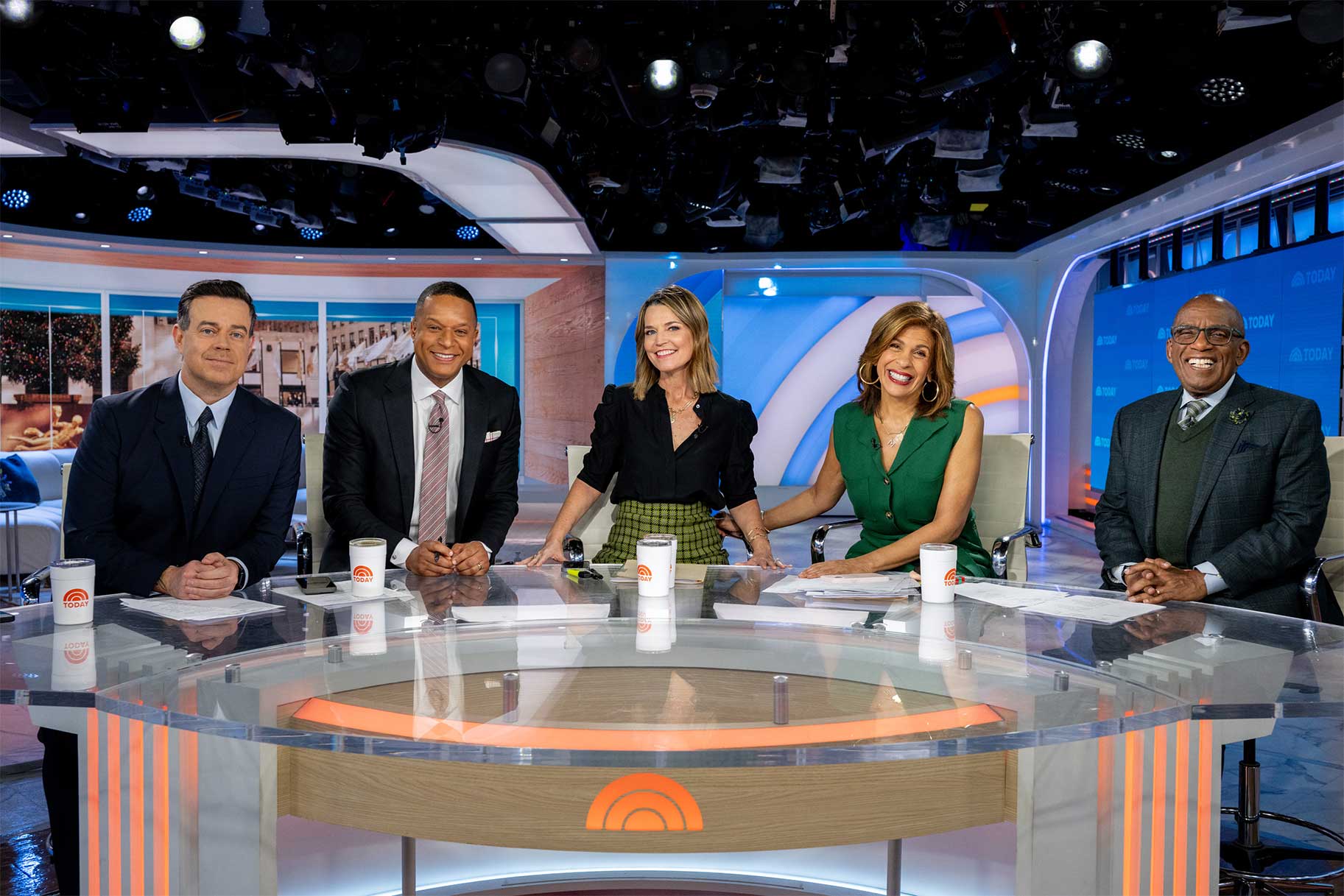
AI and Personalization in News Delivery
Looking ahead, Artificial Intelligence is set to play a larger role in how The Today Show is delivered to viewers. We are seeing the beginning of AI-driven personalization where the streaming app can “clip” specific segments—such as the “3rd Hour” or “Today with Hoda & Jenna”—based on the user’s historical interaction data. Machine learning models analyze which stories a viewer lingers on and can automatically curate a custom “Today” playlist for the user to watch during their morning routine. This algorithmic curation ensures that the most relevant tech news, lifestyle tips, or political updates are front and center, moving the show from a “one-size-fits-all” broadcast to a tailored digital product.
aViewFromTheCave is a participant in the Amazon Services LLC Associates Program, an affiliate advertising program designed to provide a means for sites to earn advertising fees by advertising and linking to Amazon.com. Amazon, the Amazon logo, AmazonSupply, and the AmazonSupply logo are trademarks of Amazon.com, Inc. or its affiliates. As an Amazon Associate we earn affiliate commissions from qualifying purchases.