
The landscape of television consumption has undergone a radical transformation over the last decade. The shift from traditional coaxial cable subscriptions to a decentralized digital ecosystem has empowered consumers, but it has also introduced a layer of technical complexity. For many, the primary hurdle in “cutting the cord” is maintaining access to local news, weather, and sports. Whether it is the high-stakes engineering of digital antennas or the sophisticated algorithms of over-the-air (OTA) streaming integration, watching local channels today is as much about understanding hardware as it is about selecting a service.

This guide explores the high-tech methodologies for capturing local broadcasts, ranging from the latest developments in antenna technology to the sophisticated software-defined networking tools that bridge the gap between broadcast signals and digital devices.
The Resurgence of Over-the-Air (OTA) Hardware
To understand how to watch local channels through a technical lens, one must first look at the hardware that captures free, over-the-air signals. While many associate antennas with the “rabbit ears” of the analog era, modern OTA technology is built on digital signal processing and high-gain engineering.
Understanding Modern Antenna Physics
Modern digital antennas are designed to capture signals in the UHF (Ultra High Frequency) and VHF (Very High Frequency) bands. Unlike the analog signals of the past, which would simply become “fuzzy” when weak, digital signals operate on a binary threshold—commonly referred to as the “cliff effect.” You either have a crystal-clear picture or no picture at all.
High-tech indoor antennas now utilize Low-Noise Amplifiers (LNAs) to boost weak signals while filtering out electromagnetic interference (EMI) from household electronics and LTE/5G cellular signals. For users in fringe reception areas, multi-directional outdoor antennas employ complex geometric designs to minimize multipath interference, where signals bounce off buildings or hills before reaching the receiver.
The Impact of ATSC 3.0 (NextGen TV)
The most significant technological leap in local broadcasting is the rollout of ATSC 3.0, commercially known as NextGen TV. This is the first major upgrade to the terrestrial television standard since the transition from analog to digital in 2009. ATSC 3.0 is built on an Internet Protocol (IP) backbone, allowing local stations to broadcast in 4K UHD resolution with High Dynamic Range (HDR).
Technically, ATSC 3.0 merges broadcast airwaves with broadband internet. This allows for targeted emergency alerts, interactive features, and superior signal penetration. For the consumer, accessing this requires a tuner capable of decoding the new HEVC (High-Efficiency Video Coding) bitstreams and Dolby AC-4 audio. As this technology scales, the “how” of watching local channels will shift from simple signal capture to managing a hybrid data stream.
Integrating Local Channels into the Streaming Ecosystem
For those who prefer a software-centric approach, the integration of local channels into streaming platforms represents the pinnacle of modern content delivery. This niche, known as vMVPD (Virtual Multichannel Video Programming Distributors), utilizes complex content delivery networks (CDNs) to route local affiliate feeds to users based on their geolocation data.
The Architecture of Live TV Streaming Services
Services such as YouTube TV, Hulu + Live TV, and FuboTV do not use antennas at the consumer end. Instead, they ingest local broadcast feeds directly from network affiliates via high-bandwidth fiber optic lines or satellite downlinks. These feeds are then transcoded into formats like H.264 or H.265 (HEVC) and distributed through the cloud.
From a technical standpoint, the “local” aspect is managed through IP geolocation and GPS data. When a user opens an app on a smartphone or a smart TV, the service checks the device’s IP address against a database of designated market areas (DMAs). This ensures that the user receives the correct local news feed rather than a broadcast from a different time zone.
Standalone Network Apps and Hybrid Solutions
Many major networks (ABC, NBC, CBS, and FOX) have developed proprietary applications that offer live local streaming to authenticated users. This is often handled through “TV Everywhere” (TVE) technology. TVE utilizes the Security Assertion Markup Language (SAML) to verify a user’s credentials across different platforms.
Furthermore, some services like Paramount+ (for CBS) and Peacock (for NBC) have integrated local live feeds directly into their premium tiers. These platforms use adaptive bitrate streaming to ensure that the live local feed remains stable even during fluctuations in the user’s home network bandwidth.
Network Tuners and Signal Optimization Software
Perhaps the most sophisticated way to watch local channels is by building a localized “broadcast-to-IP” gateway. This involves using hardware that captures an OTA signal and converts it into a digital stream that can be accessed by any device on a home network.
The Role of Network-Attached Tuners
Devices like the SiliconDust HDHomeRun or the Tablo DVR act as a bridge between the antenna and the Wi-Fi router. The hardware contains multiple digital tuners that decode the 8VSB (8-level Vestigial Sideband) modulation used in digital broadcasts. Once decoded, the device encapsulates the video into MPEG-TS packets and streams them over the local area network (LAN) using DLNA or UPnP protocols.
This configuration allows a single antenna located in an optimal position (such as an attic) to serve local TV to every laptop, tablet, and smart TV in the house without the need for dedicated cabling to each room.
Using Signal Map Software and Diagnostic Tools
To optimize reception, tech-savvy users employ signal analysis software. Websites and apps like RabbitEars.info or FCC Reception Maps provide detailed topographic data and signal strength predictions. These tools use mathematical models to account for “free-space path loss” and “knife-edge diffraction,” helping users determine the exact azimuth (direction) to point their antennas.
For granular optimization, some network tuners provide a “Signal Quality” and “Symbol Quality” metric. While signal strength measures raw power, symbol quality measures the lack of data errors in the digital stream. Achieving a 100% symbol quality is the technical gold standard for a glitch-free local viewing experience.
The Convergence of Security and Local Broadcasting
As local channels move further into the digital and IP-based realm, security and digital rights management (DRM) have become integral to the hardware and software used to view them. This is particularly relevant with the advent of NextGen TV.
Encrypted Broadcasts and Content Protection
One of the more controversial technical aspects of ATSC 3.0 is the implementation of A3SA (ATSC 3.0 Security Authority) encryption. Unlike traditional digital signals, which are unencrypted and can be recorded by any tuner, some NextGen TV signals require a “handshake” between the tuner and a security server.
This requires the viewing device to have a persistent internet connection and compatible decryption keys. From a tech perspective, this adds a layer of complexity to DVR (Digital Video Recorder) software, as the hardware must be able to securely store and playback encrypted content while adhering to copyright flags embedded in the broadcast metadata.
AI-Driven Content Discovery and Enhancement
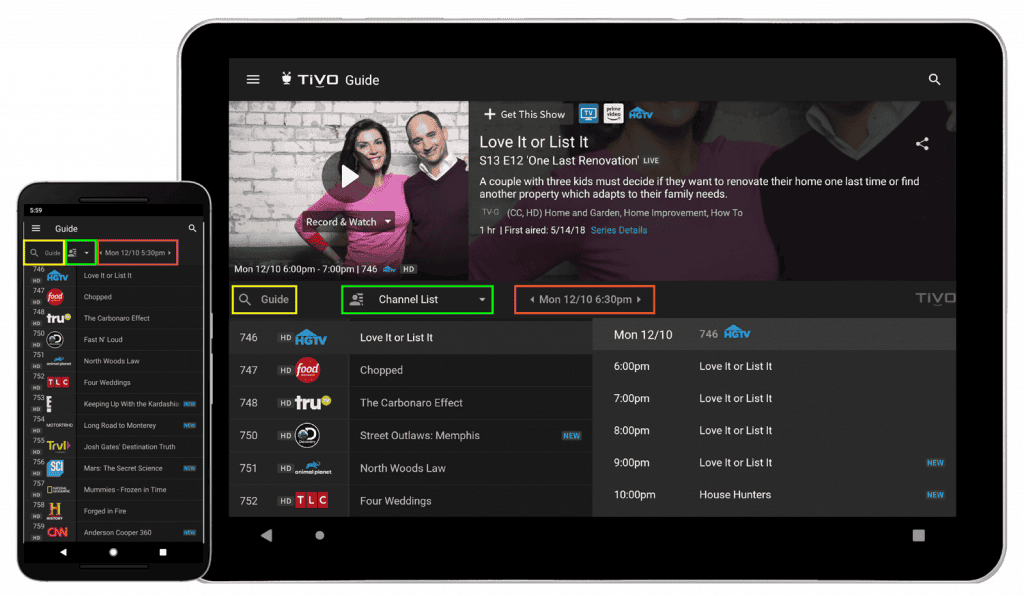
Modern smart TV operating systems, such as WebOS, Tizen, and Android TV, are now using machine learning algorithms to integrate local channels into the user interface. Rather than switching “inputs” from a streaming app to an antenna, AI-driven discovery engines aggregate local broadcast schedules into a single “Live Guide.”
These systems analyze viewing habits to suggest local news segments or sports events. Furthermore, modern image processors in high-end TVs use AI upscaling to take a standard 720p or 1080i local broadcast and reconstruct the pixels to fit a 4K display, utilizing neural networks to reduce noise and sharpen edges in real-time.
Conclusion: The Synergy of Broadcast and Broadband
The technical evolution of how we watch local channels has come full circle. What began as a simple hardware-to-display relationship has evolved into a sophisticated hybrid of radio-frequency engineering, IP networking, and cloud-based authentication.
Whether you are deploying a high-gain antenna with a network-attached tuner to create a private streaming server, or utilizing a vMVPD service that leverages global CDNs to deliver a local feed, the underlying technology is more robust than ever. As ATSC 3.0 continues to mature and 5G broadcasting enters the fray, the line between “traditional TV” and “streaming” will continue to blur, offering users a more high-definition, interactive, and accessible local media experience.
aViewFromTheCave is a participant in the Amazon Services LLC Associates Program, an affiliate advertising program designed to provide a means for sites to earn advertising fees by advertising and linking to Amazon.com. Amazon, the Amazon logo, AmazonSupply, and the AmazonSupply logo are trademarks of Amazon.com, Inc. or its affiliates. As an Amazon Associate we earn affiliate commissions from qualifying purchases.