
In an age dominated by sophisticated financial software and powerful spreadsheets, the humble financial calculator might seem like an anachronism. Yet, for anyone serious about managing their money, making informed investment decisions, or navigating complex business finance, mastering this dedicated tool remains an indispensable skill. A financial calculator distills complex time value of money (TVM) principles into an accessible interface, allowing users to quickly solve for future values, present values, payment amounts, interest rates, and loan durations. It’s a powerhouse for on-the-spot analysis, providing clarity and confidence in financial computations that impact everything from personal savings goals to multi-million dollar corporate projects.

This guide will demystify the financial calculator, breaking down its core functions, illustrating its practical applications with real-world scenarios, and offering insights into best practices. Whether you’re a student, a budding investor, a small business owner, or a seasoned financial professional, understanding how to leverage this powerful device will elevate your financial acumen and decision-making capabilities.
Understanding the Core Functions and Keys
At the heart of every financial calculator lies a set of standardized functions designed to tackle the most common financial calculations. While specific key labels might vary slightly between models (e.g., HP 12c vs. TI BA II Plus), the underlying concepts remain universal.
Time Value of Money (TVM) Keys
The cornerstone of financial calculations is the concept of the Time Value of Money (TVM), which posits that a dollar today is worth more than a dollar tomorrow due to its potential earning capacity. Financial calculators are built around solving TVM problems using five fundamental variables, each represented by a dedicated key:
- N (Number of Periods): This represents the total number of compounding periods or payment periods in a given transaction. If payments are monthly over 5 years, N would be 5 * 12 = 60.
- I/Y (Interest Rate per Year/Period): This is the interest rate applied per compounding period. Crucially, if you are given an annual rate and payments are monthly, you must adjust this to a monthly rate (e.g., 12% annual rate becomes 1% per period if payments are monthly, i.e., 12 / 12). Some calculators use ‘I’ for interest rate per period and others ‘I/Y’ for annual nominal rate which then requires setting ‘P/Y’ and ‘C/Y’ (payments per year, compounding periods per year) correctly. Always ensure consistency between N and I/Y.
- PV (Present Value): This is the current value of a future sum of money or stream of cash flows given a specified rate of return. It represents an initial investment or the current amount of a loan.
- PMT (Payment): This refers to a series of equal, periodic payments, such as loan installments, annuity payouts, or regular savings contributions. If there are no recurring payments in a problem, PMT is set to zero.
- FV (Future Value): This is the value of an asset or cash at a specified date in the future, assuming a certain rate of return. It’s the total accumulated value of an investment or the balance of a loan at the end of its term.
The beauty of these five keys is that if you know any four of them, the calculator can solve for the fifth.
Essential Setup and Clearing
Before diving into calculations, proper setup and understanding of critical operational features are paramount to ensure accurate results.
- Setting Payment Frequency (P/Y, C/Y or 1/Y, 12/Y): Many financial calculators allow you to set the number of payments per year (P/Y) and compounding periods per year (C/Y). For most basic problems, setting both to 1 (annual) or 12 (monthly) is common. If your calculator has a single “P/Y” setting, ‘C/Y’ usually defaults to the same, or you may need to explicitly set ‘C/Y’ too. Consistency here is vital for the I/Y input.
- Setting Payment Mode (BEGIN/END): This determines whether payments occur at the beginning or the end of each period.
- END Mode (Ordinary Annuity): Payments occur at the end of each period, which is the default for most loans (e.g., mortgage payments, bond interest).
- BEGIN Mode (Annuity Due): Payments occur at the beginning of each period (e.g., lease payments, rent, some retirement savings plans). Selecting the incorrect mode is a common error that leads to incorrect results.
- Clearing Memory: Always clear previous calculations to prevent errors. Common clear functions include
CLR TVM(clears the TVM registers),CLR WORK(clears data in specific worksheets), andCLR ALL(clears all memory, including settings). Make it a habit to clear before starting a new problem. - Sign Conventions (+/-): This is perhaps the most confusing aspect for beginners but is crucial for correct interpretation.
- Cash Outflows (money you pay or invest) are typically entered as negative values. For example, an initial investment (PV) or a loan payment (PMT) would be negative.
- Cash Inflows (money you receive) are entered as positive values. For example, a future sum you receive (FV) or an income stream (PMT) would be positive.
The calculator solves for the unknown based on these signs. If you invest $100 (PV = -100) and want to know its future value (FV), the FV will be positive. If you receive a loan of $100,000 (PV = +100,000) and want to calculate the payment (PMT), the payment will be negative.
Practical Applications: Mastering TVM Problems
Once you understand the core functions and setup, applying them to real-world financial problems becomes straightforward. The following examples illustrate how to solve for each of the TVM variables.
Calculating Future Value (FV)
Solving for FV helps you project the growth of your investments or savings over time.
- Scenario 1: Lump-Sum Investment Growth. You invest $10,000 today (PV = -10,000) at an annual interest rate of 8% (I/Y = 8) for 10 years (N = 10). Assuming no additional payments (PMT = 0), what will your investment be worth?
- Input:
N=10,I/Y=8,PV=-10000,PMT=0 - Compute
FV. (Result: ~$21,589.25)
- Input:
- Scenario 2: Regular Savings Contributions. You plan to save $200 per month (PMT = -200) for 20 years (N = 20 * 12 = 240) in an account earning an annual rate of 6% (I/Y = 6/12 = 0.5 per month). Assuming you start with no money (PV = 0), how much will you have? (Ensure P/Y, C/Y are set to 12, or I/Y is input as 0.5 if 1/Y is 1).
- Input:
N=240,I/Y=0.5(or 6 and P/Y=12),PV=0,PMT=-200 - Compute
FV. (Result: ~$92,842.27)
- Input:
Determining Present Value (PV)
Solving for PV allows you to determine the current worth of a future sum or a stream of future payments, essential for valuation.
- Scenario 1: Discounting a Future Lump Sum. You expect to receive $50,000 in 5 years (FV = 50,000). If you want an 7% annual return (I/Y = 7), how much is that $50,000 worth to you today? (PMT = 0).
- Input:
N=5,I/Y=7,PMT=0,FV=50000 - Compute
PV. (Result: ~$35,648.74)
- Input:
- Scenario 2: Valuing a Stream of Income. A lottery prize offers $1,000 per month (PMT = 1,000) for the next 10 years (N = 10 * 12 = 120). If the appropriate discount rate is 5% annual (I/Y = 5/12 per month), what is the present value of this prize?
- Input:
N=120,I/Y=5/12(or 5 and P/Y=12),PMT=1000,FV=0 - Compute
PV. (Result: ~$94,037.98)
- Input:
Solving for Payments (PMT)
Calculating PMT is crucial for understanding loan obligations or determining required savings contributions.
- Scenario 1: Mortgage Payment Calculation. You take out a $300,000 mortgage (PV = 300,000) at an annual interest rate of 4.5% (I/Y = 4.5/12 per month) for 30 years (N = 30 * 12 = 360). What is your monthly payment? (FV = 0, as the loan is paid off).
- Input:
N=360,I/Y=4.5/12,PV=300000,FV=0 - Compute
PMT. (Result: ~-$1,520.06 – negative because it’s an outflow).
- Input:
- Scenario 2: Required Savings to Reach a Goal. You want to accumulate $150,000 in 15 years (FV = 150,000), starting with no initial investment (PV = 0). If your account earns 7% annual interest (I/Y = 7/12 per month), how much must you save each month (N = 15 * 12 = 180)?
- Input:
N=180,I/Y=7/12,PV=0,FV=150000 - Compute
PMT. (Result: ~-$475.93)
- Input:
Uncovering Interest Rates (I/Y) and Number of Periods (N)
These calculations help evaluate investment performance or determine the time horizon for financial goals.
- Scenario 1: Effective Rate of Return. You invested $5,000 (PV = -5000) and 7 years later (N = 7) it grew to $8,000 (FV = 8000), with no additional payments (PMT = 0). What was your annual rate of return?
- Input:
N=7,PV=-5000,PMT=0,FV=8000 - Compute
I/Y. (Result: ~7.03%)
- Input:
- Scenario 2: Time to Pay Off a Loan. You have a $25,000 car loan (PV = 25,000) at 6% annual interest (I/Y = 6/12 per month) and can afford to pay $500 per month (PMT = -500). How many months will it take to pay off the loan? (FV = 0).
- Input:
I/Y=6/12,PV=25000,PMT=-500,FV=0 - Compute
N. (Result: ~54.74 months, or approximately 4 years and 7 months).
- Input:
Beyond Basic TVM: Advanced Functions and Considerations
While TVM functions are the most frequently used, financial calculators offer a suite of other powerful tools for more complex analyses.
Cash Flow Analysis (CF Function)
For scenarios with uneven or irregular cash flows (e.g., project evaluation, investment returns with variable dividends), the cash flow (CF) worksheet is invaluable. It allows you to input a series of cash inflows and outflows and then calculate:
- Net Present Value (NPV): The difference between the present value of cash inflows and the present value of cash outflows over a period of time. It’s a key metric for capital budgeting.
- Internal Rate of Return (IRR): The discount rate that makes the NPV of all cash flows from a particular project equal to zero. It’s used to evaluate the profitability of potential investments.
Understanding and using the CF function is crucial for anyone involved in corporate finance or investment analysis beyond simple annuities.
Amortization Schedules
Many financial calculators include an amortization function, which allows you to break down loan payments into their principal and interest components over specific periods. This is incredibly useful for:
- Debt Management: Understanding how much interest you’re paying versus how much principal you’re reducing on a mortgage or loan.
- Tax Planning: Interest paid on certain loans (like mortgages) can be tax-deductible.
- Financial Forecasting: Projecting your remaining loan balance at any point in time.
Bond Valuation and Depreciation
Advanced financial calculators often have dedicated worksheets for specific financial instruments and accounting methods:
- Bond Valuation: Tools to calculate a bond’s price, yield to maturity, or yield to call.
- Depreciation: Functions to compute depreciation schedules using various methods (e.g., straight-line, declining balance), which is relevant for accounting and business finance.
While these functions are more specialized, they highlight the calculator’s comprehensive utility for a wide range of financial professionals.
Best Practices and Common Pitfalls
To harness the full power of your financial calculator, adopt these best practices and be aware of common errors.
Consistency is Key
The most frequent source of errors stems from inconsistency in units. If your interest rate (I/Y) is annual, your number of periods (N) and payments (PMT) should also be annual. If I/Y is a monthly rate, then N should be in months and PMT should be monthly. Many calculators allow you to input an annual rate and set the P/Y and C/Y to 12 for monthly calculations, which automatically adjusts N and the effective periodic rate. Understand how your specific calculator handles this.
Understanding Sign Conventions
Always remember that cash outflows (money leaving your pocket) are negative, and cash inflows (money coming to you) are positive. Incorrect sign usage will result in illogical answers or “error” messages. For example, if you borrow money (PV is positive for you), your payments (PMT) will be negative.
Practice and Verification
The only way to become proficient is through consistent practice. Work through example problems, and try to verify your answers using online calculators or by setting up the problem in a spreadsheet for comparison. This builds confidence and helps you internalize the concepts.
Choosing the Right Calculator
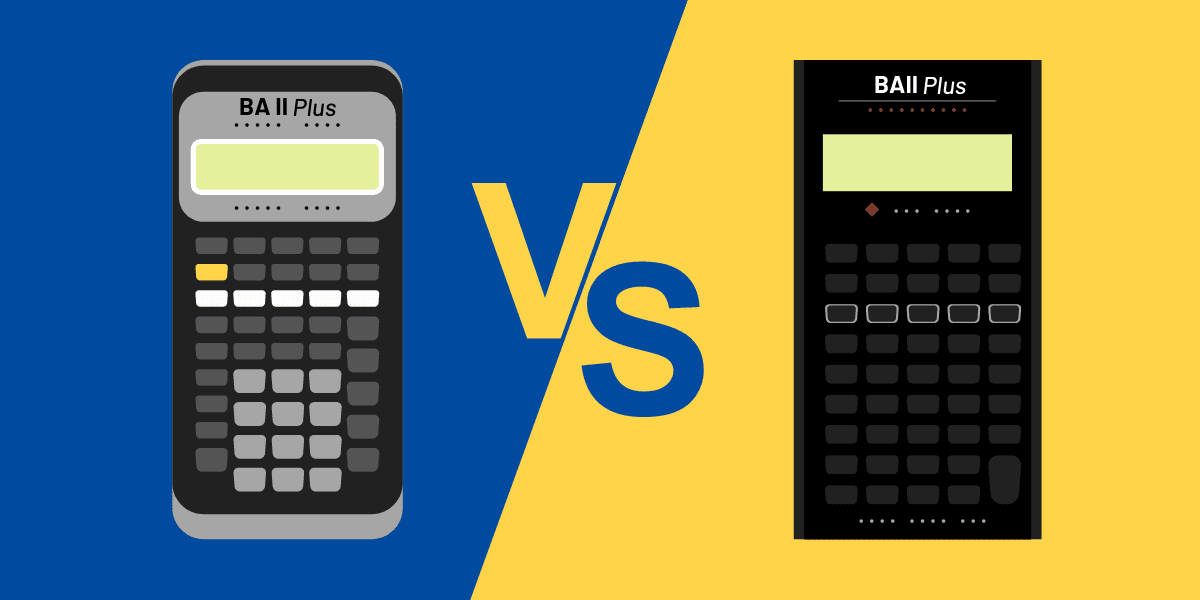
Popular models include the Texas Instruments BA II Plus (often favored for its algebraic operating system and wide use in certifications like the CFA exam) and the HP 12c (renowned for its RPN – Reverse Polish Notation – logic and durability). Familiarize yourself with your chosen model’s specific manual, as nuances in key entry and function access exist.
Integrating Your Financial Calculator into Your Financial Journey
A financial calculator is more than just a tool for academic exercises; it’s a practical asset that empowers informed decision-making across various financial domains.
Personal Financial Planning
For individuals, the calculator is invaluable for:
- Retirement Planning: Projecting future retirement nest eggs, determining required savings rates.
- Education Savings: Calculating how much needs to be saved to fund a child’s education.
- Debt Payoff Strategies: Analyzing the impact of extra payments on loan duration and total interest paid.
- Large Purchases: Assessing the true cost of financing a car or a home.
Investment Analysis
Investors can use the calculator to:
- Evaluate Potential Returns: Calculating the yield on an investment, comparing different investment opportunities.
- Valuation: Estimating the present value of future cash flows from stocks or bonds.
- Compounding Effects: Demonstrating the power of compound interest over long periods.
Business Decision Making
For entrepreneurs and business professionals, the calculator assists with:
- Capital Budgeting: Evaluating the profitability of new projects using NPV and IRR.
- Loan Structuring: Understanding the terms and costs of business loans.
- Leasing vs. Buying: Comparing the financial implications of different asset acquisition strategies.
- Forecasting: Projecting future financial outcomes based on various growth rates.

Conclusion
The financial calculator, far from being obsolete, remains a cornerstone tool for anyone seeking clarity and precision in financial matters. Its ability to quickly and accurately perform complex time value of money calculations makes it an essential companion for students, personal finance enthusiasts, investors, and business leaders alike. By understanding its core functions, mastering its practical applications, and adhering to best practices, you can unlock its full potential. Embrace this powerful device, and you’ll find yourself equipped with a profound ability to analyze, plan, and make more confident and insightful financial decisions throughout your personal and professional life. The journey to financial literacy and empowerment often begins with mastering the tools that illuminate the path forward, and the financial calculator is undoubtedly one of the brightest.
aViewFromTheCave is a participant in the Amazon Services LLC Associates Program, an affiliate advertising program designed to provide a means for sites to earn advertising fees by advertising and linking to Amazon.com. Amazon, the Amazon logo, AmazonSupply, and the AmazonSupply logo are trademarks of Amazon.com, Inc. or its affiliates. As an Amazon Associate we earn affiliate commissions from qualifying purchases.