
In the decade and a half since its inception, Bitcoin has transitioned from an obscure cryptographic experiment into a cornerstone of the modern financial landscape. Once the sole province of tech enthusiasts, it is now a recognized asset class utilized by institutional investors, sovereign nations, and millions of individuals worldwide. However, for the modern investor, “how to use Bitcoin” is not merely a technical question; it is a strategic financial inquiry. To use Bitcoin effectively is to understand its role as a hedge, a speculative asset, and a revolutionary tool for value transfer.
This guide explores the practical financial applications of Bitcoin, moving beyond the jargon to focus on wealth preservation, investment strategy, and the mechanics of digital finance.
The Financial Evolution: Understanding Bitcoin as Digital Gold
To use Bitcoin effectively within a financial framework, one must first understand its economic properties. Bitcoin is often described as “Digital Gold,” a moniker that stems from its programmed scarcity and decentralized nature. Unlike fiat currencies, which can be printed at the discretion of central banks, Bitcoin’s supply is hard-capped at 21 million units.
Store of Value vs. Medium of Exchange
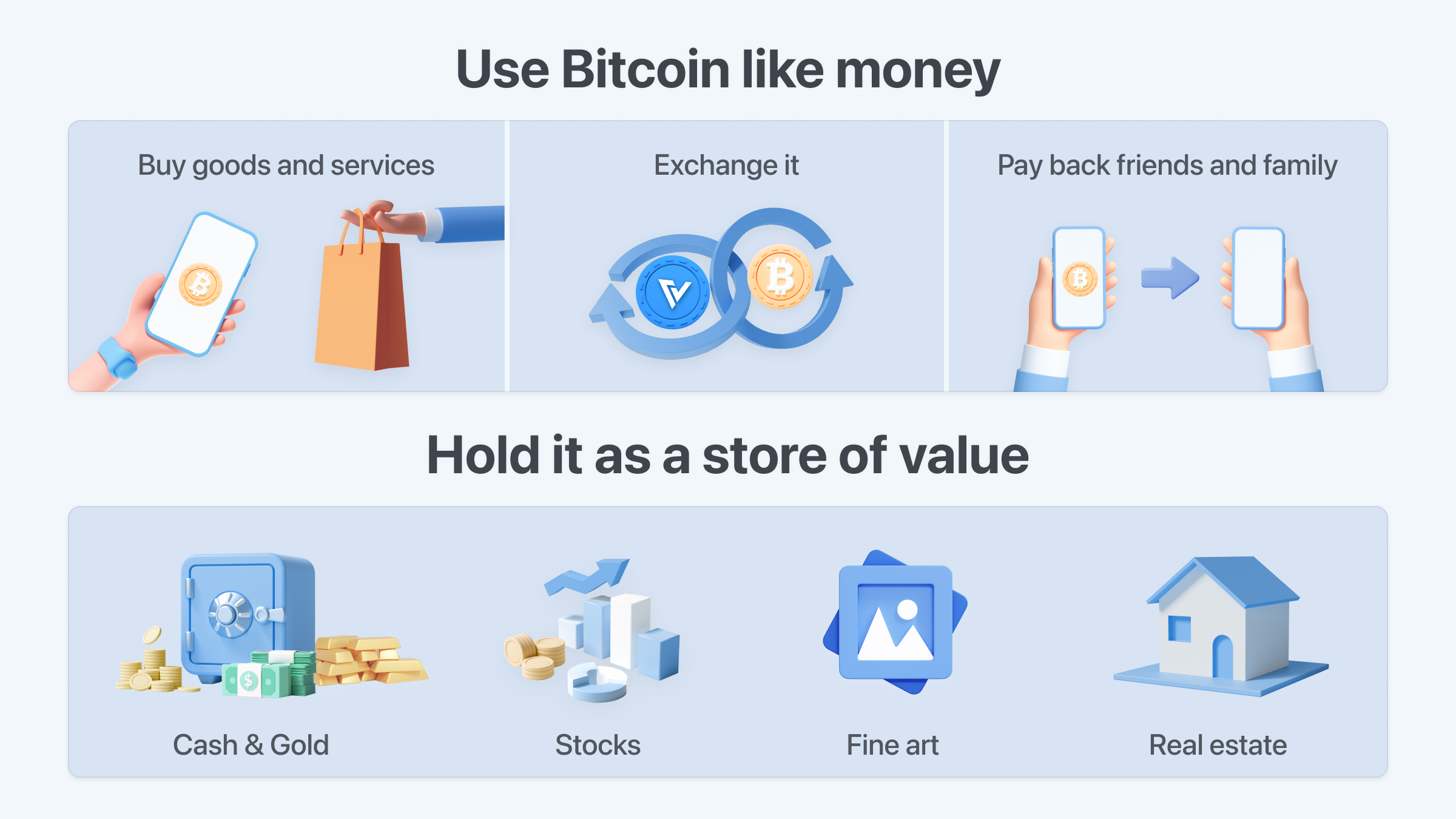
The primary debate regarding Bitcoin’s utility often centers on whether it is a currency or an asset. In its early years, the focus was on its use as a medium of exchange—a way to buy coffee or groceries. However, as the network has matured, its primary utility has shifted toward being a store of value. Because Bitcoin is divisible, portable, and impossible to counterfeit, it serves a similar economic purpose to gold but with the added benefits of digital portability. Using Bitcoin as a store of value requires a long-term perspective, viewing it as a vehicle to protect purchasing power against the backdrop of global inflationary pressures.
Bitcoin’s Role in a Diversified Investment Portfolio
From a portfolio management perspective, Bitcoin offers a unique value proposition: low correlation to traditional asset classes like stocks and bonds. While this correlation can tighten during periods of extreme market stress, Bitcoin often moves independently of the S&P 500 or the bond market over longer horizons. Financial advisors increasingly suggest a “non-zero” allocation—often ranging from 1% to 5% of a total portfolio. This small allocation allows investors to capture significant upside potential while limiting the impact of the asset’s inherent volatility on their overall net worth.
Getting Started: Establishing Your Digital Financial Infrastructure
Using Bitcoin as a financial tool requires a departure from traditional banking infrastructure. You become your own bank, which necessitates a basic understanding of digital custody and the platforms used for acquisition.
Choosing the Right Exchange for Your Financial Goals
The first step in using Bitcoin is acquiring it through a reputable exchange. For the finance-focused user, the choice of exchange should be dictated by security, liquidity, and regulatory compliance. Major platforms like Coinbase, Kraken, or Binance provide the necessary “on-ramps” to convert fiat currency (USD, EUR, GBP) into Bitcoin. When choosing an exchange, consider the fee structure—specifically the difference between “taker” and “maker” fees—and ensure the platform offers robust reporting tools for tax purposes. For high-net-worth individuals or corporate entities, many exchanges offer Over-the-Counter (OTC) desks to facilitate large trades without causing significant market slippage.
Custody Solutions: Balancing Security and Liquidity
Once Bitcoin is purchased, the most critical financial decision is where to store it. In the world of digital finance, “not your keys, not your coins” is the golden rule. While keeping Bitcoin on an exchange is convenient for frequent trading (high liquidity), it exposes the user to “exchange risk,” such as platform insolvency or hacking.
For long-term wealth preservation, “cold storage” via a hardware wallet is the industry standard. Hardware wallets are physical devices that keep your private keys offline, rendering them immune to online hacking attempts. For those managing significant sums, multi-signature (multi-sig) setups—which require more than one private key to authorize a transaction—provide an institutional grade of security, ensuring that no single point of failure can jeopardize the assets.

Practical Applications: Using Bitcoin for Wealth Building and Global Transactions
Beyond simply holding the asset, there are several ways to actively use Bitcoin to enhance your financial position and streamline global monetary movements.
Cross-Border Payments and Remittances
One of the most powerful financial uses of Bitcoin is its ability to bypass the legacy SWIFT banking system for international transfers. Traditional cross-border payments are often slow, expensive, and subject to intermediary bank fees. Bitcoin operates on a borderless network that functions 24/7/365. By using Bitcoin to send value across borders, users can settle transactions in minutes rather than days. For business owners, this can significantly improve cash flow and reduce the overhead costs associated with international trade. Furthermore, the emergence of the Lightning Network—a “Layer 2” protocol built on top of Bitcoin—allows for near-instant, micro-transactions with negligible fees, making it a viable tool for global remittances.
Leveraging Bitcoin for Long-Term Wealth Preservation
The most common financial strategy for Bitcoin users is “HODLing,” a term derived from a misspelling of “hold” that has become a core philosophy in the space. This is essentially a “Buy and Hold” strategy, akin to investing in a blue-chip stock or real estate. To mitigate the risks of market volatility, many investors use Dollar-Cost Averaging (DCA). By investing a fixed amount of fiat currency into Bitcoin at regular intervals (e.g., $100 every month), investors lower their average cost basis over time and remove the emotional stress of trying to “time the market.” This disciplined approach treats Bitcoin as a long-term capital asset rather than a short-term gamble.
Risk Management and the Regulatory Landscape
No sophisticated financial strategy is complete without a thorough analysis of risk. Using Bitcoin requires a high degree of personal responsibility and an awareness of the legal obligations that come with digital asset ownership.
Navigating Market Volatility
Bitcoin is famously volatile. It is not uncommon for the asset to experience 20% to 50% price corrections within a single year. From a money management perspective, this means you should never invest capital that you might need for immediate expenses. Professional users of Bitcoin manage this volatility by maintaining a diversified portfolio and using “stop-loss” orders if they are engaged in active trading. Understanding the “four-year cycle”—largely driven by the “halving” event (where the reward for mining new blocks is cut in half)—can help investors contextualize price movements and avoid panic-selling during temporary downturns.
Tax Implications and Compliance
As Bitcoin has entered the financial mainstream, tax authorities around the world have established clear guidelines for its treatment. In many jurisdictions, including the United States, Bitcoin is treated as property for tax purposes. This means that every time you sell Bitcoin, or even use it to purchase a good or service, you trigger a capital gains event.
To use Bitcoin responsibly, you must maintain meticulous records of your “cost basis” (the price at which you acquired the Bitcoin) and the “fair market value” at the time of any disposal. Fortunately, several software tools now integrate directly with exchanges and wallets to automate this process. Ignoring tax obligations can lead to significant penalties, so treating your Bitcoin holdings with the same level of accounting rigor as a brokerage account is essential for long-term financial health.
The Future of Bitcoin in Personal and Corporate Finance
As we look toward the future, the integration of Bitcoin into traditional financial systems continues to accelerate. The approval of Bitcoin Spot ETFs (Exchange-Traded Funds) in various global markets has made it possible to gain exposure to Bitcoin’s price movements through traditional retirement accounts like 401(k)s or IRAs. This allows for a more seamless integration of digital assets into conventional financial planning.
Furthermore, forward-thinking corporations are beginning to adopt Bitcoin as a treasury reserve asset. By converting a portion of their cash reserves into Bitcoin, companies aim to protect their balance sheets from the debasement of fiat currency. This institutional validation further solidifies Bitcoin’s position as a permanent fixture of the global financial system.
In conclusion, knowing “how to use Bitcoin” in a financial context is about more than clicking buttons on an app. It is about understanding the principles of sound money, employing robust security practices, and strategically integrating a high-growth asset into a broader wealth-management plan. Whether used as a hedge against inflation, a tool for rapid international transfer, or a long-term investment, Bitcoin represents a fundamental shift in how we define and control value in the 21st century. By approaching it with a professional, disciplined mindset, investors can navigate the complexities of the digital asset space and leverage Bitcoin to achieve their long-term financial objectives.
aViewFromTheCave is a participant in the Amazon Services LLC Associates Program, an affiliate advertising program designed to provide a means for sites to earn advertising fees by advertising and linking to Amazon.com. Amazon, the Amazon logo, AmazonSupply, and the AmazonSupply logo are trademarks of Amazon.com, Inc. or its affiliates. As an Amazon Associate we earn affiliate commissions from qualifying purchases.