
The stock exchange, often perceived as a complex, intimidating arena, is in reality a cornerstone of the global economy, offering individuals and institutions alike a pathway to wealth creation and capital growth. Far from being a mere playground for the rich, it’s a dynamic marketplace where the ownership of companies is bought and sold, fueling innovation, job creation, and economic prosperity. For many, however, the jargon, the rapid fluctuations, and the sheer volume of information can be overwhelming. This guide aims to demystify the stock exchange, providing a clear, insightful, and engaging understanding of its fundamental mechanisms, key concepts, and practical applications for anyone looking to navigate the world of investing.
The Foundations of the Stock Exchange
To truly understand the stock exchange, one must first grasp its basic architecture and the roles of its various participants. It’s not a single entity but a sophisticated network of markets, brokers, and regulations designed to facilitate the buying and selling of securities.
What is the Stock Market?
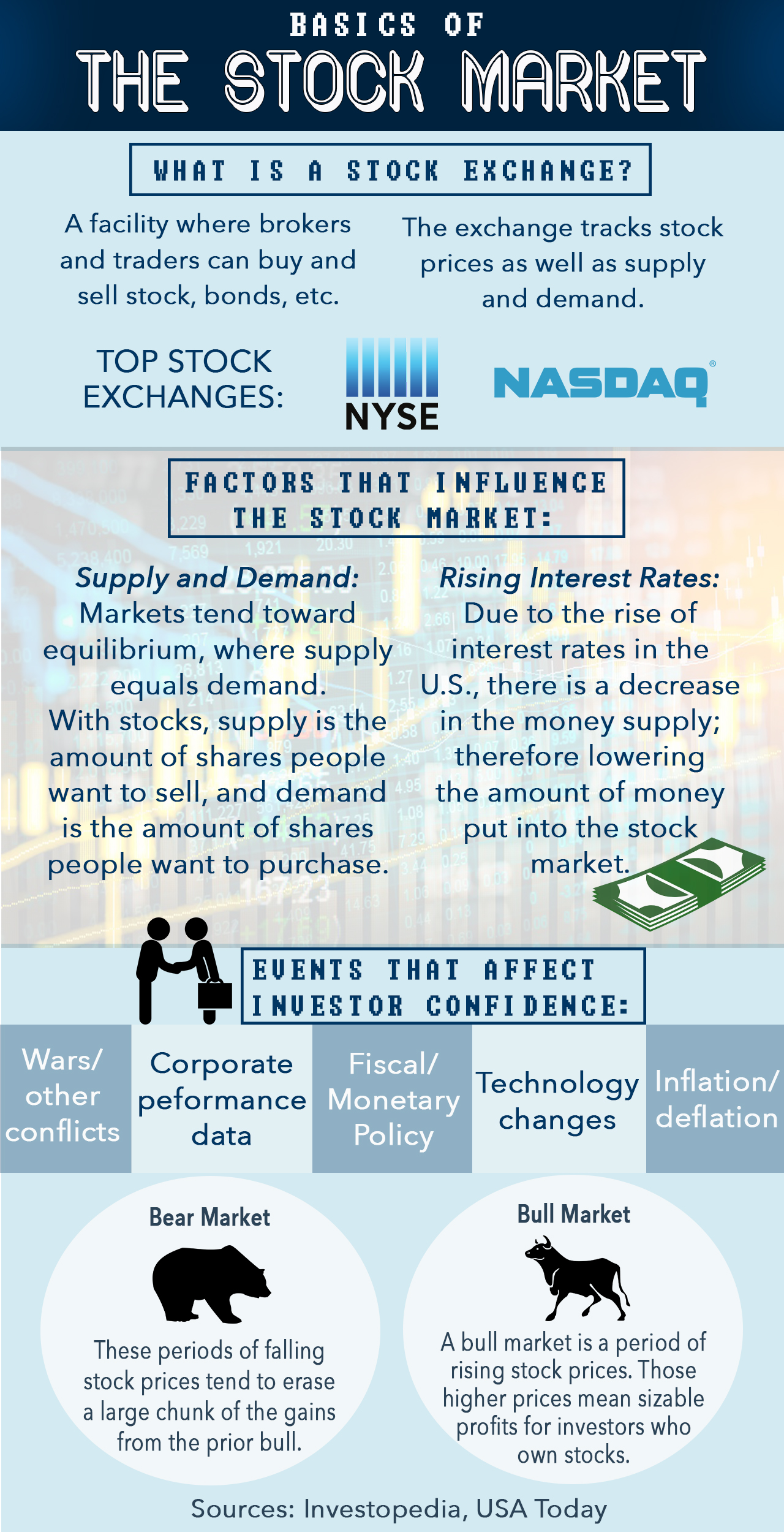
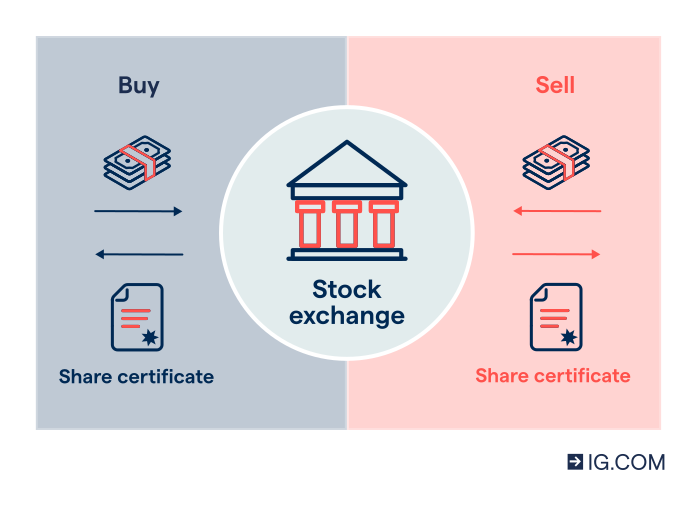
At its core, the stock market is a public market for the trading of company stock and derivatives. It’s a place where individuals and institutional investors can buy and sell shares of publicly listed companies. When you buy a stock, you’re buying a small piece of ownership in that company. The stock market serves two primary functions:
Firstly, it allows companies to raise capital by issuing shares to the public (the primary market, often through Initial Public Offerings or IPOs). This capital is vital for expansion, research, and development.
Secondly, it provides a platform for investors to trade existing shares among themselves (the secondary market). This liquidity is crucial, as it allows investors to sell their shares when needed, making stocks an attractive investment. Without this secondary market, fewer people would be willing to invest in the primary market. Exchanges like the New York Stock Exchange (NYSE) and NASDAQ are prime examples of these secondary markets, facilitating billions of dollars in trades daily.
Key Players in the Stock Exchange
The stock exchange is a bustling ecosystem populated by various participants, each playing a crucial role in its operation:
- Investors: These are individuals or institutions (like pension funds, mutual funds, or hedge funds) who buy and sell stocks with the aim of generating returns. They can be long-term investors focused on growth and dividends, or short-term traders looking to profit from price fluctuations.
- Companies: These are the entities that issue shares to raise capital. Once listed, their performance and prospects significantly influence the value of their stocks.
- Brokers: Licensed professionals or firms that act as intermediaries between investors and the stock exchange. They execute buy and sell orders on behalf of their clients, providing access to the market. Today, many online brokerage platforms have democratized access, allowing individuals to trade directly.
- Market Makers: Firms or individuals who stand ready to buy and sell particular stocks, ensuring liquidity and smooth trading by always quoting both a bid (buy) and an ask (sell) price.
- Regulators: Government bodies (like the Securities and Exchange Commission, SEC, in the U.S.) that oversee the stock market to protect investors, maintain fair, orderly, and efficient markets, and facilitate capital formation. Their rules govern everything from company disclosures to trading practices.
Understanding Stocks and Shares
The terms “stocks” and “shares” are often used interchangeably, but both refer to units of ownership in a company. When you buy shares, you become a shareholder, meaning you own a fraction of the company’s assets and earnings. There are primarily two types of stock:
- Common Stock: Represents ownership in a company and a claim (proportionate to the number of shares) on a portion of its profits and assets. Common stockholders have voting rights in corporate decisions, such as electing the board of directors.
- Preferred Stock: Typically does not come with voting rights, but preferred shareholders usually receive fixed dividend payments before common stockholders and have a higher claim on assets in the event of liquidation. Understanding these distinctions is crucial as they impact your rights and potential returns as an investor.
Decoding Stock Market Dynamics
The stock market is a complex adaptive system, constantly reacting to a multitude of factors. Understanding its dynamics is key to making informed investment decisions.
Supply and Demand in Action
The most fundamental principle driving stock prices is the law of supply and demand. If there is high demand for a particular stock and limited supply, its price will generally rise. Conversely, if there is high supply and low demand, the price will fall. This relationship is influenced by:
- Company Performance: Strong earnings reports, positive growth forecasts, and innovative product launches tend to increase demand for a company’s stock.
- Economic Indicators: Broader economic health, interest rates, inflation, and unemployment figures can influence overall market sentiment and investor confidence.
- Geopolitical Events: Wars, trade disputes, and political instability can create uncertainty, leading to shifts in supply and demand across various sectors or the entire market.
- News and Sentiment: Analyst ratings, media coverage, and even social media trends can quickly sway public perception and investor behavior, sometimes leading to irrational exuberance or panic selling. Understanding this interplay is vital, as it explains why stock prices are rarely static.
Market Indices and Their Significance
Market indices are hypothetical portfolios of stocks representing a particular market or a segment of it. They serve as benchmarks to gauge the overall health and performance of the market.
- Dow Jones Industrial Average (DJIA): Tracks 30 large, publicly-owned companies based in the United States, representing various industries. It’s often cited as an indicator of the overall health of the U.S. stock market.
- S&P 500: A broader index comprising 500 of the largest U.S. publicly traded companies, chosen for their size, liquidity, and sector representation. It’s widely considered the best gauge of large-cap U.S. equities.
- NASDAQ Composite: Primarily composed of technology and growth-oriented companies. It’s highly watched for insights into the tech sector’s performance.
Understanding these indices helps investors comprehend broader market trends and contextualize the performance of individual stocks or their own portfolios against a relevant benchmark.
Volatility and Risk
Volatility refers to the rate at which the price of a security increases or decreases. A highly volatile stock experiences significant price swings, while a low-volatility stock’s price remains relatively stable. Volatility is often linked to risk – generally, higher volatility implies higher risk, but also potentially higher returns.
- Systematic Risk (Market Risk): This is the risk inherent to the entire market or market segment. It cannot be diversified away and is caused by factors like interest rate changes, recessions, or geopolitical events.
- Unsystematic Risk (Specific Risk): This risk is specific to a particular company or industry. It can be mitigated through diversification, for example, by investing in a variety of companies across different sectors.
Understanding both types of risk is crucial for managing your investment portfolio effectively and aligning it with your personal risk tolerance.
Essential Concepts for Aspiring Investors
While the stock market can seem daunting, a few core analytical frameworks and strategic approaches can empower even novice investors.
Fundamental Analysis

Fundamental analysis is a method of evaluating a security in an attempt to measure its intrinsic value, by examining related economic, financial, and other qualitative and quantitative factors. Its goal is to determine if a company’s stock is undervalued or overvalued by the market. Key elements include:
- Financial Statements: Analyzing a company’s balance sheet (assets, liabilities, equity), income statement (revenue, expenses, profit), and cash flow statement provides a comprehensive view of its financial health.
- Key Ratios: Metrics like the Price-to-Earnings (P/E) ratio, Earnings Per Share (EPS), Return on Equity (ROE), and Debt-to-Equity ratio help in comparing companies and assessing their profitability, efficiency, and leverage.
- Dividends: For income-focused investors, understanding a company’s dividend history, payout ratio, and yield is critical.
- Management Quality and Industry Outlook: Qualitative factors such as the strength of a company’s leadership, its competitive advantages, and the growth prospects of its industry are equally important. Fundamental analysis helps investors make long-term decisions based on a company’s true worth rather than short-term market sentiment.
Technical Analysis
In contrast to fundamental analysis, technical analysis involves evaluating investments by analyzing statistics generated by market activity, such as past prices and volume. Technical analysts do not attempt to measure a security’s intrinsic value but instead use charts and other tools to identify patterns and predict future price movements.
- Chart Patterns: Identifying formations like “head and shoulders,” “double tops,” or “triangles” can suggest potential reversals or continuations in price trends.
- Indicators: Tools like Moving Averages, Relative Strength Index (RSI), and MACD (Moving Average Convergence Divergence) provide mathematical interpretations of price and volume data, helping to identify overbought/oversold conditions or momentum shifts.
While often used by short-term traders, even long-term investors can benefit from a basic understanding of technical analysis to identify optimal entry and exit points.
Diversification and Asset Allocation
Diversification is the strategy of spreading your investments across various assets, industries, and geographies to reduce risk. The principle is that a broad mix of investments will yield higher returns and pose a lower risk than any single investment.
- Asset Allocation: This involves dividing an investment portfolio among different asset categories, such as stocks, bonds, and cash equivalents. The optimal allocation depends on an investor’s time horizon, risk tolerance, and financial goals. For example, younger investors with a long time horizon might allocate a higher percentage to stocks, while those nearing retirement might prefer a more conservative mix with more bonds.
- Industry Diversification: Investing in companies across different sectors (e.g., technology, healthcare, energy, consumer staples) helps mitigate risk if one industry faces a downturn.
- Geographic Diversification: Investing in international markets can provide exposure to different economic cycles and growth opportunities, further reducing overall portfolio risk. Diversification is one of the most powerful and widely accepted tenets of sound investing.
Practical Steps to Engage with the Stock Market
Understanding the theoretical aspects is only half the battle. To become an active participant, one must take concrete steps.
Setting Investment Goals
Before making any investment, it’s crucial to define what you’re investing for.
- Short-term vs. Long-term: Are you saving for a down payment on a house in five years (short-term) or retirement in 30 years (long-term)? Your time horizon significantly influences your investment strategy and risk tolerance.
- Risk Tolerance: How much risk are you comfortable taking? Are you comfortable with potential significant losses for the chance of higher gains, or do you prefer more stable, albeit potentially lower, returns? Understanding your psychological comfort with risk is paramount.
- Financial Objectives: Clearly articulating your financial objectives – whether it’s accumulating wealth, generating passive income through dividends, or saving for a specific life event – will guide your investment choices.
Choosing a Brokerage Account
To buy and sell stocks, you’ll need a brokerage account. There are several types to consider:
- Full-Service Brokers: Offer comprehensive services, including investment advice, financial planning, and active management, usually at a higher fee.
- Discount Brokers: Provide a platform for self-directed trading, with lower commissions but minimal advice. Many online platforms fall into this category, making investing accessible to everyone.
- Robo-Advisors: Automated, algorithm-driven financial planners that manage your portfolio based on your goals and risk tolerance, often with very low fees.
When choosing, consider factors like fees (commissions, maintenance fees), available investment products, research tools, customer service, and ease of use.
Starting Your Investment Journey
Once your goals are set and your account is open, you can begin investing.
- Exchange-Traded Funds (ETFs): These are baskets of securities that often track a particular index, sector, or commodity. They offer diversification at a low cost and are traded like individual stocks. They are an excellent starting point for new investors.
- Mutual Funds: Professionally managed portfolios of stocks, bonds, or other securities. They offer diversification and professional management but typically have higher fees than ETFs.
- Individual Stocks: While potentially offering higher returns, investing in individual stocks requires more research and carries higher specific risk. It’s often advisable for beginners to start with diversified funds before venturing into individual stock picking. Start small, understand what you’re investing in, and avoid putting all your eggs in one basket.
Navigating Challenges and Embracing a Long-Term View
The stock market is a journey, not a sprint. Success often comes from maintaining discipline, continuous learning, and a long-term perspective.
The Psychology of Investing
Human emotions play a significant, and often detrimental, role in investment decisions.
- Fear and Greed: These two powerful emotions can lead investors to make irrational decisions – buying high out of greed (fear of missing out) and selling low out of fear (panic selling during market downturns).
- Herd Mentality: Following the crowd, rather than conducting independent research, can lead to poor investment outcomes.
- Confirmation Bias: Seeking out information that confirms existing beliefs while ignoring contradictory evidence.
Overcoming these psychological biases through discipline, a well-defined strategy, and a long-term outlook is crucial for investment success.
The Importance of Continuous Learning
The financial markets are constantly evolving. New technologies, economic shifts, and regulatory changes mean that what worked yesterday might not work tomorrow.
- Stay Informed: Regularly read financial news, reputable investment blogs, and company reports.
- Understand Macro and Micro Trends: Be aware of broader economic forces as well as specific industry developments.
- Review and Adapt: Periodically review your portfolio and investment strategy to ensure it still aligns with your goals and the current market environment. Continuous learning helps investors adapt to changing conditions and refine their approach.
Long-Term vs. Short-Term Trading
While short-term trading (day trading, swing trading) can be alluring due to the promise of quick profits, it is highly speculative and exceptionally challenging. The vast majority of retail traders lose money in the short term.
- Long-Term Investing: For most individuals, adopting a long-term investing strategy (holding investments for several years or decades) is far more effective. It allows for the power of compound interest, rides out short-term market fluctuations, and aligns with the fundamental growth of healthy companies and economies. Historically, the stock market has trended upwards over the long term, rewarding patient investors.
Embracing a long-term mindset helps mitigate the impact of market volatility and emotional decision-making, setting the stage for sustainable wealth creation.
In conclusion, understanding the stock exchange is an empowering journey that opens doors to financial growth and independence. While its complexities can seem daunting, by grasping its fundamental principles, key players, analytical tools, and practical steps, anyone can begin to navigate this vital financial landscape. Remember to set clear goals, manage risk through diversification, and adopt a disciplined, long-term approach, and you’ll be well on your way to becoming a confident and successful investor.
aViewFromTheCave is a participant in the Amazon Services LLC Associates Program, an affiliate advertising program designed to provide a means for sites to earn advertising fees by advertising and linking to Amazon.com. Amazon, the Amazon logo, AmazonSupply, and the AmazonSupply logo are trademarks of Amazon.com, Inc. or its affiliates. As an Amazon Associate we earn affiliate commissions from qualifying purchases.