
The stock market, often perceived as a complex and intimidating arena, is fundamentally a marketplace where shares of publicly listed companies are bought and sold. For those equipped with the right knowledge, discipline, and strategy, it offers a powerful avenue for wealth creation and financial growth. However, trading in the stock market is distinct from long-term investing; it involves a more active approach, aiming to profit from short to medium-term price fluctuations. This guide will demystify the process, providing a professional and insightful framework for individuals looking to embark on their trading journey.
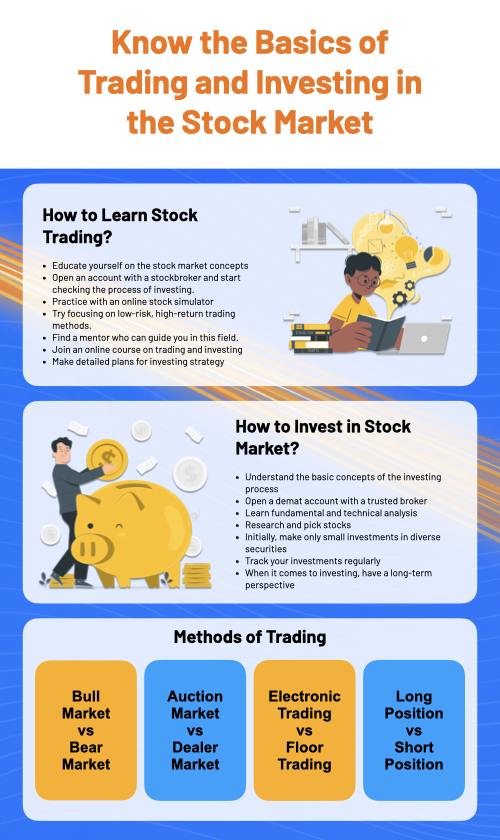
Understanding the Fundamentals of Stock Trading
Before placing your first trade, it’s crucial to grasp the foundational concepts that underpin the stock market. A solid understanding of these basics will serve as your compass in navigating this dynamic financial landscape.
What is Stock Trading?
At its core, stock trading involves the buying and selling of company shares with the primary goal of generating profits from price movements. Unlike long-term investing, which often focuses on holding assets for years to benefit from compounding returns and dividends, trading is about capitalizing on shorter-term market volatility. Traders aim to buy stocks at a lower price and sell them at a higher price, or vice-versa in the case of short-selling, within days, weeks, or even hours. This active engagement requires constant monitoring, quick decision-making, and a robust understanding of market dynamics.
Key Terminology
The stock market has its own lexicon, and familiarizing yourself with key terms is essential for effective communication and comprehension.
- Stocks/Shares: Units of ownership in a company.
- Stock Exchange: A marketplace where stocks are bought and sold (e.g., NYSE, NASDAQ).
- Brokerage Account: An investment account used to hold securities like stocks, bonds, and mutual funds, facilitated by a licensed broker.
- Bid Price: The highest price a buyer is willing to pay for a stock.
- Ask Price (Offer Price): The lowest price a seller is willing to accept for a stock.
- Spread: The difference between the bid and ask price.
- Volume: The number of shares traded over a specific period.
- Market Order: An order to buy or sell a stock immediately at the best available current price.
- Limit Order: An order to buy or sell a stock at a specified price or better.
- Stop-Loss Order: An order placed to sell an asset once it reaches a certain price, designed to limit an investor’s loss on a security.
- Dividends: A portion of a company’s earnings paid out to shareholders.
Different Types of Trading
Trading encompasses various styles, each with its own time horizon and risk profile:
- Day Trading: Involves buying and selling stocks within the same trading day, closing all positions before the market closes. Day traders aim to profit from small intraday price movements. This style is highly intensive and carries significant risk.
- Swing Trading: Involves holding stocks for a few days or weeks to profit from “swings” in price. Swing traders typically use technical analysis to identify potential price movements.
- Position Trading: A longer-term approach compared to day or swing trading, where positions are held for weeks or months. Position traders focus on longer-term trends and fundamental analysis.
- Scalping: An even shorter-term strategy than day trading, where traders aim to profit from tiny price changes, often holding positions for mere seconds or minutes. This requires extreme focus and rapid execution.
For beginners, understanding these distinctions is vital to choose a style that aligns with their personality, time commitment, and risk tolerance.
Laying the Groundwork: Preparation and Education
Successful stock trading isn’t a gamble; it’s a skill cultivated through diligent preparation, continuous learning, and strategic planning. Before you commit any capital, dedicate ample time to building a robust foundation.
The Importance of Financial Education
The stock market is an ecosystem of information. Traders must constantly learn about market structures, economic indicators, company fundamentals, and technical analysis tools. Understanding concepts like inflation, interest rates, GDP, and geopolitical events can provide crucial context for market movements. Likewise, becoming proficient in reading financial statements (balance sheets, income statements, cash flow statements) is vital for fundamental analysis, while mastering chart patterns and indicators is essential for technical analysis. Never stop learning, as market conditions and strategies evolve constantly.
Setting Clear Financial Goals and Risk Tolerance
Before entering the market, define what you hope to achieve and how much risk you are willing to undertake.
- Financial Goals: Are you trading for supplementary income, long-term capital growth, or to achieve a specific financial milestone? Clearly defined goals will help shape your strategy.
- Risk Tolerance: How much capital are you comfortable losing without significantly impacting your financial well-being? This is a critical self-assessment. Trading involves inherent risks, and not every trade will be profitable. Understanding your personal risk tolerance will dictate your position sizing and the types of assets you choose to trade. Never trade with money you cannot afford to lose.
Choosing a Reliable Brokerage Account
Your brokerage account is your gateway to the stock market. Selecting the right broker is a pivotal decision. Consider the following factors:
- Commissions and Fees: Compare trading commissions, account maintenance fees, and other charges. Lower fees can significantly impact your net returns, especially for frequent traders.
- Trading Platform and Tools: Evaluate the user-friendliness of the trading platform, its charting capabilities, research tools, and mobile accessibility. Many brokers offer advanced tools for technical analysis, screeners, and news feeds.
- Customer Service: Responsive and knowledgeable customer support can be invaluable, especially when encountering technical issues or needing assistance with trades.
- Regulatory Compliance and Security: Ensure the broker is regulated by relevant authorities (e.g., SEC and FINRA in the US) and offers robust security measures for your funds and personal information.
- Account Types: Consider if they offer individual, joint, or retirement accounts, and if margin accounts are available for advanced strategies (though not recommended for beginners).
Starting Small: Paper Trading and Demo Accounts
One of the most valuable steps for a beginner is to practice without real money. Many brokerage firms offer “paper trading” or “demo accounts” that simulate real market conditions using virtual capital. This allows you to:
- Test different trading strategies.
- Become familiar with the brokerage platform and its tools.
- Understand market dynamics and order execution.
- Develop discipline and emotional control without the pressure of actual financial loss.
Treat paper trading as seriously as you would real trading to maximize its learning potential. It’s a risk-free environment to make mistakes and learn from them.
Developing a Robust Trading Strategy
A successful trading strategy isn’t a one-size-fits-all solution; it’s a personalized blueprint derived from market analysis, risk management principles, and individual psychology. Developing and adhering to such a strategy is paramount for consistent performance.
Technical Analysis vs. Fundamental Analysis
Traders primarily rely on two main approaches to analyze stocks:
- Technical Analysis: Focuses on studying past market data, primarily price and volume, to predict future price movements. Technical analysts use charts, indicators (like Moving Averages, RSI, MACD), and chart patterns (e.g., head and shoulders, double top/bottom) to identify trends, support, and resistance levels. It operates on the premise that all relevant information is reflected in a stock’s price action.
- Fundamental Analysis: Involves evaluating a company’s intrinsic value by examining its financial statements, management quality, industry outlook, and overall economic conditions. Fundamental analysts look for undervalued or overvalued stocks based on their underlying business health. While more common for long-term investing, traders might use fundamental analysis to identify strong companies for swing trades or to understand the broader market context.
Many traders use a hybrid approach, combining elements of both to gain a comprehensive understanding of potential opportunities.

Crafting an Entry and Exit Strategy
Every trade needs a plan for when to get in and when to get out.
- Entry Strategy: Based on your analysis (technical or fundamental), you’ll identify specific criteria that signal an opportune moment to buy a stock. This could be a breakout from a resistance level, a bounce off a support level, or a positive news catalyst.
- Exit Strategy: Equally, if not more important, is knowing when to sell. This typically involves:
- Take-Profit Orders: Setting a target price at which you will sell to lock in profits. This should be determined before entering the trade.
- Stop-Loss Orders: This is your risk management tool. A stop-loss order automatically sells your stock if it falls to a predetermined price, limiting your potential losses on a trade. Always define your stop-loss before you enter a trade, never after.
A well-defined entry and exit strategy removes emotion from trading decisions and ensures you stick to your risk management rules.
Understanding Market Orders and Limit Orders
The type of order you place significantly impacts your trade execution:
- Market Orders: Execute immediately at the best available current price. While offering speed, you might get a price slightly different from what you saw, especially in volatile markets or for illiquid stocks. Generally, use with caution.
- Limit Orders: Allow you to specify the maximum price you’re willing to pay when buying or the minimum price you’re willing to accept when selling. Your order will only execute if the market reaches your specified price or better. Limit orders provide price control but may not execute immediately, or at all, if the market doesn’t reach your limit. For most traders, especially in less liquid stocks, limit orders are preferred for better price control.
The Role of Diversification (in Trading Context)
While “diversification” is often associated with long-term investing across many assets, in trading, its application is nuanced. Active traders typically focus on a smaller number of assets to maximize attention and potential gains. However, diversification for a trader can mean:
- Diversifying across strategies: Not relying on just one trading method.
- Diversifying across asset classes (if applicable): Trading stocks, but also perhaps commodities or forex to spread risk if one market is stagnant.
- Not over-allocating capital to one single trade: This is critical. While you might focus on a few stocks, your capital allocated to each trade should be a small percentage of your total trading capital. This is a form of risk management that prevents a single bad trade from decimating your portfolio.
Mastering Risk Management and Trading Psychology
The most sophisticated strategies are useless without stringent risk management and emotional discipline. These two pillars are often cited as the primary differentiators between successful traders and those who struggle.
Capital Preservation: The Golden Rule
Your primary objective in trading is not just to make money, but to preserve your capital. Without capital, you cannot trade. This principle manifests in several ways:
- Position Sizing: Never risk more than a small percentage (e.g., 1-2%) of your total trading capital on any single trade. If you have $10,000 to trade, risking more than $100-$200 per trade on a stop-loss is imprudent. This rule is non-negotiable.
- Stop-Loss Orders: As mentioned, these are essential. They enforce your maximum acceptable loss per trade and prevent emotional hesitation from turning a small loss into a catastrophic one.
- Risk-Reward Ratio: Before entering a trade, evaluate the potential profit versus the potential loss. Aim for trades where the potential reward is significantly higher than the risk (e.g., 2:1 or 3:1). If you risk $1 to make $2, you can be right less than 50% of the time and still be profitable.
Setting Realistic Expectations
The media often portrays trading as a path to instant riches, fostering unrealistic expectations. The reality is that profitable trading requires patience, hard work, and often, experiencing losses.
- Losses are Inevitable: Even the best traders experience losing trades. What distinguishes them is how they manage these losses and learn from them.
- Avoid Over-Leveraging: While margin trading can amplify gains, it also amplifies losses. For beginners, it’s best to trade with cash accounts until significant experience is gained.
- Focus on Consistency: Instead of aiming for home runs, strive for consistent, smaller gains. Compounding these consistent gains over time leads to significant growth.
The Pitfalls of Overtrading and FOMO
Emotional biases are the downfall of many traders:
- Overtrading: The urge to constantly be in a trade, often leading to impulsive decisions, higher commissions, and trades based on weak setups. Stick to your strategy and only trade when high-probability opportunities arise.
- FOMO (Fear of Missing Out): Seeing a stock rapidly rise and feeling compelled to jump in, often at the top, just before a reversal. Missed opportunities are a part of trading; chasing them is a recipe for disaster. Adhere to your entry criteria.
- Revenge Trading: After a loss, the desire to immediately make back lost money, leading to irrational and high-risk trades. Step away, re-evaluate, and trade only when calm and rational.
Developing a Trading Journal
A trading journal is an indispensable tool for self-improvement. For every trade, record:
- The stock and ticker symbol.
- Entry and exit prices.
- Position size.
- Reason for entry and exit.
- Your emotional state.
- The outcome (profit/loss).
- Lessons learned.
Regularly reviewing your journal helps identify patterns in your successes and failures, refine your strategy, and improve your psychological discipline. It provides objective data to counteract emotional biases.
Advanced Considerations and Continuous Improvement
Trading is a dynamic field that demands continuous learning and adaptation. As you gain experience, you’ll encounter more advanced concepts and tools designed to enhance your trading edge.
Leveraging Technology and Tools
Modern trading is heavily supported by technology:
- Advanced Trading Platforms: Offer sophisticated charting, real-time data feeds, customizable interfaces, and various order types. Learn to fully utilize your broker’s platform features.
- Charting Software: Beyond basic brokerage charts, dedicated charting software can provide more powerful analytical capabilities, custom indicators, and backtesting features.
- Stock Screeners: Tools that help you filter thousands of stocks based on specific criteria (e.g., market cap, industry, technical indicators, fundamental ratios) to identify potential trading candidates quickly.
- News Aggregators and Economic Calendars: Staying informed about company-specific news and macroeconomic events is crucial. Use reliable sources to track these developments.
Familiarize yourself with these tools to streamline your analysis and execution, but remember that technology is merely an aid; your decision-making is still paramount.
Staying Informed
The market is constantly reacting to new information. To stay ahead:
- Follow Reputable Financial News: Sources like The Wall Street Journal, Bloomberg, Reuters, and CNBC provide real-time updates and expert analysis.
- Economic Calendar: Keep an eye on the economic calendar for key data releases (e.g., inflation reports, jobs numbers, interest rate announcements) that can trigger significant market movements.
- Company Earnings Reports: Understand how to interpret earnings reports and conference calls for the companies you are trading, as these can be major catalysts.
- Global Events: Geopolitical events, central bank policies, and global economic shifts can have ripple effects across all markets.
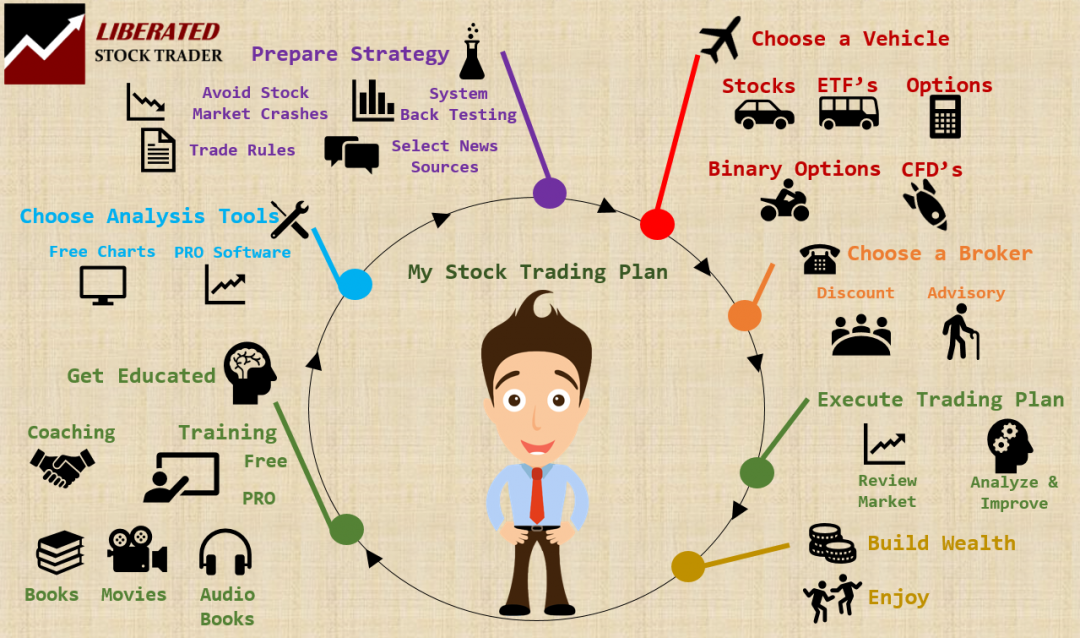
The Journey of Lifelong Learning
The stock market is an ever-evolving entity. Strategies that worked yesterday might not work tomorrow. Successful traders commit to lifelong learning:
- Adapt Your Strategies: Market conditions change, and your strategies must adapt accordingly. What works in a bull market might not work in a bear market or a sideways market.
- Study Market History: Understanding historical bubbles, crashes, and recoveries provides valuable context for current events.
- Seek Mentorship/Community: Engaging with experienced traders or joining a reputable trading community can offer new perspectives, strategies, and a support network. However, be wary of get-rich-quick schemes.
- Review and Refine: Continually review your trades, strategies, and psychological state. What can be improved? What lessons can be applied forward?
Trading in the stock market is a challenging but potentially rewarding endeavor. It demands not just intellectual rigor but also immense emotional discipline and a commitment to continuous self-improvement. By understanding the fundamentals, meticulously preparing, developing a robust strategy, and mastering risk management, you can approach the market with confidence and a higher probability of success. Remember, consistency, not intensity, is the key to long-term profitability in the world of stock trading.
aViewFromTheCave is a participant in the Amazon Services LLC Associates Program, an affiliate advertising program designed to provide a means for sites to earn advertising fees by advertising and linking to Amazon.com. Amazon, the Amazon logo, AmazonSupply, and the AmazonSupply logo are trademarks of Amazon.com, Inc. or its affiliates. As an Amazon Associate we earn affiliate commissions from qualifying purchases.