
The allure of the share market is undeniable. It represents a dynamic arena where individuals can potentially grow their wealth significantly, participate in the success of leading companies, and gain a deeper understanding of economic forces. However, it’s also a landscape fraught with risks for the unprepared. Navigating the complexities of stock trading requires a blend of knowledge, strategy, discipline, and a robust understanding of financial principles. This comprehensive guide aims to demystify the share market for aspiring traders and provide actionable insights for those looking to refine their approach, ensuring that your journey towards financial growth is both informed and sustainable.
Laying the Foundation: Understanding the Share Market Ecosystem
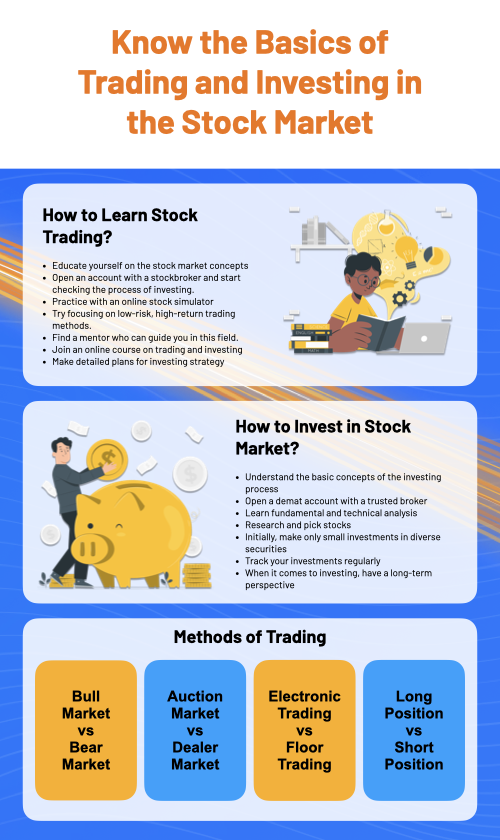
Before placing your first trade, it’s crucial to grasp the fundamental concepts that underpin the share market. This foundational knowledge will serve as your compass, guiding you through an otherwise intricate financial environment.
What Exactly is the Share Market?
At its core, the share market (also known as the stock market or equity market) is a public marketplace for the buying and selling of company shares. When you buy a share, you are essentially purchasing a small ownership stake in a company. Companies issue shares to raise capital for their operations, expansion, or debt repayment. The market consists of two primary segments:
-
Primary Market: Where new securities are issued for the first time (e.g., through an Initial Public Offering – IPO).
-
Secondary Market: Where previously issued securities are traded between investors. This is where most individual trading activity takes place.
The price of shares fluctuates based on supply and demand, company performance, economic indicators, industry trends, and investor sentiment. Understanding these forces is key to making informed trading decisions.
Why Consider Trading Shares?
The motivations for engaging in share market trading are diverse, but they generally revolve around the potential for financial gain.
-
Capital Appreciation: The primary objective for many is to buy shares at a lower price and sell them at a higher price, generating a profit.
-
Dividend Income: Some companies distribute a portion of their profits to shareholders in the form of dividends, providing a regular income stream.
-
Inflation Hedge: Investing in the stock market can sometimes outperform inflation, helping to preserve and grow your purchasing power over time.
-
Participation in Economic Growth: Investing in businesses allows you to indirectly participate in and benefit from the broader economic growth of nations and industries.
However, it’s vital to remember that with potential rewards come inherent risks. There’s no guarantee of profits, and capital loss is a real possibility.
Key Terminology for New Traders
Familiarizing yourself with common share market jargon is essential for effective communication and understanding.
-
Bulls and Bears: Bulls are optimistic investors who believe stock prices will rise; bears are pessimistic and anticipate price declines. A “bull market” signifies rising prices, while a “bear market” indicates falling prices.
-
Bid and Ask: The “bid” price is the highest price a buyer is willing to pay for a share, and the “ask” (or offer) price is the lowest price a seller is willing to accept. The difference is the “spread.”
-
Market Order: An order to buy or sell a stock immediately at the best available current price.
-
Limit Order: An order to buy or sell a stock at a specific price or better. This gives you more control over the execution price but isn’t guaranteed to fill immediately.
-
Volatility: The degree of variation of a trading price series over time. High volatility means prices fluctuate significantly, offering both higher potential gains and losses.
Getting Started: Setting Up Your Trading Journey
Once you have a grasp of the fundamentals, the next step is to prepare your actual trading setup. This involves selecting the right tools and defining your personal approach.
Choosing the Right Brokerage Account
Your brokerage account is your gateway to the share market. Selecting the right broker is a critical decision that can impact your trading experience, costs, and access to resources. Consider the following:
-
Type of Broker:
-
Full-Service Brokers: Offer extensive research, personalized advice, and a wide range of services, often at a higher cost. More suited for investors seeking comprehensive guidance.
-
Discount Brokers: Focus on executing trades at lower commissions, providing online platforms and basic research tools. Ideal for self-directed traders.
-
-
Fees and Commissions: Compare trading commissions, account maintenance fees, and other charges.
-
Trading Platform: Evaluate the user-friendliness, features, charting tools, and mobile accessibility of the broker’s platform.
-
Research and Educational Resources: Look for brokers that offer robust research reports, market analysis, and educational materials to support your learning.
-
Customer Service: Ensure they offer reliable and responsive customer support.
Funding Your Account and Setting Capital
Before you can trade, you need to deposit funds into your brokerage account. A crucial rule of thumb in share market trading is to only invest capital you can afford to lose. Never use money earmarked for essential expenses like rent, utilities, or loan repayments. Determine a specific amount you are comfortable risking, and stick to it. This capital should be considered an investment that might generate returns, but also might be partially or wholly lost.
The Importance of a Trading Plan
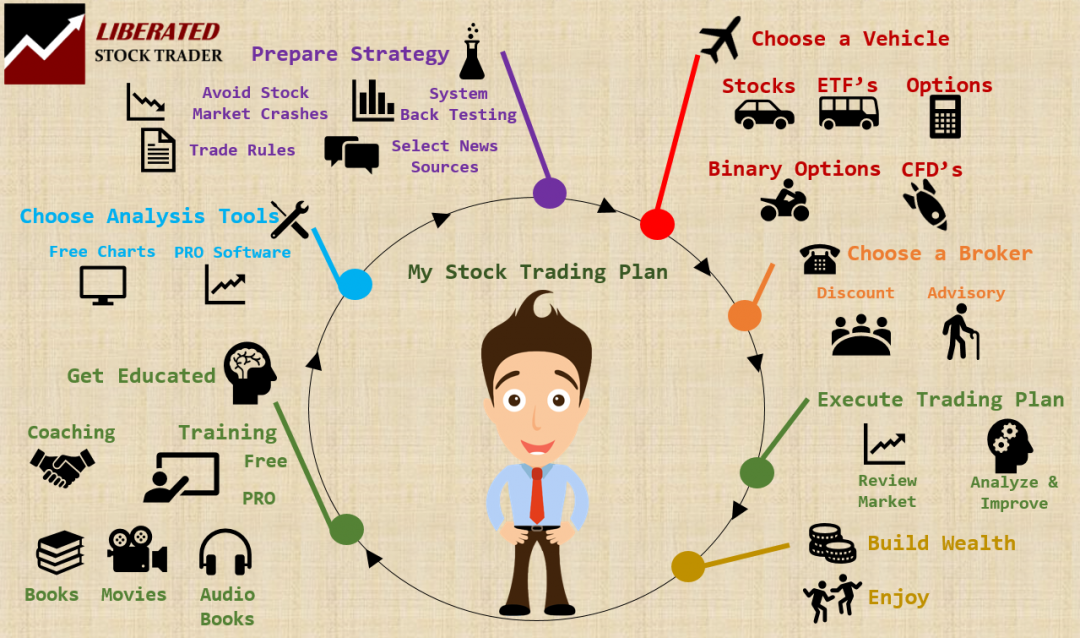
A well-defined trading plan is your roadmap. It outlines your objectives, strategies, and risk management rules, preventing impulsive decisions driven by emotion. Your plan should include:
-
Financial Goals: What do you aim to achieve? (e.g., specific percentage returns, long-term growth, supplementary income).
-
Risk Tolerance: How much risk are you comfortable taking? This will influence your choice of stocks and trading strategies.
-
Entry and Exit Strategies: How will you decide when to buy a stock and when to sell it (either for profit or to cut losses)?
-
Capital Allocation: How much of your total capital will you allocate to each trade?
-
Time Horizon: Are you looking for short-term gains (day trading, swing trading) or long-term investments?
-
Learning and Review: How will you track your performance and learn from your trades?
Developing Your Trading Strategy: Analysis and Decision Making
Successful trading hinges on making informed decisions, which typically involves a blend of analytical techniques.
Fundamental Analysis: Uncovering Intrinsic Value
Fundamental analysis involves evaluating a company’s financial health, industry position, and management quality to determine its intrinsic (true) value. The goal is to identify stocks that are currently trading below their intrinsic value, suggesting they are undervalued and have potential for price appreciation. Key aspects include:
-
Company Financials: Analyzing income statements, balance sheets, and cash flow statements to assess profitability, solvency, and liquidity. Look at metrics like P/E ratio, EPS, revenue growth, and debt-to-equity ratio.
-
Industry Trends: Understanding the broader industry landscape, competitive advantages, and growth prospects.
-
Management Quality: Assessing the leadership team’s experience, track record, and corporate governance.
-
Economic Indicators: Considering macroeconomic factors like GDP growth, inflation, interest rates, and employment data, which can influence overall market sentiment and company performance.
Technical Analysis: Reading the Market’s Pulse
Technical analysis focuses on studying historical price and volume data to predict future price movements. It operates on the premise that all relevant information is already reflected in the stock’s price, and patterns tend to repeat. Tools include:
-
Charts: Various types like candlestick charts, bar charts, and line charts visualize price movements over time.
-
Indicators: Mathematical calculations based on price and volume data that help identify trends, momentum, volatility, and overbought/oversold conditions (e.g., Moving Averages, Relative Strength Index (RSI), Moving Average Convergence Divergence (MACD)).
-
Support and Resistance Levels: Price levels where a stock historically finds buying interest (support) or selling pressure (resistance).
-
Chart Patterns: Recognizable formations on charts that often signal potential reversals or continuations of trends (e.g., head and shoulders, double top/bottom, triangles).
Combining Approaches for a Robust Strategy
Many successful traders and investors blend both fundamental and technical analysis. Fundamental analysis helps identify what to buy (strong companies at reasonable valuations), while technical analysis helps determine when to buy and sell (optimal entry and exit points). This synergistic approach can lead to more confident and strategically sound trading decisions.
Mastering Risk Management and Trading Psychology
Even the most brilliant trading strategy can fail without sound risk management and a disciplined mindset. These are arguably the most crucial components of sustainable trading.
The Golden Rule: Protect Your Capital
Protecting your trading capital is paramount. Without it, you cannot trade.
-
Stop-Loss Orders: These are pre-set instructions to sell a stock if its price falls to a certain level, limiting your potential loss on a trade. Always define your maximum acceptable loss before entering a trade.
-
Position Sizing: Never allocate too much of your capital to a single trade. A common rule is to risk no more than 1-2% of your total trading capital on any given trade. This prevents a single bad trade from significantly depleting your account.
-
Diversification: Spread your investments across different stocks, industries, and asset classes to reduce the impact of poor performance from any single investment.
Understanding and Mitigating Trading Risks
Beyond general capital protection, be aware of specific risks:
-
Market Risk: The risk that the entire market will decline, regardless of individual stock performance.
-
Company-Specific Risk (Idiosyncratic Risk): Risks unique to a particular company, such as poor earnings, management issues, or product failures.
-
Liquidity Risk: The risk that you may not be able to sell a stock quickly enough at a fair price, especially in thinly traded stocks.
The Psychological Edge: Discipline and Emotional Control
Trading can be an emotional rollercoaster. Fear, greed, hope, and regret can lead to irrational decisions.
-
Avoid FOMO (Fear Of Missing Out): Don’t jump into a trade just because everyone else is talking about it or because a stock is rapidly rising. Stick to your plan.
-
Resist Panic Selling: Market downturns are natural. Don’t sell good stocks out of fear unless your predefined stop-loss is triggered.
-
Stick to Your Trading Plan: Your plan is designed to be objective. Emotions will tempt you to deviate; discipline keeps you on track. Review your plan regularly but don’t constantly change it.
-
Learn from Mistakes: Every trader makes losing trades. Analyze what went wrong, adapt your strategy, and move forward without dwelling on past losses.
Beyond the Basics: Continuous Learning and Adaptation
The share market is constantly evolving, making continuous learning an indispensable part of a successful trading career.
Exploring Different Trading Styles
As you gain experience, you might find certain trading styles align better with your personality and time availability:
-
Day Trading: Buying and selling shares within the same trading day, aiming to profit from small price movements. Requires intense focus and quick decision-making.
-
Swing Trading: Holding positions for a few days or weeks, looking to capture “swings” in price within a broader trend.
-
Positional Trading: Holding positions for weeks or months, aiming to profit from longer-term trends.
-
Investing: A long-term approach, typically holding shares for years, focusing on fundamental growth and compounding returns.
Leveraging Technology and Tools
Modern trading platforms offer a wealth of tools to enhance your analysis and execution:
-
Stock Screeners: Filter stocks based on specific criteria (e.g., market cap, industry, P/E ratio, dividend yield).
-
Advanced Charting Software: Provides sophisticated technical indicators and drawing tools.
-
News Aggregators and Economic Calendars: Keep you informed of market-moving events and company announcements.
-
Backtesting Software: Allows you to test trading strategies against historical data.
The Imperative of Ongoing Education
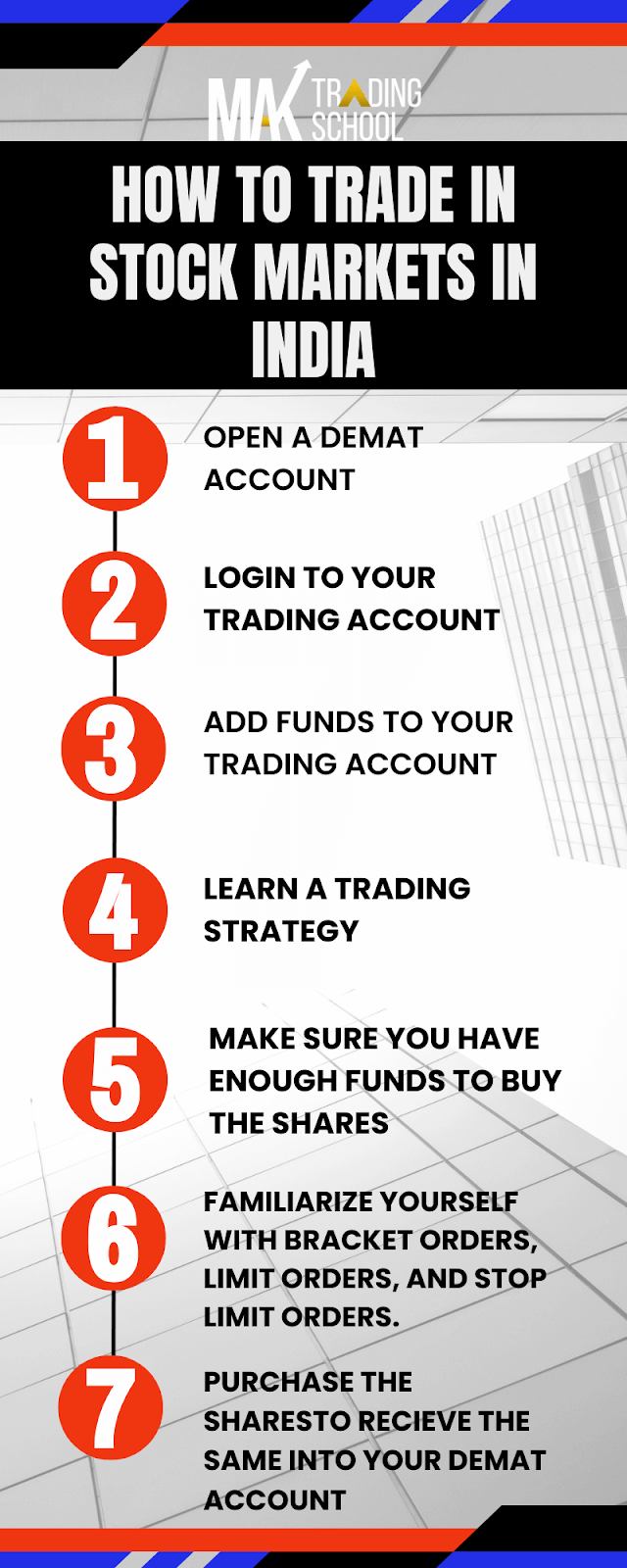
The market is a relentless teacher. Stay updated and continue your education through:
-
Books and Courses: Deepen your understanding of specific analytical techniques or market theories.
-
Financial News and Analysis: Read reputable financial publications and follow expert market commentators.
-
Market Research: Regularly review economic reports, industry analyses, and company filings.
-
Trading Journals: Keep a detailed record of all your trades, including the rationale, entry/exit points, and emotional state. This is invaluable for identifying patterns and improving decision-making.
Trading in the share market is a journey, not a destination. It demands patience, perseverance, and a commitment to lifelong learning. By building a strong foundation of knowledge, developing a robust strategy, mastering risk management, and cultivating emotional discipline, you can significantly enhance your chances of achieving your financial goals in this exciting and potentially rewarding arena. Remember, success in the share market is rarely about quick riches; it’s about strategic thinking, disciplined execution, and the consistent pursuit of knowledge.
aViewFromTheCave is a participant in the Amazon Services LLC Associates Program, an affiliate advertising program designed to provide a means for sites to earn advertising fees by advertising and linking to Amazon.com. Amazon, the Amazon logo, AmazonSupply, and the AmazonSupply logo are trademarks of Amazon.com, Inc. or its affiliates. As an Amazon Associate we earn affiliate commissions from qualifying purchases.