
The ability to look up at a contrail in the sky and instantly identify the aircraft’s origin, destination, altitude, and speed is no longer the domain of air traffic controllers alone. In the last decade, flight tracking has transitioned from a specialized industrial tool to a mainstream digital utility. Whether you are a frequent traveler, a tech enthusiast, or a developer looking to integrate aviation data into an application, understanding the ecosystem of flight tracking requires a deep dive into the hardware, software, and data protocols that keep the global airspace transparent.
The Digital Infrastructure of Global Flight Tracking
At the heart of modern flight tracking lies a sophisticated network of sensors and communication protocols. To understand how to track a flight effectively, one must first understand the technology that generates the data: ADS-B.
Automatic Dependent Surveillance-Broadcast (ADS-B)
ADS-B is the cornerstone of modern flight tracking. Unlike traditional radar, which “pings” an aircraft and measures the reflection, ADS-B is a broadcast system. An aircraft determines its position via satellite navigation (GPS) and periodically broadcasts this information along with its identity, altitude, and velocity via a transponder.
For tech-savvy users, the “Automatic” part means it requires no pilot intervention. “Dependent” means it relies on the aircraft’s navigation system. “Surveillance” means it provides status information, and “Broadcast” means the signal is unencrypted and available to anyone with the right receiver. This open nature is what allows third-party apps and websites to provide real-time maps to the public.
Multilateration (MLAT)
Not all aircraft are equipped with the latest ADS-B Out transponders, particularly older models or smaller private planes. To track these, the industry uses Multilateration (MLAT). This technology utilizes a technique known as Time Difference of Arrival (TDOA). By measuring the precise time it takes for a signal from an older Mode S transponder to reach four or more separate ground receivers, the system can calculate the aircraft’s position with high accuracy. This requires a dense network of receivers, which is why tracking is often more granular in urban areas compared to remote regions.
Satellite-Based Tracking and Remote Coverage
Historically, tracking a flight over the middle of the Atlantic or Pacific Ocean was a “dark zone” because ground-based receivers have a limited range (usually about 250–450 kilometers). However, the recent deployment of space-based ADS-B—receivers mounted on low-earth orbit (LEO) satellite constellations like Iridium NEXT—has solved this. This technology ensures that aircraft can be tracked with near-second latency even in the most remote corners of the planet.
Essential Apps and Software Platforms for Real-Time Tracking
While the raw data exists in the airwaves, software platforms are what turn those signals into intuitive, interactive maps. For those looking to track flights, choosing the right tool depends on the level of detail required.
Flightradar24: The Visual Powerhouse
Flightradar24 is arguably the most popular flight tracking service globally. Its success is built on its massive network of over 30,000 ground-based ADS-B receivers. From a technical perspective, Flightradar24 excels in its UX/UI design, offering an Augmented Reality (AR) view that allows users to point their smartphone at a plane in the sky to see its flight data. It also provides comprehensive 3D views, utilizing satellite imagery and flight data to simulate the pilot’s perspective.
FlightAware: The Enterprise Standard
Where Flightradar24 focuses on the enthusiast, FlightAware often leans toward the professional and enterprise sectors. It integrates “HyperFeed” technology, which combines ADS-B data with traditional radar, flight plans, and air traffic control (ATC) communications. For developers, FlightAware offers AeroAPI, a RESTful API that allows for the integration of real-time flight status, historical data, and predictive insights into third-party applications.
Native Mobile Integrations
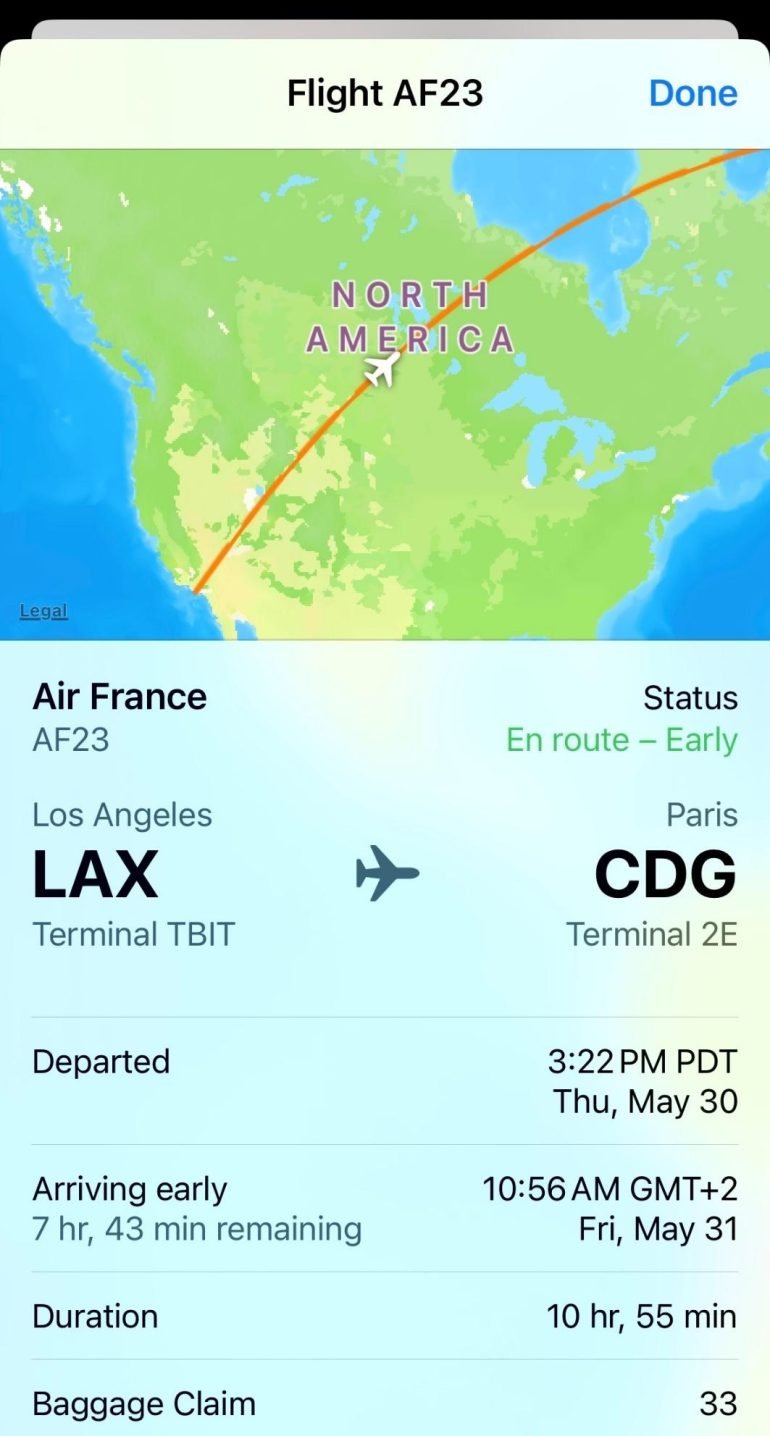
Modern mobile operating systems have begun integrating flight tracking directly into the core user experience. On iOS, for example, users can simply type a flight number into Spotlight Search or a text message. The OS recognizes the string (e.g., “AA123”) and offers a real-time tracking preview using Apple’s built-in data hooks. This is the most efficient method for casual users who do not need the granular technical data provided by dedicated apps.
How Artificial Intelligence is Transforming Flight Monitoring

The next frontier in flight tracking is not just knowing where a plane is, but predicting where it will be and what challenges it will face. This is where Artificial Intelligence (AI) and Machine Learning (ML) are becoming indispensable.
Predictive Arrival Times (ETA)
Standard flight tracking used to rely on simple distance-divided-by-speed calculations to estimate arrival times. However, these estimates often failed to account for taxi times, holding patterns, and air traffic congestion. Modern tracking platforms now use ML algorithms trained on millions of historical flights. These models analyze current weather patterns, airport throughput, and typical vectoring paths to provide “Predictive ETAs” that are significantly more accurate than the data provided by airlines themselves.
Turbulence and Weather Integration
Sophisticated tracking tools now overlay real-time meteorological data, including NEXRAD radar and satellite-based lightning detection. Advanced AI models can correlate aircraft behavior (such as sudden altitude changes or speed adjustments) with weather data to map out turbulence in real-time. This “crowdsourced” turbulence data is then used to warn other flights in the vicinity, creating a safer digital ecosystem for aviation.
Anomaly Detection
AI is also used for security and safety monitoring. By establishing a “baseline” of normal flight behavior for specific routes, AI can flag anomalies—such as a sudden deviation from a flight path or an unusual transponder code—long before they are noticed by human observers. This provides an additional layer of digital oversight for global flight safety.
Building Your Own Tracking Station: A Tech Enthusiast’s Project
For those who want to move beyond being a consumer of data to being a provider, building a personal ADS-B ground station is a popular and rewarding project. It allows you to see raw data before it is processed by commercial servers and often grants you “Enterprise” or “Business” level access to major tracking services for free.
The Hardware Stack
To build a DIY tracking station, you need three primary components:
-
SDR (Software Defined Radio): A small USB dongle (like the RTL-SDR) tuned to the 1090 MHz frequency.
-
Antenna: A specialized 1090 MHz antenna, ideally mounted outdoors with a clear view of the horizon.
-
Processor: A Raspberry Pi is the industry standard for this task due to its low power consumption and high reliability.
The Software Configuration
The software side usually involves running a Linux-based environment on the Raspberry Pi. A package known as Dump1090 is typically used to decode the raw radio signals from the SDR. This software converts the radio waves into readable JSON or CSV data.
Once the data is decoded locally, you can use “feeders” to send your data to networks like Flightradar24, FlightAware, or ADSBexchange. The latter is particularly popular among tech purists because it does not filter out any data (such as blocked tail numbers), providing a completely raw look at the sky.
The Benefit of Local Tracking
Why build your own station? Beyond the hobbyist appeal, local tracking eliminates the latency inherent in web-based platforms. When you track via a website, there is often a 10–60 second delay due to data processing and server distribution. With a local Raspberry Pi setup, you are seeing the aircraft’s position in true real-time, which is essential for photography, spotting, or local aviation research.
Privacy, Security, and the Ethics of Open Skies
As flight tracking technology becomes more accessible, it has sparked a debate regarding privacy and digital security. Every aircraft equipped with ADS-B is essentially “doxing” its location to the world.
The LADD Program and PIA
To address privacy concerns for corporate and private jets, the FAA (Federal Aviation Administration) in the United States established the Limiting Aircraft Data Displayed (LADD) program. This allows owners to request that their data not be shared by commercial tracking sites. Furthermore, the Privacy ICAO Address (PIA) program allows operators to use a temporary, randomized aircraft address that isn’t publicly linked to their specific tail number.

The Role of Decentralized Networks
Despite these privacy measures, decentralized networks like ADSBexchange continue to provide unfiltered data. They argue that the public airspace belongs to everyone and that the signals being broadcast are unencrypted by design. This tension between corporate privacy and digital transparency is a defining characteristic of the modern tech landscape in aviation.
In conclusion, tracking a flight in the modern era is a multi-layered technical endeavor. It ranges from the simple act of checking a mobile app to the complex process of decoding radio signals with a Raspberry Pi. As AI continues to refine our predictive capabilities and satellite networks close the remaining gaps in global coverage, the transparency of our skies will only increase, making flight tracking one of the most successful examples of democratized big data in the 21st century.
aViewFromTheCave is a participant in the Amazon Services LLC Associates Program, an affiliate advertising program designed to provide a means for sites to earn advertising fees by advertising and linking to Amazon.com. Amazon, the Amazon logo, AmazonSupply, and the AmazonSupply logo are trademarks of Amazon.com, Inc. or its affiliates. As an Amazon Associate we earn affiliate commissions from qualifying purchases.