
The rapid expansion of the cryptocurrency market has transformed digital assets from a niche interest into a legitimate pillar of modern personal finance. However, with this growth comes a significant challenge: complexity. Unlike traditional stock portfolios, which are often housed within a single brokerage account, a typical crypto investor’s holdings are frequently scattered across multiple centralized exchanges, decentralized wallets, hardware devices, and various blockchain protocols.
Understanding how to track crypto is no longer just about checking a price ticker; it is about maintaining a holistic view of your financial health, ensuring tax compliance, and managing risk in a market that never sleeps. Effective tracking allows investors to move away from emotional decision-making and toward a data-driven strategy that prioritizes long-term wealth preservation.

The Foundations of Crypto Portfolio Tracking
Before diving into specific tools, it is essential to understand why tracking is a non-negotiable part of crypto investing. The primary driver is the fragmentation of the ecosystem. You might buy Bitcoin on a major exchange, hold Ethereum in a software wallet for NFT purchases, and stake Solana through a hardware wallet. Without a centralized tracking system, calculating your total net worth or understanding your overall exposure to specific asset classes becomes nearly impossible.
Real-Time Value vs. Cost Basis
The most basic element of tracking is knowing the current market value of your assets. However, for serious investors, the current value is only half the story. To understand your performance, you must track your cost basis—the original value of an asset for tax purposes, adjusted for fees and commissions. By tracking the delta between your cost basis and the current market price, you can identify which assets are truly performing and which are merely benefiting from overall market momentum.
Diversification and Risk Assessment
Crypto tracking tools provide a visual representation of your portfolio’s allocation. If 80% of your holdings are in a single altcoin, you are exposed to significant idiosyncratic risk. Tracking enables you to see your exposure across different sectors, such as Layer 1 blockchains, Decentralized Finance (DeFi), Gaming (GameFi), and Stablecoins. Maintaining a balanced portfolio is the hallmark of professional financial management, and it begins with clear, accurate data.
Tax and Regulatory Compliance
In most jurisdictions, every crypto-to-crypto trade, sale for fiat, or use of crypto for a purchase is a taxable event. Tracking every transaction manually is a Herculean task that is prone to error. Professional tracking solutions automate the logging of these events, calculating capital gains and losses in real-time. This not only saves dozens of hours during tax season but also ensures that you are not overpaying the government due to poor record-keeping.
Essential Tools for Modern Investors
The methodology you choose for tracking depends on the size of your portfolio and the frequency of your trades. There are three primary ways to track crypto: manual spreadsheets, automated portfolio aggregators, and blockchain explorers.
Automated Portfolio Aggregators
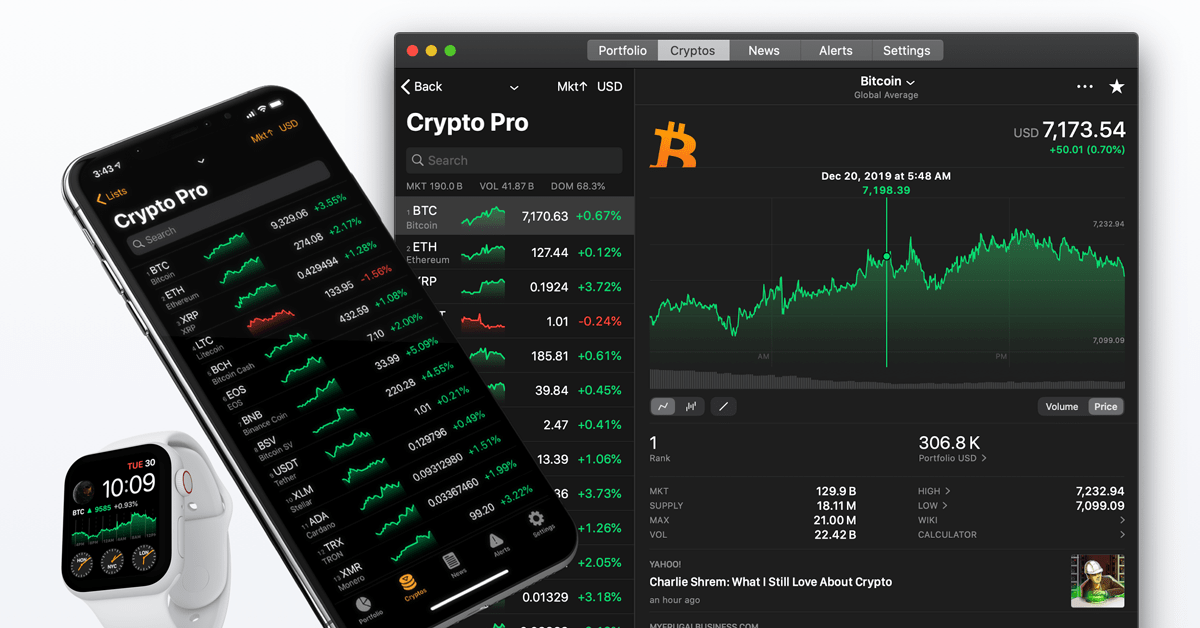
For the majority of investors, automated apps are the gold standard. These platforms connect to your exchange accounts via “read-only” API keys and sync with your public wallet addresses to provide a real-time dashboard of your holdings.
-
CoinStats and Delta: These are among the most popular mobile and desktop aggregators. They offer sleek interfaces that show your total balance, profit/loss over various timeframes, and detailed charts for every asset you own. They support thousands of tokens and integrate with almost every major exchange.
-
Koinly and CoinTracker: While these function as portfolio trackers, their primary strength lies in tax optimization. They specialize in reconciling complex transactions across hundreds of platforms and generating IRS-ready or international tax reports.
-
Zapper and DeBank: If you are heavily involved in DeFi, traditional trackers might struggle to show your liquidity pool positions or staked assets. Zapper and DeBank are “on-chain” trackers that scan the blockchain directly for your wallet address, showing you exactly where your capital is deployed in various smart contracts.
Manual Spreadsheets
For the privacy-conscious investor or the “buy-and-hold” enthusiast, a manual spreadsheet (Excel or Google Sheets) remains a powerful tool. While it lacks real-time updates unless integrated with external APIs (like CoinGecko’s API), it offers total control. You can customize your categories, track specific metrics like “Yield on Cost,” and ensure that no third-party app has data regarding your holdings. However, this method becomes unsustainable once you exceed a certain volume of transactions.
Blockchain Explorers
Every major blockchain has an explorer (like Etherscan for Ethereum or Solscan for Solana). These are the ultimate sources of truth. By pasting your public wallet address into an explorer, you can see every transaction ever made. While explorers aren’t “trackers” in the sense of showing a consolidated dollar value of a diverse portfolio, they are essential for verifying that a transaction has cleared or for auditing the history of a specific wallet.

Integrating On-Chain Data and DeFi Monitoring
As the crypto market evolves, “tracking” has moved beyond simply knowing how many coins you have. It now involves monitoring the health of the protocols where your money is working. For those earning an online income through crypto or participating in yield farming, the tracking requirements are more rigorous.
Monitoring Liquidity and Staking Rewards
When you stake assets or provide liquidity to a decentralized exchange (DEX), your coins often leave your wallet and are replaced by “LP tokens.” A standard exchange tracker might show your wallet balance as zero, leading to unnecessary panic. Dedicated DeFi trackers solve this by “peeling back” the layers of the smart contract to show the underlying value of your staked assets, the accumulated interest, and even potential “impermanent loss” metrics.
Tracking Cold Storage and Hardware Wallets
Security is the cornerstone of crypto management. Many investors move their long-term holdings to hardware wallets (like Ledger or Trezor) to keep them offline. Tracking these is unique because you want to see the value without ever connecting the device to the internet. Most top-tier tracking apps allow you to add a “watch-only” address. You simply provide the public address (the one used to receive funds), and the app monitors the balance on the blockchain, allowing you to see your net worth safely while your private keys remain offline.
Identifying “Dust” and Scam Tokens
A side effect of having an active on-chain presence is “dusting”—where random, often worthless or malicious tokens are sent to your wallet by scammers. Professional trackers often have filters to hide these tokens so they don’t artificially inflate your portfolio value or clutter your dashboard. Learning to distinguish between legitimate airdrops and “dust” is a critical skill in maintaining a clean financial record.
Advanced Strategies for High-Growth Portfolio Management
Once you have the tools in place, the focus shifts to how you interpret the data to grow your wealth. Advanced tracking is about performance benchmarking and disciplined rebalancing.
Benchmarking Against Bitcoin and Ethereum
Most investors track their portfolio in USD or their local fiat currency. While this is necessary for real-world spending, it can be misleading. In a “bull market,” almost everything goes up in dollar terms. To see if you are actually a “good” investor, you should benchmark your portfolio against Bitcoin (BTC) and Ethereum (ETH). If your basket of altcoins is gaining in USD but losing value relative to BTC, you are taking on more risk for less reward than if you had simply held Bitcoin.
Strategic Rebalancing
Data-driven tracking enables “rebalancing”—the process of selling assets that have over-performed and buying those that have under-performed to return to your target allocation. For example, if your strategy dictates a 50% BTC and 50% ETH split, and a price surge moves the ratio to 60/40, your tracker will alert you. Selling the 10% excess of BTC to buy more ETH allows you to “sell high and buy low” systematically.
Tracking Realized vs. Unrealized Gains
A common trap for crypto investors is “paper wealth.” Tracking tools help distinguish between unrealized gains (profits on assets you still hold) and realized gains (profits locked in by selling for fiat or stablecoins). Successful wealth management involves a strategy for “taking chips off the table.” By setting alerts within your tracking software for specific price targets, you can execute a predetermined exit strategy rather than falling victim to greed or FOMO (fear of missing out).
Navigating the Future of Financial Tracking
The future of tracking crypto lies in the convergence of traditional finance (TradFi) and decentralized finance (DeFi). We are entering an era of “Unified Wealth Tracking,” where investors want to see their 401(k), their brokerage account, their real estate holdings, and their crypto portfolio in a single pane of glass.
As institutional adoption grows, we can expect more robust financial tools that treat crypto as just another asset class. However, the responsibility for accuracy still rests with the individual. The “Not your keys, not your coins” mantra has a financial tracking equivalent: “Not your data, not your profit.” If you aren’t tracking your transactions, you aren’t truly managing your money; you are merely gambling on a screen.
By implementing a combination of automated aggregators for daily monitoring and blockchain-native tools for deep-dive audits, you create a foundation for financial success. In the volatile world of digital assets, clarity is the ultimate competitive advantage. Whether you are a casual holder or a professional trader, mastering the art of tracking is the most significant step you can take toward securing your financial future in the digital age.
aViewFromTheCave is a participant in the Amazon Services LLC Associates Program, an affiliate advertising program designed to provide a means for sites to earn advertising fees by advertising and linking to Amazon.com. Amazon, the Amazon logo, AmazonSupply, and the AmazonSupply logo are trademarks of Amazon.com, Inc. or its affiliates. As an Amazon Associate we earn affiliate commissions from qualifying purchases.