
In the modern era of air travel, the ability to track a flight in real-time has transitioned from a specialized luxury for air traffic controllers to a ubiquitous digital utility for the average passenger. For those flying with American Airlines (AA), the technological infrastructure supporting flight tracking is a sophisticated web of satellite data, ground-based receivers, and complex software algorithms. Understanding how to navigate this tech stack—from proprietary mobile applications to third-party data aggregators—is essential for any tech-savvy traveler looking to optimize their journey and mitigate the stressors of modern transit.

The Core Interface: Leveraging the American Airlines Mobile Ecosystem
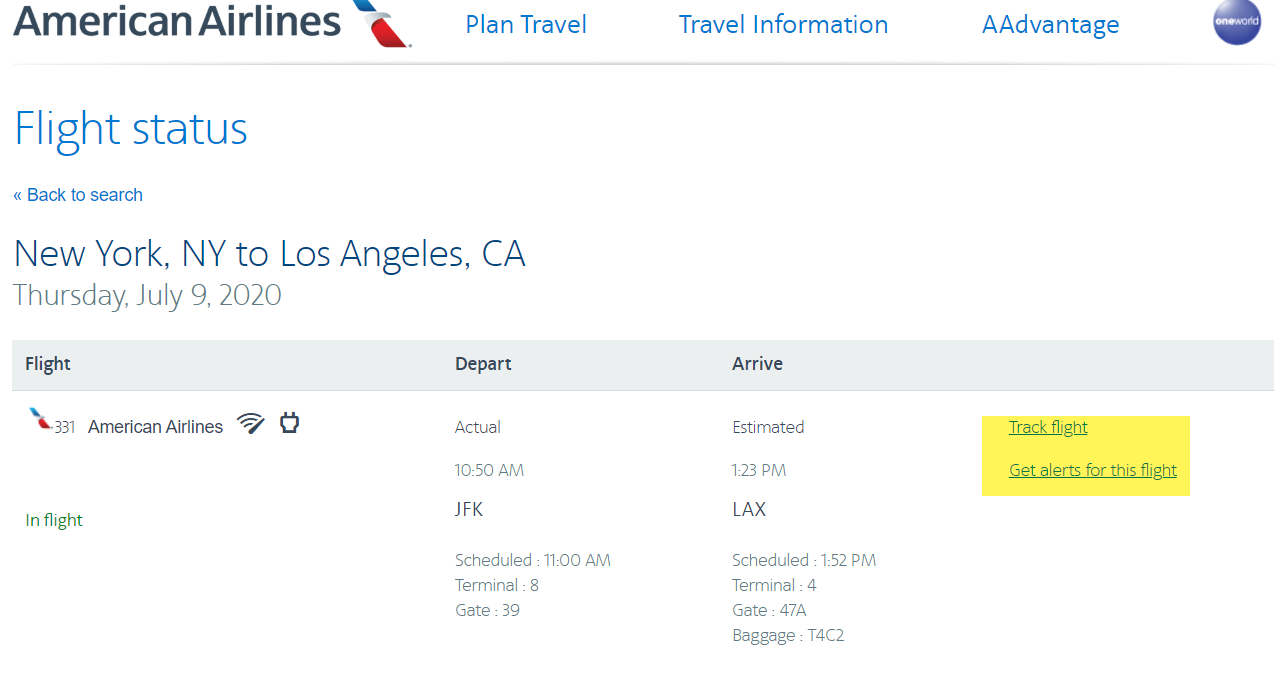
The primary gateway for tracking an American Airlines flight is the airline’s proprietary mobile application. Built on a robust API (Application Programming Interface) architecture, the AA app serves as more than just a booking tool; it is a real-time data terminal. When a user inputs a flight number, the app pulls data from the airline’s internal Operations Control Center (OCC), which manages the movement of over 6,700 flights daily.
Push Notification Architecture and Real-Time Syncing
The efficiency of the American Airlines app lies in its push notification framework. Unlike manual refreshing, which relies on client-side requests, the AA app uses a server-side push protocol. This means that as soon as a flight’s status changes in the airline’s central database—whether it’s a gate change at DFW or a maintenance delay in London—the information is pushed to the user’s device via Firebase Cloud Messaging (FCM) or Apple Push Notification service (APNs). For the end-user, this results in near-zero latency, ensuring that “time-to-info” is minimized during critical travel windows.
Digital Baggage Tracking and RFID Integration
A standout technical feature within the American Airlines tracking ecosystem is the integration of Radio Frequency Identification (RFID) technology for baggage. AA was one of the first major carriers to implement RFID chips in luggage tags. While traditional barcodes require a line-of-sight scan, RFID allows for automated tracking at various nodes within the airport’s conveyor systems and aircraft loading zones. Users can track their bags within the app’s interface, providing a digital paper trail that confirms whether their luggage has been loaded onto the correct aircraft. This is a prime example of how IoT (Internet of Things) hardware integrates directly with consumer-facing software.
Beyond the Official App: Utilizing Global ADS-B Network Data
While the official American Airlines app provides internal data, tech enthusiasts often turn to third-party aggregators like FlightAware or Flightradar24 for a deeper look at the telemetry of a flight. These platforms do not rely solely on airline schedules; instead, they tap into the global ADS-B (Automatic Dependent Surveillance-Broadcast) network.
The Mechanics of ADS-B Technology
ADS-B is the backbone of modern flight tracking. An American Airlines aircraft equipped with an ADS-B transponder determines its position via GPS and periodically broadcasts it. This broadcast is then picked up by a global network of ground stations. For a tech-oriented traveler, using an ADS-B tracking app allows for the visualization of the aircraft’s exact coordinates, altitude, vertical speed, and even the “squawk” code (a four-digit number used for communication with air traffic control).
Multilateration (MLAT) and Data Fusion
In instances where an older aircraft might not yet be broadcasting full ADS-B data, tracking software utilizes Multilateration (MLAT). This tech calculates the aircraft’s position by measuring the Time Difference of Arrival (TDOA) of signals at four or more separate receivers. Modern tracking platforms perform “data fusion,” combining ADS-B, MLAT, and FAA (Federal Aviation Administration) SWIM (System Wide Information Management) feeds. This provides a redundant and highly accurate visualization of the flight path that often precedes the updates found on airport monitors.
Digital Integration and Workflow Automation

For the power user, tracking an American Airlines flight is not a standalone activity but part of a larger digital workflow. Integrating flight data into personal productivity ecosystems allows for seamless travel management.
Siri Shortcuts, Google Assistant, and Voice Tech
The American Airlines app supports deep linking and integration with voice assistants. By setting up a Siri Shortcut, a user can trigger a flight status update with a simple voice command. On the backend, this utilizes Apple’s Intents framework, allowing the OS to extract specific data points—such as the “Estimated Time of Arrival”—and relay them through the voice interface. This hands-free approach represents the shift toward ambient computing, where the information follows the user rather than the user seeking the information.
Calendar APIs and Automated Scheduling
Sophisticated travelers often use automation tools like IFTTT (If This Then That) or Zapier to bridge their flight data with other applications. By connecting an American Airlines confirmation to a Google Calendar via an API, the system can automatically adjust meeting times based on flight delays. If the tracking software detects a 60-minute delay, a script can trigger an email to a car service or update a Slack status. This level of automation is made possible by the standardization of flight data formats (such as JSON or XML) shared across travel tech platforms.
The Infrastructure of In-Flight Connectivity
The technology used to track a flight doesn’t just exist on the ground; it is powered by the aircraft itself. American Airlines has invested heavily in high-speed satellite-based Wi-Fi, which plays a dual role in both passenger experience and technical telemetry.
Satellite Link-ups vs. Ground-to-Air
Previously, in-flight connectivity relied on Air-to-Ground (ATG) systems, which were prone to “dead zones” over oceans or remote areas. AA has shifted toward Ku-band and Ka-band satellite systems provided by companies like Viasat and Gogo (Intelsat). These satellites, positioned in geostationary orbit, allow for high-bandwidth data transfers. This enables the aircraft to transmit real-time engine health data and precise location metrics back to the airline’s maintenance servers, while simultaneously allowing the passenger to track their own progress on a high-resolution 3D map.
Reducing Latency in Flight Data
One of the primary challenges in flight tracking tech is latency. A delay of even a few minutes can be the difference between catching a connecting flight and being stranded. The move toward “low-latency” data streams involves the use of Edge Computing, where data is processed closer to the source (the aircraft or the local ground station) before being sent to the centralized cloud. This ensures that when you check the status of an American Airlines flight over the Atlantic, you are seeing a position that is as close to real-time as physics allows.
Future Trends: AI and Predictive Tracking
As we look toward the future of tracking American Airlines flights, the focus is shifting from reactive data (where the plane is now) to predictive analytics (where the plane will be and why).
Predictive Maintenance and Delay Forecasting
Machine Learning (ML) models are now being trained on decades of flight data to predict delays before they happen. By analyzing weather patterns, historical air traffic congestion, and aircraft turnaround times, AI can provide a “probability of delay” score. American Airlines utilizes “Heat Map” technology in their operations hubs to visualize potential bottlenecks. In the future, this data may be exposed to the consumer, allowing a passenger to see that while their flight is currently “On Time,” there is a 70% statistical likelihood of a delay based on incoming aircraft telemetry.
The Unified Travel Identity
The next technological leap involves the “Single Token” journey, where biometric data and flight tracking merge. Imagine a scenario where your face is your boarding pass, and the airport’s digital signage automatically updates to show your flight’s tracking information as you walk past, powered by ultra-wideband (UWB) sensors in your smartphone. This hyper-personalized tracking experience is already in the pilot phase in several tech-forward airports.
The process of tracking an American Airlines flight is a masterclass in how disparate technologies—GPS, RFID, Satellite Communications, and Cloud Computing—converge to create a seamless user experience. For the digital native, these tools offer more than just convenience; they offer a transparent window into the complex, high-velocity world of global aviation. By mastering the apps, the external data feeds, and the automation tools available, travelers can turn the uncertainty of the skies into a data-driven, manageable science.
aViewFromTheCave is a participant in the Amazon Services LLC Associates Program, an affiliate advertising program designed to provide a means for sites to earn advertising fees by advertising and linking to Amazon.com. Amazon, the Amazon logo, AmazonSupply, and the AmazonSupply logo are trademarks of Amazon.com, Inc. or its affiliates. As an Amazon Associate we earn affiliate commissions from qualifying purchases.