
In the intricate world of personal finance, business operations, and investment strategies, a single mathematical concept consistently stands as a bedrock of understanding: percentages. From calculating a discount on your groceries to deciphering your investment returns, or even understanding the true cost of a loan, the ability to “take percentage” is not merely an academic exercise—it is a fundamental life skill that empowers you to make informed financial decisions. Without a firm grasp of percentages, navigating the complexities of modern money management can feel like sailing without a compass.
This guide will demystify percentages, transforming what might seem like a daunting mathematical operation into an accessible and powerful tool for financial empowerment. We will explore the various facets of percentages within the realm of money, illustrating their profound impact on everything from daily budgeting to long-term wealth creation. By mastering how to calculate, interpret, and apply percentages, you unlock a clearer vision of your financial landscape, enabling smarter choices and greater control over your economic destiny.

The Foundation of Percentages in Finance
Before diving into complex financial scenarios, it’s crucial to establish a solid understanding of what a percentage truly represents and why its presence is so pervasive in financial discourse. At its heart, a percentage simplifies comparisons and provides a standardized way to express proportions.
What Exactly is a Percentage?
The term “percentage” literally means “per hundred” or “out of every hundred.” It is a way of expressing a number or ratio as a fraction of 100. The symbol “%” is universally used to denote a percentage. For instance, 50% means 50 out of 100, which is equivalent to the fraction 50/100 or the decimal 0.50.
The fundamental operation to “take percentage” usually involves three core elements:
- The Base (Whole): The total amount or value from which a percentage is calculated.
- The Part: A portion of the base.
- The Percentage: The part expressed as a fraction of 100 relative to the base.
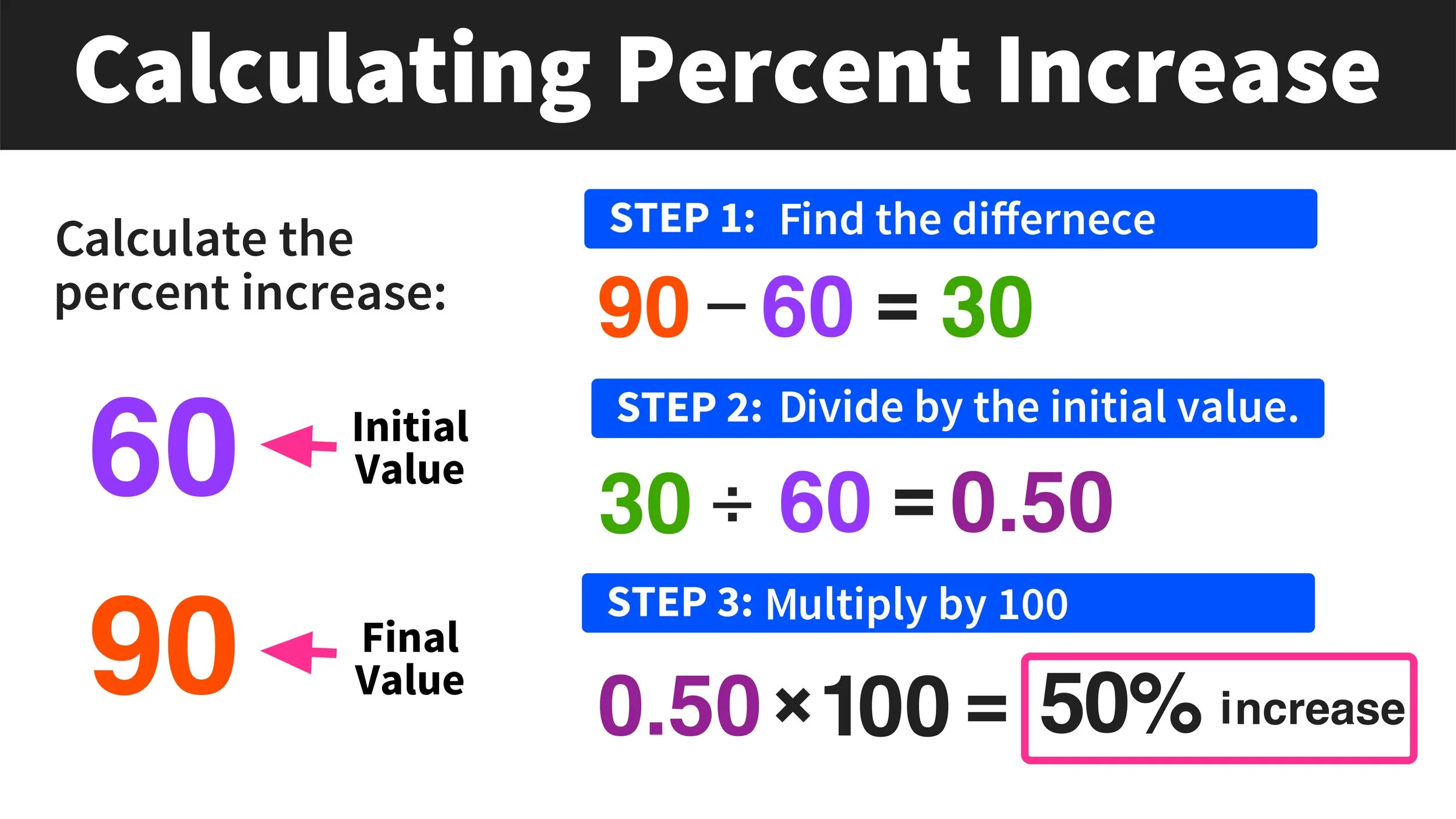
To calculate the percentage of a number, you multiply the number by the percentage (expressed as a decimal). To find what percentage one number is of another, you divide the “part” by the “whole” and then multiply by 100. For example, if you want to find 20% of $200, you would calculate 0.20 * $200 = $40. If you want to know what percentage $50 is of $250, you calculate ($50 / $250) * 100 = 20%. These simple conversions and calculations form the bedrock of all financial percentage applications.
Why Percentages Matter for Your Money
The utility of percentages in finance is vast and multifaceted. They provide a universal language for comparison and analysis, making complex financial data more digestible and actionable.
- Standardization: Percentages allow for easy comparison across different scales. A 10% return on an investment of $1,000 is directly comparable to a 10% return on an investment of $100,000, even though the absolute dollar amounts are vastly different.
- Context and Impact: They provide context for changes. Saying your expenses increased by $50 tells you less than saying they increased by 15%, especially if your total expenses are low. A 15% increase is significant regardless of the base amount.
- Decision-Making: From choosing between loan offers with varying interest rates to assessing the effectiveness of a sales promotion, percentages offer the clarity needed to make optimal financial choices. They enable you to quantify risk, opportunity, and financial performance.
- Transparency: Financial institutions, governments, and businesses frequently use percentages to communicate costs, benefits, and statutory requirements (e.g., interest rates, tax rates, inflation rates). Understanding these figures is critical for personal financial literacy.
Essential Percentage Calculations for Personal Finance
In our daily lives, percentages constantly appear, influencing how we spend, save, and manage our money. Mastering these common calculations is a significant step towards greater financial acumen.
Calculating Discounts and Sales Prices
One of the most frequent encounters with percentages is during shopping. Discounts, sales, and promotional offers are almost always expressed as percentages.
- Understanding Discounts: If an item is 25% off, it means you save 25% of the original price. To calculate the savings, multiply the original price by the discount percentage (as a decimal). For example, a $100 item at 25% off means savings of $100 * 0.25 = $25.
- Finding the Sale Price: Once you have the savings, subtract it from the original price: $100 – $25 = $75. Alternatively, if an item is 25% off, you are paying 75% of the original price (100% – 25%). So, you can directly calculate the sale price as $100 * 0.75 = $75.
Understanding Interest Rates
Interest rates are perhaps the most impactful application of percentages in personal finance, affecting everything from savings accounts to mortgages and credit card debt.
- Simple Interest: This is calculated only on the principal amount. If you invest $1,000 at 5% simple interest per year, you earn $1,000 * 0.05 = $50 each year.
- Compound Interest: Often called the “eighth wonder of the world,” compound interest is calculated on the initial principal and also on the accumulated interest from previous periods. This is where the power of percentages truly shines, leading to exponential growth. If you earn 5% compound interest on $1,000, in year one you earn $50. In year two, you earn 5% on $1,050 ($1,000 principal + $50 accumulated interest), which is $52.50.
- Annual Percentage Rate (APR) and Annual Percentage Yield (APY): APR refers to the annual cost of a loan, including interest and fees, while APY reflects the total return on an investment over a year, taking compounding into account. Understanding these percentages is vital for comparing loan offers and savings products.
Determining Tips and Taxes
From dining out to purchasing goods and services, tips and taxes are daily percentage-based calculations.
- Calculating Tips: A common tip amount ranges from 15% to 20% of the bill. To calculate a 18% tip on a $60 bill, you’d do $60 * 0.18 = $10.80.
- Sales Tax: Sales tax is a percentage of the purchase price added to your bill. If the sales tax is 7% and you buy something for $50, the tax is $50 * 0.07 = $3.50, making your total $53.50.
- Income Tax: Your income tax liability is often determined by progressive tax brackets, where different portions of your income are taxed at different percentage rates. While complex, the underlying principle is always applying a percentage to a specific income amount.
Analyzing Budget Allocations
Effective budgeting relies heavily on percentages to allocate income across various categories.
- The 50/30/20 Rule: A popular budgeting guideline suggests allocating 50% of your income to needs, 30% to wants, and 20% to savings and debt repayment. If your monthly take-home pay is $4,000, this means:
- Needs: $4,000 * 0.50 = $2,000
- Wants: $4,000 * 0.30 = $1,200
- Savings/Debt: $4,000 * 0.20 = $800
Using percentages makes it easy to visualize and adjust your spending habits to align with your financial goals.
Percentages in Investing and Wealth Building
Beyond daily transactions, percentages are indispensable for understanding and managing investments, a critical component of long-term wealth building.
Measuring Investment Returns
The performance of investments is almost exclusively expressed in percentages, offering a standardized metric for comparison.

- Return on Investment (ROI): This fundamental metric measures the gain or loss generated on an investment relative to its initial cost. ROI = (Current Value of Investment – Original Cost of Investment) / Original Cost of Investment * 100. A 15% ROI means your investment grew by 15% of its original value.
- Compounded Annual Growth Rate (CAGR): For investments held over multiple years, CAGR provides a smoothed annual growth rate, accounting for compounding. It helps investors understand the average yearly growth despite market volatility. This is particularly useful for comparing investments with different timelines.
- Dividend Yield: For dividend-paying stocks, the dividend yield expresses the annual dividend payout as a percentage of the stock’s current share price. This helps investors assess the income potential of an equity investment.
Understanding Portfolio Allocation
A diversified investment portfolio involves allocating assets across different classes (stocks, bonds, real estate, cash) to manage risk and optimize returns. These allocations are always expressed as percentages.
- Asset Allocation Strategy: An investor might choose a portfolio that is 70% stocks, 20% bonds, and 10% cash, for example. Understanding these percentages is crucial for maintaining your desired risk profile and rebalancing your portfolio periodically to bring it back to target allocations.
- Risk Management: Percentages help quantify exposure to different assets. If a particular sector experiences a downturn, knowing what percentage of your portfolio is exposed to that sector gives you a clear picture of potential impact.
Inflation and Its Percentage Impact
Inflation, the rate at which the general level of prices for goods and services is rising, and consequently, the purchasing power of currency is falling, is always expressed as a percentage.
- Erosion of Purchasing Power: If inflation is 3% per year, your money effectively loses 3% of its purchasing power each year. Understanding this percentage helps you determine how much your investments need to grow just to maintain your current standard of living.
- Real vs. Nominal Returns: Investors often distinguish between nominal returns (the actual percentage gain) and real returns (nominal return minus the inflation rate). A 5% nominal return with 3% inflation yields a real return of only 2%, a vital distinction made possible by percentage calculations.
Leveraging Percentages for Business and Income
For entrepreneurs, side hustlers, or anyone involved in business, percentages are the language of financial performance, profitability, and growth.
Profit Margins and Markups
Understanding how to calculate and interpret profit margins is fundamental for any business to remain viable and grow.
- Gross Profit Margin: This is the percentage of revenue remaining after deducting the cost of goods sold (COGS). Formula: (Revenue – COGS) / Revenue * 100. A high gross profit margin indicates efficient production.
- Net Profit Margin: This is the percentage of revenue left after all expenses, including COGS, operating expenses, interest, and taxes, have been deducted. Formula: (Net Income / Revenue) * 100. This is the ultimate measure of a company’s profitability.
- Markup: Businesses often use markup percentages to price products. If an item costs $50 and a business wants a 40% markup, they would add $50 * 0.40 = $20 to the cost, selling it for $70.
Commission and Royalty Calculations
Many income streams, particularly in sales, creative fields, and contract work, are percentage-based.
- Sales Commissions: Sales professionals often earn a percentage of the sales they generate. A 10% commission on a $1,000 sale means $100 in earnings.
- Royalties: Authors, musicians, artists, and inventors may receive royalties, which are a percentage of sales revenue or profits generated from their work. Knowing how to calculate these percentages is crucial for tracking income.
Analyzing Business Growth Rates
Measuring growth is essential for strategic planning and assessing the health of a business.
- Revenue Growth Rate: The percentage increase in revenue over a period (e.g., year-over-year). Formula: ((Current Period Revenue – Previous Period Revenue) / Previous Period Revenue) * 100.
- Customer Growth Rate: The percentage increase in the customer base. These growth rates, expressed as percentages, allow businesses to benchmark their performance, attract investors, and identify areas for improvement.
Tools and Best Practices for Percentage Calculations
While the underlying principles are simple, applying percentages in various financial contexts can sometimes feel complex. Fortunately, a combination of understanding and leveraging the right tools can make the process seamless.
Manual Calculation vs. Digital Tools
For simple calculations, mental math or a basic calculator suffices. However, as financial scenarios become more intricate, digital tools prove invaluable.
- Basic Calculators: For quick, one-off calculations (discounts, tips, simple interest), a physical calculator or your smartphone’s calculator app is perfectly adequate.
- Spreadsheets (Excel, Google Sheets): For recurring calculations, financial planning, budgeting, or managing investment portfolios, spreadsheets are indispensable. They allow you to set up formulas (e.g.,
=A1*0.05for 5% of cell A1) that automatically update, saving time and reducing errors. - Online Financial Calculators: Websites often provide specialized calculators for mortgages, loan interest, compound interest, retirement planning, and more. These are pre-programmed to handle complex percentage-based formulas.
- Financial Apps: Many personal finance and banking apps incorporate percentage calculations to show you account growth, spending categories, and budget adherence.
Common Pitfalls and How to Avoid Them
Even with the right tools, misinterpreting or misapplying percentages can lead to significant financial errors.
- Misinterpreting the Base: Always be clear about what the percentage is of. For example, a “30% off an already discounted 20% off price” is not a 50% discount; it’s a 30% discount on the remaining 80% of the original price.
- Percentage Points vs. Percentage Change: This is a crucial distinction, especially in financial news. If an interest rate goes from 4% to 5%, that’s a 1 percentage point increase. However, it’s a 25% percentage change (1/4 * 100). Confusing these can lead to misjudging the magnitude of a change.
- Compounding Effects: Neglecting the impact of compounding interest, whether positive (savings, investments) or negative (debt), can lead to underestimating long-term financial outcomes. Always account for how interest builds upon itself over time.
- Ignoring Inflation: As discussed, a nominal percentage gain might not be a real gain if inflation outpaces it. Always consider inflation when evaluating long-term financial performance.
Practical Tips for Integrating Percentage Fluency into Your Financial Life
- Practice Regularly: Make a conscious effort to calculate percentages in everyday situations—discounts, tips, sales tax.
- Question Everything: When presented with financial figures (e.g., “new investment fund offers 8% return”), ask yourself what that percentage means, what it’s based on, and how it compares to alternatives.
- Utilize Tools Smartly: Don’t rely solely on tools to do the thinking for you. Understand the underlying calculation so you can spot potential errors or misrepresentations.
- Educate Yourself Continuously: Financial products and market conditions evolve. Stay informed about how percentages apply to new opportunities and risks.
Conclusion
The ability to “take percentage” is far more than a mathematical trick; it is a vital skill that underpins financial literacy and empowers individuals to navigate the complex world of money with confidence. From the simplest daily transactions to sophisticated investment strategies and business operations, percentages provide the universal language for understanding value, change, risk, and opportunity.
By diligently applying the concepts outlined in this guide – understanding the basics, mastering essential calculations in personal finance, leveraging percentages for wealth creation, and employing them strategically in business – you transform yourself from a passive observer of financial figures into an active, informed decision-maker. Embrace the power of percentages, and unlock a clearer path towards achieving your financial goals and securing a more prosperous future.
aViewFromTheCave is a participant in the Amazon Services LLC Associates Program, an affiliate advertising program designed to provide a means for sites to earn advertising fees by advertising and linking to Amazon.com. Amazon, the Amazon logo, AmazonSupply, and the AmazonSupply logo are trademarks of Amazon.com, Inc. or its affiliates. As an Amazon Associate we earn affiliate commissions from qualifying purchases.