
In today’s digitally driven economy, the ability to accept payments online is not merely a convenience; it’s a fundamental necessity for businesses aiming to thrive and expand. From burgeoning startups to established enterprises, the transition to digital transactions has reshaped customer expectations and opened new avenues for revenue generation. This guide delves into the financial intricacies and strategic considerations of integrating online payment systems, ensuring your business is equipped to secure income, manage cash flow efficiently, and foster sustainable growth. We will explore the various mechanisms, financial tools, and strategic approaches required to successfully navigate the landscape of online transactions, all from a perspective centered firmly on business finance and online income generation.
The Imperative of Online Payment Acceptance in Modern Business
The global shift towards digital commerce has fundamentally altered how businesses interact with their customers and manage their finances. For any entity generating online income, understanding and implementing robust online payment solutions is paramount.
The Digital Transformation of Commerce
The convenience and accessibility offered by online payments have made them the preferred method for consumers worldwide. Businesses that fail to adapt risk not only losing potential sales but also alienating a significant portion of their target market. Adopting online payment capabilities instantly expands a business’s operational reach beyond geographical limitations, allowing for transactions to occur 24/7. This continuous transactional capability is a direct driver of increased online income and diversified revenue streams, transforming a local enterprise into a potential global player. From a financial standpoint, this means a broader customer base, higher sales volumes, and ultimately, enhanced profitability potential.
Enhancing Customer Experience and Reach
Offering multiple, secure online payment options significantly elevates the customer experience. When customers find it easy and secure to pay, their trust in your business grows, fostering loyalty and repeat purchases. A seamless checkout process directly impacts conversion rates, meaning more visitors to your site translate into actual sales and tangible income. Furthermore, accommodating diverse payment preferences—from credit cards to digital wallets—caters to a wider demographic, broadening your market reach and solidifying your position in the competitive online marketplace. This financial inclusivity directly correlates with expanded income opportunities, as you remove barriers that might deter potential buyers.
Core Mechanisms for Accepting Digital Payments
Implementing online payment systems involves understanding various financial tools and platforms designed to facilitate secure and efficient transactions. Selecting the right mechanism is a critical financial decision impacting operational costs, revenue collection, and scalability.
Understanding Payment Gateways and Processors
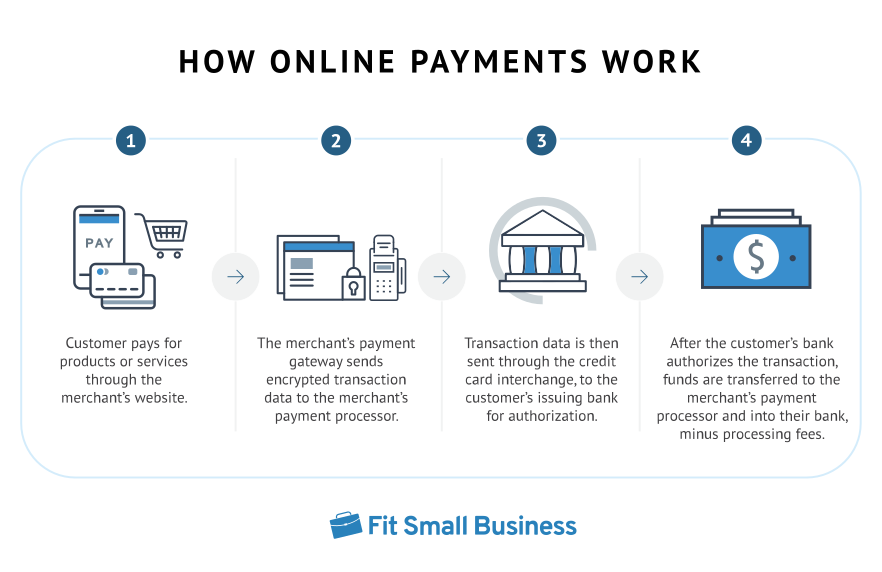
At the heart of online payment processing are payment gateways and payment processors. A payment gateway acts as a virtual point-of-sale terminal, encrypting sensitive financial information and securely transmitting it between the customer, merchant, and bank. Examples include Stripe, PayPal, and Authorize.net. A payment processor then handles the actual transaction, moving funds from the customer’s bank to the merchant’s bank account. Often, these two functions are bundled together by a single provider. From a financial perspective, evaluating these services involves scrutinizing their fee structures (per-transaction fees, monthly charges, setup costs, chargeback fees), processing speeds, and currency support, all of which directly affect your net income and cash flow management. Choosing a provider with competitive rates and transparent pricing is crucial for optimizing your profit margins.
Integrating with E-commerce Platforms
For businesses operating online stores, integrating payment processing with an e-commerce platform is a streamlined approach to online income generation. Platforms like Shopify, WooCommerce (for WordPress), BigCommerce, and Magento come with built-in integrations for various payment gateways. These platforms simplify the technical complexities, allowing businesses to quickly set up a secure checkout system. The financial benefit here is significant: reduced development costs, faster time to market, and comprehensive sales tracking features that aid in financial analysis and forecasting. While these platforms often have their own subscription fees and sometimes preferred payment processors, the convenience and robust feature set often justify the investment, contributing to a more efficient and profitable online operation.
Specialized Solutions for Service-Based Businesses
Service-based businesses, freelancers, and consultants also require efficient methods to collect online income. Beyond e-commerce platforms, tools like invoicing software (e.g., FreshBooks, QuickBooks Online) and dedicated payment links (often provided by payment gateways like PayPal or Stripe) are invaluable. These solutions enable the creation and dispatch of professional invoices that include direct links for online payments, greatly simplifying the billing and collection process. For financial managers, this means improved accounts receivable turnover, reduced administrative overhead, and a more consistent cash flow. Accepting payments online for services also broadens a freelancer’s or consultant’s client base, as geographical distance becomes irrelevant, opening doors to higher-paying international opportunities.
Navigating Payment Methods and Associated Costs
The diversity of payment methods available to consumers directly impacts a business’s ability to capture income. Each method comes with its own set of financial implications, primarily in terms of processing fees and accessibility.
Credit and Debit Card Processing: The Foundation

Accepting credit and debit card payments is foundational for almost any online business. This involves adherence to PCI DSS (Payment Card Industry Data Security Standard) compliance, a set of security standards designed to protect cardholder data. Non-compliance can lead to severe financial penalties and reputational damage. The costs associated with card processing typically include a percentage of the transaction value plus a small fixed fee. These fees, collectively known as merchant service fees, are a direct expense that businesses must factor into their pricing strategies and financial projections. Understanding the interchange fees, assessment fees, and processor markups is essential for any business keen on optimizing its financial performance and preserving profit margins.
Embracing Alternative Payment Methods
Beyond traditional cards, alternative payment methods are gaining traction and offer additional avenues for income.
- Digital Wallets (e.g., Apple Pay, Google Pay, PayPal, Amazon Pay): These offer a quick and secure checkout experience, often with lower abandonment rates. While they still leverage card networks, their integration can provide an added layer of convenience and trust for customers, potentially boosting sales and online income.
- Bank Transfers/ACH Payments: For larger transactions, especially in a B2B context, direct bank transfers or Automated Clearing House (ACH) payments can offer lower transaction fees compared to credit cards. This is a significant financial advantage for businesses dealing with high-value goods or services, leading to greater net revenue per transaction.
- Buy Now, Pay Later (BNPL) Services (e.g., Klarna, Afterpay): These services allow customers to pay for purchases in installments, often interest-free for consumers, while the merchant receives the full payment upfront (minus a fee). BNPL can significantly increase conversion rates and average order values, acting as a powerful financial lever for sales growth, albeit with an additional processing cost that needs to be absorbed.
Deciphering Transaction Fees and Pricing Models
Understanding the various pricing models employed by payment providers is crucial for effective financial planning.
- Flat-Rate Pricing: A fixed percentage and fee per transaction (e.g., 2.9% + $0.30). This is predictable and often preferred by small businesses with lower transaction volumes.
- Tiered Pricing: Transactions are grouped into different tiers (e.g., qualified, mid-qualified, non-qualified) with varying rates. This can be complex and less transparent, potentially leading to higher overall costs.
- Interchange-Plus Pricing: The most transparent model, where merchants pay the direct interchange fee (set by card networks) plus a small fixed markup from the processor. This is often favored by larger businesses with higher transaction volumes, as it typically offers the lowest overall processing costs and maximizes net online income.
A thorough financial analysis of these models against your business’s average transaction size and volume will dictate the most cost-effective solution.
Ensuring Financial Security and Mitigating Risks
The digital realm introduces unique financial security challenges. Protecting sensitive financial data and managing transaction risks are paramount to maintaining customer trust and safeguarding your business’s financial health.
Protecting Transactions: SSL, PCI Compliance, and Fraud Prevention
Robust security measures are non-negotiable for online payment processing. An SSL certificate (Secure Sockets Layer) encrypts data transmitted between a customer’s browser and your website, protecting sensitive financial information from interception. PCI DSS compliance is not just a regulatory requirement but a fundamental security posture that protects cardholder data. Non-compliance can result in substantial fines and irrevocably damage your brand’s financial standing and customer trust. Beyond these, implementing fraud prevention tools (e.g., address verification services (AVS), CVV checks, 3D Secure authentication like Verified by Visa/Mastercard SecureCode) is vital. These tools help to identify and block fraudulent transactions, significantly reducing potential financial losses from chargebacks and protecting your hard-earned income. Investing in these security layers is a critical financial decision that safeguards long-term profitability.
Managing Chargebacks and Disputes
A chargeback occurs when a customer disputes a transaction with their bank, leading to the funds being returned to them. Chargebacks represent a direct financial loss for the merchant, not only losing the sale revenue but often incurring additional chargeback fees from the payment processor. They can also negatively impact a merchant’s reputation with card networks, potentially leading to higher processing fees or even account termination. Effective strategies for managing chargebacks include clear return policies, excellent customer service, robust fraud detection systems, and maintaining detailed transaction records. Proactive dispute resolution can often prevent a chargeback from occurring, saving your business financially and preserving valuable customer relationships. Understanding the financial implications and best practices for chargeback management is crucial for any business reliant on online income.
Strategically Choosing Your Online Payment Solution
The myriad of options available can be overwhelming. Making an informed decision requires a strategic approach, aligning the payment solution with your specific business model and financial objectives.
Assessing Business Needs and Scalability
The ideal payment solution depends heavily on your business type, current operational scale, and future growth projections. A small freelancer might find PayPal’s simple payment links sufficient, whereas a rapidly scaling e-commerce business will require a more robust, integrated solution like Shopify Payments or a custom Stripe integration. Consider your transaction volume, average order value, target audience (domestic vs. international), and the types of products or services you offer. A solution that is cost-effective now but cannot scale with your financial growth will become a bottleneck later, necessitating a costly and disruptive migration. Strategic financial planning demands a payment solution that supports your evolution without incurring prohibitive upgrade costs.
Balancing Cost, Features, and User Experience
While cost is a significant factor, it should not be the sole determinant. Cheaper solutions might lack critical features like robust fraud protection, multi-currency support, or detailed financial reporting, which can lead to higher long-term costs in terms of lost sales, fraud losses, or administrative inefficiencies. Evaluate the balance between transaction fees, monthly charges, setup costs, and the features provided. A smooth and intuitive user experience for both your customers and your internal finance team is invaluable. Complex interfaces or frequent payment failures can deter customers and drain staff resources, ultimately impacting your bottom line. Investing in a solution that offers a good balance across these dimensions is a financially sound decision.

The Long-Term Financial Implications
Choosing an online payment solution is a long-term financial commitment. Consider the potential for integration with other financial tools you use, such as accounting software, CRM systems, and inventory management. Seamless integration reduces manual data entry, minimizes errors, and provides a consolidated view of your financial health, which is invaluable for strategic decision-making and forecasting online income. Evaluate the provider’s reputation, customer support, and track record for reliability and security. A reliable payment infrastructure is a cornerstone of consistent online income and sustainable business growth. The financial stability and operational efficiency derived from a well-chosen payment partner far outweigh the initial effort of selection.
In conclusion, taking payments online is a multifaceted financial endeavor that demands careful consideration of technology, security, cost structures, and customer experience. By strategically selecting and implementing the right payment solutions, businesses can not only streamline their operations and secure their online income but also lay a robust foundation for enduring financial success and market expansion in the digital age.
aViewFromTheCave is a participant in the Amazon Services LLC Associates Program, an affiliate advertising program designed to provide a means for sites to earn advertising fees by advertising and linking to Amazon.com. Amazon, the Amazon logo, AmazonSupply, and the AmazonSupply logo are trademarks of Amazon.com, Inc. or its affiliates. As an Amazon Associate we earn affiliate commissions from qualifying purchases.