
The prevailing myth in the world of entrepreneurship is that you need a significant “war chest” of capital to launch a successful enterprise. For decades, prospective founders have been told that a business requires a physical storefront, a massive inventory, and a team of employees before the first dollar of revenue can be generated. However, the modern economic landscape has fundamentally disrupted this narrative. Today, the most successful startups often begin with nothing more than a high-value skill, a strategic mindset, and a relentless focus on cash flow over capital investment.

Starting a business without money—often referred to as bootstrapping—is not just a necessity for those without deep pockets; it is a disciplined financial strategy. By operating without external funding, you retain 100% equity, force yourself to find a path to profitability immediately, and learn the essential mechanics of lean financial management. This guide explores the financial architecture of building a business from the ground up using nothing but “sweat equity” and strategic resourcefulness.
The Service-First Model: Converting Skills into Immediate Revenue
The fastest way to start a business with zero capital is to sell a service rather than a product. Products require manufacturing, shipping, and inventory costs. Services, conversely, leverage your existing intellectual property. When you sell a service, your primary cost of goods sold (COGS) is your time, which is the only asset you possess in abundance at the start.
Identifying High-Margin Service Niches
To maximize your financial return without an initial investment, you must identify skills that solve high-value problems for businesses or high-net-worth individuals. General administrative work may be easy to start, but it commands a lower hourly rate. Specialized services—such as tax strategy, digital marketing, technical writing, or project management—allow you to charge premium rates. The goal is to move from “labor for hire” to “expert consultancy” as quickly as possible. This transition shifts your financial model from an hourly wage to value-based pricing, significantly increasing your profit margins.
The Power of Sweat Equity
Sweat equity is the value added to a business by the founder’s physical and mental effort rather than financial contributions. In the early stages, you are the CEO, the marketing department, and the fulfillment team. By performing these roles yourself, you bypass the need for payroll, which is typically the largest expense for any small business. This phase is critical for understanding the unit economics of your business. If you cannot make the business profitable while doing the work yourself, it is unlikely to be profitable once you hire others.
Leveraging the “Gig” Economy as a Launchpad
Platforms like Upwork, Fiverr, or specialized industry boards provide a ready-made marketplace of buyers. While these platforms often take a percentage of your earnings, they eliminate the need for a marketing budget. In the beginning, these fees are a small price to pay for the “customer acquisition cost” (CAC) that you would otherwise have to fund out of pocket. Once you have established a portfolio and a steady stream of testimonials, you can move your clients off-platform (where legal) or use your reputation to attract direct clients through organic networking.
Establishing a Zero-Cost Infrastructure
In the past, starting a business meant signing a commercial lease and buying expensive equipment. Today, the “lean startup” methodology allows you to operate a professional-grade business using entirely free or low-cost digital tools. The key is to avoid “premium” subscriptions until the business generates enough revenue to cover them twice over.
The “Free Tier” Ecosystem
Nearly every essential business tool offers a “freemium” model. For communication, tools like Slack or Discord provide robust free options. For project management, Trello or Asana allow you to organize workflows without a monthly fee. For document creation and financial tracking, Google Workspace (Sheets, Docs) provides a powerful alternative to paid office suites. By stringing together these free services, you can create a sophisticated backend infrastructure that costs zero dollars per month.
Organic Marketing and Content as an Asset
Marketing is often the second-largest expense for a startup, but it doesn’t have to be. Paid advertising (PPC) is a “pay-to-play” game that requires capital. Organic content marketing, however, requires only time. By producing high-quality, educational content on platforms like LinkedIn, YouTube, or a personal blog, you build “authority assets.” These assets work for you 24/7, attracting potential leads through search engines and social algorithms. This is the financial equivalent of building an annuity: you invest the time upfront, and it pays dividends in the form of leads for years to come.
Validating the Market Before You Spend
One of the biggest financial mistakes new entrepreneurs make is building a product or service that nobody wants. You can validate your business idea for free by using the “Minimum Viable Product” (MVP) approach. Instead of building a full-scale website, create a simple landing page or even just a social media post describing your offer. If people are willing to give you their email address or—even better—pre-order the service, you have validated the market. This prevents the financial catastrophe of sinking months of work and potential debt into a failed concept.
Mastering Bootstrapped Financial Management
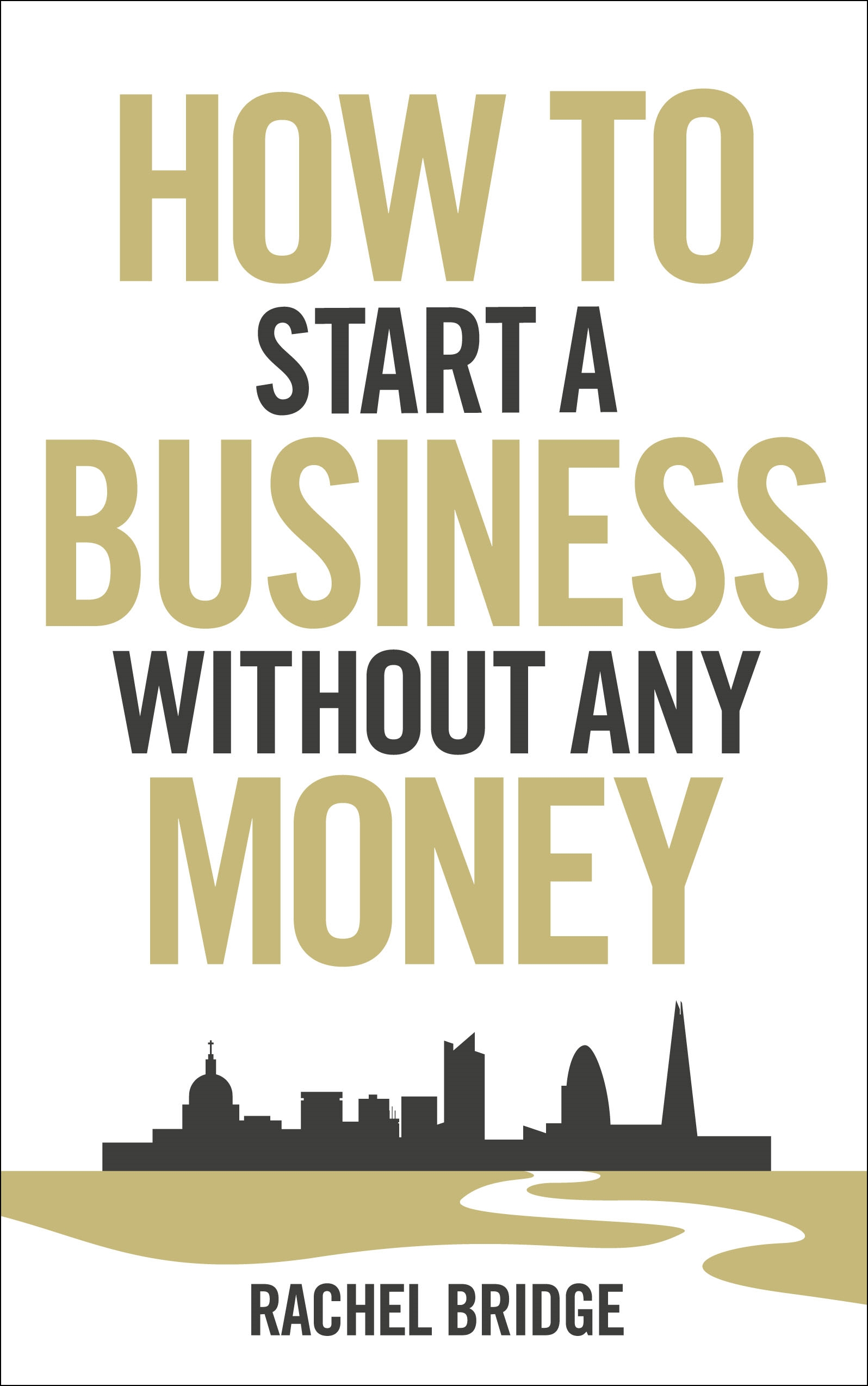
When you start with no money, every cent the business earns is precious. Traditional businesses might operate at a loss for years while burning through venture capital. A bootstrapped business does not have that luxury. You must master the art of “cash flow management” from day one to ensure survival and eventual growth.
The Principle of Reinvestment
In a zero-capital startup, your first few sales should not go toward a personal salary. Instead, they should be strategically reinvested into the business to replace your manual labor with tools or outsourced help. This is known as “climbing the value chain.” For example, if you earn $1,000 from a freelance project, you might spend $100 on a professional domain and email hosting, $200 on a specialized software tool that doubles your efficiency, and keep the remaining $700 as a cash reserve. By constantly reinvesting profits, you “fund” your own growth without ever taking a loan.
Avoiding the Trap of “Phantom” Expenses
New business owners often fall into the trap of spending money on things that feel like business but don’t actually generate revenue. Fancy business cards, expensive logos, and high-end laptops are “phantom” expenses. In the beginning, if an expense does not directly lead to a sale or significantly improve the delivery of a service, it is a luxury you cannot afford. Keep your overhead as close to zero as possible for as long as possible. This creates a “low burn rate,” giving you a longer “runway” to figure out the most profitable parts of your business.
Managing Cash Flow Gaps
Cash flow is the lifeblood of a business. It is possible to be “profitable” on paper but still go out of business because you don’t have cash in the bank to pay for basic necessities. To manage this without a line of credit, you should implement “upfront billing” or “milestone payments.” By requiring clients to pay a 50% deposit before work begins, you ensure that the business always has the liquid capital necessary to function. This also acts as a financial filter, ensuring you only work with clients who are serious and have the budget to pay.
Creative Funding and Alternative Capital
While this guide focuses on starting without money, there may come a point where you need a small amount of capital to scale. However, this doesn’t mean you have to go to a bank. There are several “non-dilutive” ways to access capital that don’t involve debt or giving up ownership.
Bartering Services for Resources
Bartering is an underutilized financial tool. If you are a web designer who needs legal advice, you can offer to redesign a law firm’s website in exchange for their services. This allows you to acquire high-value professional services without any cash changing hands. It is a pure exchange of value that preserves your cash reserves for expenses that cannot be bartered, like taxes or government filing fees.
Pre-Selling and Crowdfunding
Pre-selling is the ultimate way to fund a business using your customers’ money. If you are launching a product, you can offer a “founder’s discount” for those who pay upfront before the product is finished. This provides the “float” necessary to pay for the first round of production. Crowdfunding platforms operate on a similar principle but at a larger scale. Both methods allow you to validate demand and secure funding simultaneously, all without the intervention of a predatory lender.
Micro-Grants and Local Incentives
Many local governments and non-profit organizations offer small grants for new entrepreneurs, particularly in underserved communities or specific industries like green energy or technology. Unlike loans, these grants do not have to be paid back. While the application process can be time-consuming, it is a viable way to inject “free” capital into your business once you have a proven concept and a clear plan for how the money will be used to generate more revenue.
Scaling from Side Hustle to Sustainable Enterprise
The ultimate goal of starting a business without money is to eventually reach a point where the business is self-sustaining. This transition requires moving from a “scarcity mindset” to a “growth mindset,” but only after the financial foundation is rock solid.
Gradual Transition and Risk Mitigation
Most successful $0-capital businesses start as side hustles. By keeping your full-time job while building your business in the evenings, you use your salary to “subsidize” your life, allowing the business to reinvest 100% of its earnings. You should only consider leaving your primary income source once the business consistently generates enough profit to cover your living expenses plus a 20% “safety margin” for at least six consecutive months. This measured financial approach minimizes the personal risk of entrepreneurship.
Developing Systems for Scalability
As the business grows, your time becomes the bottleneck. To scale, you must move from “doing the work” to “managing the system.” This involves documenting your processes so that you can eventually hire a part-time contractor to handle the low-value tasks. Financially, this is a “leverage” play. If you can pay someone $25 an hour to do a task that frees you up to do a $150-an-hour task, you have created a $125-an-hour profit spread.

Long-Term Financial Health
Starting with no money teaches you a level of financial discipline that “funded” founders often never learn. You understand the value of every dollar, the necessity of high margins, and the importance of lean operations. These habits will serve you well as the business grows into a larger entity. Whether you choose to keep the business as a high-profit “lifestyle” company or eventually seek an exit by selling it to a larger firm, your lack of initial debt and 100% equity stake will put you in the strongest possible financial position.
In conclusion, the barrier to entry for starting a business is no longer capital; it is the willingness to start small, manage finances with surgical precision, and trade time for progress until the math of the business allows for true scale. By focusing on services, leveraging free tools, and reinvesting every dollar of profit, you can build a robust financial engine from absolutely nothing.
aViewFromTheCave is a participant in the Amazon Services LLC Associates Program, an affiliate advertising program designed to provide a means for sites to earn advertising fees by advertising and linking to Amazon.com. Amazon, the Amazon logo, AmazonSupply, and the AmazonSupply logo are trademarks of Amazon.com, Inc. or its affiliates. As an Amazon Associate we earn affiliate commissions from qualifying purchases.