
Starting a company is one of the most significant financial endeavors an individual can undertake. While the initial spark of an idea provides the momentum, the long-term viability of a startup is dictated by its financial architecture, capital management, and revenue strategy. In the modern economic landscape, “starting up” is no longer just about product development; it is about building a robust financial engine that can withstand market volatility and fuel scalable growth.
To move from a concept to a high-functioning enterprise, founders must navigate a complex web of business finance, from choosing the right legal structure for tax optimization to mastering the nuances of venture capital and unit economics. This guide explores the essential financial pillars of starting a company, focusing on the strategic management of money as the primary lever for success.

Building the Financial Architecture of Your Startup
The first step in starting a company is establishing a legal and financial framework that protects the founders and optimizes the entity for future investment. Every decision made in the early stages has long-term implications for tax liability and the ability to raise capital.
Choosing the Right Business Structure for Tax Efficiency
The legal structure of your company is the foundation of your financial life. For many solo founders or small teams, a Limited Liability Company (LLC) is the preferred starting point because it offers protection against personal liability while providing “pass-through” taxation, where profits are reported on the owners’ personal tax returns. However, if the goal is to attract venture capital and eventually go public, a C-Corporation is often the standard. C-Corps are favored by investors due to their ability to issue different classes of stock and the clarity they provide regarding corporate governance and tax treatment under Section 1202 (Qualified Small Business Stock), which can offer significant tax breaks on capital gains.
Estimating Initial Capital Requirements
Before the first dollar is spent, a founder must conduct a rigorous “burn rate” analysis. This involves categorizing costs into two buckets: fixed and variable. Fixed costs include legal fees for incorporation, patent filings, and initial software subscriptions. Variable costs include marketing spend, contractor fees, and inventory. A common mistake is underestimating the “safety margin.” Financial experts recommend having at least six to twelve months of operating capital—known as the “runway”—before expecting the business to generate significant revenue.
The Bootstrap Philosophy vs. External Funding
Deciding whether to bootstrap (self-fund) or seek external investment is a pivotal financial crossroads. Bootstrapping allows founders to retain 100% ownership and forces a focus on early profitability. It creates a lean culture where every dollar is scrutinized. On the other hand, external funding—through angel investors or venture capital—provides the “fuel” to capture market share rapidly. The trade-off is equity dilution and increased pressure to meet aggressive growth milestones.
Developing a Robust Revenue Model and Financial Plan
A company without a clear path to profitability is merely a project. A startup’s financial plan must move beyond simple bookkeeping into the realm of strategic forecasting and revenue modeling.
Identifying Your Monetization Strategy
How will your company actually make money? The answer defines your entire financial operation. Subscription-based models (SaaS) are currently the gold standard in the business world because they offer predictable, recurring revenue (MRR). Transactional models, such as e-commerce or marketplaces, require high volume and careful management of margins. Professional services models offer high margins but are difficult to scale. Choosing a model requires an understanding of your Customer Acquisition Cost (CAC) relative to the Lifetime Value (LTV) of that customer. A healthy company generally seeks an LTV that is at least three times the CAC.
Mastering Cash Flow Management
Cash flow is the lifeblood of a startup, and many profitable companies fail simply because they run out of liquid cash. Managing the “cash conversion cycle”—the time it takes for an investment in labor or inventory to return to the company as cash from a sale—is critical. Founders must implement tight accounts receivable processes and negotiate favorable terms with vendors to ensure that more money is coming in than going out at any given moment.
Financial Forecasting and Projections
Startups operate in an environment of uncertainty, but that does not excuse a lack of forecasting. A five-year financial model, updated monthly, allows founders to play out different scenarios: What happens if sales drop by 20%? What if we hire three more engineers? These projections are essential not only for internal planning but also for demonstrating “financial literacy” to potential investors and lenders.
Navigating the Landscape of Startup Funding
For many, starting a company requires more capital than a personal bank account can provide. Understanding the hierarchy of funding is essential for any entrepreneur looking to scale.
Seed Funding and Angel Investments
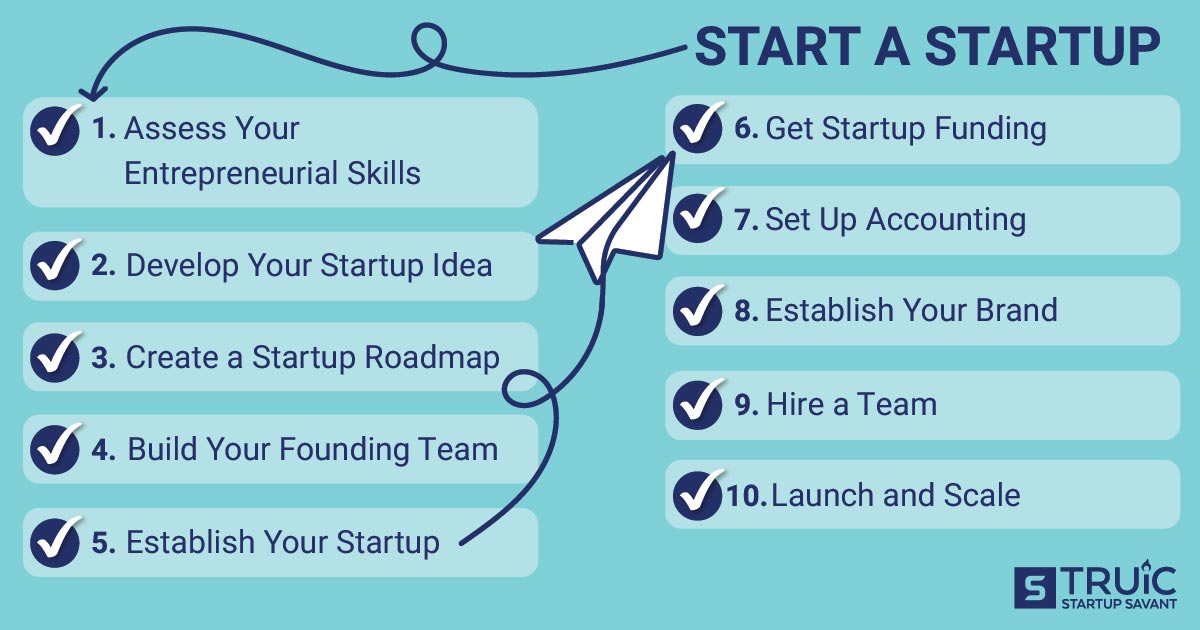
The earliest stage of external funding usually comes from “friends and family” or angel investors. Angel investors are typically high-net-worth individuals who provide capital in exchange for equity or convertible debt. At this stage, the valuation of the company is often speculative, based more on the potential of the idea and the pedigree of the founders than on existing revenue. This capital is usually used for product-market fit discovery and early hires.
Venture Capital and Equity Dilution
Venture Capital (VC) is designed for companies with the potential for explosive growth. VCs look for “unicorns”—companies capable of reaching a billion-dollar valuation. While VC funding can provide millions of dollars, it comes at the cost of equity and often a seat on the board of directors. Founders must be wary of “over-capitalization,” where taking too much money too early leads to excessive dilution and unrealistic expectations that can kill a company if growth slows down.
Alternative Financing: Debt, Grants, and Crowdfunding
Not every company is a fit for equity financing. Debt financing, such as Small Business Administration (SBA) loans or revenue-based financing, allows founders to keep their equity while paying back the capital with interest. Additionally, government grants (like SBIR grants in the US) provide non-dilutive capital for high-tech startups. Crowdfunding platforms like Kickstarter or Republic have also emerged as viable ways to validate a product and raise capital simultaneously from a broad base of micro-investors.
Implementing Financial Systems and Tools for Growth
As a company grows, the complexity of its financial operations increases. Relying on basic spreadsheets is no longer sufficient; the modern startup must leverage a sophisticated “fintech stack.”
Modern Accounting Software and Financial Tech Stacks
Transitioning from a spreadsheet to a cloud-based accounting system like QuickBooks Online or Xero is a non-negotiable step for a serious startup. These tools integrate with bank accounts, payroll systems, and tax software, providing real-time visibility into the company’s financial health. Furthermore, using expense management tools like Brex or Ramp can help founders control employee spending and provide automated insights into where the budget is being utilized.
Tax Compliance and Regulatory Obligations
Tax neglect is one of the fastest ways to shut down a promising company. Startups must navigate payroll taxes, sales taxes (especially complicated for digital products sold across borders), and corporate income taxes. Understanding the R&D tax credit is also vital for tech-heavy startups, as it can provide a significant offset to payroll taxes, effectively giving the company “free” money to continue innovating.
Managing Lean Operations and Unit Economics
A “lean” startup focuses on minimizing waste and maximizing value. This involves a constant analysis of unit economics—the profitability of a single unit of sale. If you lose money on every unit sold, you cannot “make it up in volume.” Founders must obsess over their gross margins. By maintaining a lean operational structure and high gross margins, a company remains agile and can pivot more easily when market conditions change.
Strategic Scaling and the Path to Profitability
The final phase of starting a company is the transition from a “startup” to a “scale-up.” This requires a shift in mindset from survival to strategic financial expansion.
Reinvesting Profits for Exponential Growth
Once a company reaches profitability, the question becomes how to allocate those profits. Should the company pay out dividends to the founders, or should the money be plowed back into the business? In the startup world, the answer is almost always reinvestment. Scaling sales teams, increasing R&D, and expanding into new geographical markets are the primary uses of retained earnings. The goal is to reach a “compounding effect” where the business grows faster each year.
Understanding Valuation and Exit Strategies
Every founder should have an “exit strategy” in mind, even if it is years away. Whether it is an Initial Public Offering (IPO), an acquisition by a larger corporation (M&A), or a management buyout, the financial structure of the company must be groomed for this eventual liquidity event. This means maintaining “clean” books, ensuring all intellectual property is properly owned by the company, and keeping cap tables simple and transparent.

Financial Risk Management in a Volatile Market
Starting a company is inherently risky, but financial risk can be managed. This includes maintaining diverse revenue streams so that the loss of one major client doesn’t bankrupt the firm, and keeping an “emergency fund” that is separate from daily operating capital. By prioritizing financial resilience alongside growth, a founder ensures that their company can survive economic downturns and emerge stronger on the other side.
Starting a company is a masterclass in financial management. It requires a balance of aggressive growth and conservative fiscal responsibility. By focusing on the numbers from day one—from the legal structure to the final exit strategy—entrepreneurs can transform a creative vision into a powerful, profitable, and enduring financial asset.
aViewFromTheCave is a participant in the Amazon Services LLC Associates Program, an affiliate advertising program designed to provide a means for sites to earn advertising fees by advertising and linking to Amazon.com. Amazon, the Amazon logo, AmazonSupply, and the AmazonSupply logo are trademarks of Amazon.com, Inc. or its affiliates. As an Amazon Associate we earn affiliate commissions from qualifying purchases.