
The stock market is often viewed through two extremes: a high-stakes casino where fortunes are lost overnight, or a complex labyrinth reserved only for the elite of Wall Street. In reality, the stock market is one of the most accessible and effective tools for building long-term wealth available to the average individual. At its core, investing in the stock market means buying a piece of a business. When those businesses grow, innovate, and profit, you—as a shareholder—participate in that success.
Starting your investment journey can feel overwhelming, but the cost of inaction is high. Due to the effects of inflation, cash sitting in a standard savings account often loses purchasing power over time. Conversely, the historical average return of the stock market has consistently outperformed inflation over long horizons. This guide provides a strategic roadmap for the novice investor, moving from foundational preparation to the execution of your first trade.
1. Laying the Foundation: Preparation Before Your First Trade
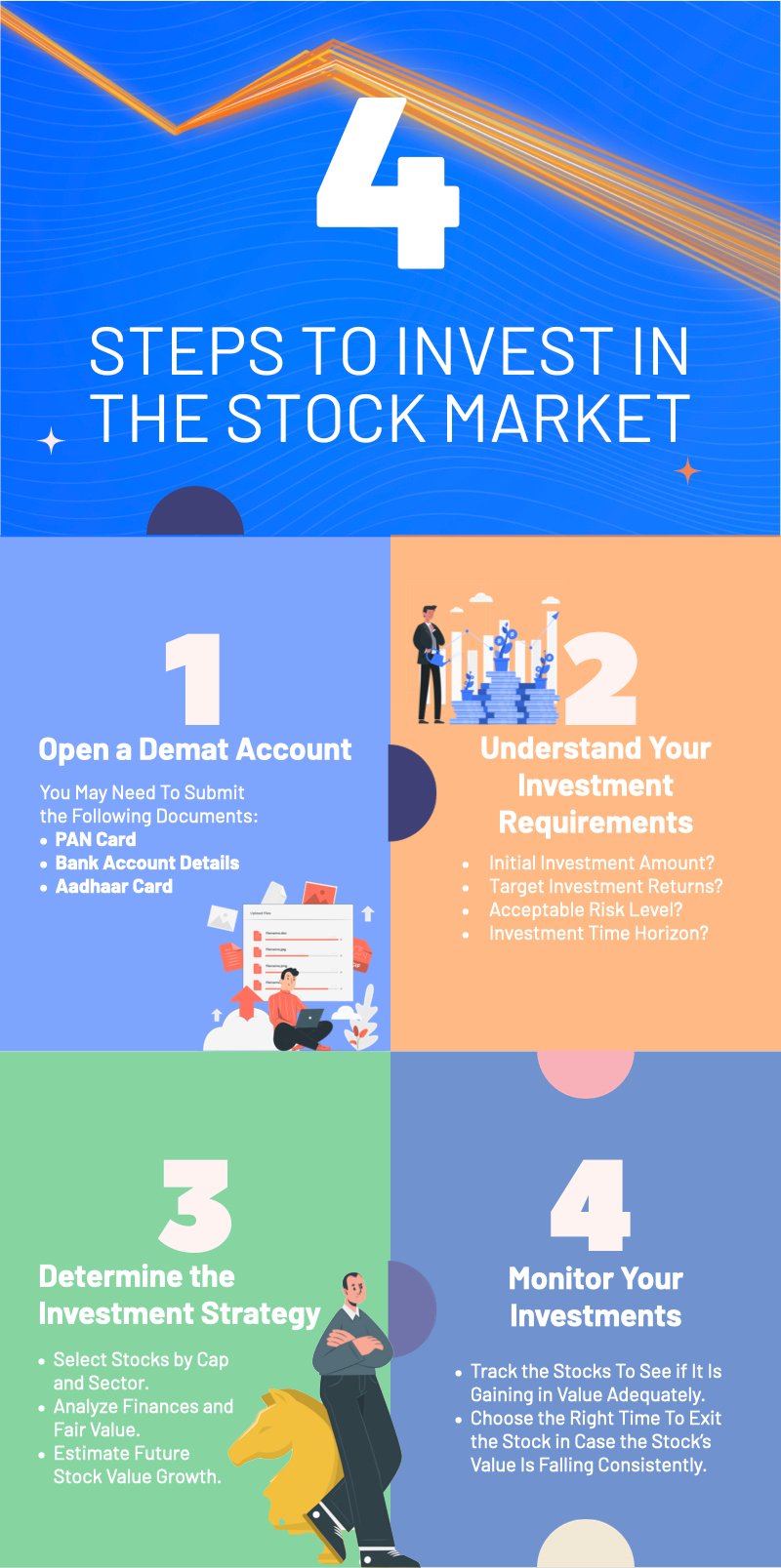
Before you commit a single dollar to the market, you must ensure your financial house is in order. Investing is a long-term endeavor; if you are forced to withdraw your money during a market downturn because of a personal financial emergency, you risk locking in permanent losses.
Assessing Your Financial Health
The first step is evaluating your debt and liquidity. It is generally unwise to invest in the stock market if you are carrying high-interest debt, such as credit card balances. If your debt carries an interest rate of 15-20%, and the stock market’s historical average return is approximately 10%, you are mathematically better off paying down the debt first. Additionally, you should establish an emergency fund—typically three to six months of living expenses—in a high-yield savings account. This ensures that you won’t be forced to sell your investments to cover unexpected medical bills or job loss.
Setting Clear Investment Goals
Why are you investing? The answer will dictate your strategy. If you are 25 and investing for retirement forty years away, your “time horizon” is long, allowing you to take more risks. If you are 50 and looking to supplement your income within a decade, your strategy will be more conservative. Clearly defined goals—such as buying a home, funding an education, or achieving financial independence—help you stay disciplined when the market becomes volatile.
Understanding Risk Tolerance
Risk tolerance is a combination of your financial ability to withstand a loss and your emotional reaction to market fluctuations. Some investors can see their portfolio drop 20% in a month and remain unfazed, while others may lose sleep over a 5% dip. Understanding where you fall on this spectrum is vital. If you take on more risk than you can stomach, you are more likely to make the cardinal sin of investing: selling at the bottom out of fear.
2. Navigating the Ecosystem: Choosing Your Investment Accounts
Once your finances are stable, the next step is determining where your money will live. The “account” is the bucket that holds your investments, and different buckets come with different tax advantages and rules.
Comparing Full-Service vs. Discount Brokers
In the past, you needed a human broker to execute trades for a high fee. Today, the industry has shifted toward digital-first discount brokers. Platforms like Vanguard, Fidelity, and Charles Schwab offer zero-commission trades on most stocks and exchange-traded funds (ETFs). When choosing a broker, look for a user-friendly interface, robust educational resources, and, most importantly, low fees. Even a 1% management fee can eat away tens of thousands of dollars from your portfolio over several decades.
Retirement Accounts vs. Taxable Accounts
In the United States, and similar systems globally, the government incentivizes investing through tax-advantaged accounts.
- 401(k) or 403(b): Often offered through employers, these allow you to invest pre-tax money, and many employers offer a “match”—which is essentially free money.
- Individual Retirement Accounts (IRAs): These come in two flavors: Traditional (tax-deductible contributions) and Roth (tax-free withdrawals in retirement).
- Taxable Brokerage Accounts: These offer no tax advantages but provide the most flexibility, allowing you to withdraw your money at any time without penalty. Beginners should usually maximize their tax-advantaged retirement accounts before moving to a taxable brokerage account.
The Role of Robo-Advisors
For those who prefer a “set it and forget it” approach, robo-advisors are an excellent entry point. These platforms use algorithms to build and manage a diversified portfolio based on your risk tolerance and goals. While they charge a small management fee (usually around 0.25%), they handle the heavy lifting of asset allocation and rebalancing, making them ideal for individuals who don’t want to pick individual stocks or funds themselves.
3. Building Your Portfolio: Selecting the Right Assets
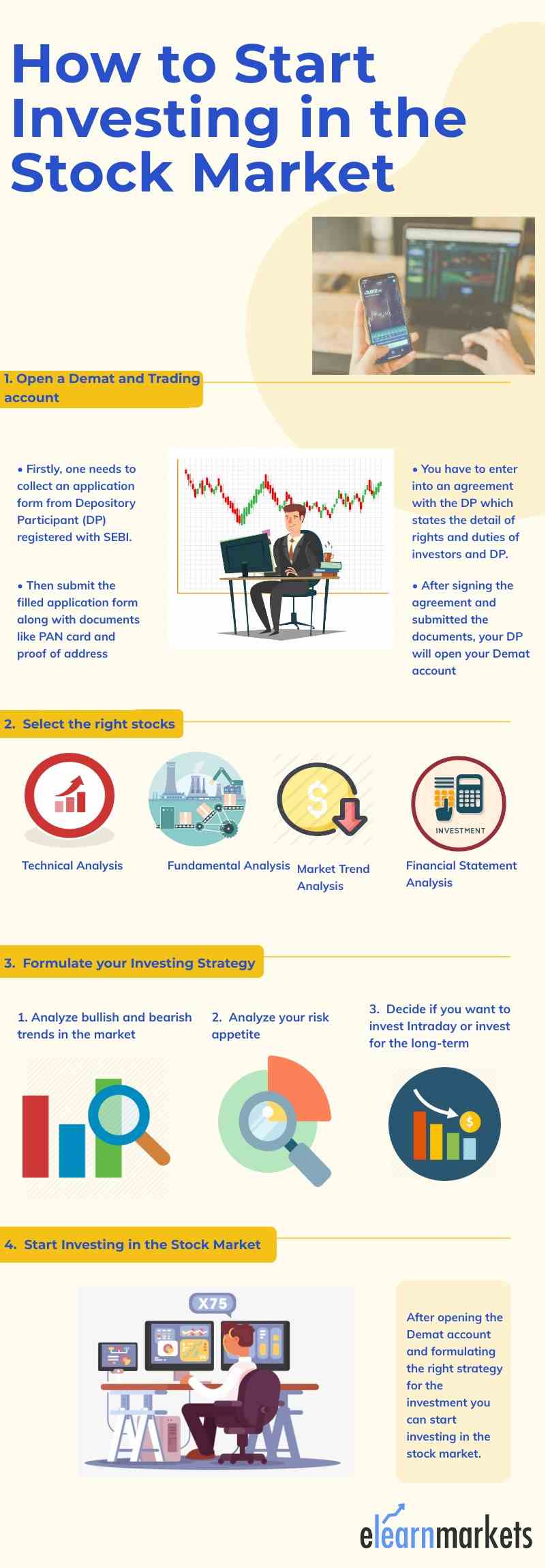
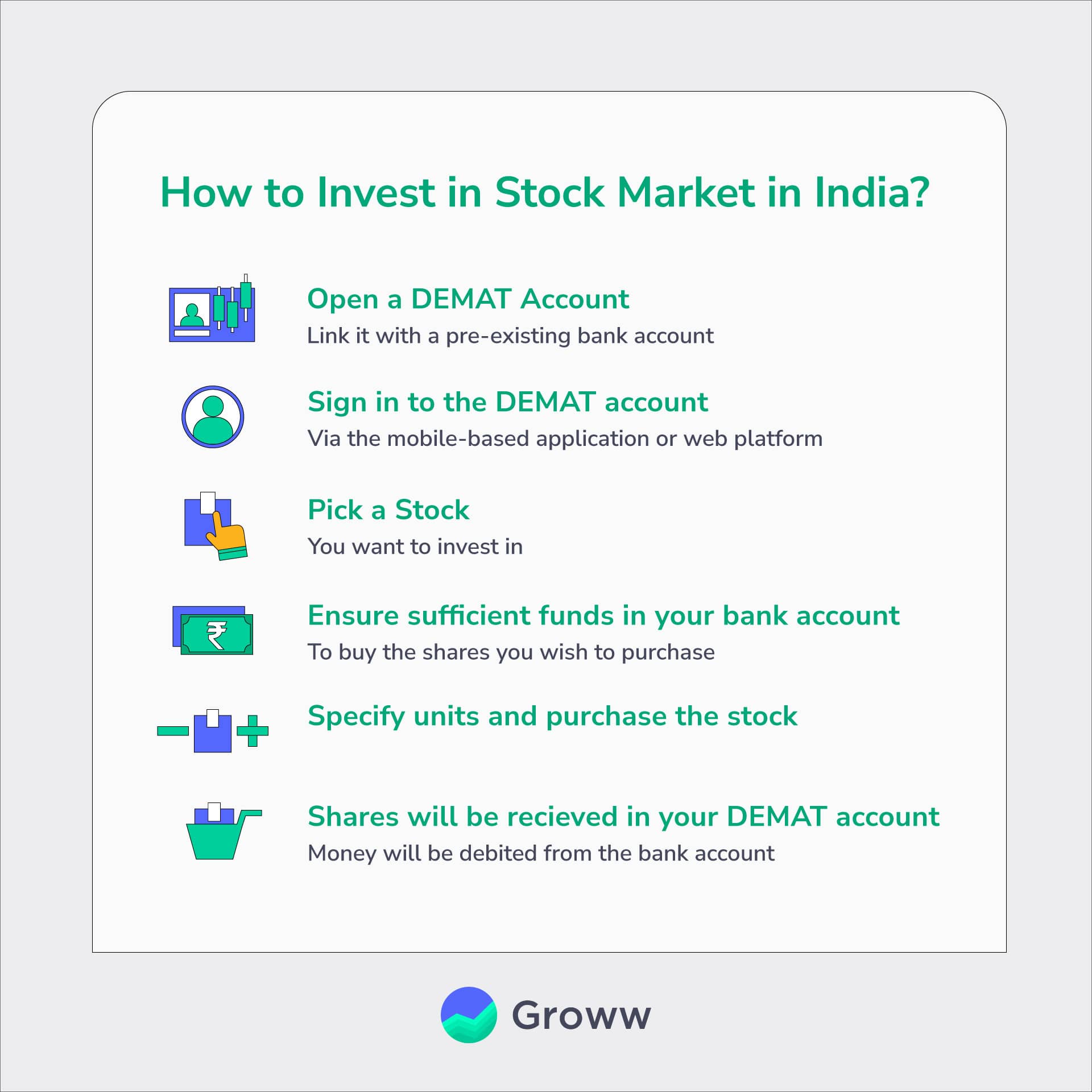
With an account opened, you must decide what to buy. The stock market offers a dizzying array of options, but for most beginners, simplicity is the ultimate sophistication.
Individual Stocks vs. Exchange-Traded Funds (ETFs)
Buying individual stocks (like Apple, Amazon, or Tesla) allows you to own a specific company. While this offers the potential for high returns, it also carries high risk; if that one company fails, your investment goes with it. For most beginners, ETFs are a better choice. An ETF is a basket of hundreds or even thousands of stocks. When you buy one share of an ETF, you are instantly diversified across many different companies, reducing the impact of any single company’s failure.
The Power of Index Fund Investing
A popular type of ETF is the “Index Fund.” These funds aim to track the performance of a specific market index, such as the S&P 500 (which consists of the 500 largest publicly traded companies in the U.S.). Because index funds are passively managed—meaning a human isn’t choosing which stocks to buy—they have incredibly low fees. Historically, the vast majority of professional fund managers fail to beat the S&P 500 over long periods, suggesting that for most people, simply “buying the market” is the most effective strategy.
Diversification: The Only Free Lunch in Finance
Diversification is the practice of spreading your investments across different sectors (Tech, Healthcare, Energy), sizes of companies (Large-cap vs. Small-cap), and even geographic locations (Domestic vs. International). The goal is to ensure that a downturn in one area of the economy doesn’t devastate your entire portfolio. By holding a diversified mix of assets, you can achieve a smoother ride toward your financial goals.
4. Strategy and Execution: How to Buy Your First Share
The mechanics of buying a stock or fund are straightforward, but the strategy you use to enter the market can significantly impact your psychological success.
Market Orders vs. Limit Orders
When you are ready to buy, you will encounter different “order types.”
- Market Order: This tells the broker to buy the stock immediately at the best current price. This is the simplest method and is usually fine for highly liquid stocks and ETFs.
- Limit Order: This tells the broker to only buy the stock if it hits a specific price or lower. This gives you more control over what you pay but may result in the trade not being executed if the price never reaches your limit.
Dollar-Cost Averaging (DCA)
One of the biggest fears for new investors is buying at the “wrong time”—just before a market crash. Dollar-cost averaging mitigates this risk. Instead of investing a large lump sum all at once, you invest a fixed amount of money at regular intervals (e.g., $200 every month), regardless of the price. When prices are high, your money buys fewer shares; when prices are low, your money buys more. Over time, this lowers your average cost per share and removes the emotional stress of trying to “time” the market.
Rebalancing and Long-Term Maintenance
Investing is not entirely “hands-off.” Over time, some of your investments will grow faster than others, causing your portfolio to become unbalanced. For example, if your goal was to have 80% stocks and 20% bonds, a strong year for the stock market might leave you with 90% stocks. Rebalancing involves selling a portion of your winners and buying more of your underperformers to return to your target allocation. Doing this once or twice a year is sufficient for most investors.
5. The Psychological Game: Staying Invested Through Volatility
The greatest challenge in investing is not math or economics; it is temperament. The stock market is volatile by nature, and your success depends on your ability to stay the course when things look bleak.
Avoiding the Pitfalls of Market Timing
Market timing is the attempt to predict when the market will rise or fall and moving your money accordingly. Study after study has shown that this is a losing game. The best days in the stock market often follow the worst days. If you panic-sell during a crash and miss just a few of the market’s best days, your long-term returns can be cut in half. Successful investing is about “time in the market,” not “timing the market.”
The Impact of Compounding Over Decades
The most powerful force in the financial universe is compound interest, which Albert Einstein reportedly called the “eighth wonder of the world.” Compounding occurs when your investment earnings begin to earn earnings of their own. In the early years, the growth may seem slow. However, as the decades pass, the growth becomes exponential. A 25-year-old who invests $500 a month until age 65 (assuming a 7% return) could end up with over $1.2 million. Most of that wealth is generated in the final decade, highlighting the importance of starting as early as possible and staying invested.
In conclusion, starting your journey in the stock market does not require a degree in finance or a massive amount of capital. It requires discipline, a long-term perspective, and a willingness to learn the basic mechanics of the financial system. By stabilizing your personal finances, choosing the right accounts, diversifying your holdings through low-cost funds, and utilizing strategies like dollar-cost averaging, you can harness the power of the global economy to secure your financial future. The best time to start was ten years ago; the second best time is today.
aViewFromTheCave is a participant in the Amazon Services LLC Associates Program, an affiliate advertising program designed to provide a means for sites to earn advertising fees by advertising and linking to Amazon.com. Amazon, the Amazon logo, AmazonSupply, and the AmazonSupply logo are trademarks of Amazon.com, Inc. or its affiliates. As an Amazon Associate we earn affiliate commissions from qualifying purchases.