
For any aspiring entrepreneur or established small business owner, understanding and actively building business credit is not merely a financial strategy—it’s a cornerstone of sustainable growth and long-term success. Unlike personal credit, which assesses an individual’s financial trustworthiness, business credit gauges the financial health and reliability of a company itself. Establishing a strong business credit profile unlocks a myriad of opportunities, from securing favorable financing terms and expanding operational capacity to attracting strategic partnerships and navigating economic fluctuations with greater resilience.
Many small business owners make the mistake of relying solely on their personal credit for business needs, intertwining their personal and professional financial fates. While personal credit can undoubtedly play a role in a startup’s early days, especially when securing initial loans or credit cards, separating these two financial identities is paramount for both protection and growth. A robust business credit profile allows your company to stand on its own financial feet, providing access to capital independent of your personal credit score and safeguarding your personal assets from business liabilities. This comprehensive guide will walk you through the essential steps, strategies, and best practices for successfully initiating and cultivating strong business credit from the ground up.
Understanding the Foundation of Business Credit
Before diving into the mechanics of building business credit, it’s crucial to grasp what it is, why it matters, and who the key players are in assessing it. This foundational knowledge empowers you to make informed decisions and approach the process strategically.
What is Business Credit and Why Does it Matter?
Business credit is essentially a company’s financial report card, reflecting its ability to manage debt and meet financial obligations. It’s a numerical representation, often in the form of a score, that lenders, suppliers, and even potential partners use to evaluate a business’s creditworthiness. This score is derived from various factors, including payment history with vendors, loans, credit cards, and public records like bankruptcies or tax liens.
The importance of business credit cannot be overstated. A strong credit profile offers numerous advantages:
- Access to Capital: It makes it easier to qualify for loans, lines of credit, and credit cards with more favorable interest rates and terms.
- Separation of Finances: It creates a clear distinction between personal and business finances, protecting your personal assets from business debts and liabilities.
- Better Vendor Terms: Suppliers are more likely to offer net-30 or net-60 payment terms, allowing you to purchase inventory or services on credit and pay later, improving your cash flow.
- Lower Insurance Premiums: Some business insurance providers consider credit scores when determining premiums.
- Professional Perception: A strong credit profile enhances your business’s credibility and professional standing in the eyes of partners, investors, and customers.
Separating Personal and Business Finances
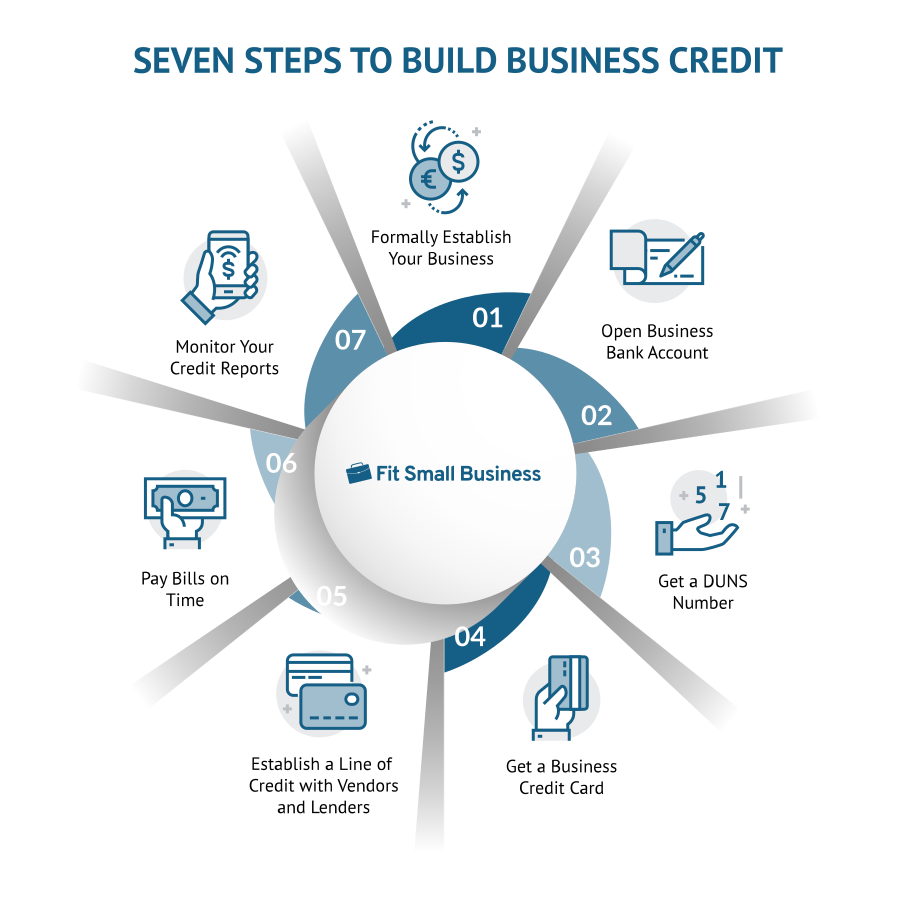
One of the most critical early steps in establishing business credit is to formally separate your personal and business finances. This isn’t just a best practice; it’s a non-negotiable requirement for building a distinct business credit profile. Commingling funds makes it difficult to track business expenses, comply with tax regulations, and, most importantly, demonstrate to credit bureaus and lenders that your business operates as an independent financial entity.
This separation begins with obtaining an Employer Identification Number (EIN) for your business, opening a dedicated business bank account, and using specific business credit cards or loans for all company-related transactions. Without this clear division, credit bureaus will struggle to differentiate between your personal and business financial activities, often defaulting to your personal credit history.
Key Players in Business Credit Reporting
Just as there are major personal credit bureaus (Experian, Equ Equifax, TransUnion), there are primary agencies that collect and report business credit information. Understanding who these players are and how they operate is essential for monitoring and improving your business credit.
- Dun & Bradstreet (D&B): Arguably the most well-known, D&B assigns businesses a D-U-N-S Number, a unique nine-digit identifier crucial for many government contracts and vendor applications. Their flagship product is the PAYDEX score, which ranges from 1 to 100, with higher scores indicating prompt payments.
- Experian Business: Experian offers comprehensive business credit reports and scores, often including a Business Credit Score (0-100), Financial Stability Risk Score (1-5, lower is better), and a Payment Behavior Index.
- Equifax Business: Equifax provides a Business Credit Risk Score (101-992, higher is better) and a Business Failure Score (1000-1610, higher is better), assessing the likelihood of business failure within 12 months.
These bureaus collect data from various sources, including vendors, lenders, public records, and even utility companies. Knowing which bureaus report what data allows you to strategically build credit across all relevant platforms.
Establishing Your Business’s Legal and Financial Infrastructure
Building a solid business credit foundation requires laying the proper legal and financial groundwork. These steps create the legitimacy and structure necessary for credit bureaus and lenders to recognize your business as a distinct entity.
Formalizing Your Business Entity
The legal structure of your business significantly impacts how credit is established and perceived. While sole proprietorships and partnerships can exist, incorporating as a Limited Liability Company (LLC) or a Corporation (S-Corp or C-Corp) is highly recommended for building business credit. These structures legally separate your personal assets from the business, making it easier to secure credit in the company’s name and offering personal liability protection.
Registering your business with your state’s Secretary of State is a fundamental step. This formalization demonstrates a commitment to your business and provides an official record for credit bureaus.
Obtaining an EIN and D-U-N-S Number
- Employer Identification Number (EIN): Also known as a Federal Tax Identification Number, the EIN is essentially your business’s Social Security number. It’s required for most business structures (other than sole proprietorships with no employees) to open a business bank account, file taxes, and apply for business credit. You can obtain an EIN for free directly from the IRS website.
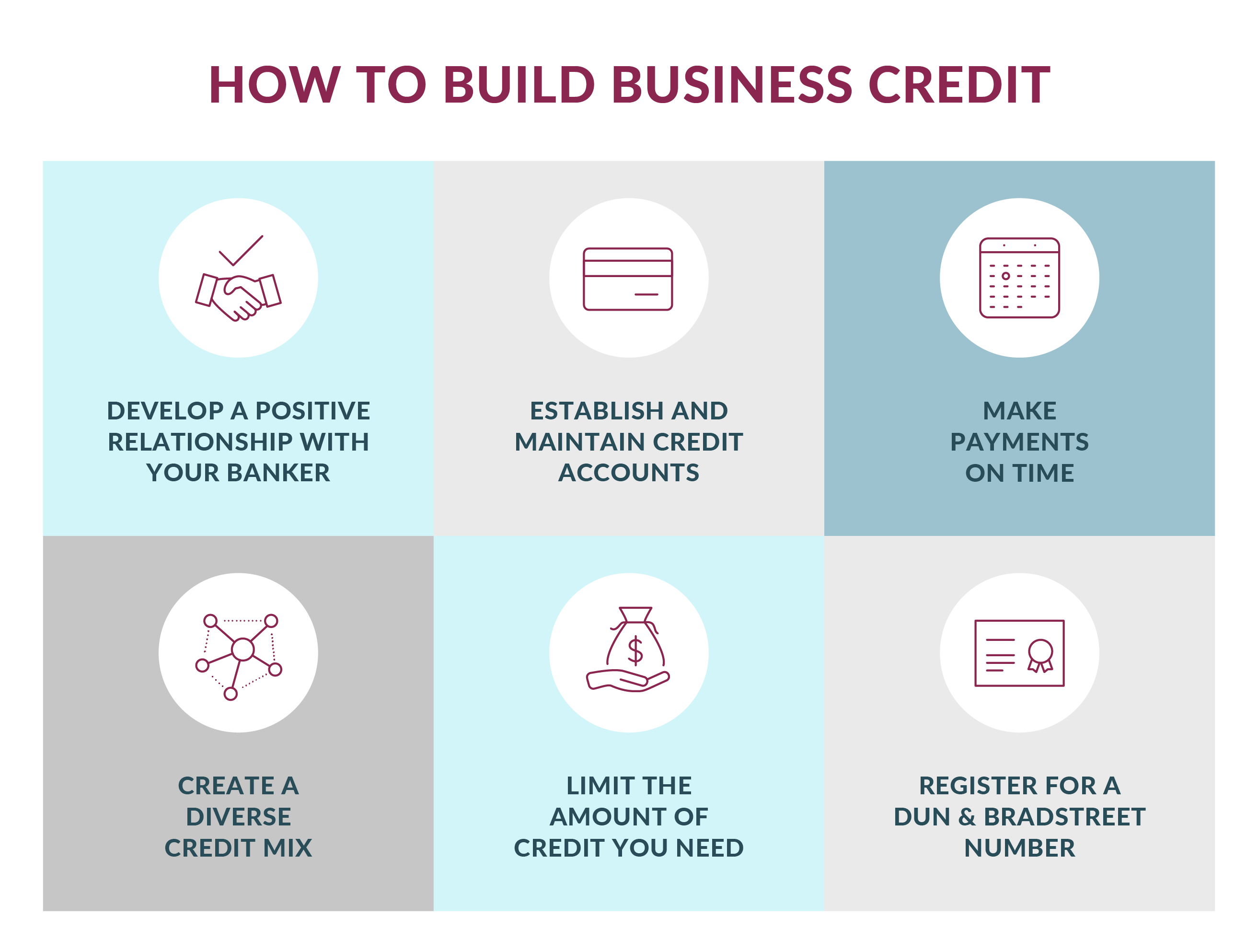
- D-U-N-S Number: The Data Universal Numbering System (D-U-N-S) Number is a unique nine-digit identifier for businesses established and maintained by Dun & Bradstreet. Many lenders and vendors, especially larger corporations and government agencies, require a D-U-N-S Number to assess your business’s creditworthiness. Obtaining one is typically free through D&B’s website, though expedited services may incur a fee. It’s a crucial step for getting your business credit file started with D&B.
Setting Up a Dedicated Business Bank Account
Once your business entity is formalized and you have an EIN, opening a dedicated business checking account is paramount. This account serves as the central hub for all your business income and expenses, reinforcing the separation of personal and business finances. It provides a clear audit trail for financial transactions, which is invaluable for accounting, tax purposes, and demonstrating financial activity to potential lenders.
When choosing a bank, look for one that understands the needs of small businesses and offers services like business savings accounts, merchant services, and potentially even initial lines of credit. Consistency in managing this account—maintaining a healthy balance, avoiding overdrafts, and showing regular activity—can subtly contribute to your business’s perceived financial stability.
Building Your Business Credit Profile Strategically
With the foundational elements in place, the next phase involves actively engaging in credit-building activities. This requires a systematic approach to acquiring and managing various forms of credit specifically designed for businesses.
Securing Starter Vendor Accounts (Net-30 Vendors)
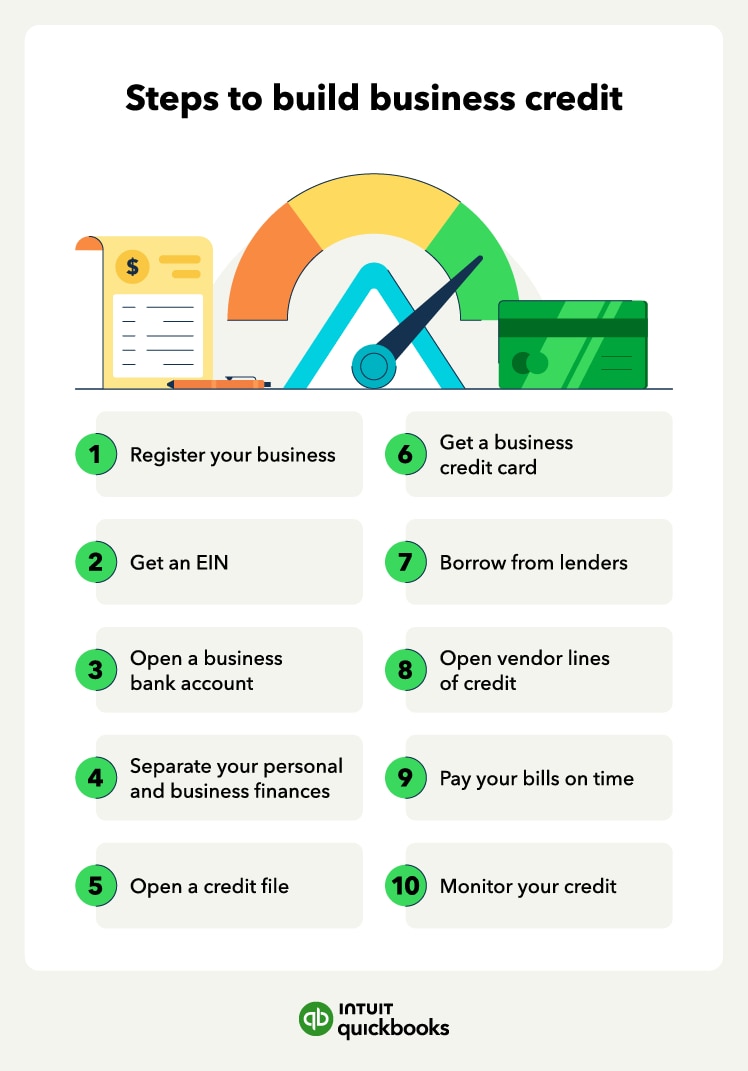
One of the most effective ways to begin building business credit is by establishing relationships with vendors who report payment history to business credit bureaus. These are often referred to as “Net-30 vendors” because they extend credit terms that allow you 30 days to pay for goods or services after an invoice is issued.
Look for suppliers of office supplies, industry-specific materials, or business services that are known to report to D&B, Experian Business, or Equifax Business. Examples include Uline, Grainger, Quill, and even some local suppliers. Start by making small, regular purchases and ensure you pay your invoices well before the due date. Consistent on-time or early payments will positively impact your business credit scores and serve as a strong foundation for future credit applications. As your relationship with these vendors matures, you might be offered Net-60 or Net-90 terms, further demonstrating your creditworthiness.
Applying for Business Credit Cards
Once you have a few positive trade lines from Net-30 vendors, you can begin to apply for business credit cards. It’s important to differentiate these from personal credit cards, even those used for business expenses. Business credit cards are reported to business credit bureaus, not personal ones (though some may still require a personal guarantee, especially for newer businesses).
Start with cards that are easier to obtain, perhaps from your current bank or those marketed towards new businesses. Look for cards with reasonable interest rates, no annual fees, and reporting mechanisms that benefit your business credit profile. Use these cards responsibly for business expenses, keeping utilization rates low (ideally below 30%) and always paying the full balance on time. Consistent, timely payments on business credit cards are a powerful indicator of financial responsibility.
Leveraging Business Loans and Lines of Credit
As your business grows and its credit profile strengthens, you can explore larger financing options such as business loans and lines of credit. These can be crucial for expansion, large equipment purchases, or managing cash flow.
- Term Loans: Provide a lump sum of capital, repaid over a set period with fixed interest rates.
- Lines of Credit: Offer flexible access to funds up to a certain limit, which you can draw from as needed and repay, similar to a credit card but often with lower interest rates and higher limits.
- SBA Loans: Backed by the Small Business Administration, these loans often have more favorable terms and lower down payments, making them accessible to businesses that might not qualify for traditional bank loans.
Successfully managing and repaying these larger credit facilities significantly boosts your business credit score, signaling to future lenders that your company is capable of handling substantial debt. Always research different lenders and loan products to find the best fit for your business’s specific needs and credit standing.
Monitoring and Managing Your Business Credit
Building business credit is an ongoing process that requires continuous monitoring and proactive management. Regularly reviewing your credit reports and scores helps you identify errors, track progress, and address any potential issues promptly.
Regular Credit Monitoring
Just as you would monitor your personal credit, it’s crucial to regularly check your business credit reports from Dun & Bradstreet, Experian Business, and Equifax Business. Many services offer monitoring subscriptions, or you can purchase reports periodically.
Key aspects to look for include:
- Accuracy of Information: Ensure all company details (name, address, EIN) are correct.
- Trade Lines: Verify that all your vendor accounts, loans, and credit cards are being reported accurately, including payment history.
- Inquiries: Note who has pulled your business credit report.
- Public Records: Check for any liens, judgments, or bankruptcies that might be incorrectly associated with your business.
- Dispute Errors: If you find any discrepancies, dispute them immediately with the respective credit bureau. Correcting errors can significantly improve your scores.
Understanding Your Business Credit Scores
Each credit bureau uses different scoring models, so it’s important to understand what each score means and what range constitutes a “good” score.
- D&B PAYDEX Score: Ranges from 1 to 100, with 80+ considered excellent, indicating prompt payments.
- Experian Business Credit Score: Ranges from 0 to 100, with 76-100 being low risk.
- Equifax Business Credit Risk Score: Ranges from 101 to 992, with higher scores indicating lower risk.
Understanding these scores allows you to gauge your business’s financial health from a lender’s perspective and identify areas for improvement. A holistic view across all bureaus provides the most comprehensive picture.
Best Practices for Payment and Debt Management
Maintaining a strong business credit profile boils down to consistent, responsible financial behavior.
- Pay Bills On Time (or Early): This is the single most important factor. Late payments are detrimental. Set up reminders or automate payments where possible.
- Keep Credit Utilization Low: For business credit cards and lines of credit, aim to use no more than 30% of your available credit limit. High utilization can signal financial distress, even if you pay on time.
- Avoid Excessive Applications: Each credit application can result in a hard inquiry, which might slightly lower your score temporarily. Apply for credit judiciously.
- Diversify Your Credit Mix: Having a mix of different credit types (vendor accounts, credit cards, loans) can be beneficial, as it demonstrates your ability to manage various forms of debt.
- Maintain Stable Business Information: Consistency in your business name, address, and phone number (NAP) across all platforms (website, directories, credit applications) helps credit bureaus accurately track your business.
Common Pitfalls and Advanced Strategies
Even with a solid plan, building business credit can present challenges. Being aware of common pitfalls and employing advanced strategies can accelerate your progress and protect your financial standing.
Avoiding Personal Guarantees (When Possible)
When starting out, many lenders will require a personal guarantee (PG) on business loans and credit cards. A PG means you, as the business owner, are personally responsible for repaying the debt if your business defaults. While often unavoidable initially, the long-term goal should be to build enough business credit so that you can qualify for financing without a PG. This completely separates your personal liability from your business debts, providing significant protection. Prioritize building your business credit to a point where lenders are comfortable extending credit based solely on the company’s financial strength.
The Role of Trade References
Beyond formal credit lines, establishing trade references can also bolster your business credit. These are references from suppliers or partners who can vouch for your company’s payment reliability, even if they don’t report to major credit bureaus. Some lenders or larger vendors might request these references when evaluating your creditworthiness, especially if your formal credit file is still thin. Actively cultivate strong relationships with your suppliers and ensure timely payments to earn positive testimonials.
Scaling Your Credit Limits
As your business grows and your credit profile improves, proactively seeking increases in your credit limits on existing business credit cards and lines of credit can be a smart move. This demonstrates to credit bureaus that you are trusted with higher amounts of capital, and it also improves your credit utilization ratio if your spending remains consistent. Many lenders will automatically review your account for limit increases, but a proactive request, especially after a period of significant growth or strong financial performance, can be beneficial. Always ensure that any increased credit limits align with your actual business needs and won’t lead to over-indebtedness.
In conclusion, starting and nurturing business credit is a fundamental journey for any entrepreneur. It demands meticulous attention to detail, a commitment to financial discipline, and a clear understanding of the financial ecosystem. By diligently implementing these strategies—from formalizing your entity and separating finances to strategically acquiring and responsibly managing various forms of credit—you will not only safeguard your personal assets but also unlock the true potential for your business’s financial independence and boundless growth. The effort invested today will pay dividends in the form of enhanced credibility, greater access to capital, and a more secure financial future for your enterprise.
aViewFromTheCave is a participant in the Amazon Services LLC Associates Program, an affiliate advertising program designed to provide a means for sites to earn advertising fees by advertising and linking to Amazon.com. Amazon, the Amazon logo, AmazonSupply, and the AmazonSupply logo are trademarks of Amazon.com, Inc. or its affiliates. As an Amazon Associate we earn affiliate commissions from qualifying purchases.