
The landscape of the modern economy has shifted significantly, allowing for the rise of the lean, home-based enterprise. For technology professionals, this shift presents a unique opportunity to transition from traditional employment to business ownership with remarkably low overhead. Starting an information technology (IT) business from home is no longer just a viable side hustle; it is a strategic financial move that, when executed with a focus on high-margin services and recurring revenue, can lead to substantial long-term wealth. By prioritizing financial structure, lean operations, and scalable pricing models, an aspiring IT entrepreneur can build a robust income stream that far exceeds the potential of a standard corporate salary.
Financial Foundations: Assessing the Low-Overhead Advantage
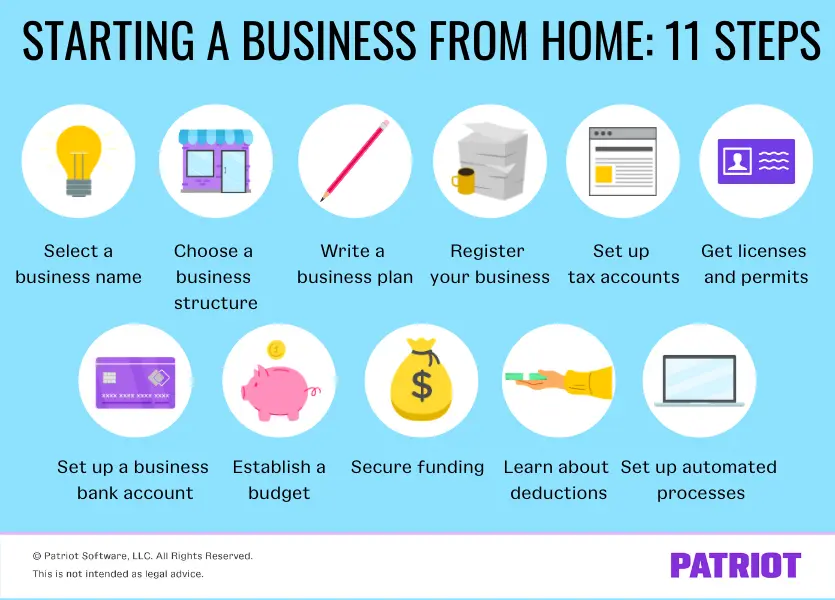
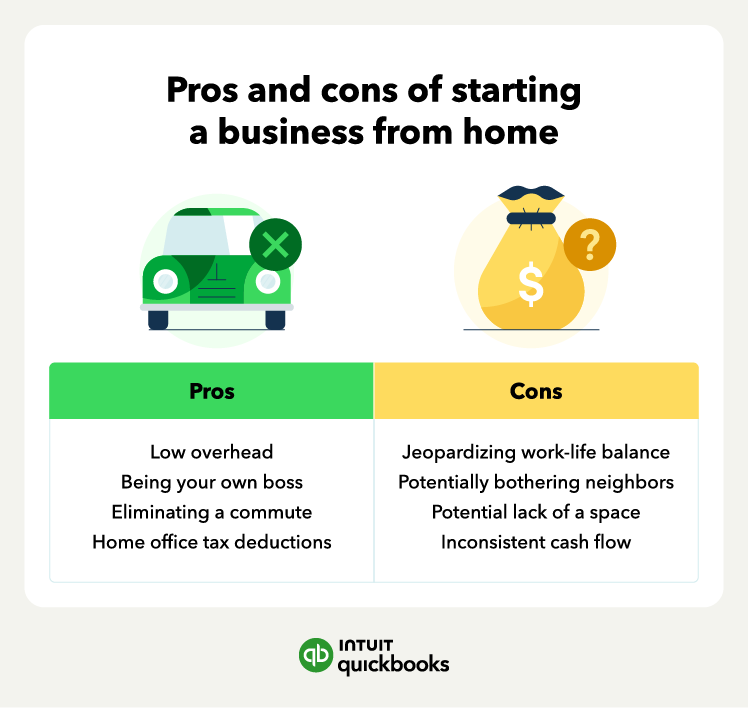
One of the most compelling reasons to start an IT business at home is the immediate elimination of major capital expenditures associated with commercial real estate. In the “Money” niche of business development, the goal is to maximize the delta between gross revenue and operating expenses. By utilizing a home office, an entrepreneur effectively reduces their “burn rate”—the amount of money spent monthly to keep the business alive—to almost zero, assuming they already have a place of residence and basic internet connectivity.
Identifying High-Margin Service Models
Not all IT services are created equal in terms of profitability. To ensure a home-based business is financially lucrative, one must focus on services with low Cost of Goods Sold (COGS) and high perceived value. For instance, hardware repair often involves low margins due to the cost of parts and the physical time required. Conversely, cybersecurity consulting, cloud architecture design, and software-as-a-service (SaaS) management offer high margins because the primary “product” is specialized knowledge and digital efficiency.
When selecting a niche, consider the “scalability-to-labor” ratio. Services that allow you to bill for your expertise rather than your manual hours—such as implementing automated security protocols or managing cloud migrations—provide a faster path to high-level income. The objective is to move away from “trading time for dollars” and toward a model where your financial gain is tied to the value you provide to a client’s bottom line.
Initial Capital Requirements and Bootstrap Strategies
The barrier to entry for a home-based IT business is financially low, but it is not non-existent. A professional setup typically requires a high-performance workstation, redundant internet connections, and specialized software licenses (such as Remote Monitoring and Management or RMM tools). However, rather than seeking external investment or taking on high-interest debt, the most successful home-based IT firms utilize “bootstrapping.”
Bootstrapping involves using personal savings to fund initial operations and then reinvesting the first few months of profit back into the business. From a financial management perspective, this keeps the business debt-free and ensures that the founder retains 100% equity. A lean start might involve utilizing open-source tools initially and upgrading to enterprise-grade software once a stable client base is established. This disciplined approach to cash flow management is what separates a sustainable business from a failing one.
Designing a High-Yield Revenue Model
Profitability in the IT sector is heavily dependent on how you structure your contracts. Many new business owners fall into the trap of purely reactive billing—charging only when something breaks. From a financial planning standpoint, this is dangerous because it creates “lumpy” income, where some months are highly profitable and others are stagnant. To build a reliable financial engine, a home-based IT business must prioritize recurring revenue.
Hourly Billing vs. Fixed-Project Fees
While hourly billing is the simplest method, it often penalizes efficiency. If you become faster at solving a problem through expertise or automation, you earn less money. A more sophisticated financial strategy is the fixed-fee or project-based model. By estimating the value of the outcome to the client (e.g., a 20% increase in their operational uptime), you can set a price that reflects that value.
For example, a security audit that takes you ten hours might be billed at $2,500 based on the protection it provides, rather than $1,000 based on a $100 hourly rate. This “value-based pricing” allows the entrepreneur to increase their effective hourly rate as they become more proficient and utilize better technology.
The Power of Recurring Revenue through Managed Services
The gold standard of IT business finance is the Managed Services Provider (MSP) model. Under this framework, clients pay a monthly retainer for ongoing support, monitoring, and maintenance. This transforms the business from a series of one-off transactions into a predictable subscription service.

For a home-based operator, securing just five to ten small business clients on a $500 to $1,500 monthly retainer can create a baseline of $5,000 to $15,000 in monthly recurring revenue (MRR). This stability allows for better personal financial planning, easier access to business credit, and the ability to project future growth with confidence. Furthermore, businesses with high MRR are valued at much higher multiples if the owner ever decides to sell the company.
Operational Finance: Taxes, Insurance, and Cash Flow
Operating from home introduces specific financial complexities and opportunities regarding tax law and risk management. Properly navigating these elements can save a business owner thousands of dollars annually, directly impacting the net profit margin.
Tax Implications and Deductions for Home-Based IT Pros
In many jurisdictions, a home-based business owner can deduct a portion of their housing costs—including rent or mortgage interest, utilities, and insurance—as a business expense, provided the space is used exclusively for work. Additionally, the IRS Section 179 deduction (or local equivalents) often allows for the immediate expensing of hardware and software purchases rather than depreciating them over several years.
It is vital to maintain separate bank accounts for personal and business finances from day one. This “clean” accounting prevents the co-mingling of funds, which is essential for protecting the legal integrity of a business entity (like an LLC) and making tax season manageable. Professional bookkeeping software is a minor expense that provides a major return on investment by identifying trends in spending and ensuring all deductible expenses are tracked.
Risk Management and Financial Protection
In the IT world, a single error can lead to significant data loss or security breaches for a client, potentially resulting in expensive legal battles. From a wealth-protection standpoint, carrying Errors and Omissions (E&O) insurance and Cyber Liability insurance is non-negotiable. While these premiums are an added cost, they protect the entrepreneur’s personal assets from business-related catastrophes.
Financial risk is also managed through robust contracts. A well-drafted Master Service Agreement (MSA) should clearly define the scope of work and limit the provider’s liability. Ensuring that your business is financially shielded from “scope creep”—where a client demands more work than originally agreed upon without paying more—is a fundamental component of maintaining healthy profit margins.
Strategic Growth: Scaling Profits through Automation and Outsourcing
The ultimate goal for many home-based entrepreneurs is to transition from a “one-person shop” to a scalable enterprise. This requires a shift in mindset from “doing the work” to “building the system that does the work.”
Leveraging Niche Markets for Premium Rates
A common mistake is trying to be a generalist IT provider for everyone. Financially, this leads to price wars with larger competitors. However, by specializing in a specific niche—such as IT compliance for dental practices, or DevOps for fintech startups—you can command premium rates. Clients in specialized industries are willing to pay more for an expert who understands their specific regulatory and technical landscape. This specialization allows you to increase your income without necessarily increasing your workload.
Reinvesting Profits for Technological Expansion
As the business generates surplus cash, the most effective “investment” is often back into the business’s own infrastructure. Implementing advanced automation tools can allow a single person to manage hundreds of devices simultaneously. This creates “non-linear growth,” where your revenue increases exponentially while your time commitment increases only marginally.
Scaling might also involve “white-labeling” certain services. For example, a home-based consultant can partner with a 24/7 Help Desk provider, paying them a wholesale rate to handle routine tickets while the owner focuses on high-level, high-revenue consulting. This allows the business to scale its capabilities and its income without the financial burden of hiring full-time employees or moving into a physical office.
In summary, starting an IT business at home is a sophisticated financial play. By leveraging low overhead, implementing recurring revenue models, optimizing tax strategies, and focusing on high-margin niches, an entrepreneur can build a powerful engine for personal wealth. Success in this field is not merely a matter of technical skill; it is a matter of masterfully managing the money and the systems that drive the business forward. Through disciplined financial management and a focus on value-based growth, the home-based IT venture can provide both the freedom of self-employment and the financial security of a high-growth enterprise.
aViewFromTheCave is a participant in the Amazon Services LLC Associates Program, an affiliate advertising program designed to provide a means for sites to earn advertising fees by advertising and linking to Amazon.com. Amazon, the Amazon logo, AmazonSupply, and the AmazonSupply logo are trademarks of Amazon.com, Inc. or its affiliates. As an Amazon Associate we earn affiliate commissions from qualifying purchases.