
The digital marketplace has evolved from a simple retail platform into a complex ecosystem that offers diverse opportunities for wealth creation. Starting a business with Amazon is no longer just about selling books; it is about leveraging one of the world’s most sophisticated logistical and financial infrastructures to build a sustainable income stream. For the modern entrepreneur, Amazon represents a bridge between a side hustle and a scalable corporate entity. Understanding the financial mechanics, investment requirements, and revenue models is the first step toward achieving profitability in this competitive environment.
Strategic Revenue Models: Choosing the Right Path to Profit
Before committing capital, a prospective business owner must identify which Amazon business model aligns with their financial goals and risk tolerance. Each model requires a different level of initial investment and offers varying margins of return.
Fulfillment by Amazon (FBA) and Private Labeling
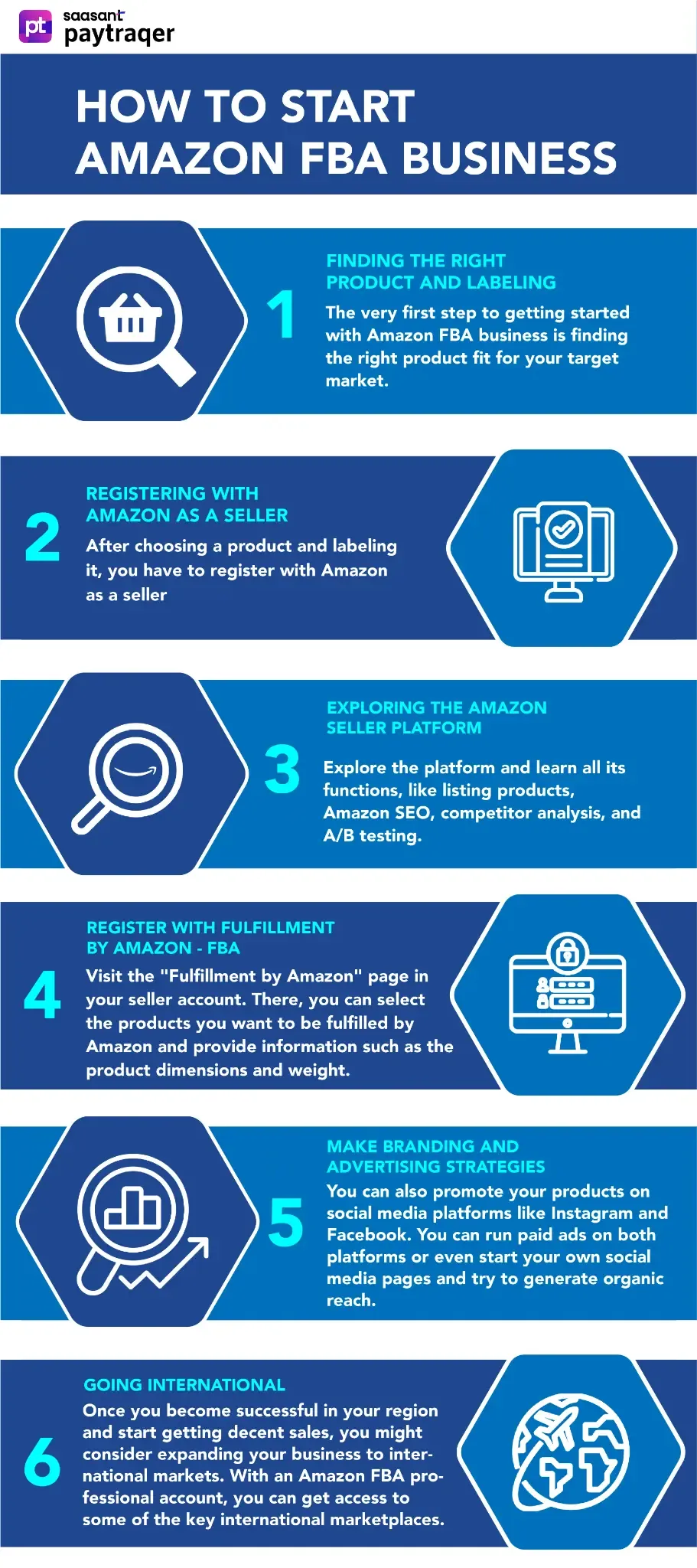
Amazon FBA is perhaps the most well-known model for significant wealth generation. In this structure, you source products—typically from manufacturers overseas—and brand them as your own (Private Labeling). The products are shipped to Amazon’s fulfillment centers, where Amazon handles storage, shipping, and customer service. Financially, this model requires the highest upfront capital for inventory, branding, and shipping. However, it also offers the highest potential for scaling and eventual brand acquisition. The goal here is to identify high-demand, low-competition niches where you can command a premium price through superior branding.
Amazon Associates (Affiliate Marketing)
For those looking to start with minimal overhead, the Amazon Associates program focuses on lead generation rather than physical inventory. By creating content—such as product reviews, gift guides, or comparison articles—entrepreneurs earn a commission on every sale directed through their unique affiliate links. The “Money” focus here is on conversion rates and traffic volume. While the margins per sale are lower (ranging from 1% to 10% depending on the category), the lack of inventory risk makes it an attractive entry point for building passive income.
Kindle Direct Publishing (KDP) and Merch on Demand
Content creation offers another low-cost entry into the Amazon ecosystem. KDP allows authors to publish digital and print-on-demand books, while Merch on Demand allows designers to upload artwork for apparel. Both models operate on a royalty basis. The financial advantage is the elimination of storage fees and manufacturing costs. Your primary investment is time or the cost of hiring ghostwriters and designers. Once a book or design gains traction, it acts as a digital asset that produces recurring revenue with zero additional cost of goods sold (COGS).
Financial Planning: Managing Costs and Profit Margins
Starting a business is an exercise in financial management. On Amazon, profit margins are often squeezed by a variety of hidden costs that can catch an unprepared entrepreneur off guard. Mastering the “Amazon Math” is essential for long-term survival.
Navigating the Fee Structure
To build a profitable business, you must account for every cent deducted by the platform. The primary fees include:
-
Professional Selling Plan: A flat monthly fee (currently $39.99) that is necessary for anyone serious about scaling.
-
Referral Fees: Essentially a commission Amazon takes on every sale, usually ranging from 8% to 15%.
-
Fulfillment Fees: Costs associated with picking, packing, and shipping your items under the FBA model.
-
Storage Fees: Monthly charges based on the volume of inventory held in Amazon warehouses. These fees spike significantly during the Q4 holiday season, making inventory turnover rates a critical financial metric.
Calculating Unit Economics
Successful Amazon sellers focus on “Unit Economics”—the direct revenues and costs associated with a single unit of a product. A common rule of thumb is the “Rule of Thirds”: one-third of the sale price goes to the cost of the product, one-third goes to Amazon fees, and one-third is your gross profit. However, after accounting for marketing (PPC), taxes, and overhead, a net margin of 15% to 25% is generally considered healthy. If your product cannot sustain these margins, it is not a viable business asset.
Managing Cash Flow
Cash flow is the lifeblood of an Amazon business. Unlike many service-based businesses, an FBA business is capital-intensive. As you scale, you must reinvest your profits into larger inventory orders to meet growing demand. A common pitfall is “growing broke”—where sales are high, but all cash is tied up in future inventory, leaving the owner unable to pay themselves or cover immediate expenses. Implementing a disciplined reinvestment strategy and maintaining a cash reserve for “Black Swan” events (like supply chain disruptions) is vital.
Investment Strategy: Sourcing and Inventory Management
Your initial investment is more than just a purchase; it is a strategic allocation of capital. How you source and manage your inventory will determine the speed at which you see a return on investment (ROI).
Sourcing for Maximum ROI
Whether you are using platforms like Alibaba for international sourcing or engaging in domestic wholesale, the goal is to drive down the landed cost—the total price of a product once it arrives at the warehouse. Negotiating with suppliers, optimizing packaging to reduce dimensions (and thus shipping fees), and auditing for quality control are all financial maneuvers that protect your margins. A $0.50 reduction in unit cost can translate to thousands of dollars in annual profit as volume increases.
Inventory Turnover and the IPI Score
Amazon monitors your Inventory Performance Index (IPI). A low IPI score due to “dead stock” (inventory that isn’t selling) can lead to storage limits and penalty fees. From a financial perspective, stagnant inventory is trapped capital that is actively depreciating due to storage costs. Effective sellers use data-driven forecasting tools to ensure they have enough stock to avoid “stocking out”—which kills your search ranking and revenue—without over-investing in slow-moving goods.
Scaling the Income: Marketing and Optimization
Once the foundation is set, the focus shifts to maximizing the return on every visitor to your listing. In the world of Amazon, this is achieved through Search Engine Optimization (SEO) and Pay-Per-Click (PPC) advertising.
Leveraging Amazon Advertising (PPC)
Amazon’s internal advertising platform is a powerful tool for driving sales, but it can also be a “money pit” if managed poorly. Sellers must monitor two key metrics:
-
ACOS (Advertising Cost of Sale): This measures how much you spend on ads relative to the revenue generated from those ads.
-
TACOS (Total Advertising Cost of Sale): This measures your ad spend against your total revenue (including organic sales).
A low TACOS indicates that your advertising is effectively boosting your organic ranking, leading to a more profitable business overall. The strategy is to spend aggressively during the launch phase to “buy” data and ranking, then optimize for profitability as organic sales take over.
Conversion Rate Optimization (CRO)
In financial terms, every click you pay for that doesn’t result in a sale is a loss. Improving your conversion rate through high-quality photography, persuasive copywriting, and A+ Content is a direct way to increase your ROI without increasing your marketing budget. A listing that converts at 15% is significantly more valuable as a financial asset than one that converts at 5%, as it yields a higher return for the same amount of traffic.
Long-term Sustainability and Exit Strategy
The ultimate goal of many Amazon entrepreneurs is not just monthly income, but the creation of a sellable asset. In recent years, the rise of “Amazon Aggregators”—companies that buy successful Amazon brands—has created a lucrative exit path.
Building Brand Equity
A business that simply “resells” items is worth very little. However, a brand with a loyal customer base, a trademarked name, and a history of consistent reviews is a valuable asset. To maximize the valuation of your business, focus on building a “moat” around your brand. This includes having a unique product offering, a professional online presence outside of Amazon, and a clean set of financial books.
Preparing for an Exit
Business valuations in the Amazon space are typically based on a multiple of SDE (Seller’s Discretionary Earnings). Multiples often range from 2.5x to 5x annual profit. To secure a high multiple, you must demonstrate financial transparency, diversified product lines, and a high percentage of organic sales. By treating your Amazon store as a corporate entity from day one—keeping meticulous records and focusing on net profit rather than just “top-line” revenue—you position yourself for a significant windfall should you choose to sell.
Starting a business with Amazon is a journey of financial discipline and strategic growth. By understanding the various revenue models, mastering the fee structures, and focusing on scalable marketing strategies, an entrepreneur can transform a modest investment into a powerhouse of online income. Success on the platform is not the result of luck, but of calculated risks and a deep understanding of the economics of digital commerce.
aViewFromTheCave is a participant in the Amazon Services LLC Associates Program, an affiliate advertising program designed to provide a means for sites to earn advertising fees by advertising and linking to Amazon.com. Amazon, the Amazon logo, AmazonSupply, and the AmazonSupply logo are trademarks of Amazon.com, Inc. or its affiliates. As an Amazon Associate we earn affiliate commissions from qualifying purchases.