
Algebraic equations are the backbone of countless disciplines, from physics and engineering to finance and computer science. They provide a concise language for representing relationships between variables, allowing us to model real-world phenomena and predict outcomes. For centuries, solving these equations has been a cornerstone of mathematical practice, often demanding rigorous mental agility and meticulous manual calculation. However, the advent of technology has dramatically reshaped this landscape, offering powerful tools that streamline the process, enhance accuracy, and unlock solutions to problems once deemed intractable. This article delves into how modern technology empowers us to solve algebraic equations, transforming a complex task into an efficient and often insightful experience.

The Evolution of Equation Solving: From Manual Methods to Digital Solutions
Understanding the journey of equation solving from traditional methods to sophisticated digital solutions highlights the profound impact of technology on mathematics.
The Foundational Role of Algebra
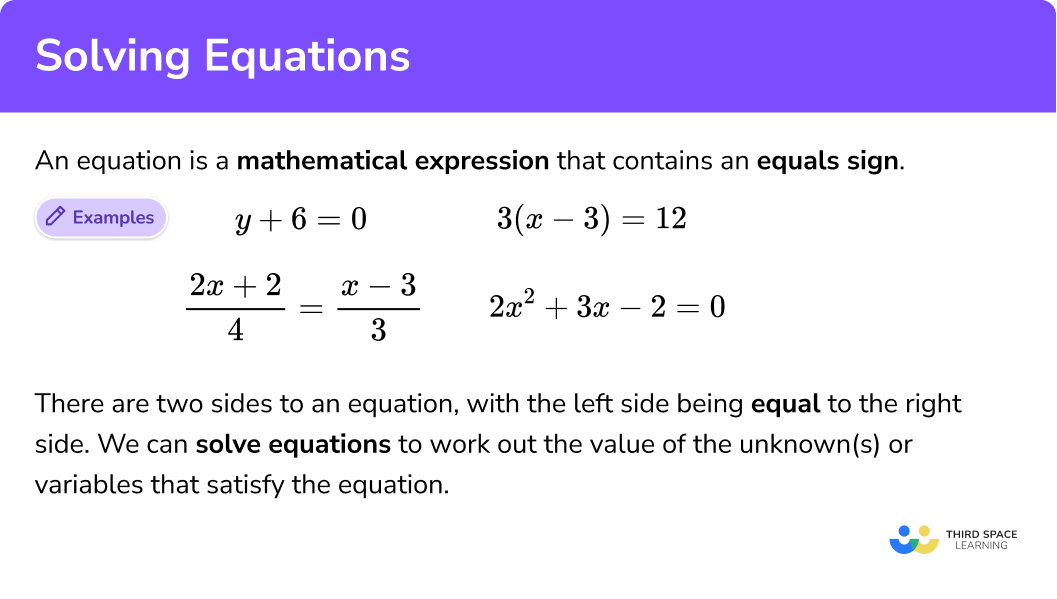
Algebra isn’t merely a subject in school; it’s a fundamental mode of thought that teaches logical reasoning and problem-solving. It allows us to express unknown quantities, establish relationships, and systematically deduce values. From simple linear equations ($ax + b = c$) to complex systems involving multiple variables, quadratic, cubic, exponential, and logarithmic functions, algebra provides the framework for quantitative analysis across virtually every scientific and technical field. Its principles underpin the algorithms that run our digital world, the models that predict climate change, and the designs of everything from skyscrapers to microchips.
Traditional Approaches and Their Limitations
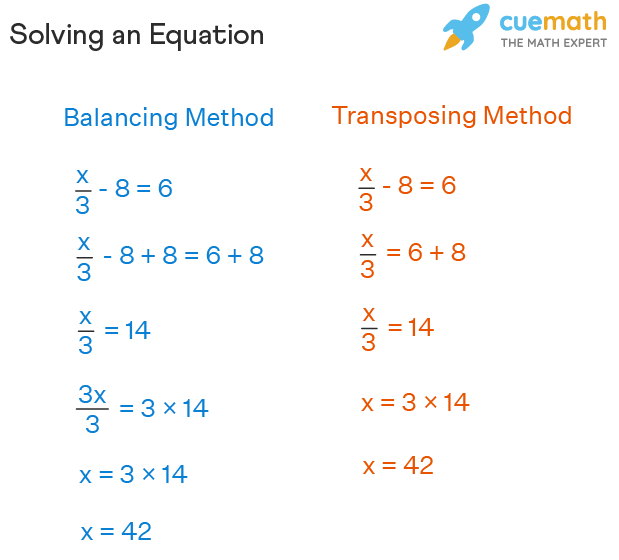
Historically, solving algebraic equations relied heavily on pencil and paper, requiring a deep understanding of algebraic properties, arithmetic precision, and a keen eye for detail. Techniques like substitution, elimination, factoring, and the quadratic formula were meticulously applied. While invaluable for building foundational mathematical intuition, these manual methods were inherently time-consuming and prone to human error, especially when dealing with equations involving many variables, large coefficients, or complex functions. The sheer computational burden often limited the scope of problems that could be realistically tackled, making iterative solutions or exploring multiple scenarios a monumental task.
The Digital Revolution in Mathematics
The introduction of electronic calculators in the mid-20th century marked the initial shift, providing rapid arithmetic capabilities. However, the real paradigm shift occurred with the advent of personal computers and specialized mathematical software. These tools moved beyond simple arithmetic to perform symbolic manipulation, numerical analysis, and graphical representations with unprecedented speed and accuracy. This digital revolution not only liberated individuals from tedious calculations but also democratized access to advanced problem-solving techniques, allowing students, educators, researchers, and professionals to focus more on understanding concepts and interpreting results rather than getting bogged down in computation. It fostered an environment where complex problems could be explored iteratively, and sophisticated models could be built and tested with ease.
Essential Tech Tools for Algebraic Equation Solving
Today, a diverse ecosystem of technological tools stands ready to assist in solving algebraic equations, each catering to different needs and levels of complexity.
Dedicated Math Software Suites
For serious mathematical work, research, or advanced education, specialized software suites offer unparalleled power and flexibility.
Symbolic Solvers
These sophisticated platforms are designed to perform symbolic computations, meaning they can manipulate mathematical expressions and equations in their abstract form, often providing exact answers rather than numerical approximations. They can simplify expressions, differentiate, integrate, and solve equations step-by-step.
-
Wolfram Alpha: An exceptionally powerful computational knowledge engine that can solve virtually any algebraic equation or system, provide step-by-step solutions, graph functions, and offer contextual information. Its natural language processing capabilities make it highly accessible.
-
Symbolab: Similar to Wolfram Alpha, Symbolab offers detailed step-by-step solutions for a wide array of mathematical problems, including equations, inequalities, and calculus. It’s highly valued for its pedagogical approach.
-
Maple and Mathematica: These are industry-standard, comprehensive computational software environments used by professionals and academics. They offer vast libraries for symbolic and numerical computation, powerful visualization tools, and programming capabilities to tackle extremely complex algebraic problems and develop custom mathematical models.
Numerical Solvers
While symbolic solvers aim for exact answers, numerical solvers approximate solutions, which is crucial for equations that lack analytical solutions or involve large datasets. They are essential in fields like engineering simulation, data science, and financial modeling.
-
MATLAB: A proprietary programming and numerical computing environment widely used for algorithmic development, data analysis, and numerical computation. Its robust libraries can solve linear and non-linear systems of equations, perform optimization, and handle matrix algebra efficiently.
-
Python (with Libraries like SymPy, NumPy, SciPy): Python has emerged as a powerhouse for scientific computing due to its open-source nature, extensive libraries, and ease of use.
-
SymPy: A Python library for symbolic mathematics, enabling Python to function as a symbolic solver similar to Maple or Mathematica for many tasks.
-
NumPy: The fundamental package for numerical computation in Python, providing support for large, multi-dimensional arrays and matrices, along with a collection of high-level mathematical functions to operate on these arrays. It’s foundational for numerical equation solving.
-
SciPy: Builds on NumPy, offering modules for optimization, integration, interpolation, linear algebra, signal processing, and more, making it ideal for solving complex scientific and engineering problems.
-
Everyday Calculator Apps and Online Utilities
For more routine tasks, quick checks, or learning, a host of accessible tools are readily available.
Scientific and Graphing Calculators (Physical & App-based)
These are ubiquitous in education and practical applications.
-
Physical Calculators (e.g., TI-84, Casio fx-991EX): Essential for standardized tests and classroom use, offering capabilities for solving linear equations, quadratic equations, and systems of equations, as well as graphing functions.
-
Desmos and GeoGebra: Highly popular free online graphing calculators and geometry tools. They allow users to visualize equations, find intersections, and perform basic algebraic operations with an intuitive, interactive interface, making them excellent educational aids.
Web-based Solvers
These platforms provide quick solutions, often with step-by-step explanations, making them ideal for students and professionals needing immediate assistance.
-
Photomath: A mobile app that uses a phone’s camera to scan handwritten or printed math problems and provides instant solutions with detailed step-by-step guides.
-
Microsoft Math Solver: Available as an app and web tool, it provides solutions, step-by-step explanations, and interactive graphs for various math problems, including algebra, calculus, and trigonometry.
AI-Powered Assistance and Future Trends
Artificial intelligence is beginning to revolutionize the way we interact with and solve mathematical problems.
AI Chatbots (ChatGPT, Bard)
Large Language Models (LLMs) like ChatGPT and Google Bard can interpret natural language queries, explain mathematical concepts, generate code for solving equations, and even attempt to solve equations directly. While they may sometimes make computational errors, their strength lies in their ability to explain the reasoning behind solutions and act as interactive tutors. They can guide users through the process of setting up equations and interpreting results.
Specialized AI Math Tutors
The future promises even more sophisticated AI tools specifically designed for mathematics. These emerging platforms use AI to personalize learning, identify common mistakes, and provide targeted feedback. They can adapt to a user’s learning style, offering dynamic problem sets and interactive explanations that go beyond static step-by-step solutions, fostering deeper understanding.
Best Practices for Tech-Assisted Equation Solving
While technology offers incredible advantages, its effective use requires a thoughtful approach.
Understanding the Problem First
Technology is a powerful amplifier, but it’s not a substitute for fundamental understanding. Before inputting an equation into a solver, take the time to comprehend what the equation represents, what the variables signify, and what kind of solution is expected. This critical thinking ensures you’re asking the right question and can interpret the answer meaningfully.
Choosing the Right Tool for the Job
Selecting the appropriate tool is key to efficiency and accuracy. A simple scientific calculator might suffice for a linear equation, while a complex system of differential equations might demand MATLAB or Python with SciPy. For visualizing functions, Desmos is excellent. For step-by-step learning, Wolfram Alpha or Symbolab are ideal. Match the tool’s capabilities to the problem’s demands.
Verifying Results and Error Checking
Even the most advanced software can produce unexpected results due to incorrect input, misinterpretation of syntax, or subtle bugs. Always sanity-check your answers. Does the solution make sense in the context of the problem? If you’re using numerical methods, is the approximation within an acceptable tolerance? Cross-referencing with another tool or performing a quick manual check can help catch errors.
Learning from the Process, Not Just the Answer
One of the greatest benefits of modern solvers is their ability to provide step-by-step solutions. Don’t just copy the final answer. Actively engage with the steps provided, understanding the logic behind each transformation. This approach turns the tool into a powerful learning aid, enhancing your own problem-solving skills rather than merely providing a shortcut.
Practical Applications and Beyond the Classroom
The ability to efficiently solve algebraic equations using technology extends far beyond academic settings, impacting numerous professional domains.
Engineering and Scientific Research
In engineering, algebraic equations are fundamental to designing structures, simulating fluid dynamics, analyzing electrical circuits, and optimizing mechanical systems. Scientists rely on them for modeling chemical reactions, predicting astrophysical phenomena, and analyzing biological processes. Software like MATLAB and Python are indispensable for solving the complex algebraic systems that arise in these fields, enabling simulations that would be impossible manually.
Data Science and Machine Learning
The core of data science and machine learning is deeply rooted in linear algebra and optimization. Algorithms for regression, classification, and neural networks involve solving systems of linear equations, calculating eigenvalues, and minimizing error functions. Tools like NumPy and SciPy in Python are crucial for manipulating large matrices and efficiently solving these algebraic problems, which are central to training models and extracting insights from vast datasets.
Business and Finance Modeling
Algebraic equations are vital for building financial models, forecasting market trends, calculating interest rates, assessing risk, and optimizing resource allocation in business operations. While specific financial tools exist, the underlying mathematical calculations often involve solving systems of equations. Using general-purpose mathematical software allows analysts to construct and solve complex models, aiding in strategic decision-making and investment planning.
Education and Personal Development
For students, technology demystifies complex algebraic concepts, making them more accessible and less intimidating. It allows educators to focus on conceptual understanding and problem formulation rather than rote calculation. For anyone, these tools serve as an excellent resource for refreshing mathematical skills, exploring new concepts, or tackling personal projects that involve quantitative analysis.
Conclusion
The journey of solving algebraic equations has been profoundly transformed by technological innovation. What was once a laborious, error-prone task can now be executed with incredible speed and precision, thanks to a diverse array of software, apps, and AI-powered tools. From dedicated symbolic and numerical solvers to intuitive web-based calculators and intelligent chatbots, technology has democratized access to advanced mathematical capabilities. However, the true power of these tools lies not just in their ability to deliver answers, but in their capacity to enhance understanding, facilitate learning, and empower individuals to tackle problems of ever-increasing complexity. By embracing these digital advancements thoughtfully, we can unlock new levels of precision, efficiency, and insight in the enduring quest to solve the world’s algebraic challenges.
aViewFromTheCave is a participant in the Amazon Services LLC Associates Program, an affiliate advertising program designed to provide a means for sites to earn advertising fees by advertising and linking to Amazon.com. Amazon, the Amazon logo, AmazonSupply, and the AmazonSupply logo are trademarks of Amazon.com, Inc. or its affiliates. As an Amazon Associate we earn affiliate commissions from qualifying purchases.