
Mathematics is the universal language of logic, but for many students and professionals, the mechanics of manual calculation—specifically when dealing with mixed fractions—can become a bottleneck in productivity. A mixed fraction, consisting of a whole number and a proper fraction, represents a value between two integers. While the traditional method of simplification involves multi-step division and the identification of the greatest common divisor (GCD), the modern technological landscape has transformed this process.
Today, simplifying mixed fractions is no longer just a pen-and-paper exercise. It is a gateway into the world of Educational Technology (EdTech), algorithmic logic, and computational intelligence. This guide explores how to simplify mixed fractions using current software tools, AI-driven applications, and programming frameworks, ensuring maximum accuracy and efficiency in digital environments.

The Evolution of Mathematical Problem-Solving in the Digital Age
The transition from manual arithmetic to digital computation has redefined our approach to “simplifying” numbers. In a traditional classroom, a student would convert a mixed fraction to an improper fraction, simplify the fractional part, and then convert it back. In the tech sector, this process is automated through sophisticated algorithms designed to handle rational numbers with absolute precision.
Moving Beyond Pen and Paper
Manual calculation is prone to human error, especially when identifying the largest factor that can divide both the numerator and the denominator. Technology eliminates this variance. Digital calculators and specialized math software use the Euclidean Algorithm to find the GCD instantly. This shift allows users to focus on the application of the result—whether in engineering, data science, or financial modeling—rather than the tedious steps of the calculation itself.
The Role of Algorithmic Processing in Fraction Simplification
At its core, simplifying a mixed fraction is a logic problem that computers are uniquely suited to solve. When you input a mixed fraction into a software tool, the backend typically follows a “Convert-Reduce-Revert” pipeline.
- Conversion: The mixed fraction is converted into an improper fraction (where the numerator is larger than the denominator).
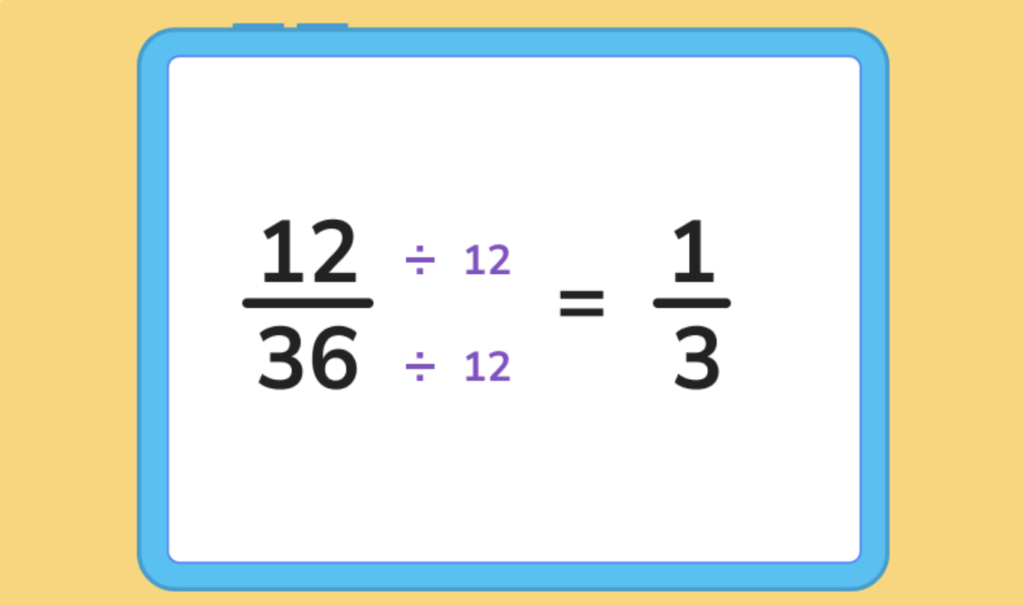
- Reduction: The software applies an algorithm to find the greatest common divisor and divides both parts of the fraction.
- Reversion: The improper fraction is converted back into its simplest mixed form for human readability.
Top AI Tools and Software for Managing Mixed Fractions
For those looking to streamline their workflow, several high-tech tools have moved beyond basic “calculator” status to become comprehensive problem-solving engines. These tools are essential for students, educators, and technical professionals who need to verify complex fractional data quickly.
Photomath and Computer Vision Technology
Photomath has revolutionized how we interact with printed and handwritten math. Using advanced Optical Character Recognition (OCR) and computer vision, the app scans a mixed fraction and recognizes the characters in real-time. Once scanned, the AI doesn’t just provide the simplified answer; it breaks down the logic into a step-by-step tutorial. This is a prime example of how mobile tech serves as a portable tutor, simplifying the complex relationship between whole numbers and fractions.
WolframAlpha: The Computational Intelligence Engine
WolframAlpha is perhaps the most powerful tool for anyone dealing with high-level mathematics. Unlike a standard search engine, WolframAlpha uses a vast “knowledge base” and computational algorithms to interpret natural language. If you type “simplify 5 and 10/20,” the engine recognizes the mixed fraction format, computes the simplification to “5 and 1/2,” and provides alternative forms, number line representations, and decimal expansions. Its ability to handle symbolic math makes it indispensable for tech-heavy industries.
Symbolab’s Step-by-Step Logic
Symbolab focuses heavily on the “how-to” aspect. In the tech world, understanding the logic (the “source code” of the math) is often more important than the final output. Symbolab’s interface allows users to input mixed fractions using a mathematical keyboard, and its algorithm provides a clear, high-level overview of the reduction process. This is particularly useful for debugging manual calculations or learning the underlying properties of rational numbers.
Integrating Fraction Simplification into Modern Programming

For developers building educational platforms or fintech applications, knowing how to programmatically simplify mixed fractions is a vital skill. This involves using specific libraries and data types that prevent “floating-point errors”—a common tech issue where computers struggle to represent certain fractions as decimals accurately.
Using Python Libraries for Fractional Calculations
Python is the leading language for data science and education tech, and it handles fractions beautifully through its native fractions module. To simplify a fraction programmatically, a developer doesn’t need to write a GCD algorithm from scratch. By using fractions.Fraction, the software automatically reduces any input to its lowest terms.
For example, a developer can create a class that takes three inputs (whole number, numerator, denominator), converts them to an improper fraction object, and utilizes the library’s built-in reduction logic. This ensures that the “simplification” is mathematically perfect every time the code runs.
JavaScript Frameworks for Educational Web Apps
In the realm of web development, building an interactive “fraction simplifier” requires JavaScript. Using libraries like Math.js allows developers to handle complex fraction objects in the browser. This is essential for creating responsive UI/UX where students can drag and drop numbers to see them simplify in real-time. By offloading the math to a robust library, developers can ensure that the “Tech” side of the app remains fast and user-friendly while maintaining mathematical integrity.
Digital Security and Data Integrity in Mathematical Software
As we rely more on cloud-based tools to simplify mixed fractions and perform calculations, the focus shifts toward the reliability and security of these digital platforms. In professional settings, a calculation error isn’t just a “wrong answer”—it is a data integrity failure.
Ensuring Accuracy in Cloud-Based Calculators
When using an online tool to simplify fractions, the user is interacting with a server-side script. Tech companies must ensure that these scripts are rigorously tested against edge cases (such as fractions with zero as a denominator or extremely large prime numbers). Ensuring “computational accuracy” is a form of quality assurance that prevents downstream errors in engineering or financial software.
Protecting User Data in EdTech Platforms
Educational apps that help simplify fractions often collect user data to track learning progress. This brings digital security into the conversation. Modern EdTech tools must implement robust encryption (such as SSL/TLS) to protect user profiles and progress logs. Simplifying a fraction might be a simple task, but the infrastructure surrounding the apps that do it must be highly secure to protect the privacy of the students and professionals using them.
The Future of Math Education: AI-Driven Personalization
The ultimate goal of simplifying mixed fractions through technology is to make the concept more accessible. As we look toward the future, Artificial Intelligence and Virtual Reality (VR) are set to take this even further.
Adaptive Learning Algorithms
The next generation of math software won’t just simplify a fraction for you; it will recognize why you are struggling with the concept. Adaptive learning platforms use AI to analyze user input patterns. If a user consistently fails to find the GCD when simplifying mixed fractions, the algorithm will pivot, offering targeted tutorials on factoring before returning to fractions. This is the epitome of “Smart Tech”—software that learns the user as much as the user learns the software.
Interactive Visualizations and VR Math
Simplified fractions are easier to visualize, and VR tech is now allowing users to see these numbers in 3D space. Imagine a VR environment where you can physically “merge” two parts of a fraction to see them simplify into a whole number. By turning abstract mixed fractions into tangible digital objects, tech is simplifying the cognitive load required to understand complex mathematical relationships.
In conclusion, simplifying mixed fractions is a foundational skill that has been significantly enhanced by the tech revolution. From the algorithms that power Photomath to the Python libraries used by software engineers, technology has turned a multi-step manual process into an instantaneous, accurate, and insightful experience. As AI continues to evolve, the tools at our disposal will only become more intuitive, ensuring that “simplification” applies not just to the fractions themselves, but to the entire way we learn and apply mathematics in the digital age.
aViewFromTheCave is a participant in the Amazon Services LLC Associates Program, an affiliate advertising program designed to provide a means for sites to earn advertising fees by advertising and linking to Amazon.com. Amazon, the Amazon logo, AmazonSupply, and the AmazonSupply logo are trademarks of Amazon.com, Inc. or its affiliates. As an Amazon Associate we earn affiliate commissions from qualifying purchases.