
In the modern landscape of global commerce, the ability to move capital quickly, securely, and efficiently is no longer a luxury—it is a financial necessity. Since its inception, PayPal has evolved from a simple payment gateway into a comprehensive financial ecosystem that bridges the gap between traditional banking and the digital economy. For individuals looking to manage personal finances, freelancers aiming to scale their side hustles, or entrepreneurs launching international businesses, understanding how to properly establish and optimize a PayPal account is the first step toward digital financial literacy.
Setting up an account is more than just an administrative task; it is an exercise in configuring a financial tool that will serve as the conduit for your income and expenditures. This guide explores the strategic process of signing up for PayPal through the lens of personal and business finance, ensuring that your digital wallet is structured for maximum utility and security.
Navigating the Setup: Personal vs. Business Accounts
Before entering your email address, the most critical financial decision you will make is selecting the appropriate account type. PayPal offers two primary structures, each tailored to specific fiscal behaviors and reporting requirements. Choosing correctly at the outset ensures that your financial records remain organized and that you have access to the specific tools required for your economic activities.
Determining Your Financial Needs
A Personal Account is designed for the casual user. It is the ideal choice for individuals who primarily use the platform for online shopping, sending money to family and friends, or receiving occasional payments for low-volume sales (such as selling an old laptop). From a financial management perspective, the Personal Account offers a clean, user-friendly interface that prioritizes peer-to-peer transfers and consumer protection.
In contrast, a Business Account is a robust financial tool designed for entities ranging from solo freelancers to established corporations. It allows for the operation under a company name, provides multi-user access for employees, and offers advanced reporting features that are essential for tax season. If your goal is to build an online income stream or manage a side hustle, the Business Account provides the professional infrastructure necessary to scale.
The Step-by-Step Registration Workflow
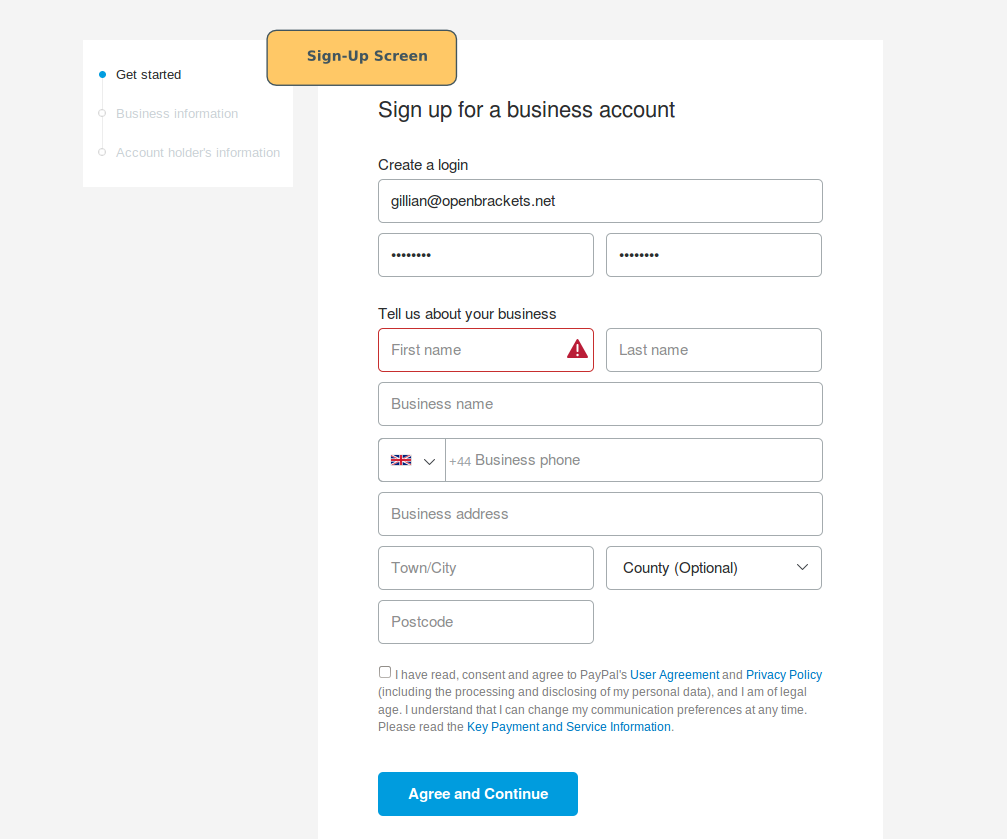
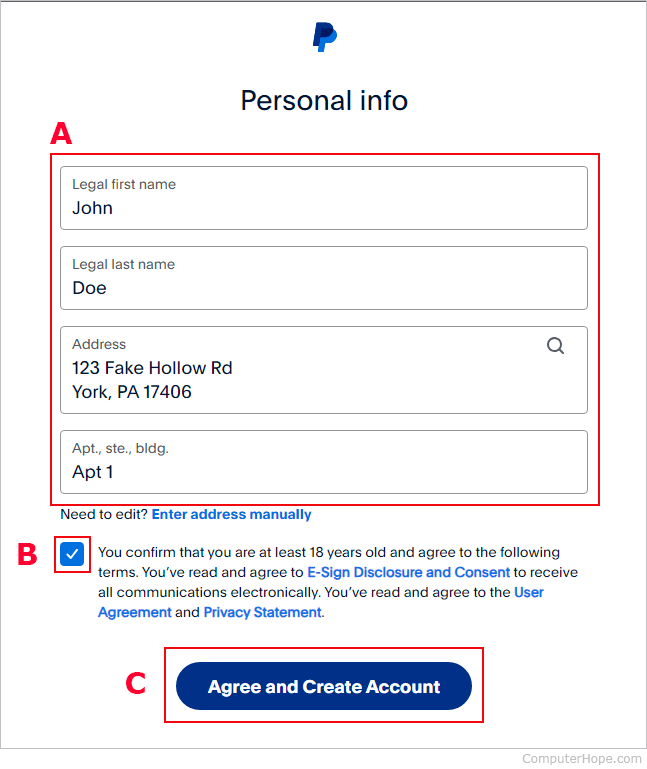
Once you have identified your account type, the registration process begins. Navigate to the official PayPal website or download the mobile application. You will be prompted to provide a legal name, a valid email address, and a secure password.
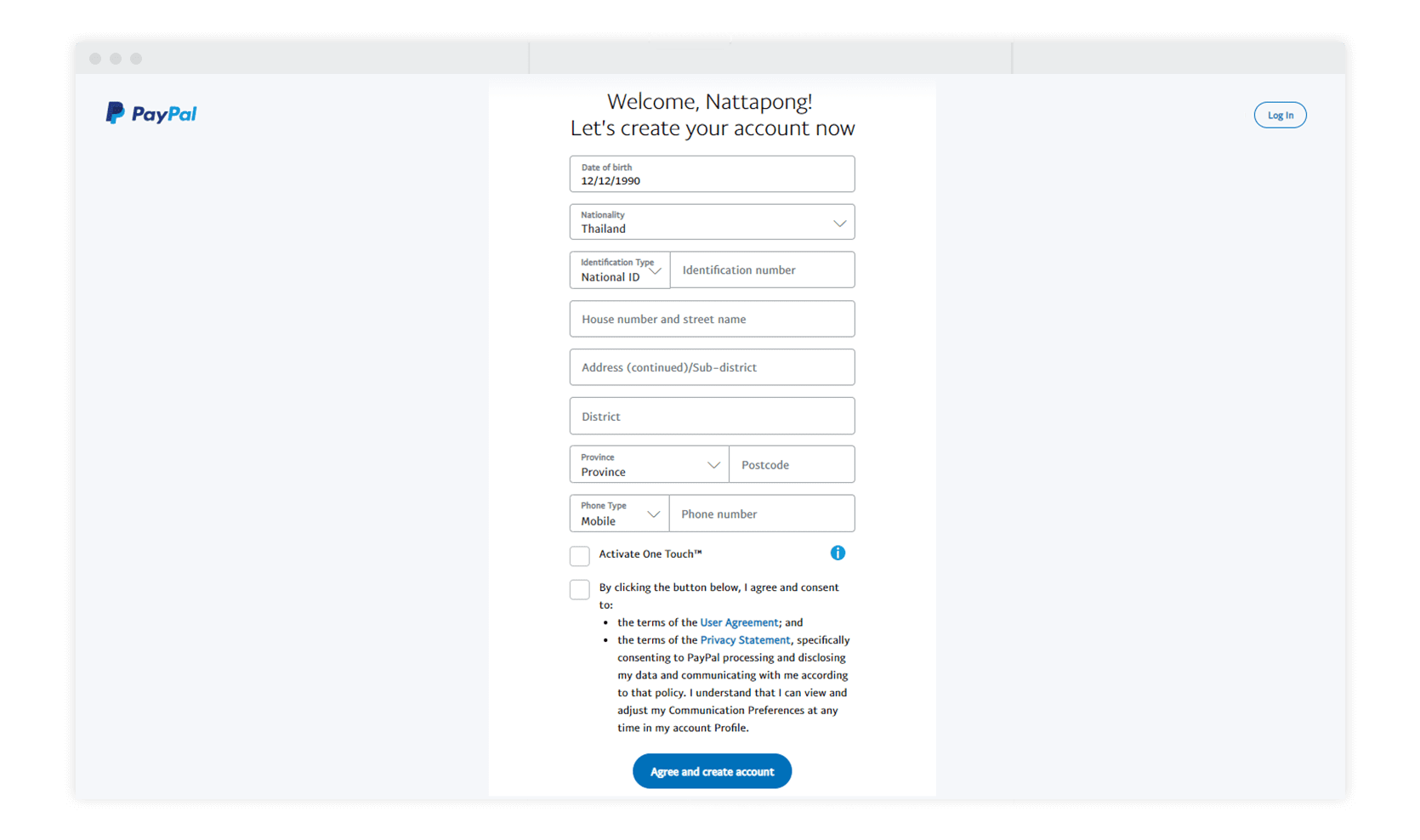
In the context of personal finance, it is vital to use an email address that you monitor regularly, as this serves as your primary identifier for all incoming and outgoing capital. For business users, using a professional domain-based email (e.g., billing@yourbusiness.com) enhances your brand’s credibility and keeps business transactions separate from personal correspondence. After submitting these details, you will be required to provide your physical address and phone number—data points that PayPal uses to verify your identity and comply with global anti-money laundering (AML) regulations.
Integrating Your Financial Infrastructure
A PayPal account is only as effective as the traditional banking institutions it is connected to. To transform your account from a digital placeholder into a functional financial tool, you must integrate it with your existing banking infrastructure.
Linking Banks and Credit Cards for Optimal Liquidity
The “Wallet” section of your PayPal dashboard is where your digital and physical finances converge. Linking a bank account allows for the seamless transfer of funds (ACH transfers), which is typically the most cost-effective way to move money into your traditional savings or checking accounts.
For many users, linking a credit card is a strategic move for managing cash flow. By using a credit card through PayPal for purchases, you maintain the “Purchase Protection” offered by PayPal while simultaneously earning reward points or cashback offered by your card issuer. This dual-layer approach to spending can be a savvy way to maximize the utility of every dollar spent.
Understanding Verification for Increased Transaction Limits
Unverified accounts often face stringent limits on how much money can be withdrawn or transferred within a certain period. To lift these restrictions, PayPal requires a verification process, which usually involves confirming your bank account or credit card.
From a financial security standpoint, this process—often involving two small “micro-deposits” sent to your bank—proves that you have legal access to the linked accounts. Completing this step is essential for anyone using the platform for significant online income or business operations, as it signals to the platform that you are a legitimate financial actor, thereby reducing the likelihood of account freezes or “holds” on your funds.
Leveraging PayPal for Modern Wealth Creation
For those pursuing side hustles or digital entrepreneurship, PayPal is more than a payment processor; it is an engine for wealth creation. It democratizes access to global markets, allowing a creator in one country to receive payment from a client in another instantly.
Facilitating Side Hustle Payments and Freelance Income
The gig economy thrives on the speed of payment. Freelancers often face the challenge of delayed checks or complex wire transfers. PayPal simplifies this by providing “PayPal.Me” links and professional invoicing tools. These features allow freelancers to present a professional front, sending itemized invoices that clients can pay with a single click. By reducing the friction between “work completed” and “payment received,” you improve your personal cash flow and reduce the administrative burden of tracking late payments.
Managing E-commerce and Small Business Cash Flow
For e-commerce entrepreneurs, PayPal serves as a trusted checkout solution. Consumers are often more likely to complete a purchase if they see a familiar, secure payment option. Strategically, this increases conversion rates and boosts top-line revenue. Furthermore, PayPal’s backend provides detailed analytics and sales reports, which are invaluable for tracking profit margins, identifying seasonal trends, and preparing financial statements for business growth analysis.
Fee Structures and Financial Optimization
To use PayPal effectively as a financial tool, one must master its fee structure. While signing up is free, the cost of moving money—especially for commercial purposes—can impact your bottom line if not properly managed.
Decoding Personal vs. Commercial Transaction Costs
Standard “Friends and Family” transfers within the same country are typically free when funded by a bank account or PayPal balance. However, “Goods and Services” transactions—those used for business—incur a percentage-based fee plus a fixed fee per transaction.
As a business owner or freelancer, it is crucial to factor these fees into your pricing strategy. A 2.9% + $0.30 fee (rates may vary by region) might seem small on a single transaction, but over hundreds of sales, it becomes a significant line item. Successful financial planning involves deciding whether to absorb these costs as a “cost of doing business” or to adjust your service rates to account for transaction overhead.
Currency Conversion and International Business Strategy
One of PayPal’s greatest strengths is its support for over 25 currencies. However, international finance introduces the complexity of currency conversion fees. When you receive a payment in a foreign currency, PayPal applies a spread over the wholesale exchange rate.
Strategic users monitor these rates and may choose to hold multiple currency balances within their PayPal account. For instance, if you receive USD but live in Europe, you might wait for a more favorable exchange rate before converting those funds to EUR, or you might use your USD balance directly to pay for business software or supplies priced in dollars, thereby avoiding conversion fees altogether.
Security Protocols for Protecting Your Digital Assets
In the realm of personal finance, the protection of capital is just as important as the accumulation of it. Because PayPal is a high-profile target for phishing and fraud, users must employ rigorous security measures to safeguard their funds.
Mitigating Risks in Online Transactions
The first line of defense is Two-Factor Authentication (2FA). By requiring a secondary code sent to your mobile device or generated by an app, you ensure that even if your password is compromised, your capital remains inaccessible to unauthorized parties. Additionally, users should be wary of “phishing” emails—fake communications designed to look like official PayPal alerts. A key financial habit is to never click links in emails regarding account disputes; instead, always log in directly through the official website or app to check your notification center.
Dispute Resolution and Purchase Protection as Financial Safekeeping
PayPal’s “Purchase Protection” and “Seller Protection” programs act as an informal insurance policy for your transactions. If a product never arrives or a service isn’t rendered as described, the dispute resolution center provides a pathway to recoup lost funds.
For sellers, maintaining a clean record and providing tracking information is the best way to ensure that “chargebacks” or disputes do not result in financial loss. Understanding the documentation required for these cases is a critical component of risk management. By treating your PayPal account with the same level of scrutiny as a traditional bank account, you create a secure environment for your digital wealth to grow.
In conclusion, signing up for PayPal is the starting point of a larger journey into digital financial management. By choosing the right account type, integrating your banking infrastructure, optimizing for fees, and maintaining high security standards, you transform a simple app into a powerful tool for personal and professional economic success.
aViewFromTheCave is a participant in the Amazon Services LLC Associates Program, an affiliate advertising program designed to provide a means for sites to earn advertising fees by advertising and linking to Amazon.com. Amazon, the Amazon logo, AmazonSupply, and the AmazonSupply logo are trademarks of Amazon.com, Inc. or its affiliates. As an Amazon Associate we earn affiliate commissions from qualifying purchases.