
The word “budget” often carries a negative connotation, frequently associated with restriction, deprivation, and the tedious tracking of every penny. However, in the realm of professional financial management, a budget is not a cage; it is a roadmap. It is the most powerful tool an individual or business owner possesses to bridge the gap between their current financial reality and their future aspirations.
Setting a budget is the process of creating a plan for your money. It ensures that you will always have enough for the things you need and the things that are important to you. By following a structured approach to budgeting, you transition from being a passive observer of your bank account to an active director of your wealth.
The Foundations of Budgeting: Shifting Your Financial Mindset
Before diving into spreadsheets and software, it is crucial to understand the philosophy behind successful budgeting. Most financial plans fail not because of math, but because of a lack of psychological alignment.
Understanding Why Most Budgets Fail
The primary reason budgets fail is that they are often too restrictive or unrealistic. Many people approach budgeting like a crash diet—they cut all discretionary spending at once, only to “binge” spend a few weeks later. A professional budget must be sustainable. It should account for the human element: the need for entertainment, the occasional impulse buy, and the reality of unexpected social invitations. To succeed, a budget must be viewed as a living document that evolves with your life, rather than a rigid set of rules.
Needs vs. Wants: The Art of Prioritization
At the heart of every financial plan is the distinction between “needs” and “wants.” While this sounds elementary, the lines often blur in a consumer-driven society. Needs are the essentials required for survival and the maintenance of your livelihood: housing, utilities, basic groceries, transportation, and minimum debt payments. Wants are the lifestyle choices that provide comfort and joy: dining out, subscription services, and luxury upgrades. Recognizing that wants are flexible is the key to unlocking the capital needed for investing and debt repayment.
The Psychology of Intentional Spending
Budgeting is ultimately about intentionality. When you set a budget, you are deciding in advance where your money will go, rather than wondering where it went at the end of the month. This shift in perspective empowers you to spend without guilt on the things that truly matter because you have already accounted for your obligations and savings goals. It replaces financial anxiety with a sense of control and clarity.
Choosing the Right Budgeting Framework
There is no one-size-fits-all approach to personal finance. The “best” budget is the one you can stick to consistently. Depending on your personality and financial complexity, several frameworks can serve as your foundation.
The 50/30/20 Rule: Simplicity for Beginners
Popularized by Senator Elizabeth Warren, this rule is excellent for those who want a high-level overview without tracking every cent. Under this framework, you allocate 50% of your after-tax income to “Needs,” 30% to “Wants,” and 20% to “Savings and Debt Repayment.” This provides a balanced lifestyle while ensuring that a significant portion of your income is dedicated to building your net worth. It is particularly effective for those with stable incomes and predictable expenses.
Zero-Based Budgeting: Giving Every Dollar a Job
For those who want total control over their cash flow, zero-based budgeting is the gold standard. The goal is to have your income minus your expenses equal zero by the end of the month. This doesn’t mean you have zero dollars in your bank account; rather, it means every dollar has been assigned a specific destination—whether that is the rent, a vacation fund, or an investment account. This method is highly effective for identifying “leaks” in your spending and maximizing your savings rate.
The “Pay Yourself First” Strategy
Also known as the “anti-budget,” this method prioritizes long-term wealth over daily tracking. You decide on a specific amount to contribute to savings and investments the moment your paycheck hits your account. Once your future is funded and your bills are paid, you are free to spend the remaining balance however you wish. This is ideal for disciplined individuals who find traditional tracking too cumbersome but still want to ensure they are meeting their financial milestones.
A Step-by-Step Execution Plan

Once you have selected a framework, the execution phase begins. This requires a systematic gathering of data and an honest assessment of your current financial habits.
Tracking Income and Mandatory Expenses
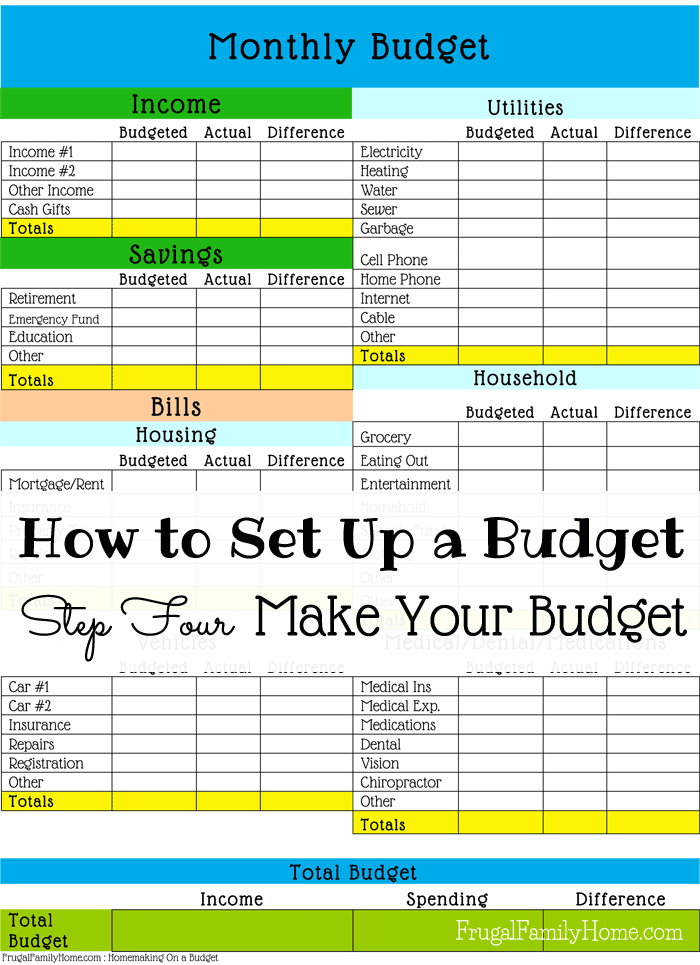
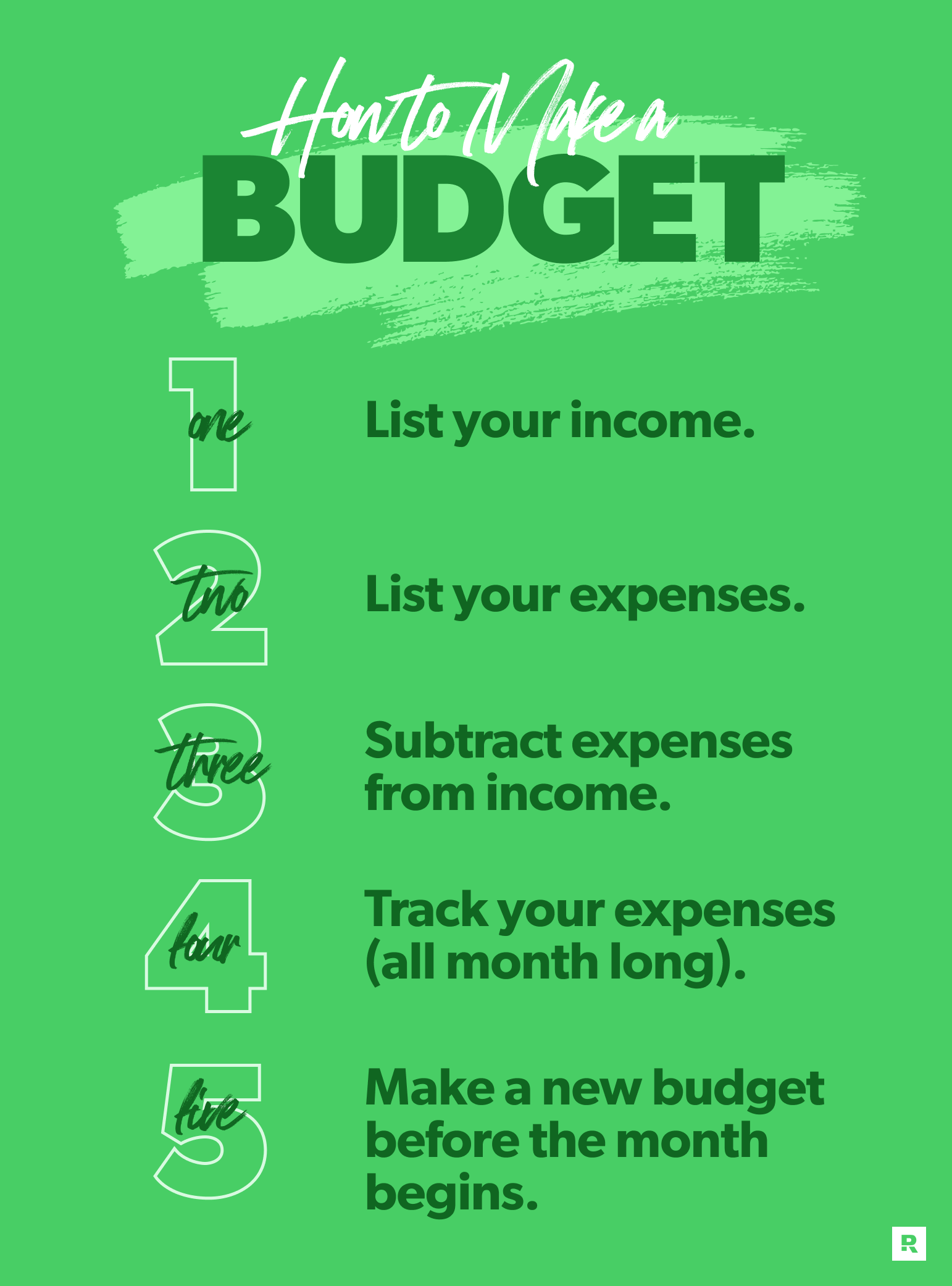
The first step is to determine your total monthly net income (take-home pay). This includes your primary salary, side hustle earnings, and any passive income streams. Next, list your fixed mandatory expenses. These are the costs that remain relatively constant each month, such as rent or mortgage payments, insurance premiums, and loan installments. Because these are non-negotiable, they form the “floor” of your budget.
Identifying Variable and Discretionary Costs
Variable expenses are necessary but fluctuate in amount, such as groceries and utilities. To get an accurate average, review your bank statements from the last three to six months. Discretionary costs—the “wants”—are often where the most significant savings can be found. By categorizing these (e.g., streaming services, coffee shops, hobbies), you can identify areas where you can scale back without significantly impacting your quality of life.
Factoring in Sinking Funds and Seasonal Costs
A common pitfall in budgeting is failing to account for non-monthly expenses. These include annual car registrations, holiday gifts, quarterly taxes, or home maintenance. Professional budgeters use “sinking funds” to handle these costs. By dividing the total annual cost by twelve and saving that amount each month, you transform a potentially stressful $1,200 annual bill into a manageable $100 monthly line item. This prevents you from having to “break” your budget or dip into emergency savings when these predictable events occur.
Leveraging Tools and Technology for Financial Management
In the modern era, you don’t need to be an accountant to manage a professional-grade budget. Technology has streamlined the process, making it easier to monitor and adjust your finances in real-time.
Manual vs. Automated Tracking Systems
Spreadsheets (such as Excel or Google Sheets) offer the highest level of customization and security, as they don’t require linking your bank accounts to third-party apps. They are perfect for those who enjoy manual entry as a way to stay mindful of their spending. On the other hand, automated apps like YNAB (You Need A Budget), Mint, or Monarch Money can sync with your financial institutions, categorizing transactions automatically and providing visual data on your spending trends. The choice depends on your preference for convenience versus control.
Using Data to Review and Adjust
A budget is not a “set it and forget it” tool. At the end of each month, you must perform a reconciliation. Did you overspend in the “dining out” category? If so, was it a one-time event (like a birthday) or a systemic habit? If it’s a habit, you must either adjust your behavior or increase that budget category by decreasing another. This monthly review allows you to pivot and ensures that your budget reflects your actual life, not an idealized version of it.
The Importance of the Emergency Fund
No budget is complete without a safety net. Financial experts recommend maintaining an emergency fund of three to six months’ worth of essential expenses. This fund should be kept in a high-yield savings account (HYSA), where it is liquid but separate from your daily spending money. Having this cushion ensures that a job loss or a medical emergency doesn’t derail your entire financial plan or force you into high-interest debt.
Advanced Strategies for Wealth Building
Once you have mastered the basics of cash flow management, your budget transitions from a survival tool to a wealth-building engine.
Integrating Debt Repayment with Your Budget
If you carry high-interest debt, such as credit card balances, your budget should be weaponized to eliminate it. You can utilize the “Debt Avalanche” method (paying off the highest interest rate first to save money on interest) or the “Debt Snowball” method (paying off the smallest balance first for psychological momentum). By identifying “found money” in your budget—such as a raise or a cancelled subscription—and redirecting it toward debt, you accelerate your path to financial freedom.
Budgeting for Investments and Compound Growth
The ultimate goal of budgeting is to create a “gap” between what you earn and what you spend. This gap is your investment capital. A sophisticated budget includes line items for retirement accounts (401k, IRA), brokerage accounts, and perhaps even a fund for future business ventures. By treating your investments as a non-negotiable “expense,” you harness the power of compound interest, allowing your money to work for you.
Reaching Financial Independence (FIRE)
For those pursuing Financial Independence, Retire Early (FIRE), the budget is the most critical asset. It allows you to calculate your “burn rate” and determine your “FI Number”—the amount of invested capital needed to support your lifestyle without traditional employment. By optimizing your budget to increase your savings rate to 30%, 50%, or even 70%, you can drastically shorten the number of years required to reach financial autonomy.
In conclusion, setting a budget is the foundational act of financial leadership. It requires honesty, discipline, and a forward-looking perspective. By choosing a framework that fits your lifestyle, leveraging the right tools, and consistently refining your approach, you transform your finances from a source of stress into a powerful engine for personal and professional growth. Your budget is the blueprint for the life you want to build; start drawing it today.
aViewFromTheCave is a participant in the Amazon Services LLC Associates Program, an affiliate advertising program designed to provide a means for sites to earn advertising fees by advertising and linking to Amazon.com. Amazon, the Amazon logo, AmazonSupply, and the AmazonSupply logo are trademarks of Amazon.com, Inc. or its affiliates. As an Amazon Associate we earn affiliate commissions from qualifying purchases.