
In an increasingly interconnected world, the need to send money to friends, family, or businesses has become a routine aspect of personal finance. Whether you’re splitting a dinner bill, sending financial support to a loved one abroad, paying a contractor, or completing an online purchase, understanding the various methods available is crucial for ensuring security, speed, and cost-effectiveness. The landscape of financial transfers has evolved dramatically, moving from predominantly traditional bank-centric methods to a vibrant ecosystem of digital platforms and innovative financial tools.
This comprehensive guide aims to demystify the process of sending money, equipping you with the knowledge to make informed decisions tailored to your specific needs. We will explore the array of options available today, delve into the critical factors to consider before initiating a transfer, and outline best practices to ensure your money reaches its destination safely and efficiently. By understanding the nuances of each method, you can navigate the modern financial world with confidence and precision.

Understanding Your Options: Traditional vs. Digital Methods
The evolution of financial technology has broadened the spectrum of how we can move money, creating a clear distinction between time-honored traditional approaches and the swift, often borderless, digital solutions. Each category offers distinct advantages and disadvantages, making the “best” method highly dependent on the situation.
Traditional Approaches to Money Transfer
Before the widespread adoption of the internet and smartphones, physical and institution-based methods were the primary ways to send money. While some of these still hold relevance, particularly for larger sums or specific scenarios, they are generally slower and less convenient than their digital counterparts.
- Bank Transfers (Wire Transfers & ACH Transfers):
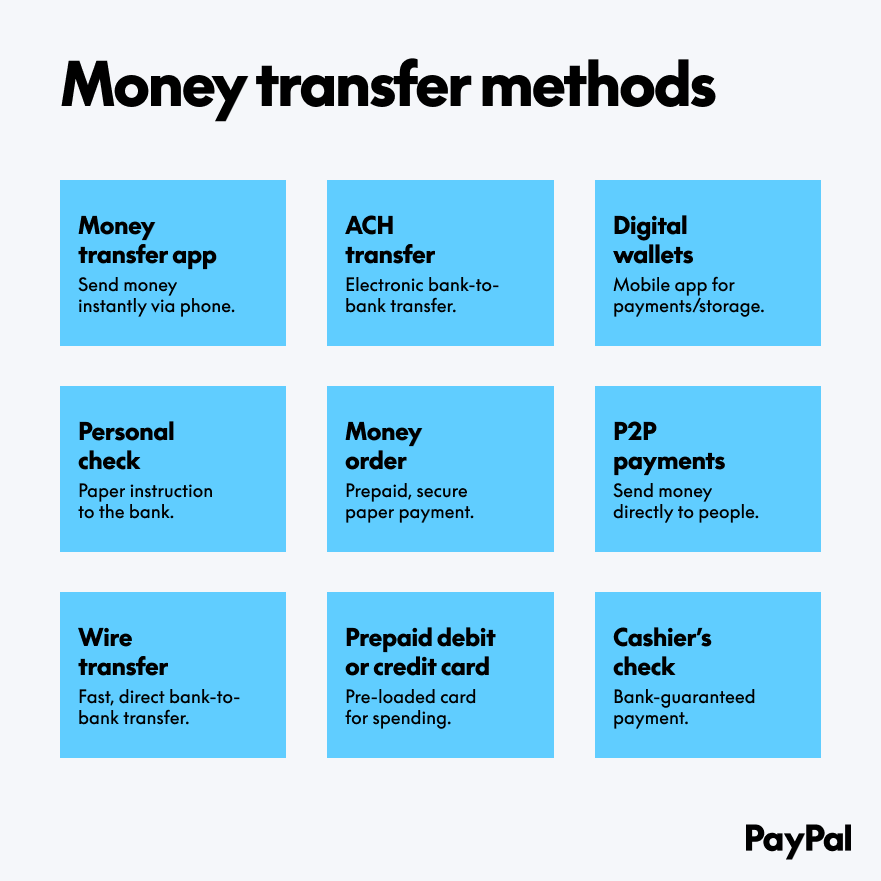
- Wire Transfers: These are direct, interbank transfers of funds, often used for large sums both domestically and internationally. They are generally irreversible once sent, making them secure but also requiring extreme caution. While fast, often same-day for domestic transfers, they typically come with higher fees compared to other methods, sometimes ranging from $25-$50 per transaction.
- ACH (Automated Clearing House) Transfers: ACH transfers are electronic payments processed through a central network. These include direct deposits, bill payments, and transfers between bank accounts. They are significantly cheaper, often free for standard transfers within the same bank or between linked accounts, but slower than wire transfers, typically taking 1-3 business days to clear. ACH is excellent for recurring payments or when speed is not the utmost priority.
- Checks and Money Orders:
- Personal Checks: While still used, personal checks are a declining method for sending money directly. They offer a paper trail but are slow to clear, can be subject to fraud (bounced checks), and require physical handling. They are best suited for situations where immediate payment isn’t required and trust exists between parties.
- Money Orders: Purchased from post offices, banks, or certain retail stores, money orders are a pre-paid guaranteed form of payment, similar to a certified check. They are useful for individuals without bank accounts or when a recipient requires a guaranteed payment method. However, they are inconvenient to purchase and send, involve small fees, and typically have transaction limits.
- Cash:
- Direct Handover: For very small, informal transactions between trusted individuals in close proximity, cash remains the simplest method. However, sending cash through mail or courier is highly risky and generally discouraged due to the lack of tracking or recourse if lost or stolen.
The Rise of Digital Payment Platforms
The digital revolution has transformed how we interact with money, making transfers faster, more convenient, and often more accessible than ever before. Digital platforms leverage technology to facilitate immediate or near-immediate transactions, often at lower costs than traditional methods. Their widespread adoption has reshaped personal finance, offering unparalleled flexibility.
Navigating Digital Payment Platforms and Apps
The digital landscape for sending money is diverse, encompassing a range of platforms designed for various purposes, from peer-to-peer transfers within the same country to complex international remittances. Choosing the right platform depends on factors like recipient location, urgency, amount, and fee tolerance.
Peer-to-Peer (P2P) Payment Apps
P2P payment apps have revolutionized domestic money transfers, allowing users to send and receive funds almost instantly using only an email address or phone number linked to their bank account or debit card. These apps are incredibly popular for splitting bills, paying friends back, or sending small sums.
- PayPal: One of the pioneers in online payments, PayPal offers broad functionality, including P2P transfers, online shopping payments, and international money sending (though often with higher fees for cross-border transactions than specialized services). It connects directly to bank accounts or credit cards, offering buyer/seller protection for certain transactions.
- Venmo: Owned by PayPal, Venmo is particularly popular among younger demographics for its social features, allowing users to add notes and emojis to transactions. It’s excellent for casual, domestic P2P payments and linking directly to bank accounts or debit cards. Instant transfers to banks often incur a small fee.
- Zelle: Integrated directly into many U.S. banking apps, Zelle allows fast, free transfers between enrolled users at participating banks. It’s ideal for sending money directly from your bank account to someone else’s, bypassing third-party apps for those who prefer banking convenience. Transactions are typically instant but irreversible.
- Cash App: Similar to Venmo, Cash App allows P2P transfers, direct deposits, and even stock/Bitcoin investing. It offers a linked debit card (Cash Card) and is popular for its ease of use and often instant transfers.
Online Banking Transfers
Beyond P2P apps, most modern banks offer robust online banking portals that facilitate various forms of digital money transfers. This can include sending money to another account within the same bank, initiating ACH transfers to external bank accounts, or even leveraging built-in features like Zelle. These services prioritize security and integrate seamlessly with your existing financial infrastructure. While not always instant, they offer a reliable and often free way to move money within national borders.
International Money Transfer Services
Sending money across borders introduces complexities like currency exchange rates, varying regulations, and higher fees. Specialized international money transfer services are designed to navigate these challenges, offering more cost-effective and transparent alternatives to traditional bank wire transfers for remittances.
- Wise (formerly TransferWise): Known for its transparent pricing and commitment to using the mid-market exchange rate, Wise is a favorite for international transfers. It uses a network of local bank accounts to facilitate transfers, minimizing traditional international wire fees and often providing faster delivery times.
- Xoom (a PayPal service): Xoom specializes in international remittances, allowing users to send money for cash pickup, bank deposit, or even delivery to door in some countries. It offers competitive exchange rates and varying speed options, often leveraging PayPal’s extensive network.
- Remitly: Focused on immigrant communities sending money back home, Remitly offers competitive rates and a range of delivery options, including bank deposits, cash pickup, and mobile money. They often have promotional rates for new users and track transfers in real-time.
- Western Union and MoneyGram (Digital Offerings): While traditionally known for their physical agent locations, both Western Union and MoneyGram now offer robust online platforms. They provide extensive global reach, cash pickup options, and varying speeds, though their exchange rates and fees can sometimes be less competitive than newer digital-first services.
Key Considerations Before You Send Money
Before you click “send,” a thorough understanding of potential pitfalls and critical factors is paramount. A momentary oversight can lead to lost funds, unexpected fees, or even falling victim to fraud. Diligence at this stage is a cornerstone of responsible financial management.
Security and Fraud Prevention
The digital nature of money transfers makes security a primary concern. Fraudsters constantly evolve their tactics, making vigilance essential.
- Verify Recipient Information: Always double-check the recipient’s name, email address, phone number, and bank account details. A single typo can send your money to the wrong person, and recovery can be difficult or impossible, especially with instant transfers like Zelle.
- Be Wary of Scams: Be highly skeptical of unsolicited requests for money, especially from unknown individuals, online romantic interests, or supposed government agencies. Common scams include phishing attempts, imposter scams (claiming to be a relative in distress), and lottery/sweepstakes scams. Never send money to someone you haven’t met in person for a “deal” that seems too good to be true.
- Use Secure Platforms and Networks: Only use reputable payment apps and websites. Ensure websites have “https://” in their URL. Avoid making transfers over public Wi-Fi networks, which can be vulnerable to interception.
- Enable Two-Factor Authentication (2FA): Always activate 2FA on your payment apps and bank accounts. This adds an extra layer of security, requiring a code from your phone or another device in addition to your password.
- Understand Chargeback Policies: Be aware that P2P payments generally do not offer chargeback protection like credit card purchases. Once the money is sent, it’s often gone, making it crucial to only send money to trusted individuals.

Fees and Exchange Rates
The true cost of sending money isn’t just the advertised fee; it also includes the impact of exchange rates for international transfers.
- Transparent Fee Structures: Look for services that clearly state all fees upfront. Some services might have low or no upfront fees but incorporate a markup into the exchange rate.
- Exchange Rate Markups: For international transfers, the “mid-market rate” is the true rate at which banks trade currencies. Many services add a percentage markup on this rate, which is a hidden cost. Platforms like Wise are known for using or being very close to the mid-market rate. Always compare the total amount received by the recipient across different services.
- Instant Transfer Fees: While many P2P apps offer free standard transfers, opting for instant delivery to a bank account often incurs a small percentage-based fee (e.g., 0.5% – 1.75%).
Speed and Accessibility
How quickly the money needs to arrive and how the recipient can access it are vital considerations.
- Instant vs. Standard Transfers: P2P apps like Zelle and Venmo (with instant transfer fees) offer near-instant delivery. Bank ACH transfers can take 1-3 business days. Wire transfers are often same-day domestically, but international wires can take longer. Specialized international services vary from minutes to several business days.
- Recipient Access: Consider whether the recipient needs cash, a bank deposit, or mobile money. Not all services offer every option in every country. For cash pickup, verify the nearest agent locations and operating hours.
- Geographic Availability: Ensure the chosen service operates legally and reliably in both your and the recipient’s country.
Transaction Limits and Regulations
Financial institutions and services often impose limits on how much money can be sent within a given period (daily, weekly, monthly) due to regulatory requirements.
- Service-Specific Limits: P2P apps often have lower limits than bank wires. International transfer services might have different tiers of limits depending on verification levels. Always check these before initiating a large transfer.
- KYC (Know Your Customer) Requirements: To combat money laundering and fraud, financial services are legally required to verify the identity of their users. You may need to provide government-issued IDs, proof of address, and other personal information, especially for larger transfers or when setting up an account.
- Reporting Requirements: In many countries, large cash transactions or international transfers exceeding certain thresholds (e.g., $10,000 in the U.S.) may trigger reporting requirements to financial authorities. While this primarily applies to financial institutions, it’s good to be aware of the regulatory landscape for substantial sums.
Best Practices for Sending Money Safely and Efficiently
Mastering the art of sending money involves more than just knowing the options; it requires strategic decision-making and adherence to best practices that prioritize security, transparency, and efficiency.
Choose the Right Method for the Situation
There is no one-size-fits-all solution. The optimal method is always context-dependent:
- For small, casual domestic transfers: P2P apps like Zelle, Venmo, or Cash App are ideal due to their speed and convenience.
- For larger domestic transfers (e.g., rent, down payments): Bank ACH transfers or wire transfers (for urgent, large sums) provide reliability and official banking trails.
- For international remittances: Specialized services like Wise, Xoom, or Remitly generally offer better exchange rates and lower fees than traditional bank wires, with varied delivery options.
- For physical cash needs abroad: Consider services with extensive cash pickup networks like Western Union or MoneyGram.
Double-Check All Details Rigorously
This cannot be overstressed. Before confirming any transfer, especially one that is instant or irreversible:
- Recipient’s Name: Ensure it matches their legal name, particularly for bank transfers.
- Account Numbers/Email/Phone Number: Verify every digit and character. A single error can lead to significant headaches or permanent loss of funds.
- Amount and Currency: Confirm the exact amount you intend to send and that the correct currency is selected for international transfers.
- Reason for Payment: Providing a clear memo or reason for the payment can be helpful for personal records and potential disputes.
Keep Meticulous Records
Maintain a digital or physical record of every transaction. This includes:
- Transaction IDs/Confirmation Numbers: These are vital if you need to trace a payment or contact customer support.
- Amount Sent, Date, and Time: Essential for personal finance tracking.
- Recipient Information: For future reference or verification.
- Screenshots: If possible, take screenshots of the confirmation screen for high-value transactions.
These records can be invaluable for reconciling accounts, resolving disputes, or providing proof of payment for tax purposes.
Be Aware of Your Digital Footprint
Your personal security extends to your digital environment:
- Secure Your Devices: Ensure your smartphone, tablet, and computer are protected with strong passwords/biometrics and up-to-date antivirus software.
- Use Secure Networks: Only initiate financial transactions on private, secure internet connections, avoiding public Wi-Fi hotspots which can be susceptible to hacking.
- Monitor Your Accounts: Regularly check your bank and payment app statements for any unauthorized activity. Set up transaction alerts for added security.
Conclusion
The ability to send money efficiently, securely, and cost-effectively is a cornerstone of modern financial life. From splitting the cost of groceries with a friend to providing vital support to family across continents, the options available today are diverse and continually evolving. By understanding the distinction between traditional and digital methods, carefully considering factors like security, fees, speed, and regulatory limits, and adhering to best practices, you empower yourself to make intelligent financial decisions. Embrace the convenience and innovation of modern payment systems, but always do so with an informed and vigilant approach, ensuring your money reaches its intended destination precisely as planned.
aViewFromTheCave is a participant in the Amazon Services LLC Associates Program, an affiliate advertising program designed to provide a means for sites to earn advertising fees by advertising and linking to Amazon.com. Amazon, the Amazon logo, AmazonSupply, and the AmazonSupply logo are trademarks of Amazon.com, Inc. or its affiliates. As an Amazon Associate we earn affiliate commissions from qualifying purchases.