
Cash App, a mobile payment service developed by Block, Inc. (formerly Square, Inc.), has evolved beyond simple peer-to-peer transfers to become a significant player in the cryptocurrency space. Its integration of Bitcoin functionality allows users to buy, sell, and critically, send Bitcoin to external wallets. This guide delves into the technical intricacies and step-by-step process of leveraging Cash App for Bitcoin transfers, focusing squarely on the technological mechanisms, security protocols, and operational best practices. Understanding these elements is paramount for any user navigating the digital asset landscape via a widely adopted financial technology application.
Understanding Cash App’s Bitcoin Ecosystem: A Tech Perspective
At its core, Cash App functions as a sophisticated fintech platform, offering a user-friendly interface that abstracts complex financial operations. When it comes to Bitcoin, Cash App acts as a custodial wallet provider, meaning it manages the private keys on behalf of its users. This design choice simplifies the user experience but also places a strong emphasis on the security infrastructure Cash App employs. Sending Bitcoin through the app involves a series of cryptographic processes and network interactions, all managed behind the scenes by Cash App’s robust systems.
Cash App as a Hybrid Financial & Tech Platform
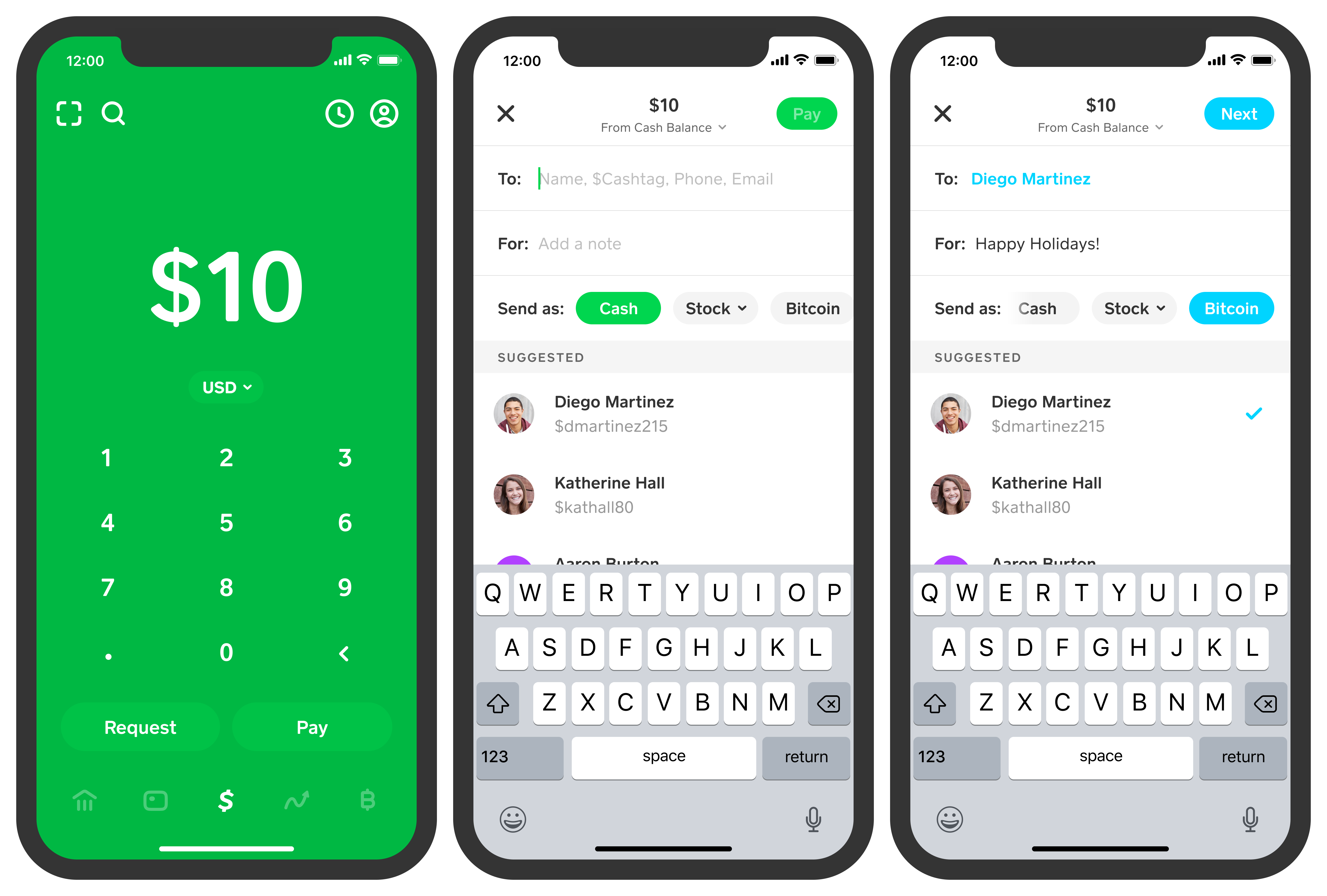
Cash App’s architecture blends traditional banking paradigms with cutting-edge blockchain technology. Users interact with a conventional mobile application, yet beneath the surface, transactions involving Bitcoin are recorded and validated on a decentralized ledger. This hybrid nature requires a sophisticated backend that can seamlessly bridge fiat currency transactions with cryptocurrency movements. The application’s design prioritizes ease of use, employing intuitive graphical user interfaces (GUIs) to simplify actions like buying or sending Bitcoin, which would otherwise require familiarity with command-line interfaces or more complex blockchain explorers. The integration of QR code scanning for wallet addresses further exemplifies its commitment to practical, user-centric technology solutions for managing digital assets.
Key Technical Prerequisites for Bitcoin Transfers
Before initiating any Bitcoin transfer, users must meet specific technical and verification requirements established by Cash App. The primary prerequisite is identity verification, often referred to as Know Your Customer (KYC) procedures. This involves providing personal identification documents, which Cash App’s compliance technology verifies against various databases. From a technical standpoint, this process is crucial for preventing illicit activities and securing the platform. Without successful KYC, users are typically restricted to basic functionalities, often unable to withdraw or send Bitcoin.
Furthermore, enabling Bitcoin sending functionality usually requires an initial purchase of Bitcoin within the app. This step activates the underlying wallet infrastructure and associated security features. Users must also ensure their Cash App is updated to the latest version. Software updates frequently include critical security patches, performance enhancements, and new features that are vital for smooth and secure cryptocurrency operations. Ignoring updates can expose users to known vulnerabilities or hinder access to the latest functionalities.
Step-by-Step Technical Process for Sending Bitcoin
The act of sending Bitcoin on Cash App, while appearing straightforward, involves a series of precise technical steps to ensure the funds are correctly routed on the blockchain. Any deviation or error in these steps can lead to irreversible loss of funds, underscoring the importance of meticulous execution.
Initiating a Bitcoin Withdrawal: Navigating the User Interface
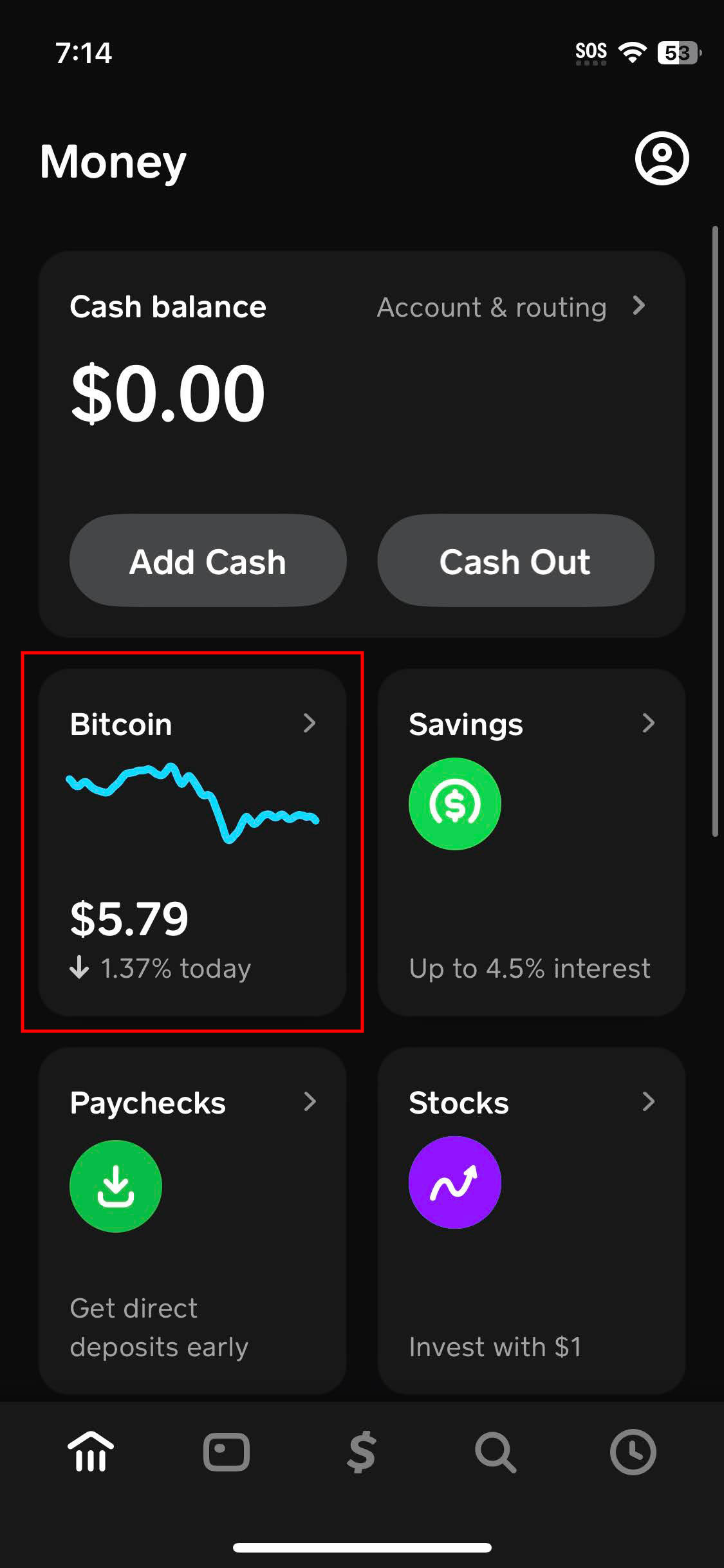
The process begins by accessing the Bitcoin section within the Cash App interface. Users navigate to the “Investing” tab, typically represented by a stock chart icon, and then select “Bitcoin.” From there, an option to “Withdraw” or “Send Bitcoin” will be presented. Tapping this initiates the withdrawal flow, guiding the user through a series of screens designed to gather the necessary transaction parameters.
The interface will prompt for the amount of Bitcoin to be sent. Users can typically input this value in either BTC (Bitcoin units) or its equivalent USD value, with Cash App performing the real-time conversion. This feature, while convenient, relies on real-time market data APIs to provide accurate exchange rates, a critical technical component for displaying current valuations. Once the amount is confirmed, the system prepares to request the destination wallet address.
Entering Recipient Wallet Addresses: Accuracy and Verification
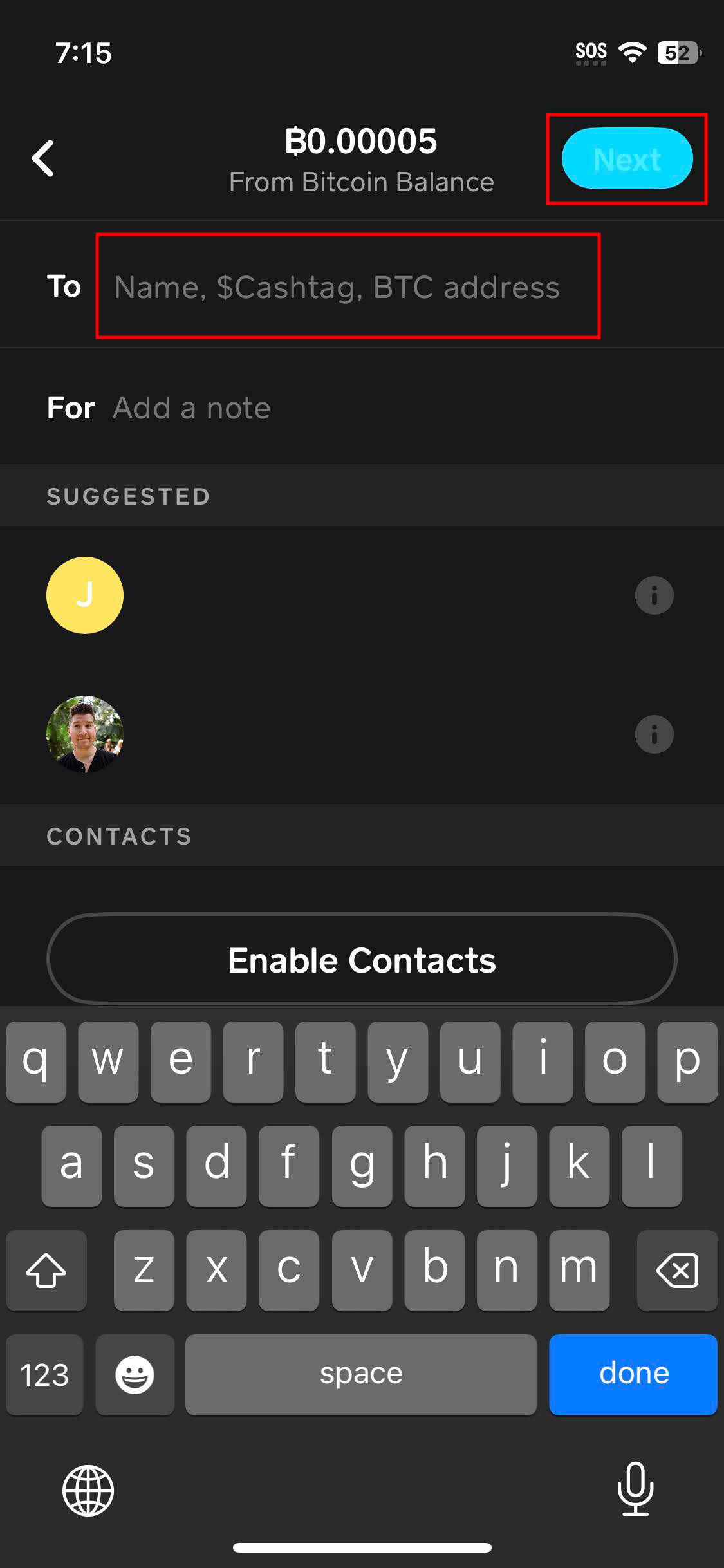
This is arguably the most critical step in the entire process. Users must provide the exact Bitcoin wallet address of the recipient. Bitcoin addresses are alphanumeric strings, typically 26-35 characters long, representing a specific location on the blockchain where the Bitcoin will be sent. A single incorrect character will result in the funds being sent to a non-existent or unintended address, rendering them irrecoverable.
Cash App facilitates this process through two primary input methods: manual entry and QR code scanning. Manual entry is prone to human error and should be approached with extreme caution, often involving double-checking each character. The more secure and recommended method is QR code scanning. When a recipient provides their Bitcoin address as a QR code, Cash App’s built-in camera functionality can scan and automatically populate the address field. This method significantly reduces the risk of transcription errors, leveraging optical recognition technology for accuracy.
Once the address is entered, Cash App might perform a basic checksum validation to ensure the address is syntactically valid (i.e., follows the correct Bitcoin address format). However, this validation does not guarantee the address is active or belongs to the intended recipient; it merely confirms its structural integrity.
Confirming Transactions and Understanding Network Fees
After entering the amount and destination address, users are presented with a final transaction summary. This summary typically includes the amount of Bitcoin being sent, the recipient’s address, and crucially, the associated network fee. Bitcoin transactions require a fee to be paid to miners who validate and add the transaction to the blockchain. Cash App calculates this fee dynamically based on current network congestion and the desired transaction speed. A higher fee generally results in faster confirmation times, as miners prioritize transactions with higher rewards.
Users must review this summary meticulously. Confirming the transaction initiates the transfer. At this point, Cash App generates a cryptographically signed transaction request, which is then broadcast to the Bitcoin network. This broadcast is a technical handshake between Cash App’s servers and the decentralized blockchain network, marking the point of no return for the transaction. Understanding these fees and their impact on confirmation times is a technical necessity for managing expectations regarding transaction finality.
Ensuring Digital Security and Best Practices for Bitcoin Transfers
Security is paramount when dealing with digital assets. Cash App employs various technological safeguards, but user diligence remains a critical component in protecting Bitcoin holdings and transactions. Adhering to best practices significantly mitigates risks associated with sending cryptocurrency.
Two-Factor Authentication (2FA) for Enhanced Protection
One of the most effective security measures available to users is Two-Factor Authentication (2FA). Cash App typically offers 2FA via SMS (sending a code to your registered phone number) or through an authenticator app (like Google Authenticator or Authy), which generates time-sensitive codes. From a technical standpoint, 2FA adds an extra layer of authentication beyond just a password or PIN. Even if an unauthorized party gains access to a user’s primary login credentials, they would still need access to the second factor (the phone or authenticator app) to authorize transactions, including Bitcoin withdrawals. Activating and diligently using 2FA is a non-negotiable best practice for securing any cryptocurrency-enabled account.
Understanding Blockchain Confirmations and Transaction Finality
Once a Bitcoin transaction is broadcast to the network, it enters a mempool (memory pool), a waiting area for unconfirmed transactions. Miners then pick transactions from the mempool to include in new blocks, which are added to the blockchain. Each block added after a transaction contains that transaction is considered a “confirmation.”
The technical concept of “transaction finality” in Bitcoin refers to the number of confirmations a transaction has received. While one confirmation means the transaction has been included in a block, industry standards often recommend 3-6 confirmations before considering a transaction truly final and irreversible. This is because, in rare instances, a block might be “orphaned” or re-organized, meaning it’s removed from the main chain. With more confirmations, the probability of such an event affecting a specific transaction becomes astronomically low. Cash App’s interface will usually show the status of outgoing transactions, allowing users to track confirmations via a link to a blockchain explorer, a technical tool for viewing real-time blockchain data.
Common Technical Pitfalls and Troubleshooting
Despite the streamlined process, users can encounter technical issues. A common pitfall is entering an incorrect or incompatible wallet address. For instance, sending Bitcoin to a Bitcoin Cash (BCH) address will result in permanent loss due to the distinct underlying blockchain architectures. Always verify the address type. Another issue can be related to network congestion, leading to delayed transactions. If a transaction is taking an unusually long time to confirm, it might be due to a low network fee during a period of high network activity. In such cases, there is typically no direct way to “speed up” a transaction once broadcast, highlighting the importance of selecting an appropriate fee upfront.
Troubleshooting often involves checking Cash App’s transaction history for details, verifying the recipient’s address on a blockchain explorer, and contacting Cash App support if the issue appears to be internal to the application. Understanding that once a transaction is confirmed on the blockchain, Cash App loses the technical ability to reverse it is crucial. Their support primarily assists with issues related to the app’s functionality, not blockchain operations.
The Underlying Technology: How Bitcoin Transfers Work
Behind the user-friendly interface of Cash App lies a complex interplay of cryptographic hashing, digital signatures, and distributed ledger technology. Understanding these foundational technical concepts provides deeper insight into the security and immutability of Bitcoin transactions.
From Cash App Balance to the Blockchain: A Technical Overview
When a user initiates a Bitcoin send, Cash App doesn’t physically move digital coins. Instead, it instructs its internal system to decrement the user’s custodial Bitcoin balance and constructs a Bitcoin transaction. This transaction essentially consists of input (where the Bitcoin is coming from – in this case, Cash App’s aggregated wallet) and output (where the Bitcoin is going – the recipient’s external wallet address), along with the amount and the network fee.
Critically, this transaction is digitally signed by Cash App using its private keys, which cryptographically proves that the transaction is legitimate and authorized by the owner of the sending funds. This signed transaction is then broadcast to the global network of Bitcoin nodes. These nodes independently verify the transaction against the blockchain’s rules (e.g., ensuring the sender has sufficient funds, checking the validity of the digital signature) before propagating it further. This distributed verification process is a cornerstone of Bitcoin’s security model, making it resistant to single points of failure.
Hash Rates, Miners, and Network Congestion Impacts
The Bitcoin network’s integrity and security are maintained by miners who compete to solve complex cryptographic puzzles. The solution to these puzzles allows them to add a new block of verified transactions to the blockchain. The “hash rate” refers to the total computational power being expended by all miners on the network. A higher hash rate generally indicates a more secure network, as it becomes exponentially harder for malicious actors to overpower the network and tamper with transactions.
Network congestion occurs when the number of pending transactions in the mempool exceeds the capacity of miners to process them into new blocks quickly. This can happen due to increased demand for transactions or limitations in block size. During periods of high congestion, transaction fees typically rise as users compete to have their transactions included sooner. Cash App’s dynamic fee calculation mechanism attempts to account for this by suggesting fees that are likely to result in timely confirmations, but users always have the technical option to adjust the fee, albeit with potential consequences for confirmation speed. Understanding these dynamics is essential for making informed decisions about transaction timing and cost.
The Future of Bitcoin on Cash App and Regulatory Technology
The landscape of financial technology and cryptocurrency is in constant flux. Cash App, as a leading innovator, continues to evolve its Bitcoin offerings, influenced by user demand, technological advancements, and the burgeoning field of regulatory technology (RegTech).
Evolving App Features and User Experience
Future iterations of Cash App’s Bitcoin functionality are likely to focus on enhancing both security and user experience through technological innovation. This could include more sophisticated on-chain analytics provided directly within the app, allowing users to track transactions with greater detail. We might also see integrations with advanced hardware security modules (HSMs) for managing Cash App’s custodial private keys, further fortifying the security of user funds. Improved user interfaces for managing multiple Bitcoin addresses, or even integrating Lightning Network capabilities for faster, cheaper small transactions, are also within the realm of possibility. These technological advancements aim to make Bitcoin more accessible and efficient for the everyday user, reducing friction in the digital asset ecosystem.
Compliance and Regulatory Tech (RegTech) Integration
As cryptocurrencies become more mainstream, regulatory scrutiny intensifies. Cash App, operating within strict financial regulations, must continuously adapt its technology to comply with evolving mandates. This means a greater reliance on RegTech solutions – technology specifically designed to manage regulatory compliance. For Bitcoin transfers, this could involve more advanced transaction monitoring systems that utilize AI and machine learning to detect unusual activity patterns indicative of fraud or money laundering. Enhanced reporting mechanisms, automation of compliance checks, and integration with global watchlists are all aspects where RegTech plays a crucial role in maintaining Cash App’s operational integrity and adherence to anti-money laundering (AML) and counter-terrorist financing (CTF) laws. This technological arms race in compliance ensures that platforms like Cash App can continue to offer Bitcoin services while mitigating risks for both users and the broader financial system.
In conclusion, sending Bitcoin on Cash App is a powerful feature that bridges the gap between traditional financial applications and the decentralized world of cryptocurrency. By understanding the underlying technological processes, adhering to rigorous security protocols, and staying informed about network dynamics, users can confidently navigate the digital asset transfers, leveraging Cash App as a robust and accessible platform for their Bitcoin needs.
aViewFromTheCave is a participant in the Amazon Services LLC Associates Program, an affiliate advertising program designed to provide a means for sites to earn advertising fees by advertising and linking to Amazon.com. Amazon, the Amazon logo, AmazonSupply, and the AmazonSupply logo are trademarks of Amazon.com, Inc. or its affiliates. As an Amazon Associate we earn affiliate commissions from qualifying purchases.