
Selling a vehicle is often viewed as a logistical chore, but in the realm of personal finance, it is a significant capital transaction. For most individuals, a vehicle represents one of their largest depreciating assets. When it comes time to liquidate that asset, the method you choose—trading it into a dealership or selling it privately—can result in a financial swing of thousands of dollars.
Choosing to sell your car privately is a strategic move to reclaim the “middleman margin” that dealerships usually pocket. By taking on the role of the salesperson, the marketing department, and the closer, you effectively earn a high-rate “side hustle” income for the hours you invest. This guide explores the financial mechanics of a private car sale, ensuring you maximize your return on investment while safeguarding your capital.

Maximizing Your ROI: The Financial Strategy of Private Sales
The primary motivation for a private sale is the preservation of equity. Dealerships offer “wholesale” prices, which are calculated to allow them room for reconditioning and profit. By selling privately, you target the “retail” price.
Understanding Market Value vs. Trade-In Value
To approach this as a financial expert, you must first understand the delta between trade-in and private party value. Tools like Kelley Blue Book (KBB), Edmunds, and NADA provide data-driven insights into what your asset is worth. However, these are merely benchmarks. To find the true market equilibrium, you must analyze local listings on platforms like Facebook Marketplace, Craigslist, and specialized automotive forums. The goal is to identify a price point that is high enough to maximize profit but low enough to trigger “velocity”—the speed at which the asset converts back into cash.
The Impact of Timing on Asset Liquidation
In the world of personal finance, timing is everything. Convertibles sell for a premium in the spring; all-wheel-drive SUVs command higher prices before the first snowfall. Furthermore, selling a car before it hits major mileage milestones (like 60,000 or 100,000 miles) can significantly preserve its resale value. From a balance sheet perspective, you want to sell the asset while it still has “curb appeal” and utility to a secondary buyer, avoiding the steep depreciation curve that occurs once a vehicle enters its high-maintenance phase.
Preparation as Investment: Enhancing Asset Value
In any financial transaction, the presentation of the asset dictates the perceived value. To a private buyer, a well-maintained vehicle suggests lower future liabilities (repair costs). Therefore, your preparation should be viewed as “sweat equity.”
Detailing and Aesthetics: The $500 Investment for a $2,000 Return
A professional detail is perhaps the highest-yielding investment you can make before a sale. Removing stains, correcting paint swirls, and cleaning the engine bay are not just cosmetic chores; they are psychological signals to the buyer. A clean car suggests a disciplined owner who likely followed maintenance schedules. In the context of personal finance, spending $200–$500 on professional reconditioning can often increase the final sale price by $1,000 to $2,000, representing a 300% to 400% return on that specific expenditure.
Maintenance Records and Transparency
A comprehensive paper trail is a financial asset. If you can provide a binder of receipts showing consistent oil changes, brake replacements, and tire rotations, you eliminate the “uncertainty discount” that buyers usually factor into their offers. In financial terms, you are reducing the risk premium. If a buyer knows exactly what has been fixed and when, they are more likely to pay a premium price because the “cost of ownership” for the next 12 months is predictable.
The Art of the Deal: Strategic Pricing and Negotiation
Pricing is not just about a number; it is about strategy. Your listing price is the opening move in a high-stakes negotiation that determines your final net profit.
Psychological Pricing and Buffer Zones
When listing your vehicle, use psychological pricing strategies common in retail. Pricing a car at $14,900 instead of $15,000 can keep your listing within the search filters of buyers who have a $15k cap. Additionally, always build in a “negotiation buffer.” If your absolute bottom-line price is $14,000, listing it at $15,200 gives the buyer the satisfaction of “winning” a $1,200 discount while you still achieve your financial target. This protects your margins while facilitating a smoother closing process.
Mastering the Counter-Offer
Negotiation is where many private sellers lose their financial edge. Professionalism is your greatest tool here. When a buyer makes a low-ball offer, do not take it personally—treat it as a data point. Counter with facts: mention the new tires, the rare color, or the low mileage. By tethering your price to the value of the asset rather than emotion, you maintain control of the financial narrative. Always be prepared to walk away; the “power of the alternative” is the strongest position in any negotiation.
Secure Transactions: Safeguarding Your Capital
The most critical phase of selling a car privately is the transfer of funds. In a world of digital scams and sophisticated fraud, protecting your capital is paramount.
Vetting Potential Buyers
Treat the initial inquiry as a screening process. A serious buyer will ask specific questions about the car’s history and will be willing to speak over the phone. Be wary of “sight-unseen” offers or buyers who want to use third-party shipping services. These are often hallmarks of escrow scams. From a risk management perspective, only engage with buyers who are willing to meet in a safe, public location (such as a “Safe Exchange Zone” at a local police station).
Executing Secure Payment Methods
Never accept personal checks or complex “app-based” payments for large sums unless the funds can be verified instantaneously. The gold standard for private car sales is a cashier’s check or a direct wire transfer conducted at the buyer’s bank. By meeting at the bank, you can witness the teller issuing the check, ensuring it is not a forgery. Cash is also acceptable, but for transactions over $10,000, be aware of IRS Form 8300 requirements regarding large cash movements. Safeguarding your money means ensuring the “cleared funds” are in your account before the title leaves your hand.
The Final Handover: Legal Compliance and Tax Implications
A sale isn’t finished when the money changes hands. Proper documentation is required to protect you from future liabilities and to ensure you are compliant with tax laws.
Transferring Title and Release of Liability
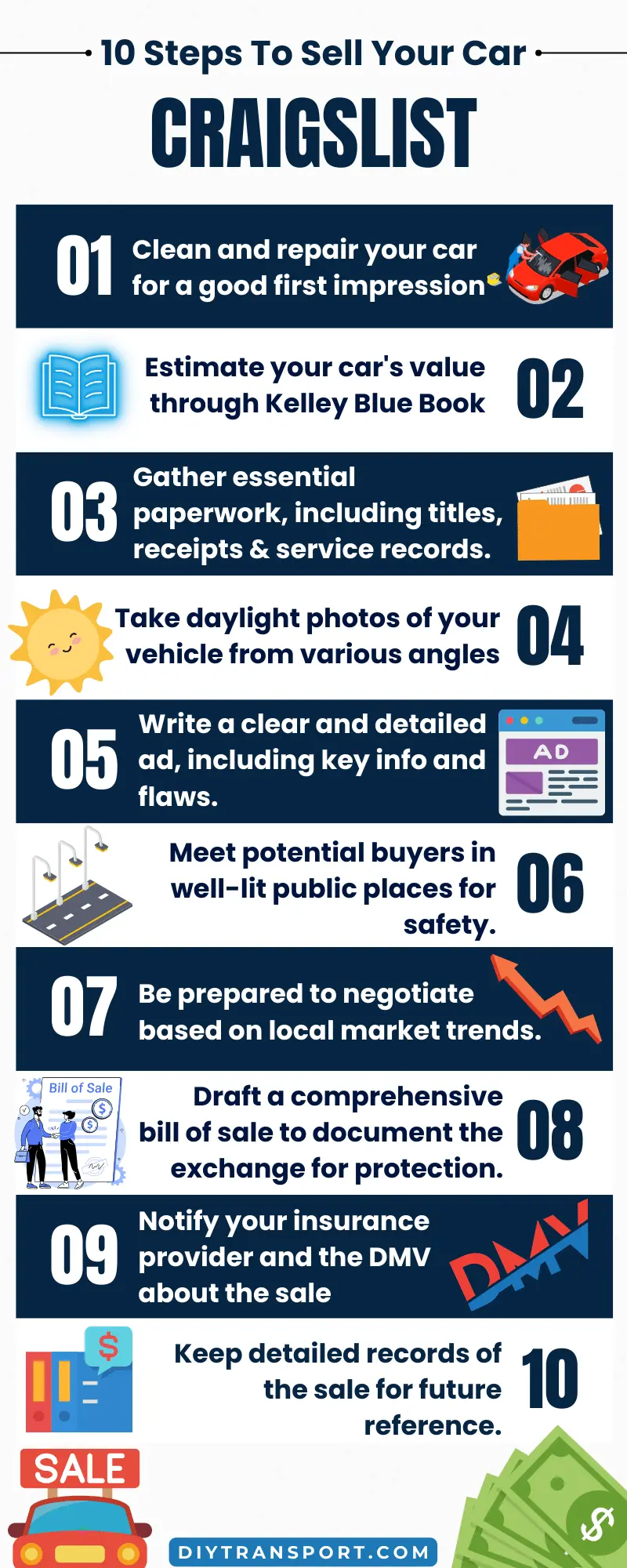
The “Title” is the legal proof of ownership. Each state has specific requirements for its transfer, often requiring a notarized signature. Crucially, as soon as the sale is complete, you must file a “Release of Liability” with your state’s DMV. This document informs the government that you are no longer responsible for the vehicle. If the new owner gets into an accident or receives a speeding ticket five minutes after driving away, this document is your financial shield against legal fees and insurance claims.
Understanding Tax Implications and Reinvestment
Depending on your jurisdiction and the sale price, you may need to account for the transaction during tax season. In most cases, because cars are depreciating assets, you are selling the vehicle for less than you originally paid, meaning there is no “capital gain” to report. However, if you are a collector selling a vintage vehicle for a profit, you must account for capital gains tax.
Finally, consider the “Next Step” for your liquidated capital. Whether you are using the proceeds as a down payment for a more fuel-efficient vehicle or investing the cash into a high-yield savings account or an index fund, the goal is to ensure that the wealth you reclaimed from the dealership’s pocket continues to work for you. By treating the sale of your car as a serious financial project rather than a casual chore, you turn a routine life event into a significant win for your personal balance sheet.
aViewFromTheCave is a participant in the Amazon Services LLC Associates Program, an affiliate advertising program designed to provide a means for sites to earn advertising fees by advertising and linking to Amazon.com. Amazon, the Amazon logo, AmazonSupply, and the AmazonSupply logo are trademarks of Amazon.com, Inc. or its affiliates. As an Amazon Associate we earn affiliate commissions from qualifying purchases.