
In the realm of personal finance, travel is often viewed as a discretionary luxury that can derail even the most disciplined budget. However, viewed through the lens of strategic financial management, airfare represents a volatile asset class where price transparency is low and the opportunity for arbitrage is high. Saving on flight tickets is not merely about finding a “deal”; it is about understanding market mechanics, optimizing credit ecosystems, and applying rigorous fiscal discipline to the procurement process.
To master the art of the affordable flight, one must transition from a passive consumer to an active market participant. This requires a deep dive into the economics of the airline industry and the various financial tools available to the modern traveler.

Understanding the Macroeconomics of Airfare
The first step in reducing travel expenditures is understanding how airlines price their inventory. Unlike retail goods with fixed margins, airline seats are “perishable” assets. Once a plane takes off, the value of an empty seat drops to zero. Consequently, airlines utilize sophisticated AI-driven dynamic pricing models to maximize revenue per available seat mile (RASM).
The Mechanics of Dynamic Pricing
Airlines categorize seats into different “fare buckets.” Even within the same economy cabin, there may be a dozen different price points for the same journey. These prices fluctuate based on real-time demand, historical data, and competitor pricing. To save money, a traveler must anticipate these fluctuations.
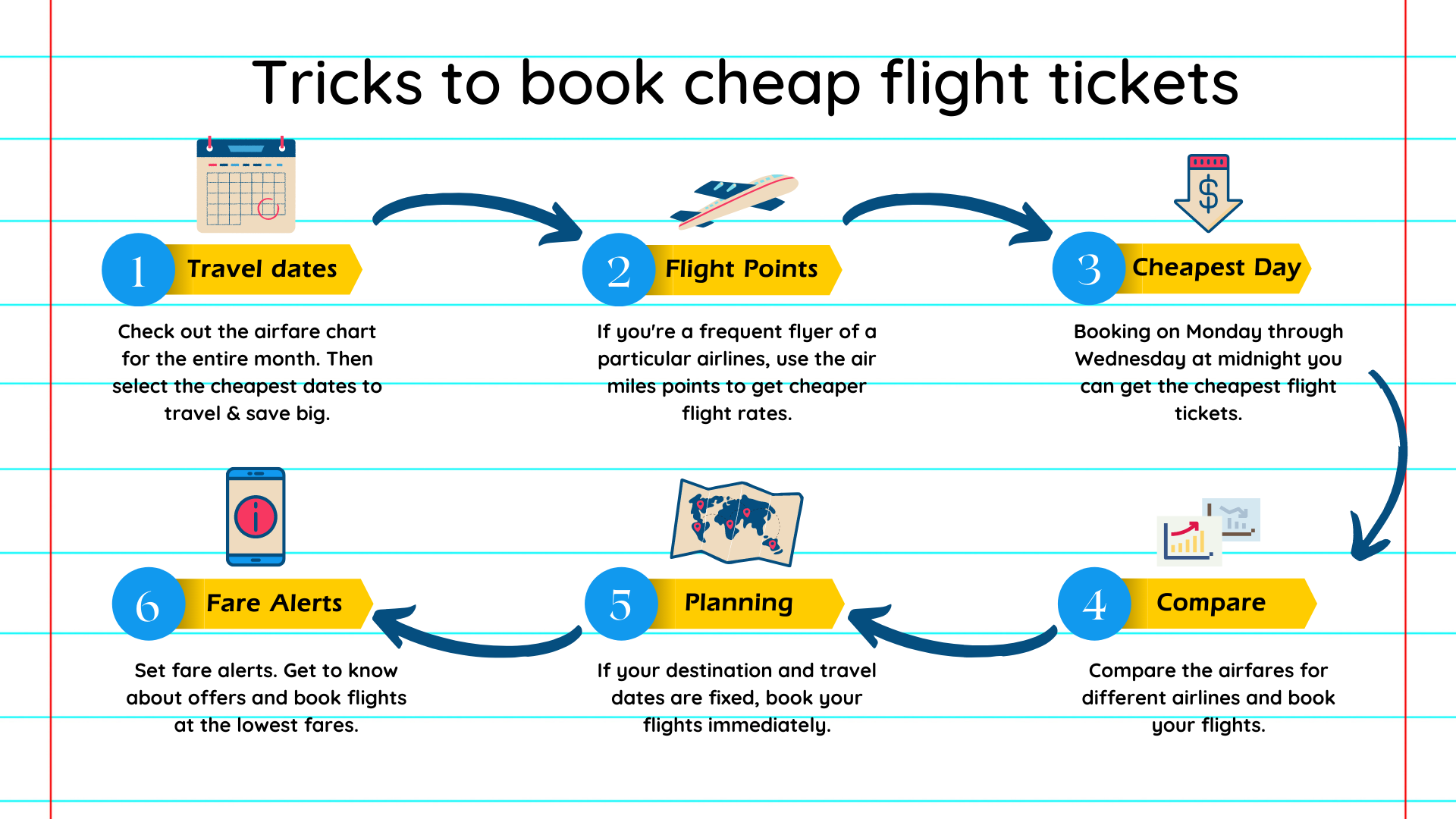
The “Goldilocks window”—the period where prices are statistically at their lowest—typically occurs one to three months before domestic departures and two to eight months for international travel. Booking too early can be as expensive as booking too late, as airlines initially set high baseline prices to capture “price-insensitive” early planners before dropping rates to fill the cabin.
Market Volatility and Seasonal Arbitrage
From a financial perspective, travel demand is highly seasonal. Saving on flight tickets often involves “temporal arbitrage”—traveling when others cannot or will not. This means targeting “shoulder seasons” (the period between peak and off-peak). For instance, visiting Europe in late September rather than July can result in a 40% reduction in airfare costs without a significant sacrifice in weather quality. By aligning travel schedules with these market troughs, individuals can protect their capital while maintaining a high quality of life.
Leveraging Financial Ecosystems: Points, Miles, and Arbitrage
In the modern financial landscape, the most potent tool for reducing travel costs is not cash, but the strategic accumulation and redemption of “loyalty currency.” Credit card rewards and frequent flyer miles represent a parallel financial system that, when managed correctly, offers a significantly higher return on investment (ROI) than traditional savings.
Credit Card Optimization
For those with high credit scores and disciplined spending habits, “credit card churning” and strategic sign-up bonus acquisition are the fastest ways to eliminate airfare costs. By opening specific travel-focused credit cards, a consumer can earn 60,000 to 100,000 miles after meeting a minimum spending requirement. In many cases, this single bonus is enough for a round-trip international flight that would otherwise cost $1,200 or more.
The key is to focus on cards that offer “transferable points.” Programs like Chase Ultimate Rewards, American Express Membership Rewards, and Capital One Venture Miles allow users to move points to various airline partners. This creates an arbitrage opportunity: you can transfer points to the specific airline that is currently offering the best redemption value for your desired route, effectively decoupling the “price” of the flight from its cash value.
Calculating the Value of a Point
A critical mistake in personal finance is failing to calculate the “cents per point” (CPP) value of a redemption. To determine if a point redemption is financially sound, divide the cash price of the flight (minus taxes and fees) by the number of points required. If a $500 flight costs 50,000 points, the value is 1 cent per point—a mediocre return. However, finding a $2,000 business class seat for 60,000 points yields 3.3 cents per point, representing a much higher financial efficiency.
Tactical Execution: Timing and Geographic Arbitrage
Beyond the broad strokes of points and timing, there are specific tactical maneuvers that can yield significant savings. These techniques require a level of “financial engineering” applied to the route map.
Geographic Arbitrage and “Positioning” Flights
A common error is searching for flights only from one’s home airport. In many cases, it is significantly cheaper to book a separate, low-cost flight to a major hub (like New York, London, or Singapore) and then book a long-haul ticket from there. This is known as a “positioning flight.”
For example, a flight from a secondary city like Indianapolis to Tokyo might be $1,500. However, a flight from Los Angeles to Tokyo might be $600, and a domestic flight from Indianapolis to Los Angeles might be $200. By unbundling these segments, the traveler saves $700. This requires careful risk management, as these are separate tickets and a delay on the first leg could result in a forfeited second leg.
The Myth of the “Tuesday Booking”
There is a persistent myth that booking on a Tuesday at midnight leads to the best deals. In the era of algorithmic pricing, this is largely obsolete. Modern financial tools like Google Flights, Hopper, and ITA Matrix provide data-driven insights that supersede anecdotal advice. Setting price alerts is a more effective strategy; it allows the user to monitor the market’s “volatility” and strike when the price hits a predetermined threshold based on historical averages.
Hidden City Ticketing
“Hidden city ticketing” is a controversial but effective strategy for reducing costs. This involves booking a flight with a layover in your actual destination and simply skipping the second leg. For instance, a direct flight from A to B might be $400, but a flight from A to C with a layover in B might be $250. While this can result in significant savings, it carries risks, such as the airline canceling the remainder of the itinerary or penalizing frequent flyer accounts. From a pure cost-benefit analysis, it is a high-reward, moderate-risk maneuver.
The Hidden Costs of ‘Cheap’ Flights
A sophisticated approach to personal finance requires looking beyond the “sticker price.” Often, the cheapest flight on a search engine is the most expensive in reality once ancillary fees and opportunity costs are factored in.
Ancillary Fee Analysis
Budget carriers (Ultra Low-Cost Carriers or ULCCs) often display extremely low base fares while charging for everything from carry-on bags to seat assignments. A $40 ticket on a budget airline can easily balloon to $120 after fees. When comparing flights, one must calculate the “fully loaded cost.” This includes baggage fees, transport to secondary airports (which are often further from city centers), and even the cost of on-board sustenance.
The Opportunity Cost of Time
In financial planning, time is a finite resource. A flight that saves $100 but involves two layovers and a 12-hour increase in travel time represents a poor “hourly wage” for your savings. If the extra travel time prevents you from working or necessitates an extra night in a hotel, the “saving” is an illusion. Assessing the “value of time” is essential for making a rational travel purchase.
Building a Sustainable Travel Fund
Finally, saving on flight tickets should be integrated into a broader personal finance strategy. Rather than treating airfare as an emergency expense, it should be treated as a planned capital expenditure.
Sinking Funds and Automation
Creating a “Sinking Fund” specifically for travel is an effective psychological and financial tool. By automating a monthly transfer into a high-yield savings account designated for flights, you ensure that you have the liquidity to strike when a “mistake fare” or a flash sale occurs. The ability to purchase a ticket instantly when prices drop is one of the greatest advantages a traveler can have.

Hedging Against Inflation
Airfare is sensitive to energy prices and inflation. By earning points and miles today, you are essentially “pre-purchasing” future travel at today’s effort. While miles can be devalued by airlines, they generally serve as a hedge against the rising cash costs of international travel.
Saving on flight tickets is not a matter of luck; it is a discipline. By understanding the underlying economic structures of the airline industry, optimizing the use of financial tools like credit cards, and applying rigorous analytical frameworks to booking decisions, the modern traveler can significantly reduce their expenditures. This allows for more frequent travel, higher-quality experiences, and a more robust overall financial profile. In the end, the goal of saving on airfare is to maximize the utility of every dollar, ensuring that the cost of the journey never outweighs the value of the destination.
aViewFromTheCave is a participant in the Amazon Services LLC Associates Program, an affiliate advertising program designed to provide a means for sites to earn advertising fees by advertising and linking to Amazon.com. Amazon, the Amazon logo, AmazonSupply, and the AmazonSupply logo are trademarks of Amazon.com, Inc. or its affiliates. As an Amazon Associate we earn affiliate commissions from qualifying purchases.