
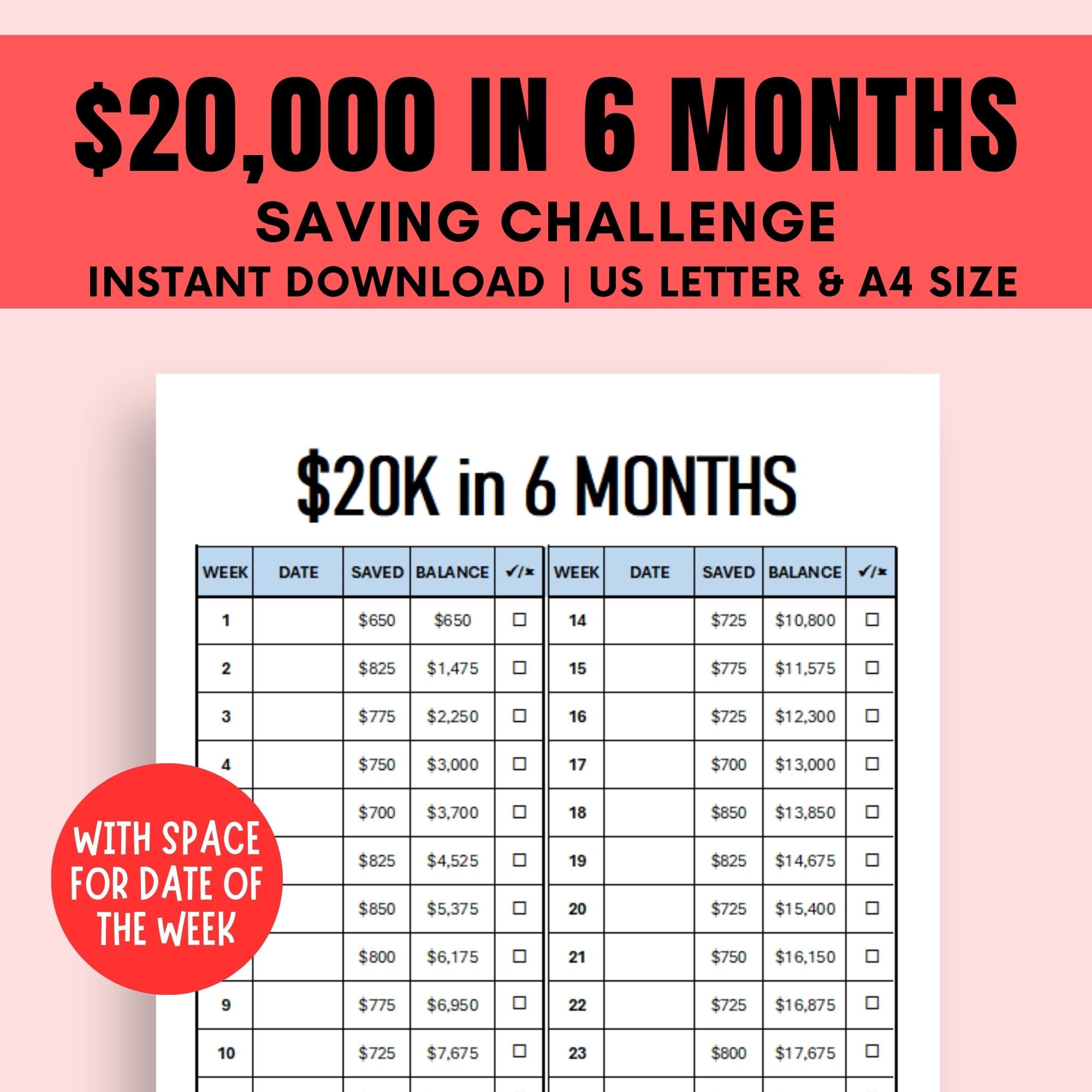
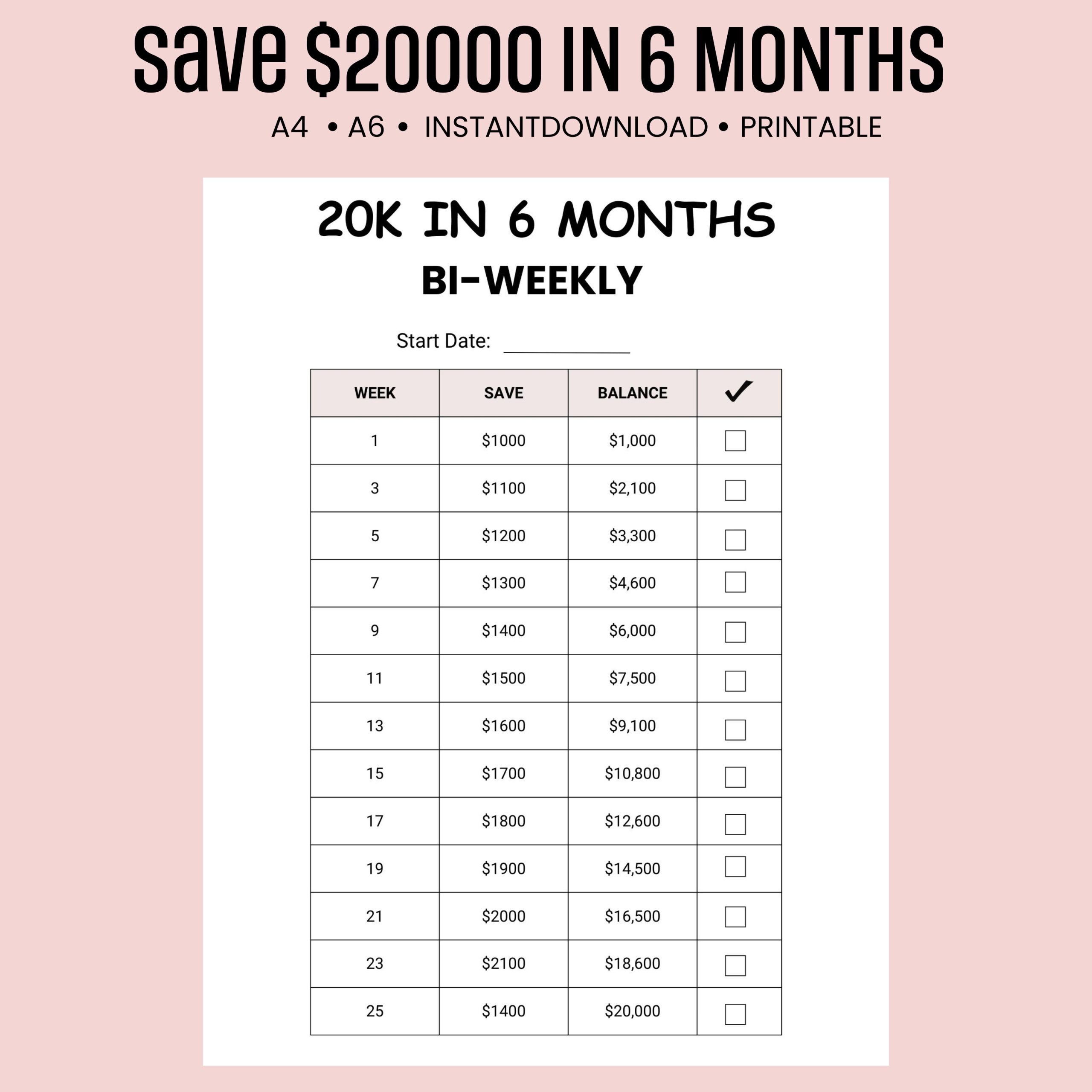
Saving $20,000 in a half-year period is an ambitious financial objective that requires more than just discipline; it requires a comprehensive strategic overhaul of your relationship with money. To reach this milestone, you must bridge a gap of approximately $3,333.33 per month. For most individuals, this cannot be achieved through frugal living alone. It demands a dual-pronged approach: the aggressive optimization of existing expenditures and the rapid scaling of income streams.
This roadmap is designed for those ready to commit to a high-intensity financial sprint. Whether you are building a down payment for a home, establishing a robust emergency fund, or generating seed capital for a business venture, the following framework provides the technical and psychological blueprints necessary to accumulate $20,000 in just 180 days.
Phase I: Auditing the Financial Infrastructure
Before a single dollar can be saved, you must have absolute clarity regarding your cash flow. High-speed savings require surgical precision. You cannot afford “ghost expenses” or “lifestyle leakage” when your monthly target is upwards of $3,000.
Implementing the Zero-Based Budget
The zero-based budgeting system is the most effective tool for aggressive saving. Unlike traditional budgeting, which often leaves “miscellaneous” categories, zero-based budgeting requires that every single dollar earned is assigned a specific job. If you earn $6,000 in a month, every one of those $6,000 must be accounted for—rent, utilities, groceries, and, most importantly, the $3,333 savings goal.
By giving every dollar a destination before the month begins, you eliminate the temptation of impulsive spending. Use digital tools like YNAB (You Need A Budget) or even a sophisticated spreadsheet to track every transaction in real-time. The goal is to create a “forced scarcity” environment where your liquid cash is moved into savings immediately upon receipt.
Identifying and Eliminating Lifestyle Leakage
To save $20,000 in six months, “standard” living often has to be temporarily suspended. This involves a deep audit of recurring subscriptions, dining habits, and convenience costs. Digital subscriptions—streaming services, premium apps, and gym memberships you rarely use—should be the first to go.
However, the real gains are found in the “Big Three” expenses: housing, transportation, and food. While you may not be able to move houses in a six-month window, you can certainly slash transportation costs by carpooling or using public transit, and you can drastically reduce food costs through meal prepping and eliminating outsourced meals. In a high-intensity savings phase, a $15 daily lunch represents a $2,700 loss over six months. Cutting that single habit brings you nearly 14% of the way to your $20,000 goal.
Phase II: Maximizing Income Velocity
For the average earner, cutting expenses is rarely enough to hit a $20,000 goal in six months. If your current take-home pay is $4,000, and your living expenses are $2,000, you are only saving $2,000 a month—leaving you $1,333 short of your target. To close this gap, you must focus on income expansion.
Leveraging High-Ticket Side Hustles
Not all side hustles are created equal. When operating on a six-month timeline, you do not have time for low-yield activities like online surveys or micro-tasking. You must focus on high-ticket freelancing or service-based businesses that leverage your existing professional skills.
If you are a graphic designer, writer, coder, or marketing strategist, your goal should be to secure one or two high-value contract projects per month. By positioning yourself in the B2B (business-to-business) market, you can command rates that significantly accelerate your savings. A single $2,000 monthly retainer for consulting work covers 60% of your monthly savings goal.
The Secondary Market: Liquidating Underused Assets
One of the fastest ways to inject capital into your savings plan is to look at the “dead equity” sitting in your home. Most households are filled with high-value items that are no longer in use. This includes electronics, designer clothing, specialized sports equipment, or furniture.
Spend the first two weeks of your six-month challenge listing these items on platforms like Facebook Marketplace, eBay, or specialized consignment sites. It is not uncommon for a focused liquidation of household clutter to generate between $2,000 and $5,000. This provides a massive psychological and financial boost in the first month, lowering the required monthly savings average for the remaining five months.
Negotiating Your Primary Salary
Often overlooked in savings challenges is the primary source of income. If you are due for a performance review, or if you have significantly exceeded your KPIs (Key Performance Indicators), now is the time to negotiate a raise or a performance bonus. Even a 10% increase in your primary salary can drastically reduce the pressure on your side hustles. Frame the conversation around the value you’ve created for the company, ensuring that your request is backed by data and market research.
Phase III: Optimization and Financial Tooling
Where you keep your money during these six months is just as important as how you save it. Your capital should not sit idle in a standard checking account where it earns zero interest and is easily accessible for spending.
High-Yield Savings and Money Market Accounts
To maximize your efforts, all saved funds should be diverted into a High-Yield Savings Account (HYSA) or a Money Market Account (MMA). While interest rates fluctuate, these accounts typically offer significantly higher returns than traditional savings accounts.
If you manage to save $3,333 each month, by the fourth or fifth month, the interest generated on your accumulating balance will start to provide a small but meaningful “bonus” toward your goal. Furthermore, these accounts often have slight “friction” regarding withdrawals, which serves as a psychological barrier to spending your progress.
Automating the Savings Velocity
Human willpower is a finite resource. To ensure success over 180 days, you must remove the element of choice. Set up an automated transfer that triggers every time you receive a paycheck. If you receive your salary on the 1st and 15th of the month, have $1,666 automatically moved to your high-yield account on those exact dates.
When the money is gone before you even “see” it in your primary account, you are forced to adapt your lifestyle to the remaining balance. This “pay yourself first” mentality is the cornerstone of all significant wealth accumulation.
Phase IV: The Psychology of Aggressive Accumulation
The greatest challenge to saving $20,000 in six months is not the math—it is the mental fatigue. The “middle months” (months three and four) are typically when motivation wanes and “frugal fatigue” sets in.
Shifting from Consumerism to Producerism
To sustain a high savings rate, you must fundamentally change how you view value. Most people are conditioned to find dopamine hits through consumption—buying new clothes, gadgets, or experiences. During this six-month sprint, you must shift your mindset toward producerism.
Find satisfaction in the growth of your account balance rather than the acquisition of physical goods. Treat your savings goal like a game or a high-stakes project. When you view every dollar saved as a “soldier” that will eventually work for you through future investments, the act of saving becomes more rewarding than the act of spending.
Managing the “Middle-Month” Slump
By month three, the novelty of the challenge often wears off. You might feel social pressure to join expensive outings or feel exhausted by the additional hours worked on side hustles. To combat this, it is essential to build in “micro-rewards” that do not break the budget.
Allocate a very small, fixed amount for “guilt-free spending”—perhaps $50 a month. This allows you to indulge in small comforts that prevent total burnout without derailing the $20,000 target. Additionally, track your progress visually. Using a chart or a digital progress bar can provide a visual dopamine hit as you watch the gap between your current balance and the $20,000 goal shrink.

Conclusion: Establishing the New Financial Baseline
Successfully saving $20,000 in six months is a transformative experience. Beyond the capital itself, you will have developed the high-value habits of budgeting, income generation, and disciplined spending.
As you approach the end of the six-month period, it is vital to have a plan for the capital. Whether it is moving into a diversified brokerage account, serving as a down payment, or funding a business launch, ensure that this “seed capital” is put to work immediately. The intensity of a six-month sprint is difficult to maintain indefinitely, but the financial foundation it builds can alter your net worth trajectory for decades to come. By mastering the art of the aggressive save, you prove to yourself that your financial reality is a product of your strategy, not just your circumstances.
aViewFromTheCave is a participant in the Amazon Services LLC Associates Program, an affiliate advertising program designed to provide a means for sites to earn advertising fees by advertising and linking to Amazon.com. Amazon, the Amazon logo, AmazonSupply, and the AmazonSupply logo are trademarks of Amazon.com, Inc. or its affiliates. As an Amazon Associate we earn affiliate commissions from qualifying purchases.