
Taxation is an inevitable part of economic participation, yet many individuals and business owners pay more than is legally required simply because they lack a comprehensive strategy for income reduction. Reducing your taxable income is not about tax evasion; it is about tax avoidance—the legal utilization of the tax regime to your advantage. By lowering your Adjusted Gross Income (AGI) and taxable income, you not only reduce the amount you owe to the government but often unlock eligibility for various credits and deductions that are phased out at higher income levels.

To navigate this landscape effectively, one must look at personal finance through a multi-dimensional lens, incorporating retirement planning, healthcare spending, investment strategies, and professional expenses. This guide explores the most effective, professional-grade strategies to optimize your financial footprint and keep more of what you earn.
1. Maximizing Pre-Tax Retirement Contributions
The most direct and effective way to lower your taxable income is to divert a portion of your earnings into tax-advantaged retirement accounts before the IRS ever sees a dime. These contributions are deducted from your gross income, effectively lowering your tax bracket in some instances.
Utilizing Employer-Sponsored Plans: 401(k) and 403(b)
For most employees, the 401(k) or 403(b) is the primary vehicle for income reduction. These plans allow you to contribute a significant portion of your salary—up to $23,000 annually (as of 2024), with an additional $7,500 “catch-up” contribution for those aged 50 or older. Because these contributions are “pre-tax,” they reduce your taxable income dollar-for-dollar. For example, if you earn $100,000 and contribute the maximum $23,000, the IRS only views your taxable income as $77,000. This immediate reduction can result in thousands of dollars in tax savings while simultaneously building a nest egg for the future.
The Role of Traditional IRAs
If you do not have access to an employer plan, or if you wish to supplement one, the Traditional Individual Retirement Account (IRA) offers another layer of protection. While eligibility for the tax deduction is subject to income limits if you or your spouse are covered by a retirement plan at work, for many, it remains a potent tool. Contributions to a Traditional IRA are often tax-deductible, meaning they are subtracted from your total income on your tax return, thereby reducing your AGI.
Health Savings Accounts (HSA): The Triple Tax Advantage
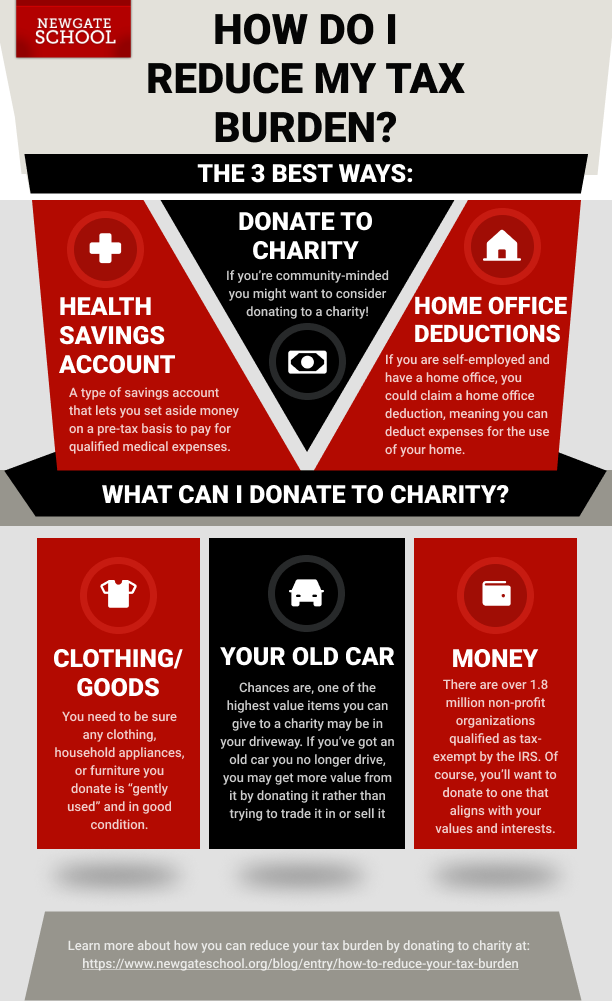
While technically a healthcare tool, the HSA is widely regarded by financial experts as one of the most powerful tax-reduction vehicles available. If you are enrolled in a High Deductible Health Plan (HDHP), you can contribute to an HSA. These contributions are 100% tax-deductible (or made pre-tax through payroll), the funds grow tax-free, and withdrawals for qualified medical expenses are also tax-free. Unlike a Flexible Spending Account (FSA), HSA funds roll over indefinitely, making it a stealth retirement account that lowers your current taxable income.
2. Strategic Deductions and the Art of “Bunching”
Once you have addressed your retirement contributions, the focus shifts to how you claim expenses. The decision between taking the standard deduction and itemizing is a pivotal moment in tax planning.
Standard vs. Itemized Deductions
The standard deduction is a flat amount that reduces your income, but for many homeowners or high-net-worth individuals, itemizing—listing specific expenses like mortgage interest, state and local taxes (SALT), and medical expenses—can lead to a much lower taxable income. The key is to determine if your specific expenses exceed the standard deduction threshold. If they do, itemizing becomes the preferred strategy for wealth preservation.
Charitable Giving and Donor-Advised Funds
Philanthropy offers a significant opportunity for tax optimization. Direct donations to qualified non-profits are deductible if you itemize. However, a more sophisticated approach involves “bunching” donations. By consolidating several years’ worth of planned giving into a single year, you can surpass the standard deduction threshold and achieve a massive one-time reduction in taxable income. This is often executed through a Donor-Advised Fund (DAF), which allows you to take an immediate tax deduction for the full amount contributed, even if the funds are distributed to charities over several subsequent years.
Managing the SALT Cap and Mortgage Interest
While the Tax Cuts and Jobs Act (TCJA) capped state and local tax deductions at $10,000, it remains a vital component of the itemization process. Additionally, the interest paid on up to $750,000 of mortgage debt for a primary or secondary home is deductible. For those in the early years of a mortgage where interest payments are highest, this deduction is a significant lever in reducing taxable income.

3. Tax-Efficient Investing Strategies
In the world of personal finance, it is not just what you earn from your job that is taxed; your investments are also subject to the IRS. Implementing tax-efficient investment strategies ensures that your portfolio growth isn’t eroded by unnecessary tax liabilities.
Tax-Loss Harvesting
Tax-loss harvesting is the practice of selling investments that are currently at a loss to offset capital gains earned elsewhere in your portfolio. If your losses exceed your gains, you can use the remaining loss to offset up to $3,000 of your ordinary taxable income. Any excess loss can be carried forward to future years. This strategy turns a market downturn into a proactive tax-saving opportunity, effectively lowering your total income for the year.
Long-Term Capital Gains and Qualified Dividends
Not all income is taxed equally. By holding assets for more than one year, you qualify for long-term capital gains rates, which are significantly lower than ordinary income tax rates (0%, 15%, or 20% depending on total income). By focusing on “buy and hold” strategies and prioritizing qualified dividends, you ensure that the growth of your wealth is taxed at a preferential rate, thereby keeping your overall effective tax rate—and your taxable income profile—manageable.
Municipal Bonds for High Earners
For investors in the highest tax brackets, municipal bonds offer a unique advantage: the interest earned is generally exempt from federal income taxes and, in many cases, state and local taxes as well. While the nominal yield might be lower than corporate bonds, the “tax-equivalent yield” often makes them a superior choice for reducing the amount of income that is actually subject to taxation.
4. Business Expenses and the Gig Economy Advantage
The rise of the side hustle and independent contracting has opened new avenues for income reduction. If you have any form of self-employment income, you have access to deductions that are unavailable to traditional W-2 employees.
The Home Office and Equipment Deductions
If you use a portion of your home exclusively for business, you can deduct a percentage of your rent, mortgage interest, utilities, and insurance. Furthermore, Section 179 of the tax code allows small business owners to deduct the full purchase price of qualifying equipment—such as computers, office furniture, and software—in the year it was purchased, rather than depreciating it over several years. This can lead to a substantial immediate reduction in business-related taxable income.
Self-Employed Retirement Plans (SEP IRA and Solo 401(k))
For those with significant side income or full-time self-employment, the SEP IRA and Solo 401(k) offer much higher contribution limits than traditional employer plans. A Solo 401(k) allows you to contribute both as an employee and as an employer, potentially allowing you to shield up to $69,000 (as of 2024) of your income from taxes. This is a game-changer for high-earning consultants and freelancers looking to minimize their tax exposure.
Travel, Meals, and Professional Development
Business-related travel and 50% of business meals are generally deductible, provided they are “ordinary and necessary” for your profession. Additionally, expenses related to professional development—such as certification fees, industry conferences, and specialized publications—can be deducted against your business income. These deductions lower your net profit, which is the figure that ultimately determines your tax liability.
Conclusion: The Proactive Path to Financial Efficiency
Reducing your taxable income requires a shift from a passive mindset to a proactive, strategic one. It is a year-round process that involves balancing your retirement goals, your charitable intentions, and your investment choices. By maximizing pre-tax contributions, intelligently itemizing deductions, leveraging investment losses, and utilizing business-related write-offs, you create a robust framework for wealth preservation.
The ultimate goal of these strategies is to ensure that you are contributing your fair share to society without overpaying through negligence. In the modern financial landscape, understanding the mechanics of taxable income is not just a skill for accountants—it is a fundamental requirement for anyone serious about achieving long-term financial independence and building lasting wealth. As you implement these strategies, consider consulting with a certified financial planner or tax professional to ensure your approach is tailored to your specific financial situation and compliant with the latest tax codes.
aViewFromTheCave is a participant in the Amazon Services LLC Associates Program, an affiliate advertising program designed to provide a means for sites to earn advertising fees by advertising and linking to Amazon.com. Amazon, the Amazon logo, AmazonSupply, and the AmazonSupply logo are trademarks of Amazon.com, Inc. or its affiliates. As an Amazon Associate we earn affiliate commissions from qualifying purchases.