
In an increasingly digital financial landscape, managing your money efficiently and accessibly is paramount. Cash App has emerged as a frontrunner in this evolution, offering a straightforward platform for peer-to-peer payments, investing, and direct banking functionalities through its associated Cash Card. For many, integrating Cash App into their personal finance toolkit means understanding not just how to send and receive money, but crucially, how to fund their Cash App balance and leverage the Cash App Card for everyday transactions. This guide delves into the various methods for putting money onto your Cash App card, transforming it from a mere digital wallet into a powerful instrument for financial control and flexibility.
The Cash App Card, a Visa debit card directly linked to your Cash App balance, provides the convenience of a traditional bank card without the complexities often associated with traditional banking. It allows users to spend their Cash App balance anywhere Visa is accepted, withdraw cash from ATMs, and even access discounts through “Cash Boosts.” Understanding how to consistently and reliably fund this card is the foundational step to maximizing its utility within your personal financial strategy. Whether you’re receiving income, managing a budget, or simply need a quick way to access funds, Cash App offers several user-friendly avenues to ensure your card is always ready for use.
Understanding the Cash App Ecosystem for Personal Finance
Before diving into the mechanics of adding funds, it’s essential to appreciate the role Cash App plays within the broader context of personal finance. It’s more than just a payment app; it’s a versatile financial tool designed to simplify how individuals interact with their money, from managing daily expenses to more strategic financial planning.
The Role of Cash App in Modern Financial Management
Cash App, developed by Block, Inc. (formerly Square, Inc.), has rapidly ascended to prominence as a key player in the fintech space. Its intuitive interface and comprehensive features have made it a go-to solution for millions seeking a simplified approach to financial transactions. At its core, Cash App facilitates instant peer-to-peer money transfers, allowing users to send and receive money with just a few taps. However, its capabilities extend far beyond this. Users can buy and sell Bitcoin and stocks directly within the app, further diversifying their financial activities.
For many, Cash App acts as a primary banking alternative, especially for those who prefer digital-first solutions or encounter difficulties with traditional banking systems. It provides a routing number and account number, enabling direct deposits of paychecks, tax refunds, and government benefits. This feature alone positions Cash App not just as a supplementary tool, but as a central hub for managing income and expenses, offering a convenient alternative to conventional checking accounts. The integration of the Cash App Card then bridges the gap between the digital balance and the physical world of commerce, allowing users to spend their funds effortlessly.
Benefits of Using the Cash App Card
The Cash App Card is a physical debit card issued by Sutton Bank, directly linked to your Cash App balance. Its primary benefit lies in the immediate accessibility of your funds. Unlike some digital wallets that require transfers to a linked bank account before spending, the Cash App Card lets you utilize your Cash App balance directly, anywhere Visa debit cards are accepted. This instant access is invaluable for budgeting, managing daily expenditures, and ensuring you have funds readily available without delays.
Beyond basic spending, the Cash App Card comes with unique perks that enhance its financial utility. “Cash Boosts” are instant discounts applied directly at the point of sale when using your Cash App Card at specific merchants. These boosts can range from discounts on coffee to savings on groceries or online purchases, effectively stretching your dollar further. For savvy users, strategically leveraging Cash Boosts can lead to significant savings over time, transforming the card from a mere payment tool into a smart savings instrument. Furthermore, the ability to withdraw cash from ATMs (with associated fees for non-network ATMs) adds another layer of financial flexibility, ensuring access to physical currency when needed. The combination of instant access, spending power, and integrated savings opportunities makes the Cash App Card a compelling component of a modern personal finance strategy.
Primary Methods for Funding Your Cash App Card
Having established the significance of the Cash App Card, let’s explore the practical methods for ensuring it’s always funded. Cash App offers several convenient ways to add money to your balance, catering to different needs and preferences.
Linking a Debit Card or Bank Account
The most common and often quickest way to add money to your Cash App balance, and by extension your Cash App Card, is by linking an external debit card or bank account. This method facilitates instant transfers, providing immediate access to your funds.
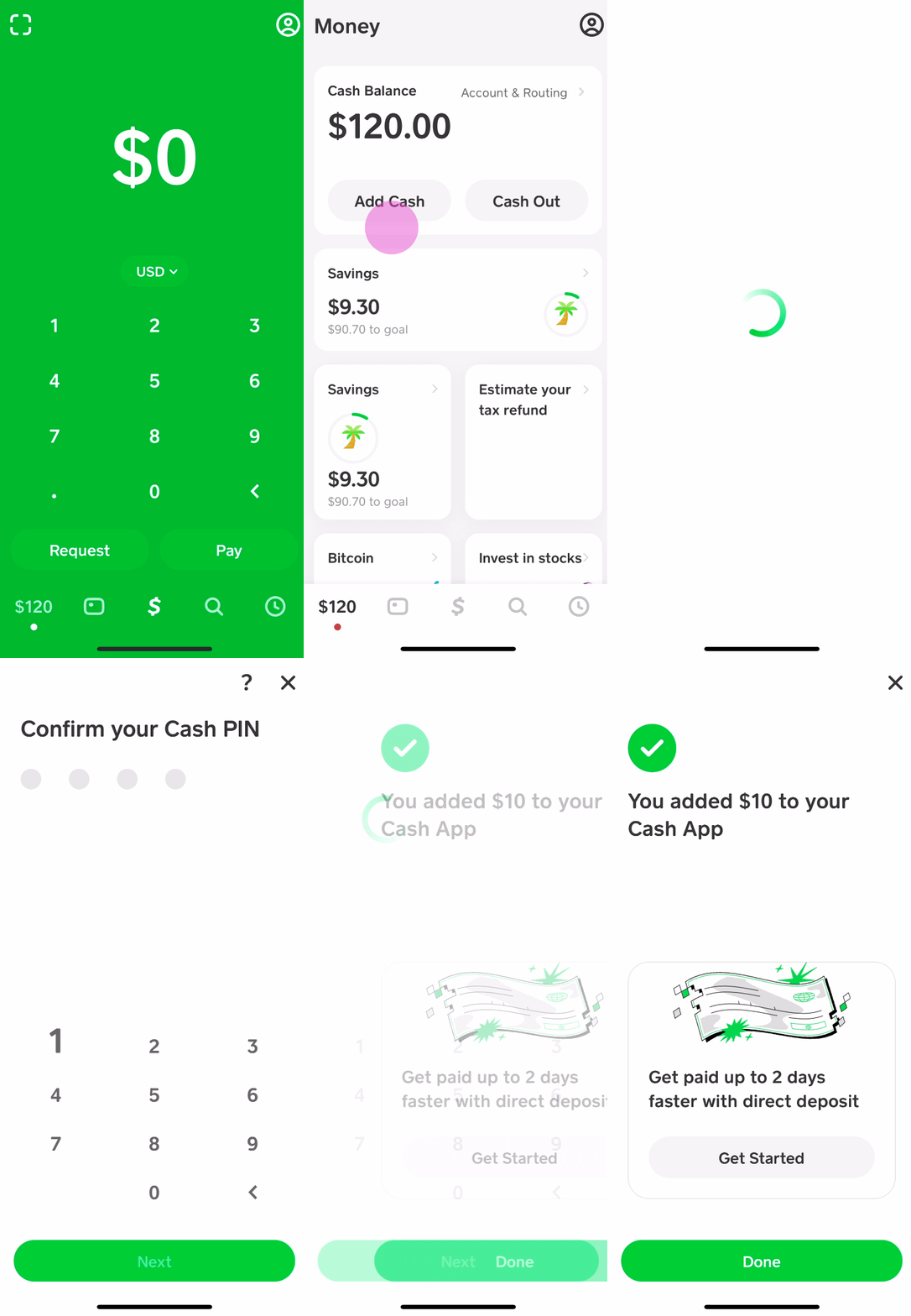
Step-by-step: Adding Funds Instantly
- Open Cash App: Launch the Cash App on your mobile device.
- Navigate to the Banking Tab: Tap the “Banking” icon (which looks like a house or a bank) on the bottom left of the home screen.
- Select “Add Cash”: Under your Cash App balance, you’ll see an “Add Cash” button. Tap it.
- Enter Amount: Input the amount of money you wish to add to your Cash App balance. You can typically add between $5 and $2,500 per transaction, though daily and weekly limits may apply.
- Confirm Transaction: Tap the “Add” button. If you haven’t linked a debit card or bank account, the app will prompt you to do so. You’ll need to enter your debit card number, expiration date, CVV, and zip code. For bank accounts, you might use Plaid to securely link your account.
- Verify: Confirm the transaction using your PIN or Touch ID/Face ID. The funds are usually added to your Cash App balance instantly.
Understanding Transaction Limits and Fees
While adding money via a linked debit card is convenient, it’s important to be aware of the associated limits and potential fees. Cash App imposes limits on how much cash you can add within a certain timeframe. For unverified accounts, these limits are generally lower (e.g., $250 per week). Verifying your account by providing your full legal name, date of birth, and the last four digits of your Social Security number significantly increases these limits, often to $7,500 per week.
Cash App typically does not charge a fee for adding money from a linked debit card. However, some banks might impose their own fees for debit card transactions, particularly if they treat them as cash advances, though this is rare for standard Cash App top-ups. It’s always advisable to check with your bank if you have concerns. Using a linked bank account directly via ACH transfer often has higher limits and no fees, but transfers might take 1-3 business days to clear.
Utilizing Direct Deposit for Regular Income
For those who rely on a steady income, setting up direct deposit with Cash App can transform it into a primary banking solution, making it incredibly easy to put money onto your Cash App card regularly.
Setting Up Direct Deposit with Your Employer
Cash App provides a unique routing number and account number that you can use to set up direct deposit.
- Access Direct Deposit Info: On the Cash App home screen, tap the “Banking” tab (house icon).
- Locate Account & Routing Numbers: Scroll down and you’ll find your Cash App account and routing numbers displayed. You might need to tap “Get Account Number” to generate them if it’s your first time.
- Provide to Employer/Payer: Share these numbers with your employer’s payroll department, your government benefits provider, or any entity that typically issues payments via direct deposit. They will usually have a form for you to fill out to initiate or change your direct deposit information.
Advantages for Managing Finances
Direct deposit into Cash App offers several significant advantages. Firstly, it provides quick access to your funds, often up to two days earlier than traditional banks for many users. This “early payday” feature can be a substantial benefit for managing cash flow. Secondly, it streamlines your financial life by consolidating your income directly into the platform you use for daily spending and budgeting. There are no fees associated with direct deposits, making it an economically sound choice. By having your paycheck deposited directly, your Cash App balance is automatically topped up, ensuring your Cash App Card is always ready for use without manual transfers. This hands-off approach to funding enhances financial convenience and predictability.
Adding Cash at Retail Locations (Paper Money Deposits)
Recognizing that not everyone relies solely on digital transfers, Cash App also offers the ability to deposit physical cash at participating retail stores. This method is particularly useful for those who receive income in cash or prefer to manage their money physically before converting it to digital funds.
Finding Participating Stores
Cash App partners with various retailers to facilitate paper money deposits. These typically include popular convenience stores, grocery stores, and big-box retailers.
- Open Cash App: Go to the “Banking” tab (house icon) on your Cash App home screen.
- Select “Add Cash”: Tap the “Add Cash” button.
- Choose “Deposit Paper Money”: You should see an option like “Deposit Paper Money.” Tap this.
- Locate Stores: Cash App will use your location to show you a map of nearby participating stores. Common partners include Walgreens, 7-Eleven, CVS, Walmart, and Family Dollar.
The Process and Potential Fees

Once you’ve found a participating store, the process is straightforward:
- Generate Barcode: Within the Cash App, follow the prompts to generate a unique barcode for your cash deposit.
- Present to Cashier: Go to the cashier and tell them you want to deposit cash to your Cash App. Present the barcode to the cashier for scanning.
- Hand Over Cash: Give the cashier the exact amount of cash you wish to deposit. There are usually limits, typically ranging from $5 to $500 per deposit, with daily and weekly maximums (e.g., $1,000 per day, $4,000 per week).
- Confirm Funds: The cashier will process the transaction, and the funds should instantly appear in your Cash App balance. You will receive a digital receipt within the app.
While this method offers excellent flexibility, it’s crucial to be aware of potential fees. Participating retailers may charge a small fee for this service, typically around $1 to $4 per deposit, depending on the store and the amount. This fee is usually disclosed before you confirm the transaction. It’s a small price for the convenience of converting physical cash into digital funds on your Cash App Card, especially for those without immediate access to traditional banking services.
Receiving Funds from Other Cash App Users
The original cornerstone of Cash App’s functionality, peer-to-peer transfers, remains a primary way to put money onto your Cash App balance and, consequently, your Cash App Card.
Instant Transfers and Requests
If a friend, family member, or client sends you money via Cash App, the funds are instantly credited to your Cash App balance. Similarly, you can request money from other users directly within the app.
- Request Money: On the Cash App home screen, tap the dollar sign icon. Enter the amount you need, then tap “Request.” Select the person (or enter their $Cashtag, phone number, or email) from whom you’re requesting funds. Add a note if desired, then send the request.
- Receive Money: When someone sends you money, you’ll receive a notification. The funds will immediately appear in your Cash App balance.
Social Finance Aspects
This method highlights Cash App’s role in “social finance,” enabling easy splitting of bills, repayment of debts, or receiving payments for small services among individuals. Since these transfers are typically instant and free, it’s an incredibly efficient way to manage shared expenses or collect informal payments. The money received automatically becomes available on your Cash App Card, ready for spending or withdrawal, seamlessly integrating personal exchanges into your broader financial management.
Maximizing Your Cash App Card’s Financial Utility
Funding your Cash App Card is only the first step. To truly harness its power, it’s essential to integrate it smartly into your financial habits and understand best practices for security and troubleshooting.
Budgeting and Expense Tracking with Cash App
The immediacy of transactions with the Cash App Card makes it a powerful tool for budgeting. Each purchase you make is immediately reflected in your app’s transaction history, providing a clear, real-time overview of your spending.
- Real-time Spending Insights: By consistently using your Cash App Card for daily expenses, you can easily review your spending patterns directly within the app. This granular view helps identify where your money is going, making it easier to adjust habits and stick to a budget.
- Dedicated Spending Categories (Manual): While Cash App doesn’t have elaborate built-in budgeting categories like some dedicated budgeting apps, you can manually track your spending by reviewing transactions and categorizing them in a separate spreadsheet or budgeting tool. The detailed transaction history provides all the necessary data.
- Allocating Funds: For specific budget categories (e.g., “dining out,” “entertainment”), you can add a designated amount to your Cash App balance that corresponds to that budget. This creates a psychological barrier against overspending, as you’re only spending what you’ve allocated to the card for that purpose.
Security Measures and Best Practices
Protecting your funds is paramount. Cash App employs robust security features, but user vigilance is equally important.
- Enable Security Locks: Always use a PIN, Touch ID, or Face ID to protect access to your Cash App. This prevents unauthorized access if your phone is lost or stolen.
- Monitor Transactions: Regularly review your transaction history for any unfamiliar activity. Report suspicious transactions immediately to Cash App support.
- Strong, Unique Passwords: If you link your bank account, ensure you use strong, unique passwords for both Cash App and your bank accounts.
- Beware of Scams: Be highly cautious of unsolicited requests for money or suspicious “giveaways.” Cash App will never ask for your PIN or sign-in code via phone or social media. Legitimate Cash App support will only communicate through official channels within the app or email.
- Two-Factor Authentication (2FA): Enable 2FA for an added layer of security.
- Card Lock Feature: If your Cash App Card is lost or stolen, immediately lock it within the app (go to the “Cash Card” tab and toggle “Enable Cash Card” off). This prevents any further unauthorized use.
Troubleshooting Common Funding Issues
Occasionally, you might encounter issues when trying to add money. Here are some common problems and their solutions:
- Declined Debit Card:
- Check Card Details: Ensure the card number, expiration date, CVV, and zip code are entered correctly.
- Insufficient Funds: Make sure there’s enough money in your linked bank account to cover the transfer.
- Bank Restrictions: Some banks might flag frequent small transfers as suspicious. Contact your bank to ensure there are no blocks on transactions to Cash App.
- Cash App Limits: You might have hit your daily or weekly funding limits. Wait until the next cycle or try a smaller amount.
- Paper Money Deposit Issues:
- Store Errors: Ensure the cashier scanned the barcode correctly.
- Internet Connection: A poor internet connection on your phone might prevent the barcode from generating or the transaction from being processed instantly.
- Store Participation: Confirm the store is still a participating location.
- Direct Deposit Not Arriving:
- Employer Verification: Double-check with your employer that they have the correct Cash App account and routing numbers and that the direct deposit has been initiated.
- Processing Time: While Cash App often offers early paydays, standard direct deposits can still take 1-3 business days to fully process.
- Cash App Verification: Ensure your Cash App account is fully verified, as unverified accounts might have issues receiving larger direct deposits.
For persistent issues, always reach out to Cash App support directly through the app.
Strategic Financial Planning with Cash App
Integrating Cash App into your financial routine can go beyond simple transactions, becoming a strategic component of your overall financial health.
Integrating Cash App into Your Overall Financial Strategy
For many, Cash App can serve as a potent tool for various financial objectives:
- Emergency Fund Lite: While not a substitute for a dedicated savings account with interest, you can use a portion of your Cash App balance as a quick-access emergency fund for small, immediate needs. Keep a specific amount on your card for unexpected expenses, separate from your main spending.
- Expense Segregation: Use your Cash App Card for specific categories of spending (e.g., all entertainment, all dining out) to easily track those particular expenses and keep them separate from other household budgets managed via traditional banking.
- Micro-Investing: Leverage Cash App’s built-in stock and Bitcoin purchasing features to passively invest small amounts over time. While highly speculative, this provides an accessible entry point to investing that integrates with your daily spending platform.
- Managing Side Hustle Income: If you have a side hustle, direct payments from clients or platforms can be routed to your Cash App, creating a distinct account for tracking this income, separate from your primary salary. This simplifies income and expense tracking for tax purposes.
Comparing Cash App with Traditional Banking and Other FinTech Solutions
Understanding Cash App’s place in the broader financial ecosystem helps in making informed decisions about its role in your personal finance.
- Vs. Traditional Banks: Cash App offers unparalleled speed for peer-to-peer transfers and often earlier access to direct deposits. However, traditional banks typically provide a wider range of services, including interest-bearing savings accounts, loans, mortgages, and more extensive fraud protection and customer service infrastructure. Cash App is excellent for immediate transactions and basic banking, but it may not fully replace a traditional bank for all complex financial needs.
- Vs. Other Payment Apps (e.g., Venmo, PayPal): While similar in peer-to-peer functionality, Cash App distinguishes itself with its Cash Card, direct deposit capabilities, and integrated Bitcoin/stock trading. Venmo focuses more on social payments, while PayPal is more universally accepted for online purchases and offers a broader suite of business tools. The choice often comes down to specific feature preferences and your social network’s preferred app.
- Vs. Other Digital Banks (e.g., Chime, Varo): Digital banks offer more comprehensive banking services (e.g., higher-yield savings, credit building tools) while maintaining the benefits of a mobile-first experience. Cash App is simpler, with fewer features for traditional banking products but stronger in immediate peer-to-peer and micro-investing.
Ultimately, Cash App often serves best as a complementary tool, either as a primary digital wallet for daily spending and specific income streams or as a robust secondary financial account that augments the services of a traditional bank.

Conclusion: Empowering Your Financial Journey with Cash App
The ability to put money onto your Cash App Card is a fundamental skill for anyone looking to leverage this versatile financial tool. Whether through instant debit card transfers, seamless direct deposits, convenient retail cash deposits, or effortless peer-to-peer receipts, Cash App provides multiple avenues to ensure your funds are accessible when and where you need them.
By understanding these methods, along with the nuances of fees, limits, and security best practices, users can transform their Cash App Card into an indispensable component of their personal finance strategy. From managing daily budgets and tracking expenses to benefiting from Cash Boosts and dabbling in micro-investing, the Cash App Card empowers users with greater control and flexibility over their money. As the digital economy continues to evolve, mastering tools like Cash App is not just about convenience; it’s about staying financially agile and empowered in an increasingly connected world.
aViewFromTheCave is a participant in the Amazon Services LLC Associates Program, an affiliate advertising program designed to provide a means for sites to earn advertising fees by advertising and linking to Amazon.com. Amazon, the Amazon logo, AmazonSupply, and the AmazonSupply logo are trademarks of Amazon.com, Inc. or its affiliates. As an Amazon Associate we earn affiliate commissions from qualifying purchases.