
The Cash App Card, a free, customizable debit card issued by Sutton Bank and linked directly to your Cash App balance, has become a pivotal tool for millions seeking streamlined digital financial management. Far more than just a payment card, it represents a versatile financial instrument for everyday spending, budgeting, and accessing your funds. Understanding how to efficiently and securely fund this card is fundamental to leveraging its full potential within your personal finance strategy. This guide delves into the various methods of adding money to your Cash App Card, examining each through the lens of financial prudence, convenience, and security.

Integrating Your Cash App Card into Your Personal Finance Ecosystem
Before diving into the mechanics of funding, it’s crucial to position the Cash App Card within your broader financial landscape. Unlike traditional bank debit cards linked to a checking account, your Cash App Card draws exclusively from your Cash App balance. This distinction is vital for effective budgeting and preventing overdrafts, as you can only spend what you have loaded onto the app. Consequently, managing your Cash App balance becomes an integral part of your liquid asset management.
The Cash App Card serves as an excellent tool for:
-
Targeted Spending: Allocating specific funds for categories like daily expenses, entertainment, or online subscriptions, separate from your main bank account.
-
Budget Adherence: Its prepaid nature helps enforce spending limits, preventing overspending in designated areas.
-
Quick Access to Funds: Ideal for peer-to-peer transfers received or for situations requiring immediate access to small-to-moderate sums.
-
Leveraging “Boosts”: Cash App’s unique discount program offers instant savings at various merchants, directly enhancing your purchasing power.
Understanding these roles helps inform your choice of funding methods and how frequently you might need to top up your balance.
Essential Methods for Loading Funds onto Your Cash App Card
Effectively putting money onto your Cash App Card involves several distinct processes, each with its own benefits and considerations regarding speed, cost, and convenience. Selecting the optimal method often depends on the source of your funds, the urgency of the transfer, and your comfort with digital financial transactions.
Direct Bank Account Transfers
The most common and often preferred method for substantial or regular funding is linking your primary bank account directly to your Cash App. This method provides a secure conduit for transferring funds from your checking or savings account.
Linking Your Bank Account
To initiate this, navigate to the “Linked Banks” section within the Cash App. You’ll typically be prompted to select your bank from a list and then log in using your online banking credentials. This process, facilitated by secure third-party financial technology, establishes a connection allowing for seamless transfers. While the initial setup requires verification, subsequent transfers are swift.
Adding Funds from a Linked Bank Account
Once linked, you can add money directly from your bank account to your Cash App balance. This usually involves selecting the “Add Cash” option within the app, specifying the amount, and confirming the transfer. While standard transfers are typically free, instant transfers may incur a small fee (e.g., 0.5%–1.75%), making it essential to weigh urgency against cost. For larger, non-urgent transfers, the standard option is often the most financially sound choice.
Utilizing a Debit Card for Instant Transfers
For quick, smaller top-ups, especially when a linked bank account isn’t immediately feasible or if you prefer not to link your primary account, adding funds via a debit card is a viable alternative.
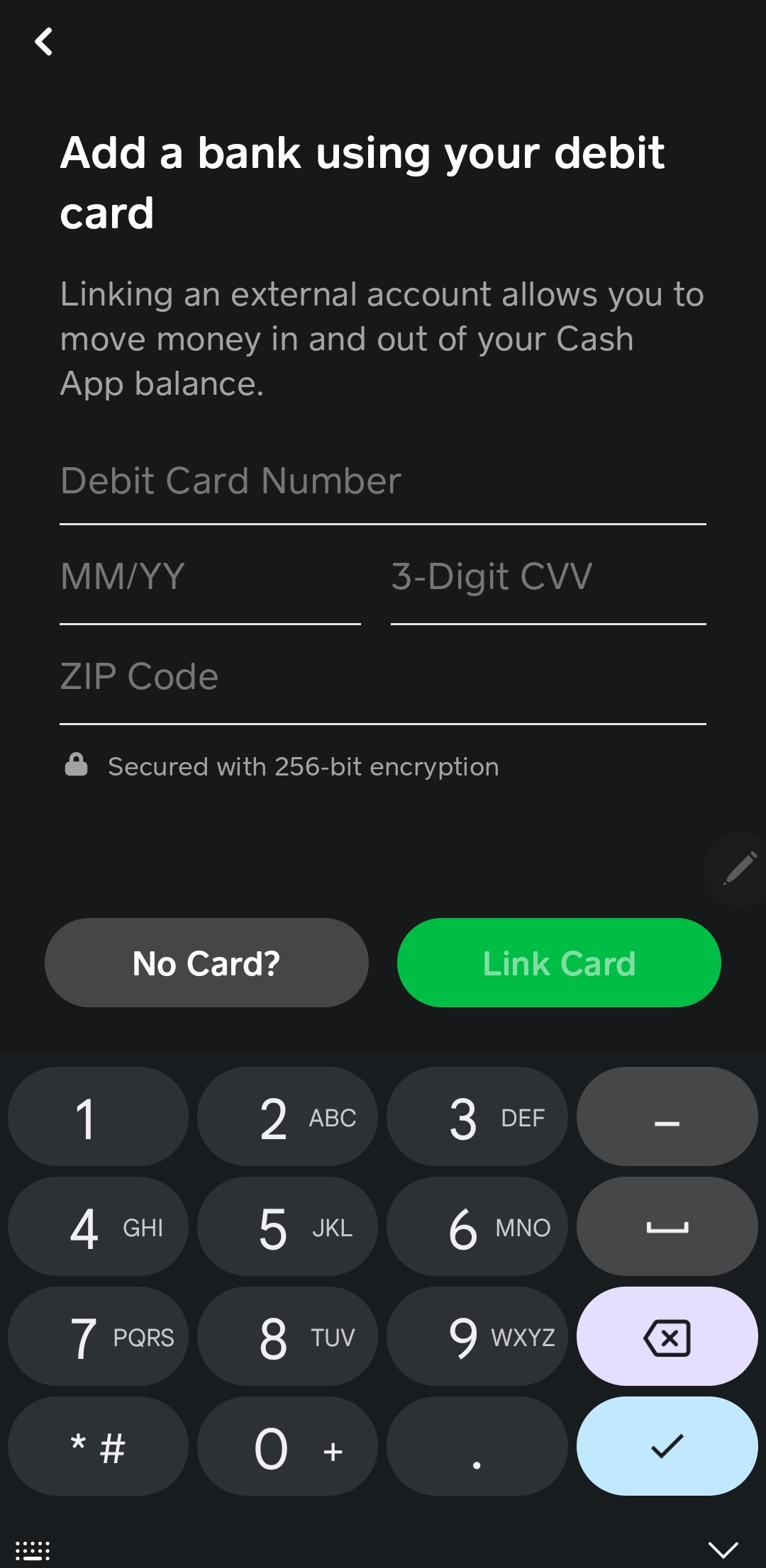
Linking Your Debit Card
Similar to linking a bank account, you can add a debit card (Visa, MasterCard, American Express, Discover) to your Cash App profile. This involves inputting the card number, expiration date, CVV, and billing zip code. Note that credit cards generally cannot be used to add funds to your Cash App balance, as this is primarily a feature for debit transactions to avoid cash advance fees imposed by credit card issuers.
Instant Loading with a Debit Card
Once linked, you can use the “Add Cash” feature and select your linked debit card as the source. Transfers are typically instant, making this an ideal solution for immediate needs. However, similar to instant bank transfers, these debit card loads might be subject to a small fee, particularly if not originating from a linked bank account via an instant method. Prudent financial management dictates reserving this method for urgent situations or when the convenience fee is negligible relative to the amount being transferred.
Accepting Funds from Other Cash App Users
The peer-to-peer payment functionality is at the core of Cash App’s appeal. Funds received from friends, family, or customers directly augment your Cash App balance and, consequently, the available funds on your Cash App Card.
Receiving Payments
When someone sends you money via Cash App, it automatically appears in your balance. There are typically no fees for standard peer-to-peer transfers. This makes the Cash App Card an excellent tool for managing shared expenses, receiving payment for goods or services, or for collecting reimbursements efficiently. For business users or frequent recipients, monitoring transaction limits and potential tax implications of received funds is crucial.
Depositing Physical Cash at Retail Locations
For individuals who primarily deal with physical cash or wish to convert cash into a digital balance without a traditional bank account, Cash App offers a solution through retail partnerships.
Identifying Participating Retailers
Cash App partners with various major retailers (e.g., Walmart, Walgreens, CVS, 7-Eleven) that offer a “Paper Money Deposit” service. Within the Cash App, you can locate nearby participating stores by using the map feature.
The Deposit Process
At a participating store, you present your Cash App Card or show a unique barcode generated in the app to the cashier. You then hand over the cash amount you wish to deposit. The cashier processes the transaction, and the funds are typically added to your Cash App balance instantly or within a few minutes. It’s important to note that these cash deposits often come with a transaction fee (e.g., $1-$5 per deposit), and daily/weekly deposit limits apply. Factoring these fees into your financial decisions is essential when considering this method, especially for regular cash conversion.
Strategic Financial Management with Your Cash App Card
Beyond the mechanics of funding, how you utilize your Cash App Card directly impacts your financial well-being. Strategic engagement can turn this simple tool into a powerful asset for personal finance.
Budgeting and Expense Tracking
The distinct balance of your Cash App Card lends itself well to specific budgeting strategies. You can designate it for a particular spending category (e.g., “Dining Out” or “Online Shopping”) and only load the allocated budget for that period. This creates a clear boundary, helping prevent overspending in those areas. Regularly reviewing your transaction history within the app provides an immediate snapshot of your spending patterns, facilitating better financial discipline.
Leveraging Direct Deposit for Income Management
For individuals receiving regular income, setting up direct deposit to your Cash App account can streamline financial operations. Your Cash App account comes with unique routing and account numbers, allowing employers or government agencies to deposit funds directly. This not only offers immediate access to your wages or benefits but also positions your Cash App balance as a primary checking alternative, complete with FDIC insurance through its banking partners. It simplifies the process of allocating funds for specific purposes or making prompt payments with your Cash App Card.
Understanding Fees and Limits
A cornerstone of sound financial management is a thorough understanding of all associated fees and transactional limits.
-
Deposit Fees: As mentioned, instant transfers from linked accounts or debit cards, and cash deposits at retailers, often incur fees. Factor these into your decisions, especially for frequent transactions.
-
Withdrawal Fees: While convenient for ATM access, withdrawing cash from your Cash App balance using your card typically incurs an ATM fee, in addition to any charges from the ATM operator.
-
Transaction Limits: Cash App imposes daily, weekly, and monthly limits on how much money you can send, receive, and add to your balance, as well as how much you can spend or withdraw. Being aware of these limits prevents unexpected hitches in your financial planning. Verified accounts generally have higher limits, emphasizing the importance of identity verification within the app.
Safeguarding Your Digital Funds: Security Best Practices
The convenience of digital finance comes with a paramount need for robust security. Protecting your Cash App Card and balance is integral to your overall financial security.
PIN and Card Security
Treat your Cash App Card with the same diligence as any other debit card. Memorize your PIN and never share it. Avoid writing it down. If your physical card is lost or stolen, immediately lock it through the Cash App or report it. This swift action can prevent unauthorized transactions. Regularly monitor your transaction history for any suspicious activity.
App and Account Security
The Cash App itself is the gateway to your funds, making its security critical. Enable two-factor authentication (2FA) for your Cash App account. This adds an extra layer of protection, requiring a code from your phone or email in addition to your password for logins or significant actions. Use a strong, unique password for your Cash App account. Be wary of phishing attempts or suspicious messages requesting personal information, which are common tactics used by scammers. Cash App will never ask for your PIN, sign-in code, or full debit card number via phone or social media.
Monitoring for Fraud
Regularly review your Cash App activity. If you notice any unauthorized transactions, report them immediately to Cash App support. Understanding common scams (e.g., fake giveaways, payment requests from unknown senders, “customer support” impersonators) can significantly reduce your vulnerability. Never send money to someone you don’t know or trust, especially if they promise larger returns in exchange.

Conclusion
The Cash App Card is a powerful financial tool that, when understood and utilized correctly, can significantly enhance your personal finance management. From efficiently loading funds via bank accounts, debit cards, or cash deposits, to strategic budgeting and robust security practices, each aspect plays a vital role in maximizing its utility. By integrating these practices, you transform a simple digital debit card into an effective component of your broader financial strategy, ensuring your money is accessible, secure, and working for your financial goals.
aViewFromTheCave is a participant in the Amazon Services LLC Associates Program, an affiliate advertising program designed to provide a means for sites to earn advertising fees by advertising and linking to Amazon.com. Amazon, the Amazon logo, AmazonSupply, and the AmazonSupply logo are trademarks of Amazon.com, Inc. or its affiliates. As an Amazon Associate we earn affiliate commissions from qualifying purchases.