
Embarking on the journey of stock market investing can feel like stepping into a complex labyrinth for the uninitiated. Yet, for countless individuals, it represents a powerful pathway to wealth creation, financial independence, and securing a comfortable future. Understanding how to purchase a stock is not merely about clicking a “buy” button; it’s about making informed decisions, aligning investments with personal goals, and cultivating a strategic mindset. This guide aims to demystify the process, offering a clear, professional, and insightful roadmap for anyone ready to take their first step into the world of equities.

At its core, buying a stock means purchasing a tiny piece of ownership in a publicly traded company. When you own a stock, you become a shareholder, entitling you to a portion of the company’s assets and earnings, and potentially a say in its governance through voting rights. The allure of stock investing lies in its potential for capital appreciation—the increase in the stock’s value over time—and, for some stocks, dividend payments, which are distributions of a company’s profits to its shareholders. However, like any investment, it comes with risks, and a thoughtful, educated approach is paramount.
Understanding the Fundamentals Before You Buy
Before you commit any capital, it’s crucial to build a solid foundation of understanding about what stocks are, why they’re invested in, and the underlying principles that govern market behavior. This foundational knowledge will serve as your compass in navigating the often-volatile seas of the stock market.
What Exactly is a Stock?
A stock, or share, represents a claim on the assets and earnings of a corporation. When a company wants to raise capital to expand operations, develop new products, or repay debt, it can “go public” by issuing shares to the general public through an Initial Public Offering (IPO). Once these shares are issued, they can be bought and sold on stock exchanges, like the New York Stock Exchange (NYSE) or NASDAQ. The price of a stock fluctuates based on supply and demand, company performance, economic indicators, and investor sentiment. Owning stock makes you a part-owner, giving you a vested interest in the company’s success.
Why Invest in Stocks?
There are several compelling reasons why individuals choose to invest in stocks, making it a cornerstone of many long-term financial plans:
-
Capital Appreciation: The primary draw for many is the potential for their investment to grow in value. As a company performs well, its earnings increase, and its prospects improve, investor demand for its stock can rise, driving up its share price.
-
Dividends: Many established companies share a portion of their profits with shareholders in the form of dividends. These payments can provide a regular income stream and are a significant component of total returns, especially for income-focused investors.
-
Inflation Hedge: Over the long term, stocks have historically outpaced inflation, meaning they can help preserve and grow your purchasing power, unlike cash that depreciates over time.
-
Long-Term Wealth Building: Historically, the stock market has delivered attractive returns over extended periods, making it a powerful engine for compounding wealth and achieving significant financial goals like retirement, homeownership, or funding education.
Key Investment Principles to Grasp
Success in stock investing isn’t about picking the next big winner overnight; it’s about adhering to proven principles:
-
Risk vs. Reward: All investments carry risk. Generally, higher potential returns come with higher risk. Understanding your personal risk tolerance is critical.
-
Diversification: The golden rule of investing: “Don’t put all your eggs in one basket.” Spreading your investments across different stocks, industries, and asset classes helps mitigate risk.
-
Long-Term Perspective: Stock market investing is often a marathon, not a sprint. Short-term fluctuations are normal, but over decades, markets tend to trend upwards. Patience and avoiding impulsive decisions are key.
-
Do Your Homework: Never invest in something you don’t understand. Thorough research into a company’s business model, financials, and competitive landscape is essential.
Preparing for Your First Stock Purchase
With a foundational understanding in place, the next step involves personal preparation and setting up the necessary infrastructure for your investments. This includes defining your financial objectives and selecting the right platform to execute your trades.
Defining Your Investment Goals and Risk Tolerance
Before you even think about specific stocks, ask yourself: What am I investing for? Are you saving for retirement decades away, a down payment on a house in five years, or simply looking to grow your wealth generally? Your goals will dictate your investment horizon, which in turn influences the level of risk you should comfortably take.
Equally important is understanding your risk tolerance—your psychological capacity to withstand market fluctuations without panic selling. A younger investor with a long time horizon might tolerate more risk, opting for growth stocks, while someone nearing retirement might prefer less volatile, income-generating stocks or bonds. Be honest with yourself about how much risk you can truly bear without losing sleep.
Setting Up Your Investment Account
To purchase stocks, you’ll need an investment account with a brokerage firm. These firms act as intermediaries, executing trades on your behalf. There are generally two main types of brokerage services:
-
Discount Brokerages: These are often online platforms offering low commissions (sometimes even zero-commission trades for stocks and ETFs) and a wide range of investment products. They are ideal for self-directed investors comfortable making their own research and trading decisions. Examples include Fidelity, Charles Schwab, Vanguard, and Robinhood.
-
Full-Service Brokerages: These firms provide personalized advice, financial planning, and a broader suite of services, often at a higher cost. They might be suitable for investors who prefer hands-on guidance from a professional.
When choosing a brokerage, consider factors like fees, available investment products, research tools, customer service, and ease of use of their platform. You’ll also need to decide on the type of account:
-
Taxable Brokerage Account: A standard investment account where capital gains and dividends are taxed in the year they are realized.
-
Retirement Accounts (IRA, Roth IRA, 401(k)): These offer significant tax advantages (tax-deferred growth or tax-free withdrawals in retirement) but come with contribution limits and withdrawal rules.
Funding Your Account
Once your brokerage account is open, you’ll need to deposit funds. Common methods include:
-
Electronic Funds Transfer (EFT): Linking your bank account for easy, often free, transfers.
-
Wire Transfer: Faster but usually comes with a fee.
-
Check Deposit: A traditional method, but slower.
-
Rollover: Transferring funds from an existing retirement account (e.g., from a previous employer’s 401(k)).
Ensure your funds have settled and are available for trading before attempting to make a purchase.
Researching and Selecting Stocks
This is arguably the most critical stage, requiring diligence and an analytical mindset. Identifying promising companies is key to making sound investment decisions.
Fundamental Analysis Basics
Fundamental analysis involves evaluating a company’s financial health, management, competitive landscape, and overall industry to determine its intrinsic value. Key metrics and factors to consider include:
-
Earnings Per Share (EPS): A company’s profit divided by the number of outstanding shares.
-
Price-to-Earnings (P/E) Ratio: The current share price divided by its EPS. It indicates how much investors are willing to pay per dollar of earnings.
-
Revenue Growth: Shows if the company’s sales are increasing over time.
-
Debt-to-Equity Ratio: Reveals how much debt a company is using to finance its assets relative to the value of shareholders’ equity.
-
Profit Margins: Gross, operating, and net profit margins indicate a company’s efficiency.
-
Management Team: Assess the experience and track record of the company’s leadership.
-
Competitive Advantage (Moat): What makes the company unique and protects it from competitors (e.g., brand recognition, patents, network effects)?
-
Industry Outlook: Is the industry growing or declining? What are the macro trends affecting it?
Diversification Strategies
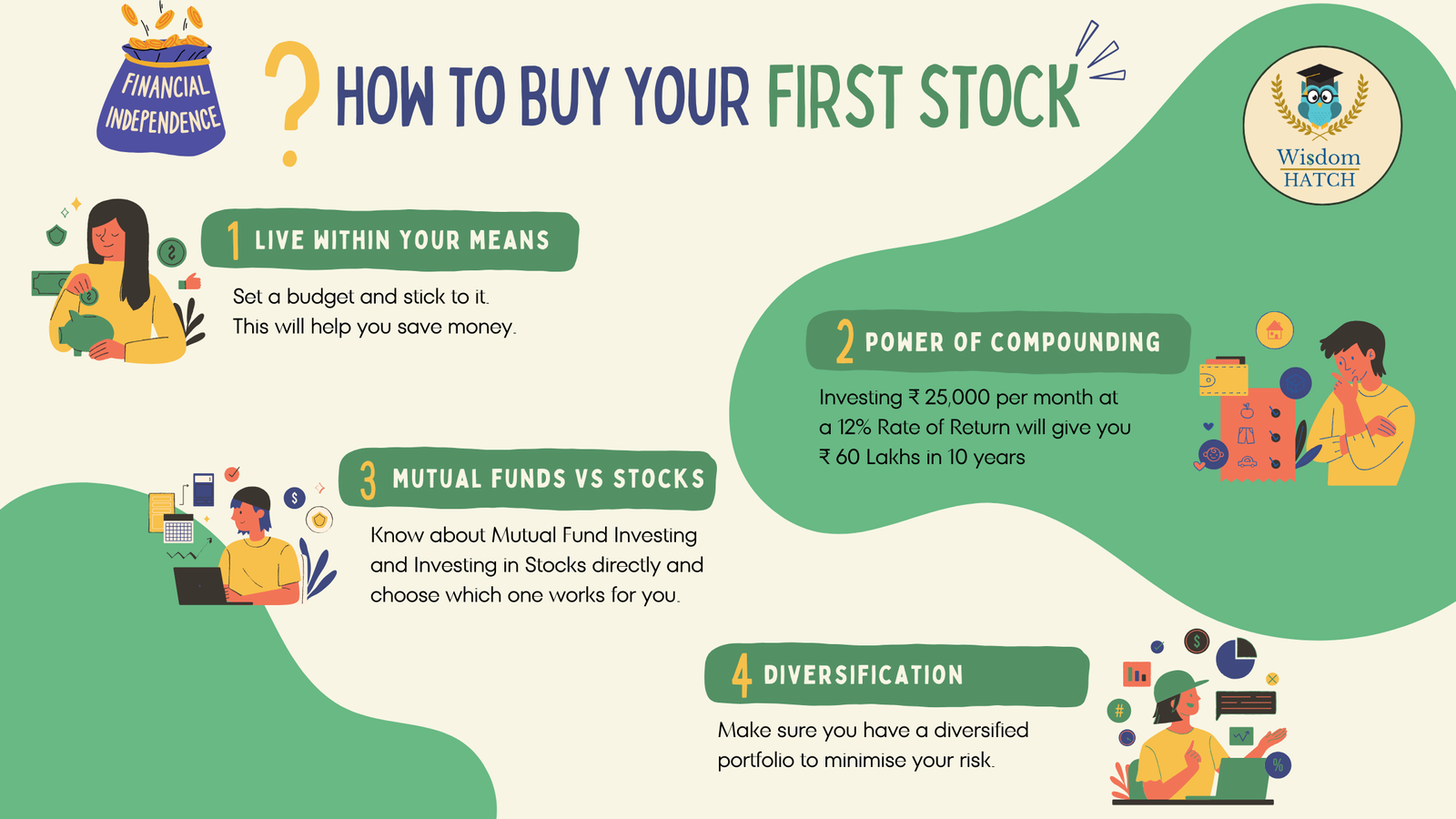
While individual stock picking can be rewarding, it also carries higher risk. Diversification is paramount. Instead of putting all your money into a single company, consider spreading it across:
-
Different Industries/Sectors: Don’t just invest in technology; consider healthcare, consumer staples, financials, etc.
-
Companies of Different Sizes: A mix of large-cap (established, stable) and small-cap (high-growth potential, higher risk) stocks.
-
Geographic Regions: Consider international stocks to reduce reliance on any single economy.
For many beginners, investing in Exchange-Traded Funds (ETFs) or Mutual Funds offers instant diversification. These funds hold a basket of many different stocks (or other assets), managed by professionals or designed to track an index (like the S&P 500). They are an excellent way to gain broad market exposure with less risk than picking individual stocks.
Where to Find Reliable Information
Never rely on a single source or unsubstantiated tips. Utilize a variety of reputable resources:
-
Company Investor Relations: Public companies are required to file reports with regulatory bodies (like the SEC in the U.S.). Look for 10-K (annual reports) and 10-Q (quarterly reports) on the company’s investor relations website or the SEC EDGAR database.
-
Financial News Outlets: Websites like The Wall Street Journal, Bloomberg, Reuters, and reputable financial sections of major news sites offer in-depth analysis and market news.
-
Brokerage Research: Many brokerage platforms offer extensive research tools, analyst reports, and stock screeners to help you find suitable investments.
-
Investment Books and Educational Resources: Continuously educate yourself through well-regarded investment literature.
Executing Your Stock Purchase
Once you’ve done your research and decided on a stock, it’s time to place your order through your brokerage platform. Understanding different order types is crucial for executing your trade effectively.
Understanding Order Types
When you buy a stock, you’ll specify how you want your order to be handled:
-
Market Order: This is the simplest and most common order type. You instruct your broker to buy (or sell) shares immediately at the best available price in the market. While it guarantees execution, it does not guarantee a specific price, which can be an issue in fast-moving markets.
-
Limit Order: With a limit order, you specify the maximum price you’re willing to pay per share (for a buy order) or the minimum price you’re willing to accept (for a sell order). Your order will only be executed if the stock reaches your specified price or better. This gives you more control over the price, but there’s no guarantee your order will be filled.
-
Stop Order (or Stop-Loss Order): This order becomes a market order once a specified “stop price” is reached. For a buy stop order, it’s typically used to limit a loss or protect a profit on a short sale. For a sell stop order (stop-loss), it’s commonly used to limit potential losses on a long position.
-
Stop-Limit Order: Combines features of a stop order and a limit order. Once the stop price is triggered, it becomes a limit order rather than a market order, offering price control but still no guarantee of execution.
For beginners, a market order is often sufficient for highly liquid stocks. For less liquid stocks or when you want more price control, a limit order is preferable.
Placing the Trade Through Your Brokerage Platform
The process is generally straightforward:
-
Log in: Access your brokerage account online or via their mobile app.
-
Navigate to Trade/Invest: Find the section for placing trades.
-
Enter Stock Symbol: Type in the ticker symbol (e.g., AAPL for Apple, MSFT for Microsoft).
-
Select Action: Choose “Buy.”
-
Enter Quantity: Specify the number of shares you want to purchase. Some platforms allow you to invest a dollar amount, buying fractional shares.
-
Select Order Type: Choose between market, limit, or other order types.
-
Review Order: Carefully check all details—stock, quantity, price, order type—before submitting.
-
Place Order: Confirm the trade.
You’ll receive a confirmation once the order is executed.
Transaction Costs and Fees
While many brokerages now offer commission-free trading for stocks and ETFs, be aware of other potential costs:
-
Commissions: For some specific asset classes or advanced order types, commissions might still apply.
-
Regulatory Fees: Small fees imposed by regulatory bodies like the SEC or FINRA.
-
Expense Ratios: For ETFs and mutual funds, this is an annual fee charged as a percentage of your investment, covering the fund’s operating costs.
-
Bid-Ask Spread: The difference between the highest price a buyer is willing to pay (bid) and the lowest price a seller is willing to accept (ask). This is an implicit cost of trading.
Always review the fee schedule of your chosen brokerage.
Managing Your Investments Post-Purchase
Buying a stock is not the end of the journey; it’s just the beginning. Effective portfolio management and a disciplined approach are essential for long-term success.
Monitoring Your Portfolio
While it’s wise to avoid obsessively checking stock prices daily, regular monitoring is important. Periodically review the performance of your holdings and stay updated on the companies you own. Read their quarterly earnings reports, follow industry news, and assess if the fundamental reasons you invested still hold true. Set a schedule—perhaps quarterly or semi-annually—for a more in-depth review.
Rebalancing and Adjusting Your Strategy
Over time, your portfolio’s allocation may drift due to market performance. Rebalancing involves adjusting your holdings to bring them back to your target asset allocation. For instance, if stocks have performed exceptionally well, you might sell some to reinvest in underperforming assets or to take profits. Rebalancing helps manage risk and ensures your portfolio remains aligned with your long-term goals.
Life events, changes in your financial situation, or shifts in your risk tolerance may also necessitate adjustments to your investment strategy. Be prepared to adapt, but avoid making emotional decisions based on short-term market noise.
The Importance of Long-Term Perspective
Perhaps the most crucial advice for any stock investor is to cultivate a long-term perspective. Short-term market volatility is inevitable. Economic downturns, geopolitical events, and company-specific news can cause significant swings. Investors who panic and sell during dips often lock in losses, missing out on subsequent recoveries. History shows that patient investors who stick to their well-researched strategies through market cycles tend to be the most successful. Harness the power of compounding by letting your investments grow over many years, reinvesting dividends, and consistently adding to your portfolio.
Tax Implications of Stock Investing
Understanding the tax implications of stock investing is vital for maximizing your returns. Key areas include:
-
Capital Gains Tax: When you sell a stock for a profit, you incur a capital gain. This gain is taxed differently depending on how long you held the stock:
-
Short-Term Capital Gains: For assets held for one year or less, typically taxed at your ordinary income tax rate.
-
Long-Term Capital Gains: For assets held for more than one year, generally taxed at lower, preferential rates.
-
-
Dividend Income Tax: Dividends received from stocks are also taxable, often categorized as “qualified” or “non-qualified” with different tax treatments.
-
Wash Sale Rule: This IRS rule prevents investors from selling a security at a loss, only to repurchase substantially identical securities within 30 days before or after the sale, thereby claiming a tax deduction.
Consult with a tax professional to understand how stock investing affects your personal tax situation, especially as your portfolio grows.

Conclusion
Purchasing a stock marks a significant step in your financial journey, offering the potential for substantial growth and long-term wealth accumulation. It’s a process that demands diligence, patience, and a commitment to continuous learning. By understanding the fundamentals of what a stock is, meticulously preparing your investment strategy, thoroughly researching companies, executing trades thoughtfully, and diligently managing your portfolio, you can build a robust foundation for success. Remember, the stock market rewards informed decisions and a disciplined, long-term approach. Start small, stay educated, and embark on your investing journey with confidence and foresight.
aViewFromTheCave is a participant in the Amazon Services LLC Associates Program, an affiliate advertising program designed to provide a means for sites to earn advertising fees by advertising and linking to Amazon.com. Amazon, the Amazon logo, AmazonSupply, and the AmazonSupply logo are trademarks of Amazon.com, Inc. or its affiliates. As an Amazon Associate we earn affiliate commissions from qualifying purchases.