
Financial success is rarely the result of luck or an unexpectedly high windfall; rather, it is the product of meticulous planning, disciplined execution, and consistent oversight. At the core of this success lies the budget plan. A budget is far more than a restrictive list of things you cannot buy; it is a strategic blueprint that empowers you to direct your capital toward the goals that matter most. Whether you are aiming to eliminate high-interest debt, build a robust investment portfolio, or secure a comfortable retirement, a well-structured budget is the primary vehicle that will get you there.
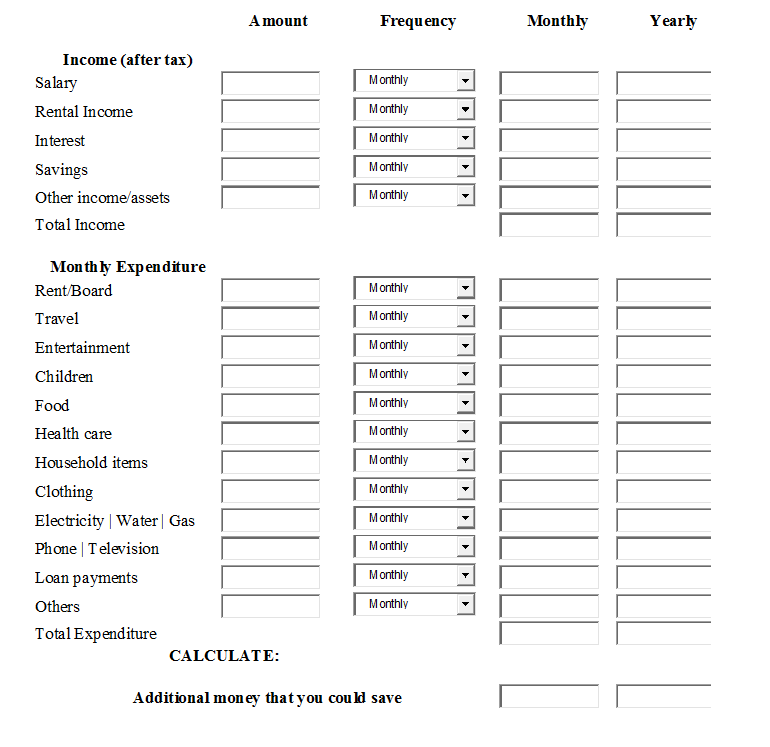
Preparing a budget plan requires a shift in perspective. Instead of viewing money as something that happens to you, you must view it as a tool that you manage. This guide explores the sophisticated methodologies of personal finance to help you construct a budget that is both resilient and adaptable to the complexities of modern economic life.
Understanding the Pillars of a Sustainable Budget
Before diving into the numbers, it is essential to understand the theoretical foundation of a successful budget. Most people fail at budgeting because they approach it with a mindset of deprivation. A sustainable budget, however, is built on the principle of intentionality. It is about prioritizing value over impulse and ensuring that every dollar serves a specific purpose in your broader financial ecosystem.
The Psychology of Spending and Value Alignment
The first step in preparing a budget is an honest assessment of your values. Financial mastery begins when your spending aligns with your long-term objectives. If your goal is to achieve financial independence, but a significant portion of your discretionary income is diverted toward depreciating assets or low-value entertainment, there is a fundamental misalignment.
To rectify this, categorize your historical spending not just by “type” (e.g., food, rent), but by “value.” Identify which expenses contribute to your well-being and growth, and which are the result of “lifestyle creep”—the tendency for spending to increase as income rises. Recognizing these patterns allows you to make psychological adjustments before you even touch a spreadsheet.
Distinguishing Between Fixed and Variable Expenses
A professional budget plan categorizes outflows into two distinct buckets: fixed and variable expenses. Fixed expenses are the non-negotiables—mortgage or rent payments, insurance premiums, and loan obligations. These are generally static and predictable.
Variable expenses, such as groceries, dining out, and utility bills, fluctuate based on usage and behavior. The key to a resilient budget is maintaining a lean fixed-expense ratio. When your “must-pay” bills consume a smaller percentage of your net income, you gain the “financial margin” necessary to weather economic downturns or capitalize on investment opportunities.
Step-by-Step Implementation: From Data Collection to Allocation
The transition from theory to practice requires a systematic approach to data. You cannot manage what you do not measure. Preparing a budget plan involves a deep dive into your financial history to project a more efficient future.
Auditing Historical Cash Flow
Begin by gathering at least three to six months of bank statements and credit card records. This look-back period is crucial because it accounts for “irregular” expenses that might not occur every month, such as quarterly insurance payments or annual subscriptions.
Calculate your average monthly net income—the actual take-home pay after taxes and 401(k) contributions. Then, calculate your average monthly expenses. Subtracting your expenses from your income yields your “net cash flow.” If this number is negative, you are living on debt; if it is zero, you are living paycheck to paycheck; if it is positive, you have the “seed money” for wealth creation.
Selecting a Budgeting Framework: 50/30/20 vs. Zero-Based
There is no one-size-fits-all approach to budgeting, but two frameworks stand out for their effectiveness:
-
The 50/30/20 Rule: This is an excellent framework for those who prefer a high-level, balanced approach. It dictates that 50% of your income should go toward “Needs” (housing, utilities, basic groceries), 30% toward “Wants” (hobbies, dining out, travel), and 20% toward “Financial Goals” (debt repayment, emergency funds, and investments). This structure ensures that you are saving for the future while still enjoying the present.
-
Zero-Based Budgeting: This method is preferred by those who want total control. In a zero-based budget, your income minus your expenses (including savings and debt payments) must equal zero. You assign every single dollar a “job” before the month begins. This prevents “leakage”—those small, unaccounted-for purchases that can derail a financial plan over time.
Incorporating Sinking Funds for Irregular Costs
One of the most common budget-killers is the “unexpected” expense that was actually predictable. Car repairs, holiday gifts, and medical deductibles often catch people off guard. To prevent this, incorporate “Sinking Funds” into your budget plan. A sinking fund is a category where you save a small amount each month for a future, specific expense. For example, if you know you spend $1,200 on car maintenance annually, you should budget $100 per month into a sinking fund. This turns a high-stress financial shock into a pre-funded, non-event.
Leveraging Financial Tools and Automation
In the digital age, manual tracking is often inefficient and prone to human error. To maintain a budget plan over the long term, you should leverage specialized financial tools and automation to handle the heavy lifting.
The Role of High-Yield Accounts and Digital Buckets
Your budget plan should dictate where your money “lives.” Not all cash should sit in a standard checking account where it earns negligible interest and is easily accessible for impulsive spending. Use High-Yield Savings Accounts (HYSAs) for your emergency funds and sinking funds.
Many modern fintech platforms offer “buckets” or “vaults” within a single account. This allows you to visually separate your money for different goals—such as a “Home Down Payment” bucket and a “Travel” bucket—while still earning a competitive interest rate on the total balance.
Automating the “Pay Yourself First” Principle
The most successful budgeters automate their financial goals. By setting up automatic transfers that trigger on payday, you ensure that your savings and investment goals are met before you have the chance to spend the money on discretionary items. This is known as “paying yourself first.”
If your budget plan calls for $500 a month in a Roth IRA and $300 in an emergency fund, these should be automated transactions. This removes the “willpower” element from the equation, making financial growth the default state rather than an after-thought.
Strategies for Debt Management and Wealth Integration
A budget is not a static document; it is a dynamic tool used to aggressively improve your net worth. To do this, your budget plan must specifically address debt repayment and the transition into wealth building.
Navigating Debt: Snowball vs. Avalanche
If you are carrying high-interest debt, your budget should be optimized for repayment. Within your plan, identify how much “extra” capital can be diverted to debt each month. You can then apply one of two strategies:
-
The Debt Snowball: Focus on paying off the smallest balance first while making minimum payments on the rest. This creates psychological momentum.
-
The Debt Avalanche: Focus on the debt with the highest interest rate. This is the mathematically superior method, as it reduces the total interest paid over time.
Whichever method you choose, it must be explicitly reflected in your monthly budget allocations to ensure consistency.
Budgeting for Investments and Asset Allocation
Once high-interest debt is eliminated and an emergency fund is established, your budget plan should pivot toward asset accumulation. Budgeting for investments is different from budgeting for expenses. You are essentially “buying” future income.
Your plan should detail exactly how much you will contribute to various asset classes—equities, bonds, real estate, or tax-advantaged accounts like HSAs or 401(k)s. By treating an investment contribution as a “mandatory expense” in your budget, you ensure the consistent compounding necessary for long-term wealth.
Long-term Maintenance and Periodic Adjustments
The final phase of preparing a budget plan is establishing a cadence for review. A budget created in January may no longer be relevant in June. Life events—such as a promotion, a move to a new city, or changes in inflation—require tactical adjustments to your financial roadmap.
The Monthly Financial Review
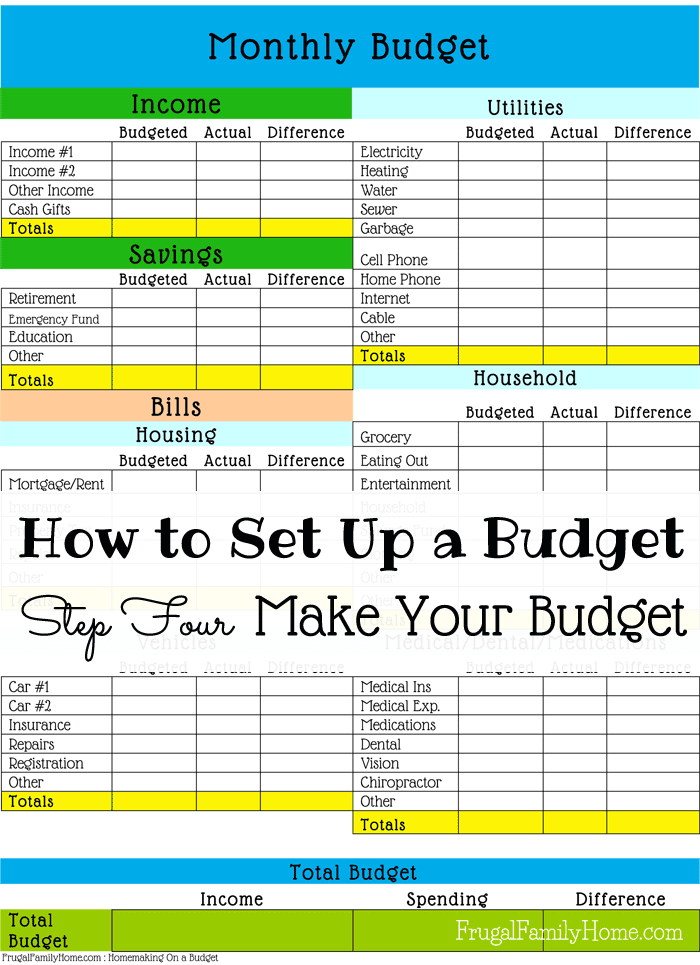
Set a recurring date each month to review your performance. Compare your “Actual” spending against your “Budgeted” amounts. If you consistently overspend in one category, ask whether you need to exercise more discipline or if the budget was unrealistically low.
This review is also the time to account for “windfalls”—unexpected bonuses, tax refunds, or cash gifts. A robust budget plan already has a “Windfall Protocol.” For instance, you might decide that 50% of any unexpected money goes to investments, 30% to debt, and 20% to “fun.” Having this plan in place prevents the money from disappearing into mindless consumption.
Adjusting for Lifestyle Inflation
As your career progresses and your income increases, you will face the challenge of “lifestyle inflation.” This occurs when your standard of living rises alongside your income, effectively keeping you in the same financial position despite earning more.
A sophisticated budget plan manages this by using a “Savings Rate” target. Instead of budgeting based on a dollar amount, budget based on a percentage. If you commit to saving 25% of your gross income, any raise you receive automatically increases your contributions to your future self, while still allowing for a moderate increase in your current lifestyle.

Conclusion: The Budget as a Tool for Freedom
Ultimately, preparing a budget plan is an act of self-empowerment. It provides the clarity needed to make informed decisions and the structure required to achieve ambitious financial milestones. By understanding your cash flow, leveraging modern financial tools, and maintaining a focus on long-term wealth integration, you transform your relationship with money. A well-executed budget does not just manage your finances; it creates the freedom to live a life aligned with your highest priorities and values.
aViewFromTheCave is a participant in the Amazon Services LLC Associates Program, an affiliate advertising program designed to provide a means for sites to earn advertising fees by advertising and linking to Amazon.com. Amazon, the Amazon logo, AmazonSupply, and the AmazonSupply logo are trademarks of Amazon.com, Inc. or its affiliates. As an Amazon Associate we earn affiliate commissions from qualifying purchases.