
In the intricate world of personal finance, business operations, and investment strategies, one fundamental concept repeatedly surfaces: percentages. Far from being a mere mathematical abstraction learned in school, percentages are the universal language of financial comparison, growth, debt, and opportunity. From calculating a discount on a new purchase to understanding the interest rate on a loan, assessing investment returns, or even deciphering economic reports, a solid grasp of “how to percentages” isn’t just useful—it’s absolutely essential for making informed decisions and achieving financial well-being.
This article delves into the practical applications of percentages within the money domain, offering a comprehensive guide to understanding, calculating, and leveraging them. Whether you’re a budding investor, a small business owner, or someone simply looking to better manage their household budget, mastering percentages will unlock a new level of financial literacy and control.

1. Understanding the Basics: What Are Percentages and Why They Matter in Finance?
At its core, a percentage is a way of expressing a number as a fraction of 100. The word “percent” literally means “per hundred.” It provides a standardized method to compare different quantities, proportions, and changes in a clear, relatable manner, irrespective of the absolute values involved. In finance, this standardized comparison is invaluable.
The Core Concept: Parts of a Whole
Imagine you have a pie divided into 100 slices. If you take 10 slices, you’ve taken 10 percent (10%) of the pie. If you’ve spent $20 out of a $100 budget, you’ve spent 20% of your budget. This simple concept extends to all financial scenarios. A percentage allows us to immediately grasp the proportion without needing to know the total amount upfront. This proportionality makes complex financial data digestible, enabling quick comparisons and evaluations.
Why Financial Literacy Demands Percentage Fluency
Financial decisions often hinge on relative values rather than absolute figures. Is a $50 fee high? It depends on what it’s a percentage of. If it’s 50% of a $100 service, it’s substantial. If it’s 0.05% of a $100,000 transaction, it’s negligible. Percentages provide this crucial context. They are indispensable for:
- Budgeting: Allocating income across different spending categories.
- Saving: Setting realistic savings goals and tracking progress.
- Investing: Evaluating returns, risks, and portfolio allocation.
- Debt Management: Understanding interest rates, payment structures, and debt burden.
- Business Operations: Analyzing profit margins, growth rates, and market share.
- Economic Analysis: Interpreting inflation, GDP growth, and unemployment rates.
Without a firm grasp of percentages, individuals are left vulnerable to misinterpretations of financial data, potentially leading to poor decisions that impact their long-term financial health.
Common Financial Scenarios Where Percentages Reign
From the moment you earn your paycheck to the time you plan for retirement, percentages are everywhere:
- Discounts and Sales: “20% off all items!”
- Interest Rates: “Annual Percentage Rate (APR) of 5.99% on your credit card.”
- Taxes: “15% capital gains tax.”
- Tips: “Add 18% for gratuity.”
- Investment Returns: “Our fund yielded 8% last year.”
- Loan Payments: “Your monthly payment is X% of your original loan amount.”
- Retirement Contributions: “Contribute 10% of your salary to your 401(k).”
These everyday examples highlight the pervasive nature of percentages in financial discourse, underscoring the necessity of mastering their calculation and interpretation.
2. Calculating Percentages: Essential Formulas for Everyday Finance
While calculators and spreadsheets often do the heavy lifting, understanding the underlying formulas empowers you to double-check figures, estimate quickly, and truly grasp the financial implications of various scenarios. Here are the fundamental calculations you need to know.
Finding a Percentage of a Number (e.g., discounts, interest)
This is arguably the most common percentage calculation. To find ‘X percent’ of a ‘Y’ number, convert the percentage to a decimal (divide by 100) and then multiply it by the number.
Formula: Percentage (as decimal) × Whole Number = Part
- Example 1 (Discount): You want to buy a jacket that costs $150, and it’s on sale for 25% off.
- Convert 25% to a decimal: 25 / 100 = 0.25
- Calculate the discount amount: 0.25 × $150 = $37.50
- The sale price is: $150 – $37.50 = $112.50
- Example 2 (Interest): You have $1,000 in a savings account that earns 2% annual interest.
- Convert 2% to a decimal: 2 / 100 = 0.02
- Calculate the interest earned in one year: 0.02 × $1,000 = $20
Calculating Percentage Increase or Decrease (e.g., investment growth, price changes)
This calculation helps you understand the magnitude of change over time or between two different figures.
Formula: ((New Value - Original Value) / Original Value) × 100 = Percentage Change
- Example 1 (Investment Growth): Your investment portfolio grew from $10,000 to $12,000.
- Change: $12,000 – $10,000 = $2,000
- Percentage Increase: ($2,000 / $10,000) × 100 = 20%
- Example 2 (Price Decrease): The price of a stock dropped from $50 to $45.
- Change: $45 – $50 = -$5
- Percentage Decrease: (-$5 / $50) × 100 = -10% (or a 10% decrease)
Determining What Percentage One Number Is of Another (e.g., debt-to-income ratio, profit margins)
This tells you what proportion a part represents of a whole.
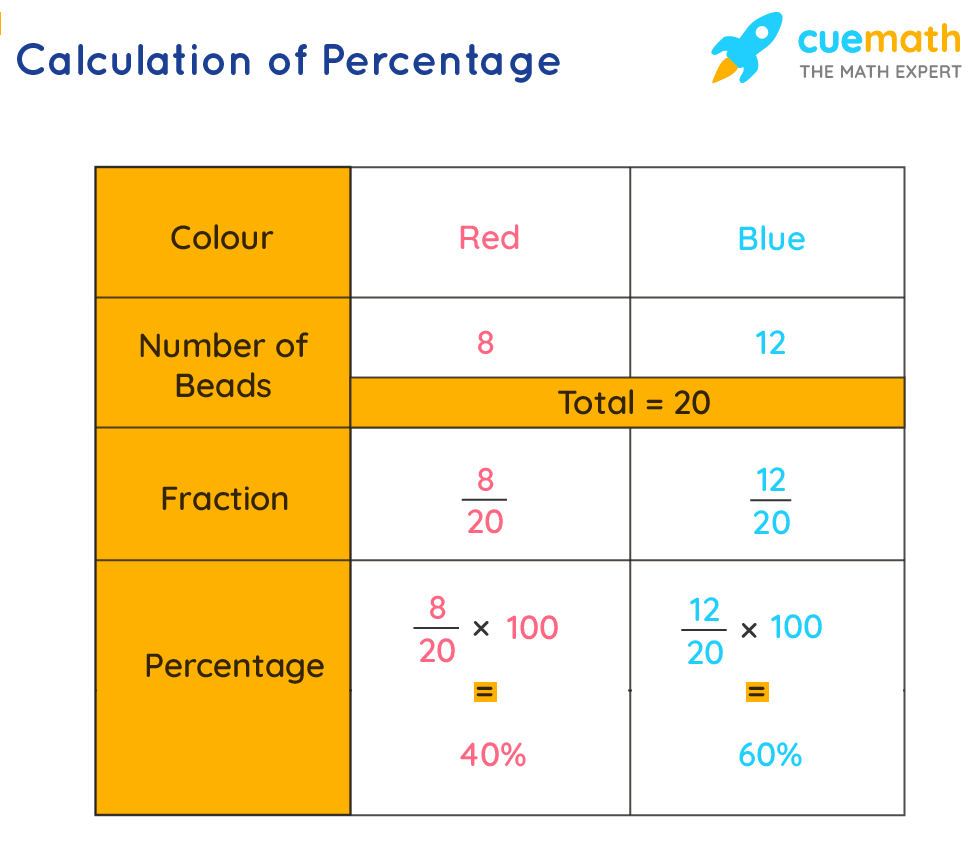
Formula: (Part / Whole) × 100 = Percentage
- Example 1 (Budget Allocation): Your monthly income is $4,000, and you spend $1,200 on rent.
- Percentage of income spent on rent: ($1,200 / $4,000) × 100 = 30%
- Example 2 (Profit Margin): A product sells for $100, and its cost of goods sold is $60, resulting in a profit of $40.
- Profit Margin: ($40 / $100) × 100 = 40%
Reversing Percentage Calculations (e.g., finding original price after discount)
Sometimes you know the result after a percentage change and need to find the original number.
Formula (After a % Discount): Final Price / (1 - Discount Percentage as decimal) = Original Price
Formula (After a % Increase/Markup): Final Price / (1 + Markup Percentage as decimal) = Original Price
- Example 1 (Original Price after Discount): You bought an item for $75 after a 25% discount. What was the original price?
- Discount as decimal: 0.25
- Original Price: $75 / (1 – 0.25) = $75 / 0.75 = $100
- Example 2 (Original Price after Tax): A service cost you $106, including 6% sales tax. What was the price before tax?
- Tax as decimal: 0.06
- Price before tax: $106 / (1 + 0.06) = $106 / 1.06 = $100
3. Percentages in Personal Finance: Managing Your Money Wisely
For individuals, understanding and applying percentages is crucial for effective personal financial management. It empowers you to create realistic budgets, make informed borrowing decisions, and strategically plan for your future.
Budgeting and Expense Allocation (e.g., 50/30/20 rule)
Many financial advisors recommend budgeting rules based on percentages to help individuals allocate their income effectively. A popular example is the 50/30/20 rule:
- 50% for Needs: Housing, groceries, utilities, transportation, debt minimums.
- 30% for Wants: Dining out, entertainment, hobbies, vacations.
- 20% for Savings & Debt Repayment: Emergency fund, retirement contributions, paying down extra debt.
By converting your actual spending into percentages of your income, you can quickly assess if you’re aligning with your financial goals or if adjustments are needed.
Debt Management: Interest Rates and Loan Payments
Interest rates, always expressed as percentages (APR – Annual Percentage Rate), are the cost of borrowing money. Understanding how they impact your loans is vital:
- Credit Cards: A high APR means a significant portion of your payment goes towards interest if you carry a balance.
- Mortgages/Car Loans: Even a small difference in the interest rate percentage can lead to tens of thousands of dollars in extra payments over the life of a loan. Calculating the percentage of your monthly income that goes towards debt payments (debt-to-income ratio) is also a key indicator of financial health.
Savings and Investments: Compound Interest and Returns
Percentages are the backbone of wealth accumulation:
- Compound Interest: Often called the “eighth wonder of the world,” compound interest means earning interest on your initial principal and on the accumulated interest from previous periods. The higher the percentage interest rate and the longer the duration, the more dramatic the compounding effect.
- Investment Returns: Returns on stocks, bonds, and mutual funds are almost always expressed as percentages (e.g., “an average annual return of 7%”). Understanding these helps you compare investment options and project potential growth.
Taxes and Deductions: Navigating Your Obligations
Tax systems are heavily percentage-based:
- Income Tax Brackets: Different portions of your income are taxed at different percentage rates.
- Sales Tax: A percentage added to the price of goods and services.
- Property Tax: A percentage of your property’s assessed value.
- Deductions and Credits: These reduce your taxable income or your tax liability, effectively saving you a percentage of your money. Knowing how to calculate these percentages helps you understand your true tax burden and identify potential savings.
4. Percentages in Business and Investing: Growth, Profit, and Risk
For businesses and investors, percentages are the critical metrics for evaluating performance, health, and potential. They provide a standardized way to compare companies, analyze trends, and make strategic decisions.
Understanding Profit Margins and Markups
Businesses live and die by their profit margins:
- Gross Profit Margin: (Gross Profit / Revenue) × 100. This indicates the percentage of revenue left after deducting the cost of goods sold.
- Operating Profit Margin: (Operating Income / Revenue) × 100. This shows the percentage of revenue remaining after all operating expenses.
- Net Profit Margin: (Net Income / Revenue) × 100. This is the ultimate bottom line, showing the percentage of revenue left after all expenses, including taxes and interest.
Markups (e.g., a 50% markup on cost) are also crucial for pricing strategies, ensuring profitability.
Analyzing Investment Returns (ROI, Yields)
Investors constantly use percentages to measure the success of their investments:
- Return on Investment (ROI): ((Current Value – Original Cost) / Original Cost) × 100. This is a fundamental metric for evaluating the efficiency of an investment.
- Dividend Yield: (Annual Dividends per Share / Share Price) × 100. This shows the percentage return an investor receives in dividends relative to the stock’s price.
- Bond Yield: This represents the percentage return an investor receives on a bond, taking into account its coupon rate, market price, and maturity.
Assessing Financial Ratios (e.g., Gross Profit Margin, Debt-to-Equity)
Financial ratios are powerful tools that convert raw financial data into percentages, making it easy to compare a company’s performance over time or against its competitors.
- Debt-to-Equity Ratio: (Total Debt / Shareholder Equity) × 100. This ratio indicates the percentage of a company’s financing that comes from debt versus equity, highlighting its financial leverage and risk.
- Current Ratio: (Current Assets / Current Liabilities). While not a percentage, it’s often compared to benchmarks (e.g., a current ratio of 2.0 or 200% suggests good short-term liquidity).
- Return on Equity (ROE): (Net Income / Shareholder Equity) × 100. This measures the percentage return generated on the shareholders’ investment.
Sales, Discounts, and Commission Structures
From marketing to sales, percentages drive business activity:
- Sales Growth Rate: The percentage increase in sales over a period.
- Promotional Discounts: Used to attract customers, these are always percentage-based (e.g., “buy one get one 50% off”).
- Sales Commissions: Salespeople often earn a percentage of the sales they generate, incentivizing performance.
5. Leveraging Percentages for Strategic Financial Decisions
Beyond basic calculations, mastering percentages means using them strategically to make more insightful financial decisions and gain a competitive edge.
Identifying Trends and Forecasting Outcomes
Percentages help identify patterns and project future financial scenarios. For example, consistent 5% year-over-year revenue growth in a business suggests a strong trajectory, while a declining profit margin percentage might signal an impending issue. By extrapolating percentage trends, businesses and investors can make educated forecasts about market movements, sales figures, and economic conditions.
Comparing Financial Products and Services
When faced with choices like mortgages, savings accounts, or insurance policies, percentages provide the common denominator for comparison. An APR on a loan, an APY (Annual Percentage Yield) on a savings account, or the percentage-based fees on an investment fund allow for apples-to-apples comparisons, ensuring you choose the most favorable terms. It’s not about the absolute dollar amount of a fee, but its percentage impact relative to the principal.
Making Informed Investment Choices
A sophisticated understanding of percentages empowers investors to:
- Diversify Portfolios: Allocate specific percentages of investments across different asset classes (e.g., 60% stocks, 30% bonds, 10% cash) to manage risk.
- Evaluate Risk vs. Reward: Compare potential percentage returns against the percentage likelihood of loss.
- Rebalance Investments: Adjust portfolio allocations back to target percentages when market fluctuations cause them to drift.
Negotiating Better Deals
Whether it’s negotiating a salary increase (a percentage raise), a discount on a large purchase, or the terms of a business contract, framing your requests and understanding the counter-offers in percentage terms can be highly effective. A request for a “10% raise” sounds more concrete and justifiable than “more money,” for instance.

Conclusion
The ability to confidently work with percentages is more than just a mathematical skill; it is a cornerstone of financial literacy and empowerment in the “Money” realm. From managing your daily expenses to navigating complex investment landscapes and making critical business decisions, percentages offer a clear, standardized lens through which to view and interpret financial information. By understanding what percentages represent, mastering their fundamental calculations, and applying them strategically across personal and business finance, you equip yourself with an invaluable tool. Embrace percentages, and you will not only clarify your financial picture but also unlock the potential for greater control, smarter choices, and ultimately, enhanced financial success.
aViewFromTheCave is a participant in the Amazon Services LLC Associates Program, an affiliate advertising program designed to provide a means for sites to earn advertising fees by advertising and linking to Amazon.com. Amazon, the Amazon logo, AmazonSupply, and the AmazonSupply logo are trademarks of Amazon.com, Inc. or its affiliates. As an Amazon Associate we earn affiliate commissions from qualifying purchases.