
In an increasingly digital world, the way we manage our finances and execute payments has evolved dramatically. While paper checks once dominated personal and business transactions, their digital counterpart – the electronic check, or eCheck – has emerged as a secure, efficient, and cost-effective alternative. For individuals and businesses alike, understanding how to leverage eChecks is no longer a niche skill but a fundamental aspect of modern financial literacy. This guide will demystify the process, offering a comprehensive look at what eChecks are, how they work, their benefits, and how you can confidently use them for your payment needs.

Understanding the Electronic Check (eCheck) Landscape
The electronic check system is a cornerstone of the digital payment infrastructure, providing a robust framework for transferring funds directly between bank accounts. Far from being a mere digital image of a paper check, eChecks operate on a sophisticated network designed for speed, security, and accuracy.
What is an Electronic Check?
At its core, an electronic check is a payment made online that directly debits funds from your bank account and credits them to a recipient’s bank account. Unlike credit card transactions that involve intermediaries and lines of credit, eChecks are direct bank-to-bank transfers. They function via the Automated Clearing House (ACH) network, a secure electronic funds transfer system managed by the National Automated Clearing House Association (NACHA) in the U.S. This network processes large volumes of credit and debit transactions, including direct deposits, bill payments, and, of course, eChecks.
The key distinction from paper checks is that the entire process—from authorization to settlement—is digital. There’s no physical check to write, mail, or deposit. Instead, you provide your bank account details (account number and routing number) and authorize the payment electronically.
The Mechanics of an eCheck Transaction
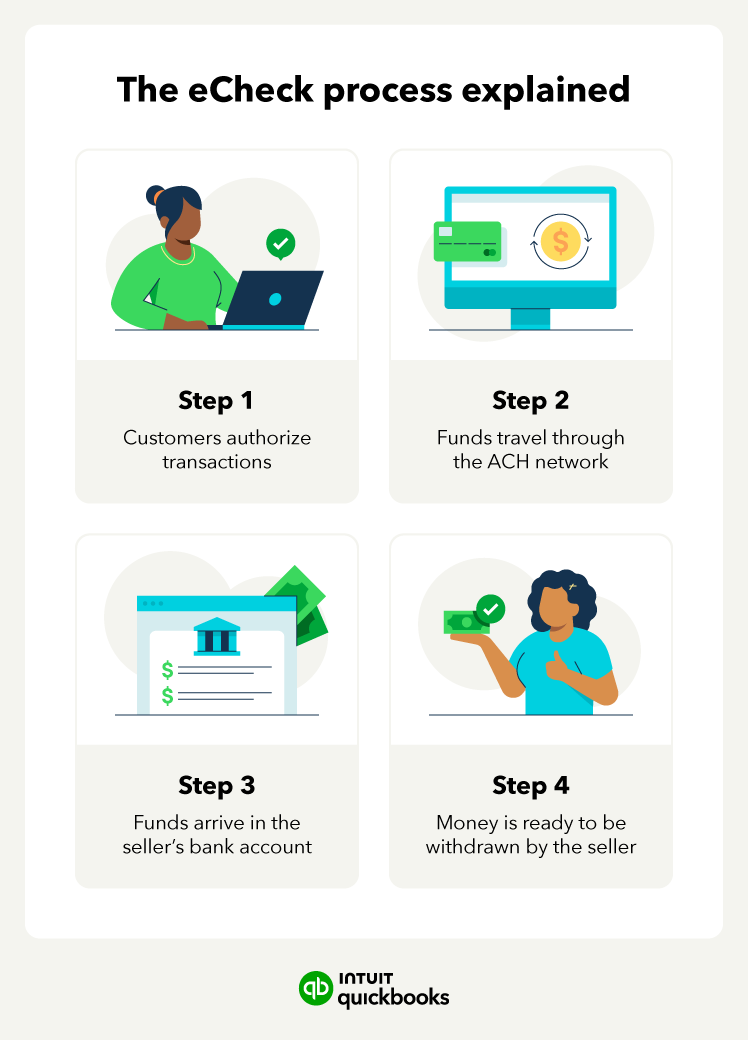
Understanding the step-by-step process of an eCheck transaction can demystify its operation and build confidence in its use:
-
Authorization: The payer provides their bank account and routing numbers to the payee (e.g., a merchant, utility company, or individual) and grants electronic authorization for the payment. This authorization can be given via an online form, a signed agreement, or even a recorded phone call.
-
Payment Initiation: The payee or their payment processor inputs the payment details into their system and submits the transaction to the ACH network.
-
Batch Processing: The ACH network gathers these transactions into batches and sends them to the respective banks.
-
Bank Processing: The payer’s bank (Originating Depository Financial Institution – ODFI) receives the debit request and verifies the funds. If sufficient funds are available, the amount is debited from the payer’s account. The transaction then moves to the payee’s bank (Receiving Depository Financial Institution – RDFI).
-
Settlement: The payee’s bank credits the funds to the payee’s account. This entire process typically takes 3-5 business days, though some faster ACH options are emerging.
-
Confirmation: Both payer and payee receive confirmation of the successful transaction.
Key Benefits of Using eChecks
The advantages of utilizing eChecks extend across various financial dimensions:
-
Cost-Effectiveness: For businesses, eCheck processing fees are often significantly lower than credit card processing fees, leading to substantial savings, especially for high-volume or large-value transactions. For individuals, they often incur no transaction fees.
-
Enhanced Security: The ACH network employs robust security protocols, including encryption and strict regulations, making it a very secure way to transfer funds. It mitigates the risks associated with paper checks, such as physical theft or alteration.
-
Convenience: Payments can be made anytime, anywhere, with an internet connection. This eliminates the need for stamps, envelopes, and trips to the post office or bank.
-
Efficiency: Automating payments through eChecks reduces administrative overhead for businesses and ensures timely payments for individuals, preventing late fees.
-
Environmental Impact: Going paperless contributes to a reduced environmental footprint by conserving resources and minimizing waste.
Practical Steps to Initiating an eCheck Payment
Making an eCheck payment is a straightforward process, provided you have the necessary information and understand the steps involved. Whether you’re paying a bill, making an online purchase, or sending money to a vendor, the fundamental requirements remain consistent.
Gathering Necessary Information
Before you can make an eCheck payment, you’ll need two crucial pieces of information from your bank account:
-
Bank Routing Number: This is a nine-digit code that identifies your financial institution. It tells the ACH network which bank to pull funds from. You can usually find this on the bottom left of your paper checks, on your bank’s website, or within your online banking portal.
-
Bank Account Number: This is your unique identifier for your specific account (checking or savings) at your bank. It’s typically found next to the routing number on your checks or accessible through your online banking.
You will also need the payment amount and the details of the payee, which will be provided by the recipient or the payment platform.
Choosing a Payment Platform
Most organizations that accept eChecks provide a dedicated platform for processing these payments. This could include:
-
Online Payment Portals: Many utility companies, landlords, and service providers have secure sections on their websites where you can manage your account and make payments.
-
Billing Systems: For businesses, integrated billing and invoicing software often includes an eCheck payment option for clients.
-
Third-Party Payment Processors: Platforms like PayPal (for specific types of bank transfers), Stripe, or various merchant service providers facilitate eCheck payments, especially for e-commerce sites. Always ensure the platform is reputable and uses secure encryption (look for “https://” in the URL and a padlock icon).
Authorization and Verification
The most critical step in an eCheck payment is granting authorization. This is your digital signature, confirming your consent for the funds to be transferred.
-
Explicit Consent: You will typically be asked to explicitly agree to the terms and conditions, often by checking a box that states “I authorize [Payee Name] to debit my bank account.”
-
Secure Input: You’ll enter your routing and account numbers into a secure form. Never email or text this sensitive information.
-
Verification Steps: Some platforms may implement additional verification steps, such as micro-deposits (where small, random amounts are deposited into your account, and you must confirm them) or linking directly to your online banking through secure third-party aggregators, to ensure you are the legitimate account holder.
Confirmation and Record Keeping
Once you’ve submitted your eCheck payment, don’t just close the window.
-
Confirmation Screens/Emails: Always wait for a confirmation screen and/or email. This will usually include a transaction ID, the amount paid, and the date.
-
Transaction ID: Note down or save the transaction ID. This is vital for any inquiries or disputes that may arise.
-
Bank Statements: Regularly review your bank statements to ensure the correct amount was debited and that no unauthorized transactions have occurred. Digital records are just as important as physical receipts.
Security and Risk Management in eCheck Payments
While eChecks offer a high level of security due to the robust infrastructure of the ACH network, vigilance and best practices are essential to protect your financial information. Understanding the potential risks and how to mitigate them empowers you to use eChecks confidently.
Safeguarding Your Financial Information
The primary concern with any digital payment method is the security of your sensitive data.
-
Secure Connections (SSL/TLS): Always ensure that any website where you enter your banking details uses a secure, encrypted connection. Look for “https://” at the beginning of the website address and a padlock icon in your browser’s address bar. This indicates that data transmitted between your browser and the server is encrypted.
-
Reputable Payees/Processors: Only provide your banking information to trusted organizations and well-known payment processors. If you are unsure, contact the payee directly through their official contact channels to verify the legitimacy of the payment portal.
-
PCI DSS Compliance: While primarily for credit cards, many payment processors extend similar security standards (like PCI DSS – Payment Card Industry Data Security Standard) to eCheck processing. This ensures that sensitive financial data is handled, processed, and stored in a secure environment.
-
Device Security: Ensure the device you are using for transactions (computer, phone) is secure, with up-to-date operating system and antivirus software. Avoid making payments on public Wi-Fi networks.
Recognizing and Avoiding Fraud
Fraudsters constantly devise new ways to gain access to financial information. Being aware of common tactics can help you avoid falling victim.
-
Phishing Scams: Be wary of unsolicited emails or messages asking for your bank account details, even if they appear to be from a legitimate company. Always go directly to the company’s official website to log in or make payments.
-
Unauthorized Transactions: Regularly check your bank statements. If you spot any unfamiliar debits, report them to your bank immediately.
-
Scams Requesting Unusual Payment Methods: Be suspicious if someone insists on payment via eCheck for an unlikely scenario (e.g., lottery winnings requiring an upfront eCheck fee, or utility companies threatening immediate shut-off if you don’t pay by eCheck over the phone). Legitimate businesses rarely demand immediate payment through a single, specific method under duress.
Handling Errors and Disputes
Mistakes or fraudulent activities can occasionally occur. Knowing your rights and the dispute resolution process is crucial.
-
NACHA Rules: The ACH network operates under strict rules set by NACHA, which include provisions for resolving disputes. For unauthorized eCheck transactions, consumers typically have up to 60 days from the statement date to dispute the charge with their bank.
-
Contact Your Bank: If you suspect an error or unauthorized transaction, contact your bank (the ODFI) immediately. They will guide you through the dispute process, which may involve filling out an affidavit.
-
Contact the Payee: For legitimate errors (e.g., incorrect amount charged), first try to resolve the issue directly with the payee. They might be able to issue a refund or correction more quickly.
-
Chargebacks: Your bank can initiate an ACH “return” or “chargeback” if a transaction is unauthorized or erroneous, reversing the funds.
When to Choose eChecks: Ideal Scenarios and Considerations
While eChecks offer numerous advantages, they are not a one-size-fits-all solution for every payment. Understanding when they are most beneficial, and when other methods might be preferable, is key to optimizing your financial operations.
Recurring Payments
eChecks are exceptionally well-suited for recurring payments due to their automated nature and lower transaction costs.
-
Subscriptions: Services like streaming platforms, software subscriptions, or gym memberships often offer bank debit options.
-
Utility Bills: Electricity, water, internet, and phone bills can be conveniently paid via eCheck, ensuring you never miss a due date.
-
Loan Installments: Mortgage payments, car loans, and student loans are prime candidates for automated eCheck payments, providing consistency and avoiding late fees.
Business-to-Business (B2B) Transactions
For businesses, eChecks can streamline internal and external financial processes.
-
Invoicing: Businesses can accept eChecks from clients, reducing the reliance on paper checks and accelerating cash flow.
-
Vendor Payments: Paying suppliers and vendors via eCheck simplifies accounts payable, offers better tracking, and can often be integrated with accounting software.
-
Payroll: Direct deposit, which is an ACH credit, is essentially the reverse of an eCheck payment and is the standard for modern payroll.
Large Sum Transactions
When dealing with significant amounts of money, eChecks can be a more attractive option than credit cards.
-
Lower Fees: For businesses accepting payments, credit card fees can be prohibitive for large transactions (e.g., thousands of dollars). eCheck fees are typically flat or a much lower percentage, leading to substantial savings.
-
Reduced Risk: For individuals, paying large sums via eCheck can sometimes feel more secure than using a credit card online, as it involves a direct bank transfer without the credit card network’s layers of potential vulnerabilities, especially for one-time payments.
Considerations for Payers
Despite their benefits, eChecks do have some characteristics that payers should consider:
-
Processing Times: Unlike instant credit card transactions, eChecks typically take 3-5 business days to clear. This delay needs to be factored in, especially when making time-sensitive payments.
-
Transaction Limits: While often higher than credit card limits, some banks or payment processors might impose daily or per-transaction limits on eCheck payments.
-
Alternative Payment Methods: Always weigh eChecks against other options like credit cards (for rewards or buyer protection), wire transfers (for instant, high-value, international payments), or mobile payment apps. The best method depends on the specific context, urgency, and cost considerations.
The Future of Digital Payments: eChecks in an Evolving Financial Ecosystem
The financial landscape is in constant flux, driven by technological advancements and shifting consumer expectations. While credit cards, digital wallets, and peer-to-peer payment apps capture significant headlines, eChecks continue to hold a vital, evolving role in the broader digital payment ecosystem.
Integration with Financial Management Tools
The convenience of eChecks is amplified when integrated with personal and business financial management software. Modern accounting platforms, budgeting apps, and enterprise resource planning (ERP) systems increasingly offer seamless eCheck payment and receipt functionalities. This integration allows for automated reconciliation, clearer financial reporting, and a holistic view of cash flow, further cementing eChecks as a powerful financial tool for streamlined operations and better financial decision-making.
Role in a Cashless Society
As societies worldwide move towards reduced reliance on physical cash, digital payment methods like eChecks become indispensable. They offer a formal, traceable, and secure means of transaction that bridges the gap between traditional paper checks and newer, often more consumer-focused, instant payment solutions. For structured, recurring, and B2B transactions, the stability and low cost of eChecks make them an enduring preference in the march towards a cashless future.

Emerging Trends and Innovations
The ACH network itself is not static. Innovations like “Same Day ACH” have begun to address the traditional multi-day processing times, allowing for faster fund availability and making eChecks more competitive with instant payment options. Furthermore, the principles behind eChecks—direct bank-to-bank transfers—are being explored in conjunction with cutting-edge technologies like blockchain for even greater transparency, security, and real-time settlement possibilities, though these are still in nascent stages for mainstream eCheck applications. As financial technology continues to advance, eChecks are poised to adapt and remain a relevant and secure mechanism for digital payments.
In conclusion, paying with an electronic check is a powerful and practical skill in today’s digital economy. By understanding its mechanics, benefits, and best practices for security, you can confidently utilize this financial tool to manage your personal and business payments efficiently, securely, and cost-effectively. As the financial world continues its digital transformation, mastering eChecks ensures you remain ahead of the curve in managing your money.
aViewFromTheCave is a participant in the Amazon Services LLC Associates Program, an affiliate advertising program designed to provide a means for sites to earn advertising fees by advertising and linking to Amazon.com. Amazon, the Amazon logo, AmazonSupply, and the AmazonSupply logo are trademarks of Amazon.com, Inc. or its affiliates. As an Amazon Associate we earn affiliate commissions from qualifying purchases.