
Managing your finances effectively is a cornerstone of financial well-being, and a critical component of this is understanding how to responsibly manage and pay your credit card bills. For Bank of America credit cardholders, navigating the various payment options and best practices can seem daunting at first glance. However, Bank of America offers a range of convenient and secure methods designed to make paying your bill straightforward and stress-free. This comprehensive guide will walk you through everything you need to know, from understanding your statement to leveraging digital tools and maintaining sound financial habits.
In today’s fast-paced world, credit cards are indispensable tools for managing daily expenses, making large purchases, and even building a strong credit history. Yet, the power and convenience they offer come with the responsibility of timely payments. Ignoring your credit card bill or making late payments can lead to substantial late fees, increased interest rates, a damaged credit score, and a host of other financial setbacks. Bank of America, as one of the largest financial institutions, provides robust systems to ensure their cardholders can fulfill this responsibility with ease. By understanding and utilizing these systems, you not only avoid penalties but also actively contribute to your financial health, paving the way for future financial opportunities. Whether you prefer the speed of online banking, the simplicity of a phone call, or the traditional approach of mail, Bank of America has a solution tailored for you.
Demystifying Your Bank of America Credit Card Statement
Before you can effectively pay your bill, it’s crucial to understand what you’re paying. Your Bank of America credit card statement is more than just a summary of what you owe; it’s a vital financial document packed with information essential for managing your account. Taking a few moments to review it each month can prevent errors, identify fraudulent charges, and help you strategize your payments.
Key Information on Your Statement
Every Bank of America credit card statement will prominently display several critical pieces of information:
-
Payment Due Date: This is arguably the most important date on your statement. Payments must be received by Bank of America on or before this date to avoid late fees and potential interest charges.
-
Minimum Payment Due: This is the smallest amount you must pay to keep your account in good standing. While paying only the minimum will avoid late fees, it typically results in carrying a balance, accruing interest, and extending the time it takes to pay off your debt.
-
New Balance (Total Balance Due): This is the total amount you owe as of the statement closing date. Ideally, you should aim to pay this amount in full each month to avoid interest charges and keep your credit utilization low.
-
Credit Limit and Available Credit: These figures indicate your maximum borrowing capacity and how much credit you have left to use.
-
Interest Rate (APR): This section details the Annual Percentage Rate applied to different types of balances (e.g., purchases, cash advances). Understanding your APR helps you calculate the cost of carrying a balance.
-
Summary of Account Activity: This includes your previous balance, payments made, new purchases, cash advances, fees, and interest charged during the billing cycle.
Decoding Charges and Transactions
Your statement provides a detailed list of all transactions made during the billing period. Reviewing this section diligently allows you to:
-
Spot errors: Occasionally, merchant errors or double charges can occur.
-
Identify fraud: Unauthorized transactions are a serious concern. Promptly reporting suspicious activity is crucial for protecting your finances.
-
Track spending: Understanding where your money goes is the first step in budgeting and achieving financial goals. Categorize your expenses mentally or physically to gain better control over your spending habits.
The Importance of Timely Payments
Paying your bill on time is non-negotiable for several reasons. It prevents late fees, which can range from $30 to $41 per instance, depending on your card agreement and state regulations. Timely payments also prevent penalty APRs, which are significantly higher interest rates applied to your balance if you fail to pay on time. Most importantly, your payment history is the single largest factor (35%) in your FICO credit score calculation. Consistently paying on time builds a positive credit history, which is essential for securing loans, mortgages, and even some job opportunities in the future.
Multiple Avenues for Making Payments
Bank of America understands that its customers have diverse preferences and needs when it comes to managing their money. Consequently, they offer a variety of convenient methods to pay your credit card bill, ensuring you can choose the option that best fits your lifestyle.
Online Banking and Mobile App: The Digital Frontier
For most cardholders, online banking and the Bank of America mobile app represent the quickest, most flexible, and most secure ways to pay. If you haven’t already, enrolling in online banking is the first step.
-
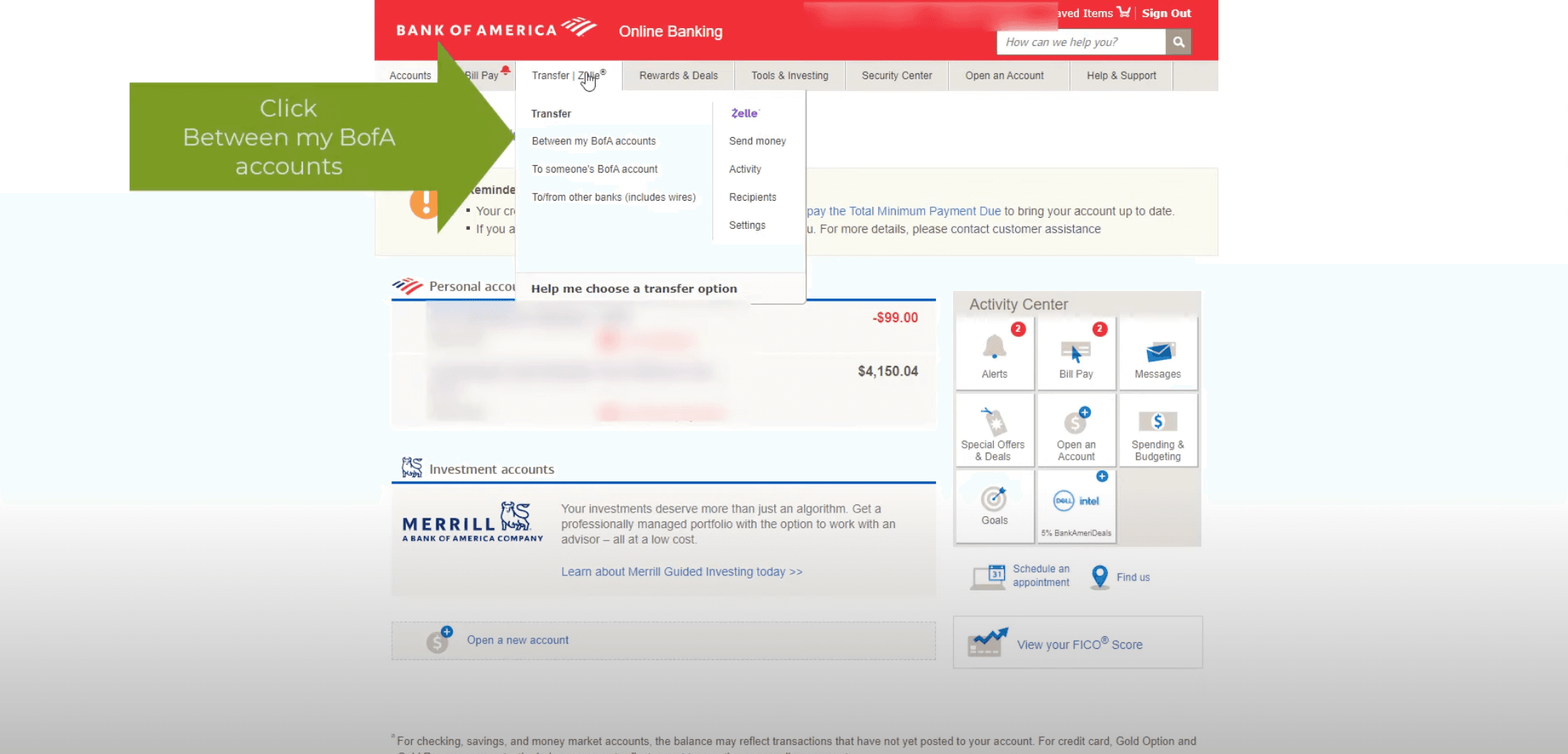
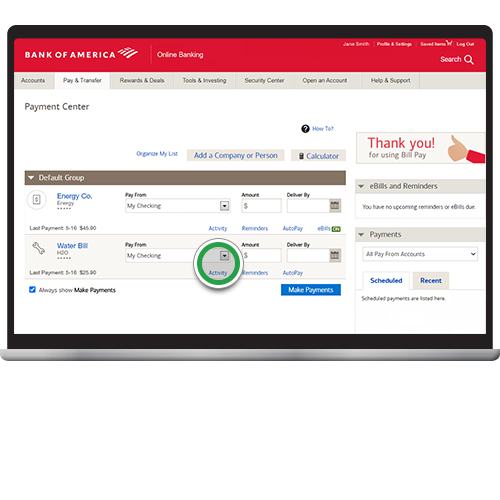
Setting Up Payments: Once logged into your online banking account or the mobile app, navigate to the “Payments & Transfers” section. You’ll typically find an option for “Pay Bills” or directly “Pay Your Credit Card.”
-
Scheduling Recurring Payments: This is an excellent feature for ensuring you never miss a payment. You can set up automatic payments for the minimum amount due, the full statement balance, or a custom amount on a chosen date each month. This strategy requires diligence to ensure sufficient funds are available in your linked account.
-
Making One-Time Payments: If you prefer to manually control each payment, you can easily make a one-time payment. You can choose the amount, the payment date, and the funding account (e.g., your Bank of America checking account or an external bank account). Payments made from a Bank of America account are usually processed the same day, while payments from external accounts may take a few business days.
-
Viewing Payment History: Both platforms allow you to review past payments, confirm successful transactions, and see any scheduled future payments, providing a clear audit trail of your account activity.
Paying by Phone: A Direct Approach
If digital methods aren’t your preference or you require immediate assistance, paying by phone is a viable option.
-
Automated System: You can typically call the customer service number on the back of your card. Many banks offer an automated system where you can enter your account details and make a payment using your checking account or debit card information.
-
Speaking with a Representative: For more complex inquiries or if you prefer human interaction, you can opt to speak with a customer service representative. Be prepared to provide your account number and personal identification details for security purposes. This method might incur a small fee in some cases, so it’s always wise to ask.
Traditional Mail: For the Paper-Oriented
While less common today, paying by mail remains an option for those who prefer it.
-
Finding the Correct Mailing Address: Your monthly statement will usually include a payment coupon with the correct mailing address. It’s crucial to use this specific address to ensure your payment reaches the correct department.
-
Using Payment Slips: Always include the payment slip from your statement, or at minimum, write your account number clearly on your check or money order. Mail your payment several business days before your due date to account for postal delivery times and processing.
In-Person at a Bank of America Branch
For those who prefer face-to-face service, visiting a Bank of America branch is a straightforward way to pay your bill.
-
Teller Assistance: You can make a payment with a teller using cash, a check, or by transferring funds from your Bank of America checking or savings account. Have your credit card or account number ready.
-
ATM Payments: While not universally available for credit card payments at all ATMs, some Bank of America ATMs may offer this functionality, particularly if you’re paying from a linked Bank of America account. Check the ATM’s features or inquire at a branch.
Third-Party Bill Pay Services
If you manage your finances through another bank or financial institution, you might be able to use their online bill pay service to send a payment to your Bank of America credit card. You’ll need your Bank of America credit card account number and Bank of America’s payment address. Be mindful of processing times, as these can vary significantly between institutions.
Strategies for Smart Credit Card Management
Paying your bill is just one piece of the puzzle. Strategic credit card management involves more than just meeting the minimum; it’s about making your credit card work for you and supporting your overall financial health.
Paying More Than the Minimum: Accelerating Debt Reduction
While paying the minimum keeps your account in good standing, it’s often the most expensive way to manage credit card debt. Interest charges accrue on your outstanding balance, meaning a larger portion of your minimum payment goes towards interest rather than the principal. By paying more than the minimum – ideally the full statement balance – you significantly reduce the amount of interest you pay over time, accelerate your debt repayment, and free up your credit limit faster.
Setting Up Payment Reminders and Alerts
Life gets busy, and it’s easy to forget a due date. Bank of America offers various alert services that can send reminders via email or text message a few days before your payment is due. Additionally, many personal finance apps and calendar programs allow you to set up recurring reminders. Proactive reminders are a simple yet effective way to prevent late payments.
Understanding Grace Periods and Avoiding Interest Charges
Most credit cards, including Bank of America’s, offer a grace period. This is the period between your statement closing date and your payment due date during which no interest is charged on new purchases, provided you pay your entire previous balance by the due date. If you carry a balance from the previous month, you lose your grace period, and interest starts accruing immediately on new purchases. The best strategy to avoid interest entirely is to pay your full statement balance every month.
Dealing with Payment Difficulties: What to Do If You Can’t Pay
Financial hardships can happen to anyone. If you anticipate being unable to make a payment, don’t wait until the due date passes. Contact Bank of America customer service as soon as possible. They may be able to offer solutions such as:
-
Payment arrangements: A temporary reduced payment plan.
-
Hardship programs: More structured programs for long-term difficulties.
-
Waiver of late fees: In certain circumstances, they might waive a late fee, especially if it’s your first time.
Being proactive and communicating with your lender can prevent more severe consequences for your credit score and financial standing.
AutoPay: Convenience vs. Control
AutoPay offers immense convenience by automatically deducting your payment from a linked account each month. You can usually set it to pay the minimum, the statement balance, or a custom amount. While this guarantees timely payments, it’s essential to:
-
Monitor your bank account: Ensure sufficient funds are available to avoid overdraft fees.
-
Review your statement: Even with AutoPay, it’s crucial to review your statement for accuracy and to track your spending. Relying solely on AutoPay without reviewing statements can lead to missed fraudulent charges or budget overruns.
The Benefits of Responsible Credit Card Payment Habits
Consistently paying your Bank of America credit card bill on time and managing your account wisely yields significant, long-lasting benefits that extend far beyond avoiding late fees.
Building and Maintaining a Strong Credit Score
Your payment history is the most impactful factor in your credit score. Every on-time payment contributes positively, demonstrating reliability to potential lenders. A strong credit score (typically above 700) opens doors to:
-
Lower interest rates: On mortgages, auto loans, and future credit cards.
-
Easier loan approvals: With more favorable terms.
-
Better insurance rates: Many insurers use credit scores as a factor.
-
Easier approval for rental applications, utilities, and even some jobs.
Avoiding Late Fees and Penalties
This is the most immediate and tangible benefit. Late fees can quickly add up, often costing $30-$41 per instance. Additionally, a late payment can trigger a penalty APR, significantly increasing the interest rate on your outstanding balance. By paying on time, you keep these extra costs out of your pocket.
Enhancing Financial Well-being
Responsible credit card use reduces financial stress. Knowing your bills are paid, your debt is under control, and your credit score is healthy provides peace of mind. It allows you to focus on saving, investing, and achieving larger financial goals rather than worrying about mounting debt or damaged credit.
Access to Better Financial Products and Rates
As a responsible cardholder, Bank of America may reward you with offers for cards with lower interest rates, higher credit limits, or better rewards programs. Other financial institutions will also view you favorably, giving you access to premium products and services designed for financially stable individuals.
Digital Security and Best Practices
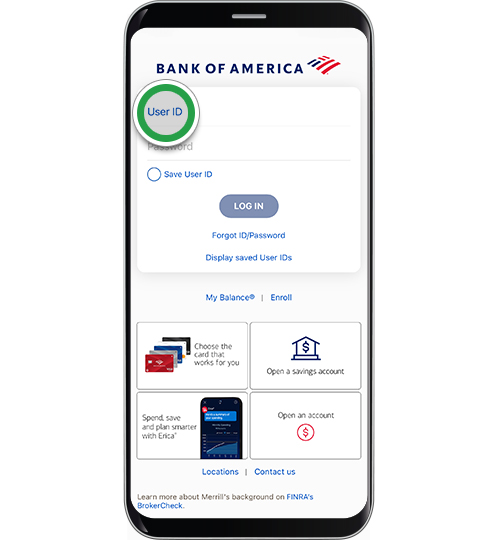
In an increasingly digital world, securing your financial information is paramount. Bank of America employs robust security measures, but personal vigilance is also essential when paying your bill online or through the app.
Protecting Your Account Information
-
Strong, Unique Passwords: Use complex passwords for your online banking that differ from those used for other accounts. Consider a password manager.
-
Two-Factor Authentication (2FA): Enable 2FA whenever possible. This adds an extra layer of security, requiring a code from your phone in addition to your password.
-
Secure Networks: Only access your online banking or mobile app over secure, private Wi-Fi networks. Avoid public Wi-Fi for financial transactions.
-
Log Out: Always log out of your online banking session, especially on shared computers or devices.
-
Monitor Statements: Regularly review your statements for suspicious activity, as noted earlier.
Recognizing Scams and Phishing Attempts
Scammers constantly try to trick individuals into revealing sensitive information. Be aware of:
-
Phishing Emails/Texts: Unsolicited communications claiming to be from Bank of America, asking for your account number, password, or other personal data. Bank of America will never ask for this information via unsecure email or text.
-
Suspicious Links: Never click on links in unsolicited emails or texts. Instead, type Bank of America’s official website address directly into your browser.
-
Unexpected Phone Calls: Be cautious of calls demanding immediate payment or threatening account closure. If in doubt, hang up and call the official Bank of America customer service number directly.
Utilizing Bank of America’s Security Features
Bank of America provides features designed to protect you:
-
Fraud Alerts: They actively monitor your account for suspicious activity and will alert you if unusual transactions occur.
-
Zero Liability Policy: In most cases, you are not responsible for unauthorized transactions on your credit card.
-
Secure Messaging: Use the secure message center within online banking for sensitive communications.
By combining the convenience of Bank of America’s payment methods with sound financial habits and robust security practices, you can confidently manage your credit card, build a strong financial foundation, and achieve your monetary goals. Paying your bill doesn’t have to be a chore; it can be a strategic step towards a more secure and prosperous financial future.
aViewFromTheCave is a participant in the Amazon Services LLC Associates Program, an affiliate advertising program designed to provide a means for sites to earn advertising fees by advertising and linking to Amazon.com. Amazon, the Amazon logo, AmazonSupply, and the AmazonSupply logo are trademarks of Amazon.com, Inc. or its affiliates. As an Amazon Associate we earn affiliate commissions from qualifying purchases.