
Navigating the American tax landscape requires a shift in perspective for those transitioning from traditional employment to the world of entrepreneurship, freelance work, or significant investing. In a standard W-2 employment scenario, the “pay-as-you-go” nature of the U.S. tax system is largely invisible, managed through automatic withholdings from every paycheck. However, for those whose income is not subject to withholding, the responsibility shifts entirely to the individual. Understanding how to pay IRS estimated taxes is not merely a matter of compliance; it is a fundamental pillar of sound financial management and cash flow optimization.
The Internal Revenue Service (IRS) requires that taxes be paid as income is earned or received during the year. If you expect to owe $1,000 or more when you file your annual return, you are generally required to make quarterly estimated tax payments. Failure to do so can result in underpayment penalties and interest, which can erode your hard-earned profits. This guide explores the nuances of calculating, scheduling, and executing these payments to ensure your financial health remains robust throughout the fiscal year.
The Foundation of the Pay-As-You-Go System
The U.S. tax system operates on a contemporary basis. Unlike some international systems where taxes are settled in a single lump sum at the end of the year, the IRS mandates that individuals pay at least 90% of their current year’s tax liability or 100% of their prior year’s liability (110% for high-income earners) through withholding or estimated payments.
Who Must Pay Estimated Taxes?
Estimated tax requirements primarily target four groups: the self-employed, gig economy workers, investors, and retirees with significant non-wage income. If you operate as a sole proprietor, partner, or S corporation shareholder, you generally have to make estimated tax payments if you expect to owe tax of $1,000 or more.
Additionally, if you receive substantial income from interest, dividends, alimony, capital gains, prizes, or awards, you may fall under these requirements. Even those with W-2 jobs might need to pay estimated taxes if their withholding is insufficient to cover their total tax liability, perhaps due to a side hustle or a large gain from a stock sale.
The Role of Self-Employment Tax
For entrepreneurs and freelancers, estimated payments cover more than just federal income tax. They also include self-employment tax, which consists of Social Security and Medicare taxes. In a traditional job, the employer and employee split these costs. When you are self-employed, you are both the employer and the employee, making you responsible for the full 15.3% (subject to income ceilings and additional Medicare surcharges). Factoring this into your quarterly estimates is critical to avoiding a massive surprise when April 15th arrives.
Mastering the Calculation: Safe Harbors and Projections
The most daunting aspect of estimated taxes for many is the calculation. How can you accurately predict what you will owe months before the year ends? Fortunately, the IRS provides “Safe Harbor” rules that offer a degree of protection against underpayment penalties.
Utilizing the Safe Harbor Rule
The Safe Harbor rule is the most efficient way to manage estimated payments without needing a crystal ball. To avoid a penalty, you should aim to pay the lesser of:
-
90% of the tax shown on your current year’s return.
-
100% of the tax shown on your previous year’s return (provided your prior year’s return covered all 12 months).
For individuals with an Adjusted Gross Income (AGI) over $150,000 ($75,000 if married filing separately), the “prior year” safe harbor increases to 110%. By paying 110% of last year’s total tax liability divided into four equal installments, you are protected from penalties even if your income triples in the current year.
The Annualized Income Installment Method
For professionals with seasonal income—such as a consultant who lands a major contract in Q3 or a retailer who earns the bulk of their revenue during the holidays—the standard equal-payment method might create a cash flow crisis. In these instances, you can use the Annualized Income Installment Method. This allows you to pay an amount based on what you actually earned during each specific period, aligning your tax outflows with your actual income inflows. While this requires more complex record-keeping and the completion of Form 2210, it is a powerful tool for maintaining liquidity.
Accounting for Deductions and Credits
When calculating your estimates, do not forget to factor in your “above-the-line” deductions, such as health insurance premiums for the self-employed, contributions to SEP-IRAs or Solo 401(k)s, and the deductible portion of your self-employment tax. These deductions lower your taxable income and, consequently, your quarterly obligation. Keeping a running tally of your business expenses via accounting software can make these projections much more accurate.
Navigating Payment Platforms: From Direct Pay to EFTPS
The IRS has modernized its payment infrastructure, offering several digital channels to facilitate quarterly payments. Choosing the right method depends on your transaction volume and your preference for record-keeping.
IRS Direct Pay
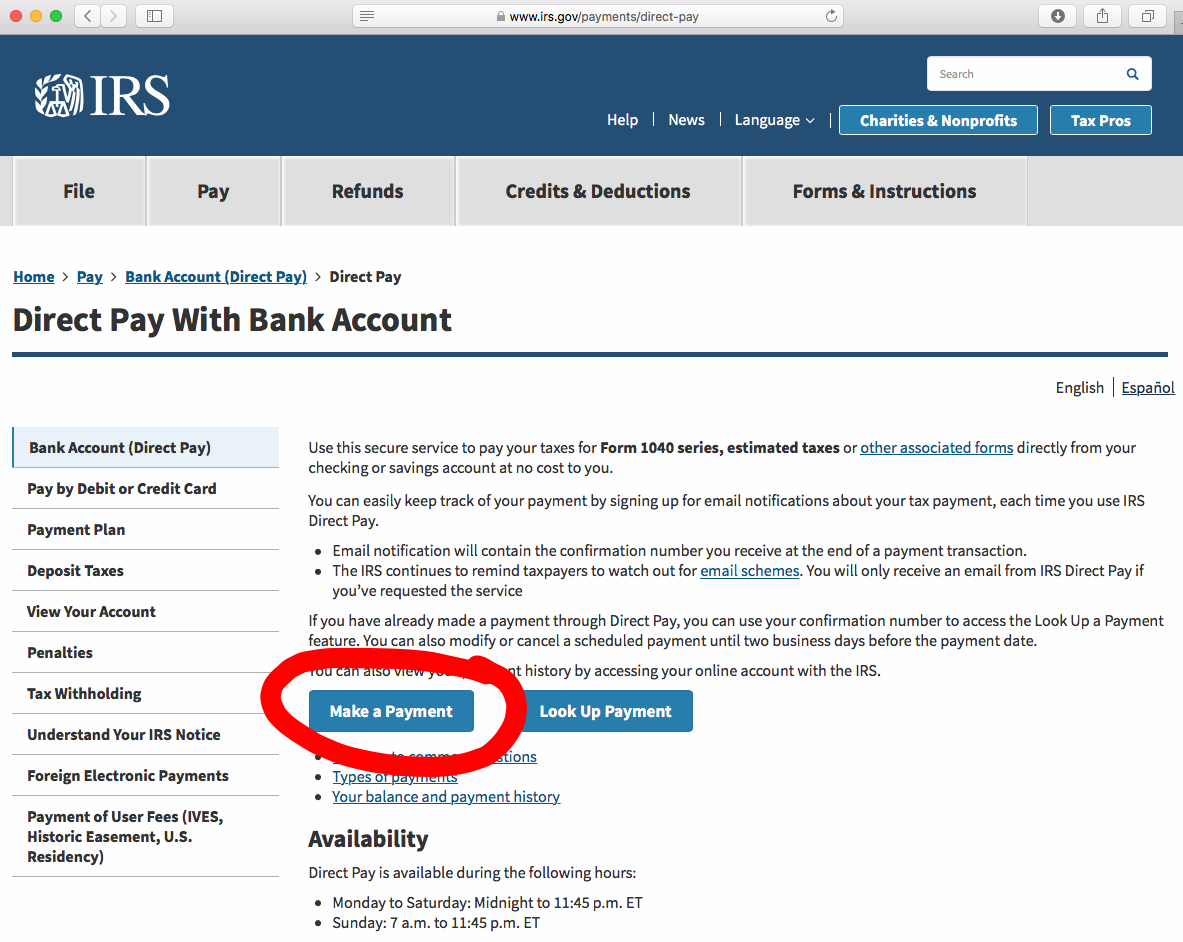
For most individual filers and sole proprietors, IRS Direct Pay is the most straightforward option. This free service allows you to pay directly from your checking or savings account without any prior registration. You simply select “Estimated Tax” as your reason for payment, choose the applicable tax year (1040-ES), and verify your identity using information from a previous year’s tax return. It provides an immediate confirmation number, which is vital for your records.
The Electronic Federal Tax Payment System (EFTPS)
For business owners with more complex needs or those who want to schedule all four payments in advance, EFTPS is the preferred gold standard. Unlike Direct Pay, EFTPS requires a formal registration process, after which you receive a PIN by mail. Once set up, it offers a robust history of all your federal tax payments and allows you to schedule payments up to 365 days in advance. This “set it and forget it” approach is highly recommended for busy entrepreneurs who want to ensure they never miss a deadline.
Credit Cards and Digital Wallets
While the IRS does not charge a fee for Direct Pay or EFTPS, third-party payment processors do allow you to pay via credit card or digital wallets like PayPal and Click to Pay. These processors charge a convenience fee, usually ranging from 1.82% to 2% of the payment amount. While this is generally not advisable for large tax bills, it can be a strategic move for those who are looking to hit a “minimum spend” on a new rewards credit card, provided the value of the rewards exceeds the processing fee.
Deadlines, Record-Keeping, and Long-Term Strategy
The IRS “quarterly” deadlines do not follow a standard three-month calendar, which is a common pitfall for the uninitiated. Mastering these dates is essential for avoiding interest charges.
The Quarterly Schedule
Estimated tax payments are due on the following dates:
-
Q1 (Jan 1 – March 31): Due April 15
-
Q2 (April 1 – May 31): Due June 15
-
Q3 (June 1 – Aug 31): Due Sept 15
-
Q4 (Sept 1 – Dec 31): Due Jan 15 of the following year
If the 15th falls on a weekend or a legal holiday, the deadline is extended to the next business day. It is important to note that the June and September “quarters” are actually two and three months long, respectively, which requires careful monitoring of your revenue during those periods.
The “Tax Sinking Fund” Strategy
One of the most effective ways to manage estimated taxes is to treat them as a recurring business expense rather than a personal burden. Establishing a “Tax Sinking Fund”—a separate, high-yield savings account—is a best practice for any self-employed individual. By transferring a fixed percentage (typically 25% to 30%) of every check or payment received into this account, you ensure the funds are available when the deadline arrives. Not only does this protect your operating capital, but it also allows you to earn interest on the tax money before you hand it over to the government.
Leveraging Technology and Professional Advice
In the modern era, manual spreadsheets are increasingly being replaced by automated financial tools. Many accounting platforms now offer “Tax Estimator” features that sync with your bank accounts and provide real-time updates on what you owe based on your current profit and loss statement.
However, technology is not a total substitute for professional oversight. As your income grows and your financial situation becomes more complex—perhaps involving real estate investments, K-1s from partnerships, or international income—consulting with a Certified Public Accountant (CPA) or tax strategist becomes invaluable. They can help you identify nuances like the Qualified Business Income (QBI) deduction, which can significantly reduce your tax liability and your required quarterly payments.

Conclusion: Proactive Management for Financial Peace
Mastering the process of paying IRS estimated taxes is a rite of passage for every successful entrepreneur and investor. It moves you away from a reactive “tax season” mindset and toward a proactive, year-round strategy of financial stewardship. By understanding the safe harbor rules, selecting the right payment platforms, and maintaining a disciplined sinking fund, you transform a potentially stressful obligation into a routine administrative task. This foresight not only keeps you in the good graces of the IRS but also provides the clarity and confidence needed to scale your business and grow your wealth without the looming shadow of an unpaid tax debt.
aViewFromTheCave is a participant in the Amazon Services LLC Associates Program, an affiliate advertising program designed to provide a means for sites to earn advertising fees by advertising and linking to Amazon.com. Amazon, the Amazon logo, AmazonSupply, and the AmazonSupply logo are trademarks of Amazon.com, Inc. or its affiliates. As an Amazon Associate we earn affiliate commissions from qualifying purchases.