
Tax season often brings a mix of administrative hurdles and financial pressure, particularly when the final calculation reveals a balance due to the IRS. For many taxpayers, the immediate question is not just how much they owe, but how they will facilitate the payment. While traditional methods like electronic fund transfers or checks remain standard, paying taxes with a credit card has emerged as a sophisticated financial strategy for those looking to manage cash flow or maximize credit card rewards.
However, using a credit line to settle a federal or state tax liability is not a decision to be made lightly. It involves a complex interplay of processing fees, interest rates, and potential rewards valuations. To determine if this route is right for your personal finance strategy, you must understand the mechanics of the transaction and the mathematical reality of the costs involved.
The Mechanics of Paying Taxes via Credit Card
The Internal Revenue Service (IRS) does not directly accept credit card payments. Instead, they authorize third-party payment processors to handle these transactions. These processors act as the intermediary, taking your credit card information, charging the tax amount plus a convenience fee, and then remitting the tax payment to the Treasury.
IRS-Authorized Processors
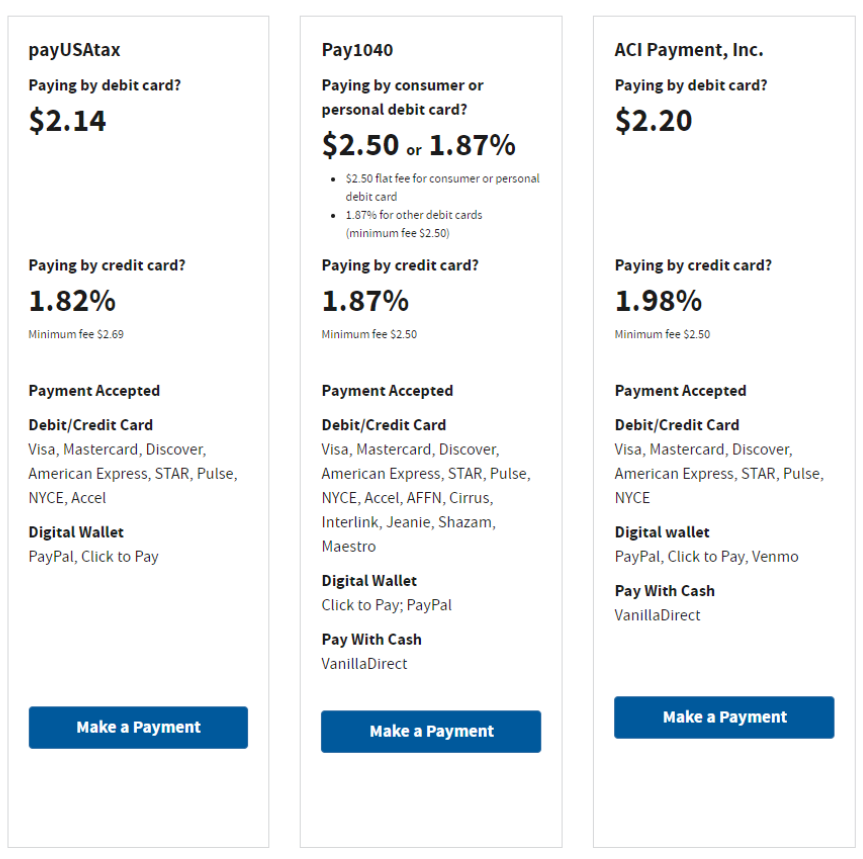
Currently, there are three primary authorized processors: PayUSAtax, Pay1040, and ACI Payments, Inc. Each of these entities charges a percentage-based fee for credit card transactions. Historically, these fees have hovered between 1.82% and 1.98% of the total tax payment. While this may seem like a small margin, on a $10,000 tax bill, a 1.87% fee amounts to an additional $187.
Limits on Transactions
It is also important to note that the IRS limits how many times you can pay via credit card for a single tax period. Generally, for Form 1040 (U.S. Individual Income Tax Return), you are limited to two payments per tax year. This means if you intend to split the payment across multiple cards to hit various spending requirements, you must plan your strategy carefully to stay within these regulatory constraints.
Weighing the Financial Impact: Rewards vs. Processing Fees
The primary motivation for paying taxes with a credit card is usually the accumulation of rewards points, miles, or cashback. From a personal finance perspective, this is only a winning strategy if the value of the rewards earned exceeds the cost of the processing fee.
The Mathematics of Cashback
If your credit card offers a flat 1.5% cashback on all purchases, and the tax processor charges a 1.96% fee, you are effectively paying a 0.46% premium to use your card. In this scenario, you are losing money on the transaction. However, if you hold a card that offers 2% or 2.5% cashback on all purchases, you can technically “profit” from your tax bill. For example, a 2% cashback reward on a $5,000 payment yields $100, while a 1.87% fee costs $93.50, leaving you with a net gain of $6.50. While the margin is slim, for high-net-worth individuals or business owners with six-figure tax liabilities, these margins can add up.
Leveraging Sign-Up Bonuses (SUBs)
The most lucrative reason to pay taxes with a credit card is to meet the “minimum spend” requirements for a new credit card sign-up bonus. Many premium travel cards require spending $4,000 to $10,000 within the first three months to unlock bonuses worth $500 to $1,500 in travel value.
If you have a $5,000 tax bill, paying it with a new card might immediately trigger a bonus that far outweighs the $100 processing fee. In the world of “credit card churning” and travel hacking, tax season is often viewed as an opportunity to secure high-value points at a very low cost of entry.
The Interest Rate Trap
The math only works if you pay your credit card balance in full and on time. If you carry the tax balance on your credit card, you will likely be hit with an Annual Percentage Rate (APR) ranging from 18% to 30%. No rewards program can offset the cost of high-interest debt. If you cannot afford to pay the tax bill in full by the credit card’s due date, the “convenience” of using a card becomes a significant financial liability.
Strategic Benefits: Cash Flow and Liquidity Management
Beyond the hunt for rewards, using a credit card to pay taxes can serve as a tool for sophisticated cash flow management. This is particularly relevant for entrepreneurs, freelancers, and those with fluctuating income streams.

Utilizing 0% APR Introductory Offers
A highly effective strategy involves applying for a credit card with a 0% introductory APR on purchases, which often lasts for 12 to 18 months. By paying your tax bill with such a card, you essentially grant yourself an interest-free loan from the bank.
For instance, if you owe $12,000 in taxes, you could pay the fee (roughly $225) to put the balance on a 0% APR card. You then divide the $12,000 into twelve $1,000 monthly payments. This allows you to keep your cash in a High-Yield Savings Account (HYSA) or invested in the market, where it can earn interest that potentially offsets the processing fee. This is a “liquidity play” that keeps your capital working for you while satisfying your obligations to the IRS.
Preserving Emergency Reserves
Sometimes, an unexpected tax bill can threaten to deplete a household’s emergency fund. Paying with a credit card can provide a “buffer,” allowing the taxpayer to keep their liquid cash available for immediate emergencies while paying down the tax debt over a few billing cycles. While this should be a last resort due to interest costs, it offers a level of flexibility that a direct debit from a bank account does not.
Potential Risks and Credit Score Considerations
While the benefits are clear, there are hidden risks associated with putting a large tax liability on plastic. These risks extend beyond the immediate financial cost and can impact your long-term financial health.
Credit Utilization Ratio
Your credit score is heavily influenced by your credit utilization ratio—the amount of credit you are using compared to your total limits. If you put a $20,000 tax bill on a card with a $25,000 limit, your utilization for that card jumps to 80%. This can cause a temporary but significant drop in your credit score. If you are planning to apply for a mortgage or an auto loan in the months following tax season, this spike in utilization could lead to less favorable loan terms.
The Danger of Compounding Debt
For those who are already struggling with debt, using a credit card to pay taxes can be a slippery slope. It converts a government debt (which often has lower interest rates and more flexible repayment plans via IRS Installment Agreements) into high-interest consumer debt. The IRS typically charges much lower interest and penalty rates than a standard credit card company. If you cannot pay the bill, an IRS payment plan is almost always a better financial move than carrying a balance on a credit card.
Step-by-Step Implementation: Executing the Transaction
If you have crunched the numbers and decided that paying taxes with a credit card is the right move, the execution must be precise to ensure the payment is credited correctly and the fees are minimized.
1. Calculate the Total Liability
Ensure your tax return is finalized so you have an exact figure. Do not forget to account for state taxes, as many states also allow credit card payments through similar third-party processors, though their fees may differ from federal ones.
2. Choose the Right Processor
Visit the IRS website to compare the current rates of the authorized processors. Even a difference of 0.05% can be meaningful on large payments. Ensure the processor you choose accepts your specific card network (Visa, Mastercard, American Express, or Discover).
3. Verify Reward Eligibility
Before making the payment, check your credit card’s terms and conditions. While most cards treat tax payments as “purchases,” some may classify them differently. Additionally, ensure that your credit limit is high enough to accommodate both the tax amount and the processing fee.
4. Execute and Document
When making the payment, you will need your Social Security Number (or EIN for businesses), the tax year, and the specific form type. Once the transaction is complete, print and save the confirmation receipt. The processing fee itself is generally not deductible for individual taxpayers, though it may be a deductible business expense for sole proprietors or business owners filing Schedule C.
Final Verdict: Is It the Right Financial Move?
Paying taxes with a credit card is a tool, not a solution. For the disciplined taxpayer who earns high-value rewards or is meeting a sign-up bonus threshold, it is a brilliant way to extract value from a mandatory expense. For the strategic investor, it is a way to maintain liquidity through 0% APR offers.
However, for the average consumer, the convenience fee often negates the value of standard rewards. The most important rule of personal finance applies here: never pay interest to earn points. If you can pay the balance in full and the rewards outweigh the fees, the credit card is a powerful ally. If not, the traditional methods of payment—or an official IRS installment plan—remain the most fiscally responsible path. By approaching your tax liability with a strategic mindset, you can transform a yearly burden into a calculated financial advantage.
aViewFromTheCave is a participant in the Amazon Services LLC Associates Program, an affiliate advertising program designed to provide a means for sites to earn advertising fees by advertising and linking to Amazon.com. Amazon, the Amazon logo, AmazonSupply, and the AmazonSupply logo are trademarks of Amazon.com, Inc. or its affiliates. As an Amazon Associate we earn affiliate commissions from qualifying purchases.