
In an increasingly digitized world, the days of scrambling for stamps, envelopes, and paper checks to pay your federal taxes are rapidly becoming a relic of the past. The Internal Revenue Service (IRS) has embraced modern technology, offering a suite of secure, convenient, and efficient online payment options that cater to individuals, businesses, and tax professionals alike. Transitioning to online tax payments isn’t just about convenience; it’s a strategic move towards better financial management, enhanced security, and greater peace of mind. For anyone managing personal or business finances, understanding these digital pathways is essential for navigating the annual tax season with confidence and precision. This comprehensive guide will illuminate the various methods available, providing insights into their benefits, usage, and crucial considerations to ensure a smooth, error-free transaction, squarely positioning this discussion within the critical domain of personal and business finance.

The Digital Revolution of Tax Payments: Why Online is the Way to Go
The shift from traditional paper-based tax payments to digital platforms represents a significant leap forward in financial administration. For the modern taxpayer, whether an individual or a business entity, leveraging online payment methods offers a multitude of compelling advantages that extend far beyond mere convenience. It’s about optimizing financial processes, ensuring compliance, and enhancing overall fiscal security.
Unparalleled Convenience and Time Savings
One of the most immediate and appreciated benefits of paying federal taxes online is the sheer convenience it affords. No longer are taxpayers beholden to bank hours, postal service schedules, or the physical constraints of traditional mail. Payments can be initiated 24/7, from virtually anywhere with an internet connection – be it a home office, a café, or even while traveling. This flexibility empowers taxpayers to manage their financial obligations on their own terms, fitting tax payments seamlessly into their busy schedules. The time saved from not having to print forms, write checks, purchase stamps, and make trips to the post office or bank can be substantial, allowing individuals and businesses to reallocate valuable time to more productive endeavors. Furthermore, the ability to schedule payments in advance alleviates last-minute stress, ensuring deadlines are met without frantic rushes. This foresight is a cornerstone of sound financial planning, allowing funds to be properly allocated and accounted for ahead of time.
Enhanced Security and Accuracy
While some may harbor initial reservations about the security of online financial transactions, the platforms provided or endorsed by the IRS are built with robust security protocols designed to protect sensitive financial information. These systems often employ advanced encryption technologies, multi-factor authentication, and secure servers to safeguard data against unauthorized access. This level of digital security often surpasses the inherent risks associated with mailing checks, which can be lost or intercepted. From a financial perspective, online payments also significantly reduce the potential for errors. Manual calculations, incorrect address entries, and illegible handwriting are all eliminated. Digital systems guide users through the process, often validating information in real-time and providing clear confirmations. This precision minimizes the risk of payment delays or rejections due to administrative oversights, which could otherwise lead to penalties and interest. Accurate and timely payments are fundamental to maintaining good standing with the IRS and avoiding unnecessary financial burdens.
Eco-Friendly and Paperless Solutions
Beyond the personal and financial advantages, opting for online tax payments contributes to a broader positive impact: environmental sustainability. By choosing digital methods, taxpayers actively reduce their consumption of paper, ink, and the fossil fuels associated with transportation for mail delivery. This aligns with a growing global emphasis on sustainable practices and corporate social responsibility for businesses. From a financial record-keeping standpoint, the digital trail created by online payments offers an organized and easily retrievable archive. Confirmation numbers, payment dates, and amounts are all stored electronically, simplifying reconciliation and auditing processes. This paperless approach not only benefits the environment but also streamlines financial management, reducing clutter and making it easier to access historical payment data whenever needed for future tax filings or financial reviews. It’s a testament to how modern financial tools can intertwine personal benefit with broader societal good.
Navigating the Official Channels: Your Primary Online Payment Gateways
The IRS provides several primary official channels for taxpayers to remit federal taxes online. Each method is designed to cater to different needs and preferences, offering varying levels of convenience, flexibility, and cost implications. Understanding these options is crucial for making an informed decision that best suits your financial situation.
IRS Direct Pay: The Quickest Route for Many
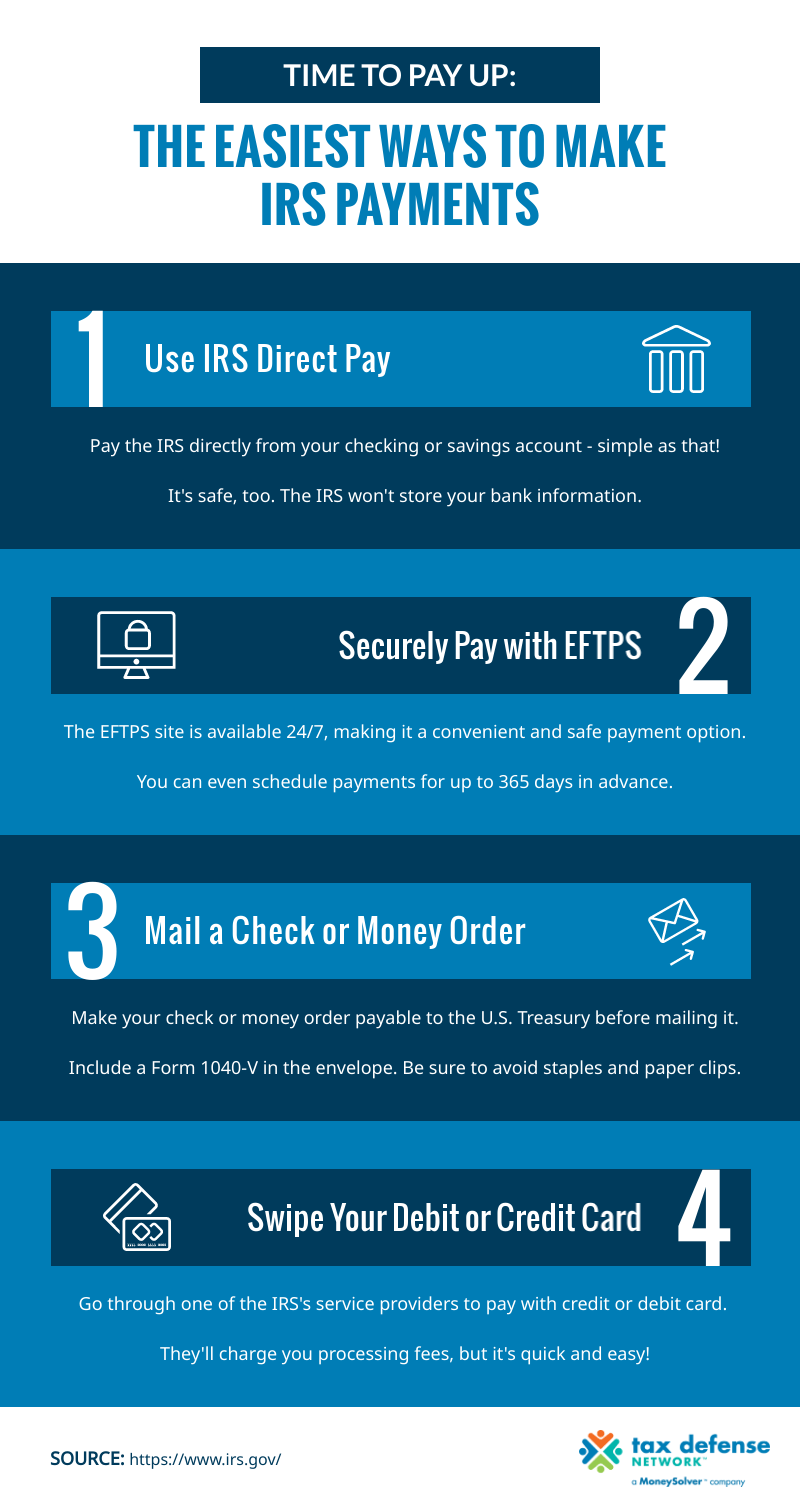
IRS Direct Pay is arguably the most straightforward and cost-effective method for individual taxpayers to pay their federal taxes directly from a checking or savings account. It’s a free, secure web service that allows for direct debit payments for various tax types, including Form 1040 series payments (income tax, estimated tax, amended return tax, extension payments) and certain other payments.
What it is and who can use it.
IRS Direct Pay facilitates direct electronic transfers from a bank account to the U.S. Treasury. It’s designed primarily for individual taxpayers to make payments for current year tax liabilities, estimated taxes, and payments related to previously filed returns. It is not generally used for business taxes that require more complex reporting, for which EFTPS is typically preferred. The service is free, and there are no processing fees involved, making it a highly attractive option from a financial perspective.
Key steps: select payment type, enter taxpayer info, verify, submit.
The process is intuitive:
- Select Payment Type: Users first select the reason for their payment (e.g., “Income Tax – Form 1040,” “Estimated Tax”).
- Verify Identity: To ensure security, the system requires identity verification using information from a previous tax return. This typically involves inputting filing status, address, and an exact amount from a prior year’s tax filing. This financial authentication step protects against unauthorized payments.
- Enter Payment Details: Users input their bank account number, routing number, and the payment amount. They also select the payment date, which can be scheduled up to 365 days in advance.
- Review and Submit: A final review screen summarizes all payment details. After confirming accuracy, the payment is submitted, and a confirmation number is provided immediately. This confirmation number is vital for financial record-keeping.
Electronic Federal Tax Payment System (EFTPS): Ideal for Businesses and Recurring Payments
For businesses, individuals requiring recurring payments, or those who need to pay a wider array of federal taxes, the Electronic Federal Tax Payment System (EFTPS) is the go-to solution. It’s a free service provided by the U.S. Department of the Treasury.
Registration process and lead time.
Unlike IRS Direct Pay, EFTPS requires a registration process before it can be used. Taxpayers must enroll online at EFTPS.gov or by calling the enrollment line. The IRS then mails a Personal Identification Number (PIN) to the taxpayer’s address of record, which can take 5-7 business days. This lead time for activation means taxpayers, especially businesses, should plan to register well in advance of payment deadlines. Once registered, taxpayers can manage their account online, establishing a secure financial gateway for all their federal tax obligations.
Scheduling payments and tracking history.
EFTPS allows taxpayers to schedule payments up to 365 days in advance, offering significant flexibility for financial planning. This is particularly beneficial for businesses that make regular payroll tax deposits or estimated tax payments. The system also provides a comprehensive payment history for up to 15 months, allowing businesses to easily track their tax liabilities and payments, aiding in financial reconciliation and compliance. Payments can be initiated via the internet or by phone, offering multiple access points.
Paying with a Debit or Credit Card: Flexibility at a Cost
While not directly handled by the IRS, paying federal taxes with a debit or credit card is an option provided through authorized third-party payment processors. This method offers unparalleled flexibility, particularly for those who wish to leverage credit card rewards or need to bridge a temporary cash flow gap.
Understanding convenience fees.
The primary consideration when using a debit or credit card is the associated convenience fee. The IRS does not receive these fees; they are charged by the authorized payment processors for their service. These fees typically range from 1.87% to 1.98% for credit cards and a flat fee (e.g., $2.50) for debit cards. While seemingly small, for large tax liabilities, these fees can accumulate quickly, potentially negating any credit card rewards or adding an unnecessary cost to the payment. From a financial planning perspective, it’s crucial to weigh these fees against the benefits, such as rewards points or the immediate liquidity offered by a credit card.
Choosing an authorized payment processor.
The IRS website lists several authorized payment processors, and taxpayers must use one of these approved vendors. Examples include PayUSAtax, Official Payments, and ACI Payments, Inc. Each processor may have slightly different fee structures or user interfaces, so it’s advisable to compare them to find the most cost-effective or preferred option. After making the payment through the processor, the payment details are transmitted to the IRS. Taxpayers receive a confirmation number from the processor, which serves as proof of payment and should be retained for financial records.
Beyond the Basics: Exploring Alternative Online Payment Methods
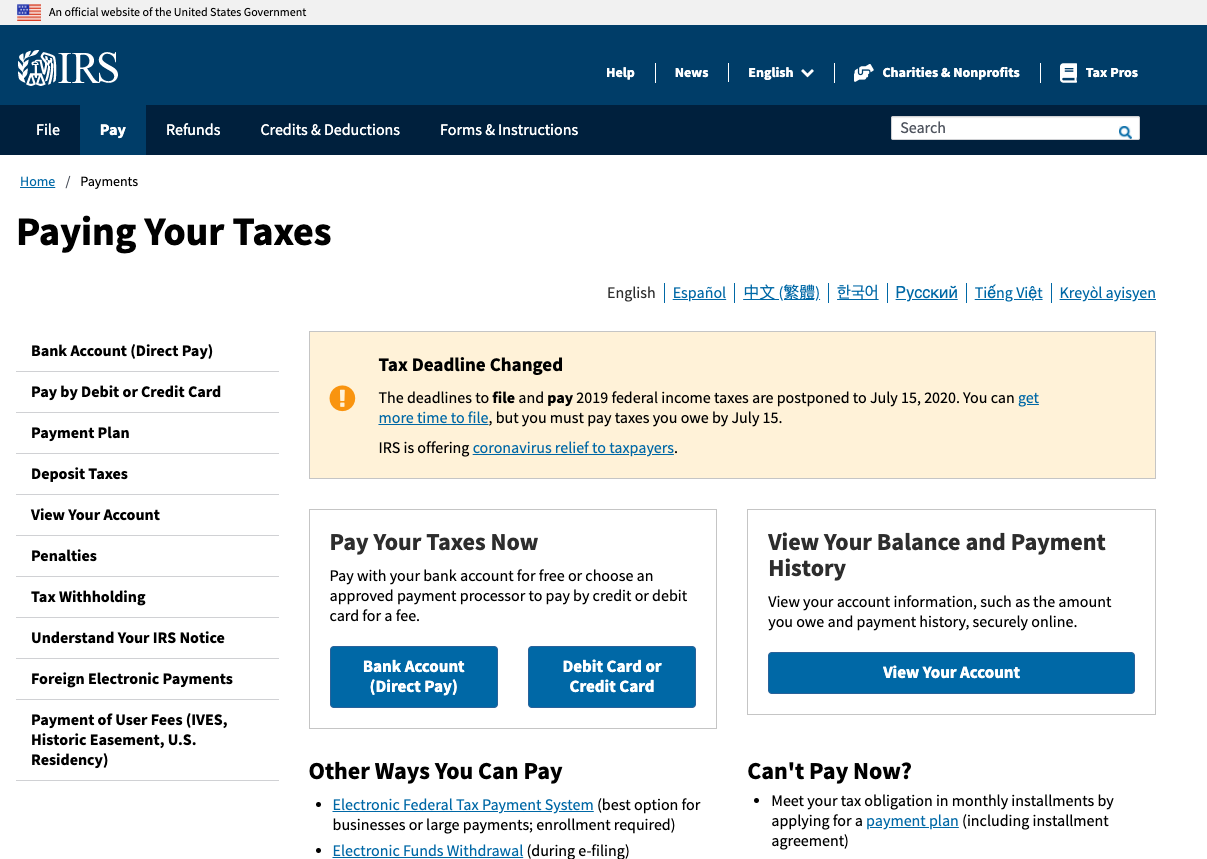
While IRS Direct Pay and EFTPS are the primary official routes, and third-party processors handle card payments, other online methods integrate tax payments seamlessly into existing financial workflows, offering additional layers of convenience, particularly during tax filing season.
Utilizing Tax Software: Integrated Solutions
For millions of taxpayers, filing and paying taxes go hand-in-hand, often facilitated by commercial tax preparation software. These platforms offer an integrated solution that streamlines the entire tax process.
Seamless payment during e-filing.
Most popular tax software programs allow taxpayers to electronically file their federal tax returns and submit their tax payments in a single, unified process. During the e-filing process, if a balance is due, the software will prompt the user to authorize a direct debit from their bank account. This can be scheduled for the filing date or the tax deadline, whichever is later. This integration simplifies compliance, as all necessary data for both the return and the payment is already within the system. It eliminates the need to visit a separate IRS website for payment, making the entire experience more cohesive and less prone to errors.
Popular software options (e.g., TurboTax, H&R Block).
Leading tax software providers like TurboTax, H&R Block, TaxAct, and others offer this integrated payment functionality. While the software itself may come with a fee, the direct debit payment service within the software is typically free, as it leverages the IRS’s electronic funds transfer infrastructure. This method is particularly popular among individual taxpayers who prefer a guided, step-by-step approach to tax preparation and payment, ensuring accuracy and efficiency in managing their personal finances.
Bank-Initiated Payments: Leveraging Your Financial Institution
Many banks and financial institutions offer online bill pay services that can be utilized to pay federal taxes. While not a direct IRS platform, it uses the banking system to initiate the transfer.
Online banking bill pay options.
Through your bank’s online bill pay portal, you can often add the U.S. Treasury as a payee. You would then enter the payment amount, your tax ID (SSN or EIN), the tax period, and the form number being paid. Your bank then generates and sends an electronic payment (or sometimes even a physical check if it’s an older system) to the IRS on your behalf. It’s crucial to confirm with your bank how they process these payments and what information they require to ensure it reaches the IRS correctly. This method can be convenient if you manage all your other bills through your bank’s platform, consolidating your financial outflows in one place.
Ensuring correct routing information.
A critical aspect of using bank-initiated payments is ensuring that all the routing information is correct. This includes the payee name (e.g., “U.S. Treasury”), the correct IRS address for payments if a check is sent, and importantly, your identification number and the tax year/form number in the memo field. Incorrect information could lead to misapplication or delay of your payment, resulting in potential penalties. While often free, taxpayers must exercise diligence in setting up these payments to avoid costly financial mistakes. Always double-check with the IRS or your tax professional for the most current and accurate payment instructions if you choose this route.
Essential Considerations for a Smooth Online Tax Payment Experience
While online payment methods offer significant advantages, a successful and stress-free experience hinges on understanding and adhering to several critical considerations. These factors are paramount for financial compliance and safeguarding your fiscal well-being.
Deadlines and Penalties: Timing is Everything
The most fundamental rule of tax payments is adherence to deadlines. The IRS strictly enforces payment due dates, and even the most minor delay can trigger penalties and interest. When paying online, it’s crucial to understand that the payment is considered “on time” based on the date the transaction is initiated, not when the funds actually clear your bank. However, if a payment is rejected due to insufficient funds or incorrect bank information, it’s considered not paid, and penalties may apply. Therefore, always initiate payments well in advance of the deadline, preferably a few days, to allow for any unforeseen technical glitches or bank processing times. Planning ahead is a key component of effective financial management, preventing unnecessary financial burdens.
Verifying Your Payment: Confirmation is Key
Every online payment method discussed – IRS Direct Pay, EFTPS, third-party processors, and even tax software – provides a confirmation number or transaction ID upon successful submission. This number is your undeniable proof that a payment was initiated. It is absolutely critical to save this confirmation number immediately. Print it, screenshot it, or store it in a secure digital location. In the rare event of a discrepancy or if the IRS claims non-receipt of payment, this confirmation number will be your primary defense, allowing you to trace the transaction. Without it, proving your payment can become a protracted and financially stressful ordeal. This step is a non-negotiable part of secure financial record-keeping.
Troubleshooting Common Issues and Seeking Assistance
Despite the ease of online payments, issues can occasionally arise. These might include difficulty logging in, payment rejections, or confusion over specific instructions. If you encounter a problem:
- Don’t panic. Most issues have straightforward solutions.
- Check error messages carefully. They often provide clues to the problem.
- Review your entries. Double-check bank account numbers, routing numbers, SSNs/EINs, and payment amounts for typos.
- Consult the IRS website. The “Pay Your Tax Bill” section and FAQs are excellent resources.
- Contact the specific platform’s support. If using EFTPS or a third-party processor, their customer service can often resolve specific issues.
- IRS Taxpayer Assistance. For complex issues or persistent problems, contacting the IRS directly through their official phone lines or local assistance centers may be necessary. Remember, reaching out for help is a sign of responsible financial management, ensuring your tax obligations are met correctly.
Data Security Best Practices: Protecting Your Financial Information
While IRS-affiliated platforms are secure, maintaining your own digital hygiene is paramount. When making online tax payments, always:
- Use a secure internet connection. Avoid public Wi-Fi networks for financial transactions.
- Ensure the website is legitimate. Always type the official IRS URL (IRS.gov) directly into your browser or verify links before clicking. Be wary of phishing scams.
- Keep your login credentials private. Never share your PINs, passwords, or bank account details.
- Monitor your bank statements. Regularly review your checking or savings account for the payment to ensure it processed correctly and to identify any unauthorized activity.
- Keep your operating system and web browser updated. These updates often include critical security patches.
Adhering to these best practices not only protects your financial information during tax payments but also contributes to overall digital security in your financial life.
The Future of Federal Tax Payments: Embracing Digital Transformation
The ongoing evolution of federal tax payment methods underscores a broader trend towards digital transformation in financial services. For individuals and businesses, embracing these online tools is more than just a matter of convenience; it’s a strategic move towards greater financial efficacy and control.
Streamlining Financial Management
The availability of multiple, secure online payment channels fundamentally streamlines financial management. It allows for better integration of tax obligations into overall financial planning, budgeting, and forecasting. Businesses can schedule payments years in advance through EFTPS, ensuring compliance without constant manual intervention. Individuals can incorporate estimated tax payments into their regular financial routines with ease via IRS Direct Pay or tax software. This digital framework supports a more proactive approach to fiscal responsibility, moving away from reactive, last-minute efforts. The electronic trails left by these payments also simplify record-keeping, auditing, and future tax preparation, reducing administrative burdens and freeing up resources for core financial activities or personal investments.
A Path Towards Greater Financial Literacy and Control
By demystifying the payment process and making it accessible, online tax payment platforms also contribute to greater financial literacy. They empower taxpayers to take direct control of their tax obligations, understanding the mechanics of how their money moves to the Treasury. The transparency offered by immediate confirmations and accessible payment histories provides a clearer picture of one’s tax footprint. As financial technology continues to advance, we can anticipate even more intuitive interfaces, potentially integrating AI for personalized payment advice, and even greater automation. For anyone looking to optimize their personal or business finances, staying abreast of these digital payment innovations is not just recommended, it’s essential for maintaining control and achieving financial peace of mind in an increasingly digital economy.
aViewFromTheCave is a participant in the Amazon Services LLC Associates Program, an affiliate advertising program designed to provide a means for sites to earn advertising fees by advertising and linking to Amazon.com. Amazon, the Amazon logo, AmazonSupply, and the AmazonSupply logo are trademarks of Amazon.com, Inc. or its affiliates. As an Amazon Associate we earn affiliate commissions from qualifying purchases.