
The global financial landscape has undergone a seismic shift over the last decade, transitioning from a cash-heavy society to a digital-first economy. Understanding how to navigate online payments is no longer a niche technical skill; it is a fundamental pillar of modern personal finance and business management. Whether you are a consumer looking to protect your assets, a freelancer seeking to streamline your income, or an entrepreneur scaling a business, mastering the mechanics of digital transactions is essential for long-term financial health.
The Infrastructure of Digital Transactions
To master online payments, one must first understand the underlying architecture that moves money from point A to point B. Unlike physical cash, which involves a simple hand-to-hand exchange, digital payments rely on a complex network of gateways, processors, and banking protocols designed to ensure security and liquidity.
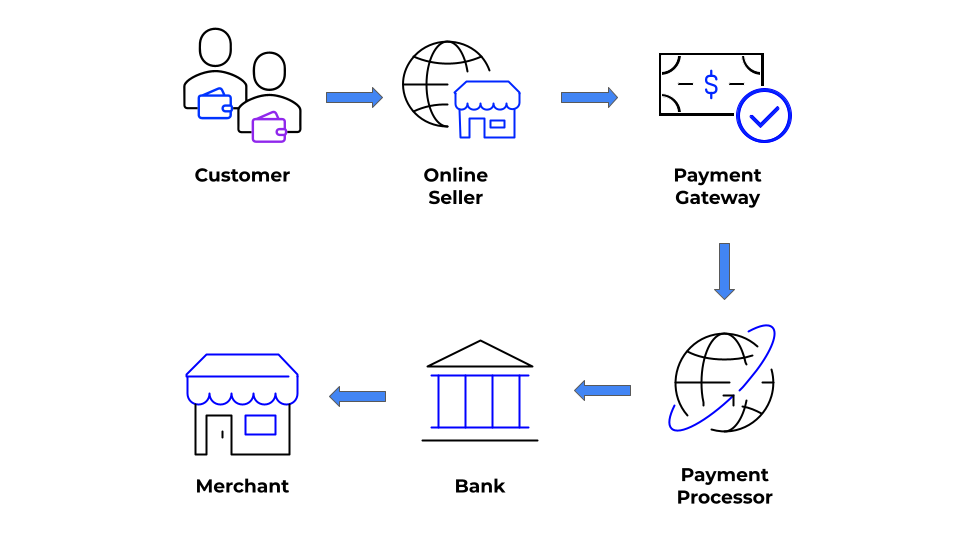
Understanding Digital Wallets and Payment Processors
Digital wallets, such as PayPal, Apple Pay, and Google Pay, act as intermediaries that store your financial information securely, allowing you to execute transactions without sharing sensitive card details directly with merchants. From a financial management perspective, these tools offer an additional layer of insulation. By using a digital wallet, you centralize your spending data, making it easier to track monthly outgoings and identify discrepancies.
Payment processors like Stripe or Square serve a different role, primarily on the receiving end of a transaction. For those involved in side hustles or digital entrepreneurship, choosing the right processor is a critical financial decision. Each platform has a different fee structure—typically a combination of a percentage of the transaction plus a flat fee. Understanding these costs is vital for maintaining healthy profit margins.
Credit vs. Debit: Strategic Risk Management
In the realm of online payments, not all payment methods are created equal. Financial experts generally recommend using credit cards for online purchases over debit cards. The reasoning is rooted in consumer protection and risk management.
When you pay with a debit card, the funds are immediately pulled from your liquid bank account. If a transaction is fraudulent, that money is gone until a bank investigation—which can take weeks—is resolved. Credit cards, conversely, offer a buffer. Under regulations like the Fair Credit Billing Act, consumers have robust protections against unauthorized charges. Furthermore, credit cards often provide purchase protection and extended warranties, adding tangible value to your financial transactions.
The Role of ACH and Wire Transfers
For larger financial movements, such as paying a mortgage, settling a high-value invoice, or transferring funds between investment accounts, Automated Clearing House (ACH) transfers and wire transfers are the standard. ACH transfers are generally free or low-cost but take several days to settle. Wire transfers are near-instant but come with significant fees. Choosing between them requires a balance of urgency and cost-effectiveness—a hallmark of savvy financial planning.
Securing Your Financial Assets in a Connected World
The convenience of online payments comes with the inherent risk of cyber-related financial loss. Protecting your money requires more than just a strong password; it requires a strategic approach to digital security that treats your online presence as a high-stakes financial portfolio.
Implementing Multi-Layered Security Protocols
The first line of defense in online payments is Multi-Factor Authentication (MFA). By requiring a second form of verification—such as a biometric scan or a time-sensitive code—you significantly reduce the risk of unauthorized access to your banking apps and digital wallets.
Beyond MFA, many modern financial institutions offer “Virtual Cards.” These are temporary card numbers generated for a specific merchant or a single transaction. If a website’s database is compromised, the virtual card number becomes useless to hackers, leaving your primary bank account untouched. Utilizing these tools is a sophisticated way to manage “leakage” and prevent recurring unauthorized subscriptions from draining your wealth.
Identifying and Mitigating Transactional Risks
Financial literacy includes the ability to spot “phishing” attempts and fraudulent payment gateways. Before entering any payment information, verify the site’s security through the presence of “https” and a valid SSL certificate. However, security goes beyond the technical. It also involves auditing your statements.
A disciplined financial practice involves a weekly “transaction audit.” By reviewing your online payment history frequently, you can catch small, fraudulent “test charges” that scammers often use before attempting a larger theft. This proactive monitoring is the difference between a minor inconvenience and a catastrophic financial loss.
Managing the Lifecycle of Online Subscriptions
One of the greatest “wealth eroders” in the digital age is the forgotten subscription. Because online payments are often automated, it is easy for small monthly charges to go unnoticed. To optimize your personal finance, use a dedicated tracking tool or a spreadsheet to list every recurring online payment. Periodically “pruning” these subscriptions ensures that your capital is being allocated toward your current priorities rather than historical habits.
Streamlining Revenue: Receiving Online Payments for Businesses and Side Hustles
For those looking to grow their net worth through online income, the ability to receive payments efficiently is just as important as the ability to send them. The “how-to” of receiving money online involves balancing user experience with fee optimization.
Selecting the Right Merchant Service Provider
If you are selling a product or service, your choice of merchant service provider (MSP) will directly impact your bottom line. Platforms like Shopify or Etsy offer integrated payment systems that are easy to set up but often come with higher transaction fees.
For service-based professionals, invoicing software that integrates with Stripe or Wise can be more cost-effective. When evaluating these platforms, look beyond the headline transaction fee. Consider the “chargeback fee”—the amount you are charged if a customer disputes a payment. A high frequency of chargebacks can lead to your account being frozen, which represents a significant risk to business continuity.
Managing International Transactions and Currency Exchange
The digital economy is global, which often means dealing with multiple currencies. Traditional banks often charge exorbitant fees for international transfers and offer poor exchange rates. To maximize your income, utilize fintech solutions like Wise (formerly TransferWise) or Revolut Business. These platforms allow you to hold balances in different currencies and convert them at the “mid-market rate,” saving you thousands of dollars in hidden fees over the course of a fiscal year.
The Importance of Automated Bookkeeping
Every online payment received is a taxable event. To avoid a financial headache during tax season, it is essential to integrate your payment gateway with accounting software like QuickBooks or Xero. This automation ensures that every dollar earned is tracked, categorized, and reconciled. Accurate record-keeping is not just about compliance; it provides the data necessary to analyze which revenue streams are most profitable and where your business expenses can be optimized.
Leveraging Online Payments for Better Personal Finance Management
Ultimately, the goal of mastering online payments is to gain greater control over your financial destiny. When used strategically, digital payment tools can be leveraged to build wealth, earn rewards, and automate the path to financial independence.
Automating Savings and Bill Payments
The most powerful tool in the personal finance arsenal is automation. By setting up “pull” payments for your utility bills and “push” payments for your savings and investment accounts, you remove the psychological friction of moving money.
Automating your online payments ensures you never incur late fees, which are essentially high-interest penalties that detract from your net worth. Furthermore, by automating transfers to a brokerage account or a high-yield savings account on the day you receive your paycheck, you adhere to the “pay yourself first” principle, ensuring that your long-term financial goals are prioritized over impulsive spending.
Maximizing Rewards and Cash-Back Strategies
A sophisticated approach to online payments involves “gaming” the rewards systems offered by various cards and platforms. Many credit cards offer 2% to 5% cash back on specific online categories, such as groceries, travel, or office supplies.
By strategically routing your online payments through the appropriate cards, you can generate a significant “rebate” on your annual spending. For a household spending $50,000 a year on digital transactions, a 2% cash-back strategy yields $1,000 in pure profit. When reinvested into a compound-interest-bearing account, these small gains contribute to significant long-term wealth.

The Future of Money: Emerging Payment Trends
As we look forward, the world of online payments continues to evolve with the integration of blockchain technology and Central Bank Digital Currencies (CBDCs). While these may seem like high-tech concepts, their financial implications are grounded in speed and reduced transaction costs. Staying informed about these trends allows you to adapt your financial strategy early, ensuring that you are always using the most efficient tools available to manage your money.
In conclusion, the ability to navigate the world of online payments is a critical competency in the modern financial era. By understanding the infrastructure, securing your assets, optimizing your revenue streams, and leveraging automation, you transform a simple utility into a powerful engine for financial growth. Online payments are more than just a convenience—they are the digital pulse of your financial life. Mastering them is the first step toward true financial mastery.
aViewFromTheCave is a participant in the Amazon Services LLC Associates Program, an affiliate advertising program designed to provide a means for sites to earn advertising fees by advertising and linking to Amazon.com. Amazon, the Amazon logo, AmazonSupply, and the AmazonSupply logo are trademarks of Amazon.com, Inc. or its affiliates. As an Amazon Associate we earn affiliate commissions from qualifying purchases.