
In an increasingly digitized world, the concept of working once and getting paid repeatedly has transitioned from an aspirational dream to a tangible reality for millions. This phenomenon is known as residual income, often interchangeably referred to as passive income, and the internet has become its most fertile ground. Unlike traditional employment where your income is directly tied to the hours you put in, residual income streams continue to generate revenue with minimal ongoing effort after the initial work is done. It represents a fundamental shift in how we approach earning, offering freedom, financial security, and the potential to build true wealth. This guide delves into the mechanisms, strategies, and mindset required to cultivate robust residual income streams online, empowering you to build a financial future that works for you, even while you sleep.

Understanding Residual Income and Its Appeal
Before diving into specific strategies, it’s crucial to grasp what residual income truly entails and why it has become a cornerstone of modern financial independence. It’s not about getting rich quick, but rather about strategic effort yielding long-term, compounding returns.
Defining Residual (Passive) Income
Residual income is money earned from an asset or activity after the initial effort has been expended. The “residual” aspect means that the income continues to flow in over time without requiring active, continuous labor. Think of authors who earn royalties long after their book is written, or musicians who receive performance rights for songs composed years ago. Online, this principle applies to digital products, automated systems, investments, and content that continues to attract an audience and generate revenue. It requires significant upfront investment of time, money, or both, but eventually detaches your income from your time.
Why Pursue Online Residual Income?
The allure of online residual income is multifaceted. Firstly, it offers financial freedom by diversifying your income sources, making you less reliant on a single job or client. This resilience is invaluable in an unpredictable economic landscape. Secondly, it provides time freedom, allowing you to pursue passions, spend more time with family, or simply enjoy life without the constant pressure of trading hours for dollars. Thirdly, the scalability of online ventures is unparalleled. A digital product or a piece of content can reach a global audience with virtually no limit on how many people it can serve, unlike a physical service business. Lastly, the relatively low barrier to entry for many online opportunities means that with determination and the right strategies, almost anyone can start building their residual income portfolio.
The Mindset for Long-Term Success
Building residual income online is a marathon, not a sprint. It demands a specific mindset characterized by patience, persistence, and a willingness to learn. Successful residual income generators understand that:
- Initial Effort is Substantial: Creating valuable digital assets or setting up automated systems requires significant upfront work. Donorexpect instant results.
- Value Creation is Key: Your income streams will only be sustainable if they provide genuine value to an audience or solve a problem.
- Automation and Delegation: The goal is to minimize ongoing effort. This means leveraging technology for automation and, eventually, delegating tasks that don’t require your direct involvement.
- Continuous Learning: The online landscape evolves rapidly. Staying updated with trends, tools, and strategies is vital for maintaining and growing your income streams.
- Risk Tolerance: Every venture carries some risk. A willingness to experiment, fail fast, and adapt is crucial for navigating the entrepreneurial journey.
Strategies for Building Digital Assets
The most common and effective pathways to online residual income involve creating and leveraging digital assets. These are products or pieces of content that, once created, can be sold or monetized repeatedly without significant additional input.
Content Creation and Monetization (Blogging, YouTube)
Creating valuable content is a powerful way to build an audience and generate residual income.
- Blogging: A blog, focused on a niche you are passionate about or knowledgeable in, can become a significant income generator. Once articles are written and published, they can attract organic traffic from search engines for years. Income streams include display advertising (e.g., Google AdSense), affiliate marketing (recommending products and earning a commission), selling your own digital products, or offering premium content/memberships. The key is consistent, high-quality content that addresses audience needs.
- YouTube Channels: Similar to blogging, creating video content on YouTube allows you to build an audience around a specific topic. Once videos are uploaded, they can generate ad revenue through the YouTube Partner Program, attract sponsorships, drive sales of merchandise or digital products, and promote affiliate offers. Evergreen content that remains relevant over time is particularly effective for long-term residual income.
Digital Product Development (eBooks, Courses, Templates)
Creating and selling your own digital products is perhaps one of the most direct routes to residual income. You create the product once, and it can be sold an infinite number of times.
- eBooks: Share your expertise, stories, or research in an eBook. Platforms like Amazon Kindle Direct Publishing allow you to self-publish and reach a massive audience. Once published, your eBook can generate royalties for years with minimal ongoing effort, beyond perhaps some promotional activities.
- Online Courses: If you have specialized knowledge, an online course can be highly lucrative. Platforms like Teachable, Thinkific, or Udemy allow you to host and sell video-based or text-based courses. Students pay for access, and your course can continue to enroll new learners for a long time after its creation.
- Templates & Digital Resources: Consider creating templates (e.g., Notion templates, Canva templates, website themes), presets (for photographers), stock photos/videos, or software plugins. These are digital assets that individuals and businesses need and are willing to pay for. Marketplaces like Etsy, Creative Market, or specialized theme stores allow you to sell these products globally.
Affiliate Marketing through Niche Websites
Affiliate marketing involves promoting other companies’ products or services and earning a commission for every sale or lead generated through your unique affiliate link. The residual aspect comes from building a content-rich website or platform that consistently attracts traffic interested in those products.
- Building Niche Websites: Create websites dedicated to specific product categories or problems that affiliate products can solve. For example, a site reviewing home espresso machines or comparing different types of pet food. Once the content (reviews, comparisons, how-to guides) is published and ranks in search engines, it can continually drive traffic to affiliate offers.
- Strategic Product Selection: Choose products that are highly relevant to your audience, offer good commission rates, and come from reputable companies. Focus on evergreen products that will remain in demand.
- SEO Optimization: To ensure long-term traffic, rigorous search engine optimization (SEO) is critical. This means creating high-quality, keyword-optimized content that consistently ranks well in Google and other search engines.
Software as a Service (SaaS) or Membership Sites
For those with technical skills or the ability to outsource development, creating a Software as a Service (SaaS) product or a membership site can lead to highly recurring residual income.
- SaaS Products: These are web-based software solutions that users pay a recurring subscription fee to access. Examples include project management tools, email marketing platforms, or CRM systems. While development requires significant upfront investment, a successful SaaS can generate predictable, high-margin revenue for years.
- Membership Sites: Offer exclusive content, community access, or specialized tools behind a paywall. Members pay a recurring fee (monthly or annually) to maintain access. This model builds a loyal community and provides a stable revenue stream, provided you continuously deliver value.
Leveraging E-commerce and Dropshipping for Passive Streams
While e-commerce often requires active management, certain models can be automated to generate residual income with less direct involvement over time.
Setting Up an Online Store (Print-on-Demand)
Print-on-Demand (POD) is an e-commerce model where you sell custom-designed products (like T-shirts, mugs, phone cases) without holding any inventory.
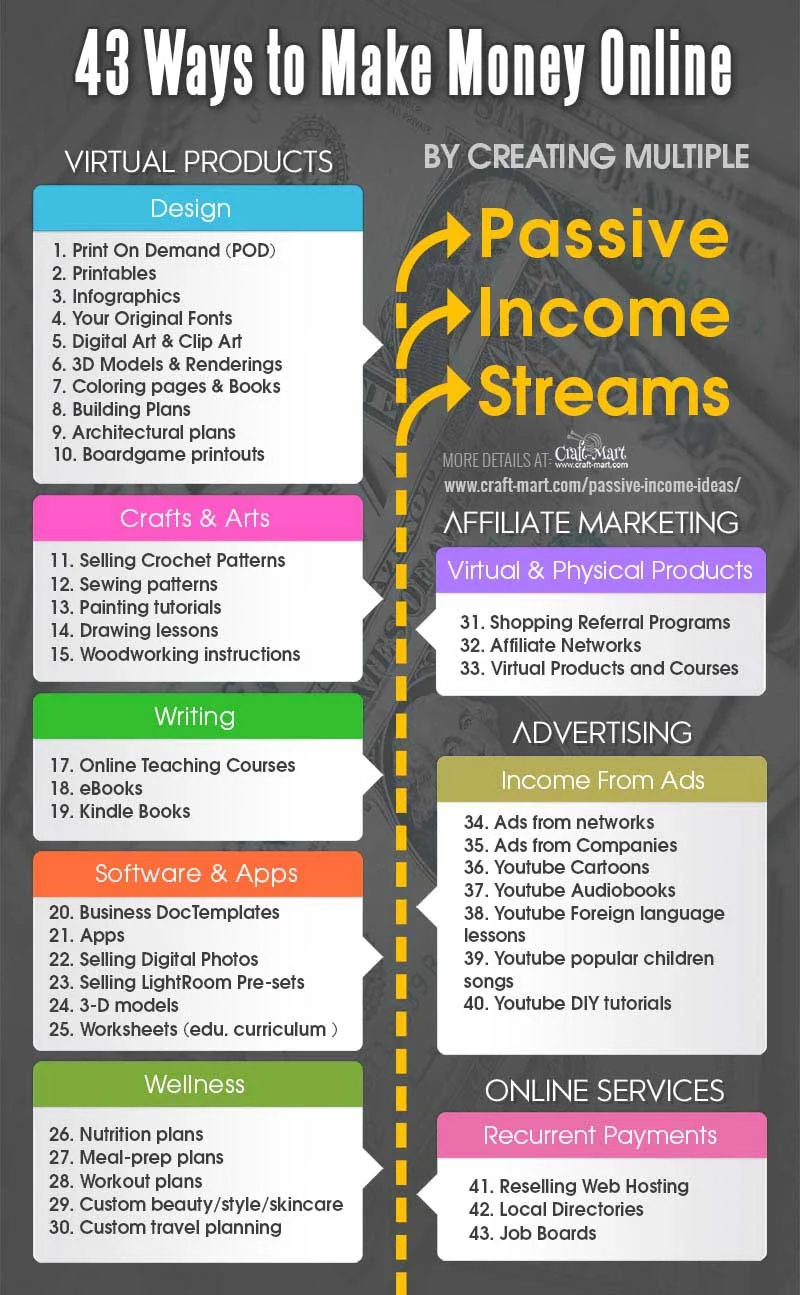
- Design and List: You create unique designs and list them on your online store (e.g., Shopify) or marketplaces like Etsy.
- Automated Fulfillment: When a customer places an order, a third-party POD service (like Printful or Printify) prints your design on the product, packages it, and ships it directly to the customer. You pay them a base cost and keep the difference.
- Residual Potential: Once your designs are created and listed, and your store is set up, the order fulfillment and shipping process is almost entirely automated, allowing sales to happen while you focus on marketing or creating new designs.
The Dropshipping Model Explained
Dropshipping is another e-commerce fulfillment method where a store doesn’t keep the products it sells in stock. Instead, when a store sells a product, it purchases the item from a third party and has it shipped directly to the customer.
- Finding Suppliers: Identify reliable dropshipping suppliers (e.g., via AliExpress, SaleHoo, Doba).
- Building Your Store: Create an online store and list products from your chosen suppliers.
- Automating Orders: When a customer buys a product, you forward the order details to your supplier, who then ships the product. While not entirely hands-off, tools and integrations can automate much of this process, allowing you to focus on marketing and customer service.
- Scalability: With the right automation, a dropshipping store can handle a high volume of sales with relatively little direct involvement in inventory management or logistics.
Automating E-commerce Operations
The key to turning e-commerce into a residual income stream is maximizing automation:
- Automated Marketing: Implement email marketing sequences (welcome series, abandoned cart reminders), schedule social media posts, and use retargeting ads.
- Customer Service Tools: Utilize chatbots, comprehensive FAQs, and self-service portals to reduce direct customer inquiries.
- Inventory & Order Sync: Integrate your store with suppliers or fulfillment services to automatically update inventory levels and process orders.
- Outsourcing: As your business grows, consider outsourcing customer service, design, or even marketing efforts to virtual assistants or specialized agencies.
Investing in Financial Instruments for Online Residual Income
Beyond creating digital products, a significant avenue for online residual income lies in leveraging financial markets and platforms that facilitate passive investment. This requires capital, but the management can often be done entirely online.
Dividend Stocks and REITs (Online Platforms)
Investing in assets that regularly pay out a portion of their earnings can be a cornerstone of a residual income strategy.
- Dividend Stocks: These are shares of companies that regularly distribute a portion of their profits to shareholders in the form of dividends. Once you own the shares, you receive these payments passively, often quarterly. Investing through online brokerage platforms makes this accessible to anyone.
- Real Estate Investment Trusts (REITs): REITs are companies that own, operate, or finance income-producing real estate. They allow individuals to invest in large-scale real estate portfolios, much like mutual funds, without having to buy, manage, or finance property themselves. They are legally required to distribute at least 90% of their taxable income to shareholders annually in the form of dividends, making them excellent for residual income. You can buy REIT shares through online brokerage accounts.
Peer-to-Peer Lending
Peer-to-peer (P2P) lending platforms connect individual lenders directly with borrowers, often bypassing traditional financial institutions.
- How it Works: You lend money to individuals or small businesses through a platform like LendingClub or Prosper. In return, you earn interest on your loan principal.
- Diversification: To mitigate risk, it’s advisable to lend small amounts to many different borrowers, creating a diversified portfolio of loans.
- Residual Nature: Once your capital is deployed, the platform manages the loan servicing, and you passively receive interest payments as borrowers make their repayments.
Cryptocurrency Staking and Yield Farming
For those comfortable with the emerging digital asset landscape, certain cryptocurrency strategies can generate residual income.
- Staking: In proof-of-stake blockchain networks, staking involves locking up your cryptocurrency holdings to support the network’s operations and security. In return, you earn new coins as a reward, similar to earning interest in a savings account. Many online exchanges (e.g., Binance, Coinbase) offer easy staking services.
- Yield Farming: This is a more advanced DeFi (Decentralized Finance) strategy where users lend or stake cryptocurrency in exchange for rewards, often in the form of additional cryptocurrency. It typically involves providing liquidity to decentralized exchanges. While potentially high-reward, it also carries higher risks due to market volatility and smart contract vulnerabilities.
Sustaining and Scaling Your Residual Income Streams
Generating residual income is not a one-time setup; it requires ongoing attention to sustain and grow your efforts. The goal is to maximize the “residual” aspect while continuously optimizing and expanding.
Reinvesting Profits for Growth
A critical strategy for accelerating your residual income growth is to reinvest a portion of your profits.
- Compound Interest: Whether it’s adding more capital to your investment portfolio, funding new digital product development, or investing in advertising for your blog, reinvesting allows your earnings to compound, leading to exponential growth over time.
- Scaling Existing Streams: Use profits to create more content, develop additional digital products, or expand into new niches, thereby diversifying and increasing the volume of your income-generating assets.
Diversification and Risk Management
Relying on a single income stream, even a residual one, carries inherent risks. Diversification is key to building a resilient financial portfolio.
- Multiple Income Sources: Aim to build several distinct residual income streams across different categories (e.g., a blog with affiliate marketing, an online course, and some dividend stocks). If one stream falters, others can pick up the slack.
- Market Volatility: Understand that all markets (content, e-commerce, financial) can experience fluctuations. Diversification helps hedge against downturns in any single area.
- Stay Informed: Regularly monitor the performance of your income streams and the broader market trends to make informed decisions about where to allocate your time and capital.
Continuous Learning and Adaptation
The online world is dynamic. What works today might be obsolete tomorrow. Sustaining and scaling your residual income requires a commitment to continuous learning.
- Evolve with Technology: Keep abreast of new tools, platforms, and automation technologies that can make your income streams more efficient and effective.
- Understand Algorithm Changes: For content creators and affiliate marketers, staying updated on search engine and social media algorithm changes is crucial for maintaining visibility.
- Consumer Behavior: Monitor shifts in consumer preferences and demands to ensure your products and services remain relevant and valuable.
- Networking: Engage with other entrepreneurs and investors. Learning from others’ experiences and strategies can provide invaluable insights and opportunities for collaboration.
In conclusion, making residual income online is a journey that demands strategic planning, consistent effort, and an adaptive mindset. By focusing on creating valuable digital assets, leveraging automated e-commerce models, and making smart financial investments through online platforms, individuals can construct a diversified portfolio of income streams that provide financial independence and the ultimate freedom to live life on their own terms. The internet has democratized wealth creation, and with the right approach, anyone can tap into its vast potential to build a truly residual income future.
aViewFromTheCave is a participant in the Amazon Services LLC Associates Program, an affiliate advertising program designed to provide a means for sites to earn advertising fees by advertising and linking to Amazon.com. Amazon, the Amazon logo, AmazonSupply, and the AmazonSupply logo are trademarks of Amazon.com, Inc. or its affiliates. As an Amazon Associate we earn affiliate commissions from qualifying purchases.