
In the modern economic landscape, the concept of “making money while you sleep” has transitioned from a fringe dream to a strategic financial necessity. Passive income is often misunderstood as “free money” or a “get-rich-quick” scheme. In reality, it is the result of front-loading effort—whether through capital investment or time-intensive labor—to create an asset that continues to generate cash flow with minimal ongoing maintenance.
As inflation fluctuates and traditional job security becomes less certain, diversifying your income through passive channels is one of the most effective ways to achieve financial independence. This guide explores the multifaceted world of passive income, focusing on proven financial vehicles and scalable business models that offer long-term stability.

1. The Core Philosophy of Passive Income
Before diving into specific strategies, it is essential to understand the mechanics of how passive income works. Unlike active income, where you trade hours for dollars, passive income decouples your earnings from your time.
Understanding the Trade-off: Capital vs. Sweat Equity
Most passive income streams require one of two things at the start: a significant amount of money or a significant amount of time. If you have capital, you can invest in assets like dividend stocks or real estate that pay you immediately. If you lack capital, you must invest “sweat equity”—creating a digital product, building a blog, or developing software—that eventually generates revenue. Understanding which resource you have in abundance is the first step in choosing the right path.
The Myth of “Set It and Forget It”
A common pitfall for many beginners is the belief that passive income requires zero effort once established. In professional finance, almost every passive stream requires periodic monitoring and maintenance. Rental properties need repairs; investment portfolios require rebalancing; and digital content needs updates to remain relevant in search algorithms. The goal is not total absence, but rather high-leverage efficiency.
2. High-Yield Financial Investments
For those with existing savings, the financial markets offer the most direct route to passive income. These methods rely on the power of compounding and the historical growth of the global economy.
Dividend-Paying Stocks
Dividend investing is the cornerstone of a classic passive income strategy. When you own shares in a profitable company that pays dividends, you receive a portion of those profits, usually on a quarterly basis.
- Dividend Aristocrats: These are companies that have not only paid but increased their dividends for at least 25 consecutive years. Investing in these provides a level of safety and predictable growth.
- Reinvestment Strategies: By using a Dividend Reinvestment Plan (DRIP), you can automatically use your payouts to buy more shares, exponentially increasing your future income without adding new capital.
Real Estate and REITs
Physical real estate has long been a preferred asset for wealth building, but it can be management-intensive. For a more passive approach, many investors turn to Real Estate Investment Trusts (REITs).
- Physical Rentals: While these offer tax advantages and equity growth, they require property management. Hiring a management firm can turn this into a truly passive venture, albeit at the cost of a percentage of your margins.
- REITs: These are companies that own, operate, or finance income-producing real estate. By buying shares of a REIT on the stock market, you gain exposure to large-scale commercial or residential portfolios without the headaches of being a landlord.
Index Funds and ETFs
For the hands-off investor, low-cost index funds or Exchange-Traded Funds (ETFs) that track the S&P 500 or the total stock market are ideal. While the “income” here often comes from long-term capital appreciation rather than monthly cash flow, many retired investors use the “4% Rule”—withdrawing a small percentage of their total portfolio annually—to provide a steady stream of passive funds while keeping the principal intact.
3. Monetizing Digital Assets and Content
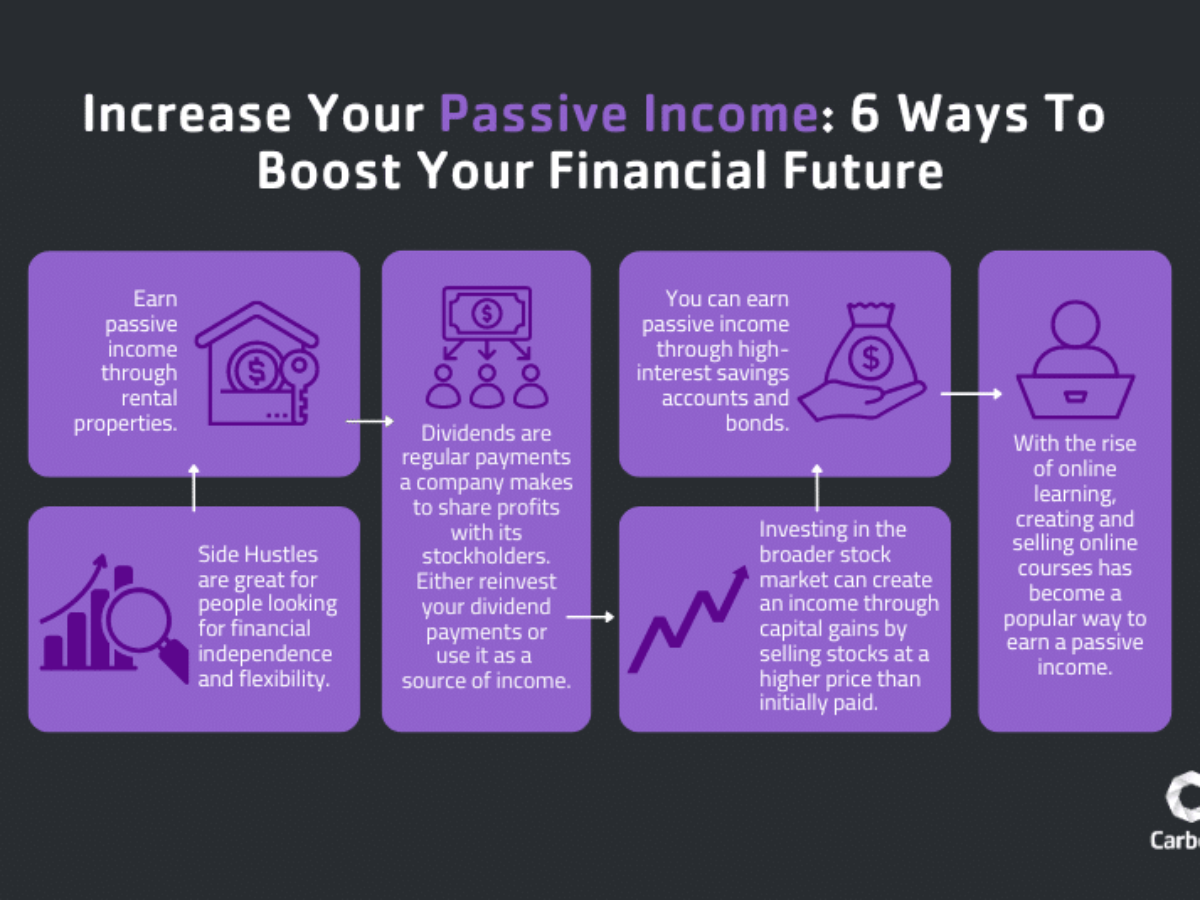
The digital age has democratized the ability to create income-generating assets. If you have expertise in a specific niche, you can package that knowledge into products that sell repeatedly.
Content Creation and Affiliate Marketing
Building a platform—whether a niche website, a YouTube channel, or a specialized newsletter—allows you to earn through affiliate marketing. This involves recommending products or services and earning a commission on every sale made through your unique link.
- Evergreen Content: The key to success here is creating “evergreen” content—information that remains useful for years. A well-written guide on “How to Invest in Gold” can generate affiliate revenue for a decade, whereas a news piece on yesterday’s market dip loses value quickly.
- SEO Mastery: To make this passive, one must master Search Engine Optimization (SEO) so that traffic arrives organically from search engines without the need for constant social media promotion.
Creating and Selling Digital Products
Digital products like e-books, online courses, and stock photography have a unique advantage: they have zero marginal cost of production. Once the product is created, selling 1,000 units costs no more than selling one.
- Online Courses: Platforms like Teachable or Udemy allow you to host video lessons. While the initial production is grueling, a high-quality course can serve as a “digital ATM” for years.
- Print-on-Demand (POD): This model allows you to upload designs for t-shirts, mugs, or books. A third-party provider handles printing and shipping only when a customer makes a purchase, leaving you with a royalty and no inventory risk.
4. Scalable Business Systems and Intellectual Property
Beyond the stock market and digital downloads, there are structural business models designed to operate independently of the founder.
Licensing Intellectual Property
If you are an inventor, artist, or photographer, you can license your work to companies. For example, a photographer might list their work on Getty Images, or a musician might license their beats for use in commercials. Each time the asset is used, a royalty fee is triggered. This is a pure form of passive income because the creator retains ownership while others handle the distribution and sales.
Automated E-commerce
While traditional retail is active, “dropshipping” or “Amazon FBA” (Fulfillment by Amazon) can be automated to a high degree.
- Amazon FBA: You source a product, ship it to Amazon’s warehouses, and they handle the storage, delivery, and customer service. Your primary role becomes inventory management and marketing, which can often be outsourced to virtual assistants.
- The Power of Outsourcing: To move a business from active to passive, you must build systems and hire people. By documenting every process (Standard Operating Procedures), you can eventually remove yourself from the day-to-day operations.
5. Risk Management and Strategic Growth
Building passive income is not without its risks. A professional approach requires a focus on diversification and sustainability.
The Importance of Diversification
Relying on a single stream of passive income is a precarious strategy. Algorithm changes can kill a YouTube channel, a housing market crash can hurt rental income, and companies can cut dividends during a recession. A robust financial plan involves “laddering” these streams—combining the high-growth potential of digital assets with the stability of traditional stock market investments.
Reinvestment for Compounding Growth
The fastest way to grow passive income is to resist the urge to spend it immediately. In the early stages, the cash flow generated by your assets should be reinvested to acquire more assets. This creates a feedback loop. For example, the dividends from your stocks could pay for the hosting of your affiliate website, and the profits from your website could serve as a down payment for a rental property.
Tax Implications and Financial Efficiency
It is crucial to consult with financial professionals regarding the tax treatment of different income streams. Passive income is often taxed differently than earned income. In some jurisdictions, long-term capital gains and qualified dividends are taxed at a lower rate than a standard salary. Understanding these nuances can significantly increase your “take-home” passive pay.

Conclusion
Making money passively is a journey of shifting from a consumer mindset to a producer and investor mindset. It requires an initial sacrifice—giving up leisure time today to build an asset, or giving up consumption today to invest capital. However, the reward is the most valuable commodity of all: time. By systematically building a portfolio of dividend stocks, digital assets, and scalable systems, you can create a financial foundation that supports your lifestyle independently of a traditional employer, providing true freedom and long-term security.
aViewFromTheCave is a participant in the Amazon Services LLC Associates Program, an affiliate advertising program designed to provide a means for sites to earn advertising fees by advertising and linking to Amazon.com. Amazon, the Amazon logo, AmazonSupply, and the AmazonSupply logo are trademarks of Amazon.com, Inc. or its affiliates. As an Amazon Associate we earn affiliate commissions from qualifying purchases.