
The stock market, for many, represents a labyrinth of complex financial instruments, volatile price movements, and jargon-filled analysis. Yet, for those who understand its mechanisms and approach it with a well-informed strategy, it stands as one of the most powerful engines for wealth creation and financial independence. Making money off stocks isn’t about mere speculation; it’s about understanding underlying business value, market dynamics, and disciplined execution. This comprehensive guide will demystify the process, outlining strategies, tools, and mindsets essential for profitable stock market participation.
Understanding the Fundamentals of Stock Investing
Before diving into strategies, it’s crucial to grasp the foundational concepts that underpin stock market investing. A solid understanding here is the bedrock upon which all successful investment journeys are built.
What are Stocks and How Do They Work?
At its core, a stock (or equity) represents a fractional ownership interest in a company. When you buy a company’s stock, you become a shareholder, meaning you own a tiny piece of that business. Companies issue stocks to raise capital for various purposes, such as expanding operations, research and development, or paying down debt. As an owner, you have a claim on the company’s assets and earnings, and in some cases, voting rights on corporate matters.
The value of a stock is primarily driven by the company’s performance, its future prospects, industry trends, and the overall economic environment. Supply and demand in the market also play a significant role, as investors collectively determine the price at which they are willing to buy and sell shares.
Key Concepts: Shares, Dividends, Capital Appreciation, Market Volatility
To effectively navigate the stock market, several key terms must be familiarized:
- Shares: Individual units of ownership in a company.
- Dividends: A portion of a company’s profits distributed periodically (typically quarterly) to its shareholders. Not all companies pay dividends, but they can be a significant source of passive income for investors.
- Capital Appreciation: This is the primary way most investors make money from stocks. It refers to the increase in the value of an investment over time. If you buy a stock at $50 and sell it later at $70, you’ve realized a capital gain of $20 per share.
- Market Volatility: Refers to the degree of variation of a trading price over time. High volatility means prices can change dramatically and rapidly, both up and down, while low volatility suggests relatively stable prices. While volatility can be unnerving, it also presents opportunities for astute investors.
Risk vs. Reward in Stock Markets
Investing in stocks inherently involves risk. Companies can underperform, industries can face disruption, and economic downturns can impact overall market sentiment, leading to potential losses. However, this risk is compensated by the potential for significant returns that often outpace other asset classes like bonds or savings accounts over the long term. The key is to manage risk effectively through diversification, thorough research, and aligning investments with one’s personal risk tolerance and financial goals. Understanding that higher potential returns often come with higher risk is fundamental.
Diverse Strategies for Profiting from Stocks
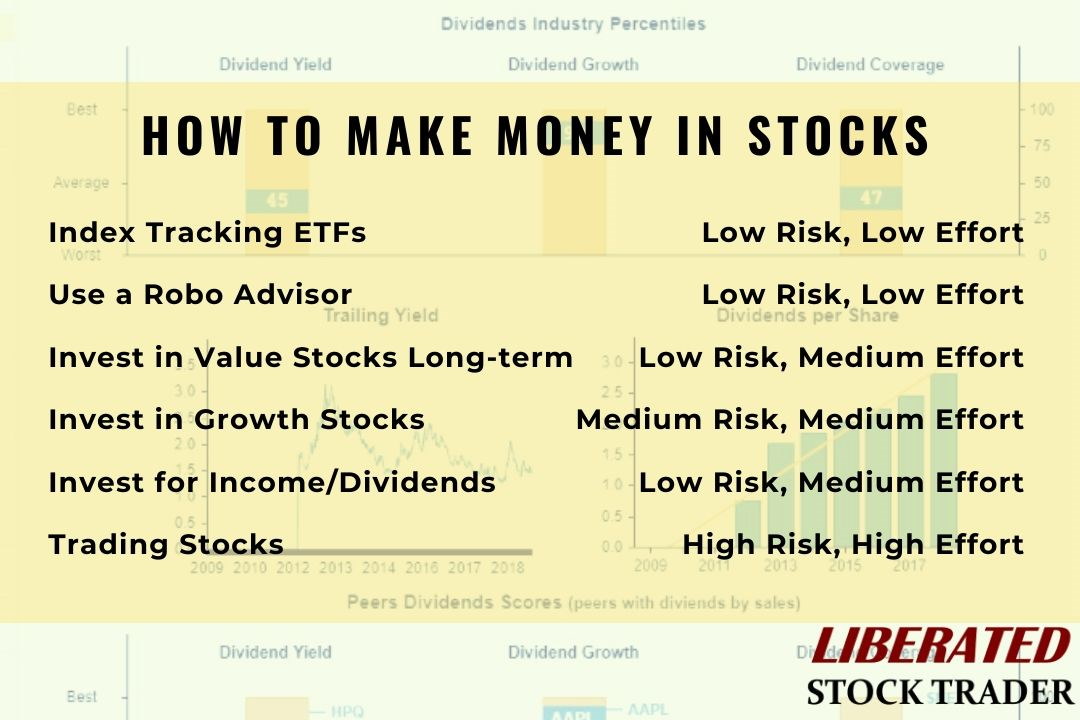
Making money off stocks isn’t a one-size-fits-all endeavor. Different investors employ various strategies based on their financial goals, time horizons, and risk appetites.
Long-Term Investing: Growth & Value Investing
This is perhaps the most common and often recommended strategy for individual investors. Long-term investors focus on holding stocks for several years, allowing the power of compounding to work its magic.
- Growth Investing: This strategy involves identifying companies expected to grow their earnings and revenue at a rate faster than the overall market. These companies often reinvest profits back into the business, leading to higher stock prices over time. Examples include innovative tech companies or emerging industry leaders. Growth stocks often trade at higher valuations because of their future potential, but they can also be more volatile.
- Value Investing: Pioneered by Benjamin Graham and popularized by Warren Buffett, value investing involves finding companies whose stocks are trading below their intrinsic value. These are often mature, established companies that might be temporarily out of favor with the market but possess strong fundamentals. Value investors look for “bargains,” believing that the market will eventually recognize the true worth of these companies.
Both growth and value investing emphasize thorough fundamental analysis, looking at a company’s financial statements, management quality, competitive landscape, and industry outlook.
Dividend Investing: Passive Income Generation
Dividend investing focuses on acquiring shares of companies that regularly pay out a portion of their profits to shareholders as dividends. This strategy provides a steady stream of passive income, which can be reinvested to buy more shares (compounding returns) or used for current expenses. Dividend-paying companies are often mature, stable businesses with predictable cash flows. While their stock prices might not offer explosive capital appreciation, the consistent income and potential for modest capital gains make them attractive to income-focused investors, particularly retirees.
Short-Term Trading: Day Trading and Swing Trading
For those with a higher risk tolerance, significant time commitment, and a deep understanding of technical analysis, short-term trading strategies can be appealing.
- Day Trading: Involves buying and selling stocks within the same trading day, often holding positions for only minutes or hours. Day traders aim to profit from small price fluctuations, closing all positions before the market closes to avoid overnight risk. This strategy requires intense focus, rapid decision-making, and sophisticated charting tools. It is exceptionally challenging and often results in losses for inexperienced traders.
- Swing Trading: Involves holding stocks for a few days or weeks to profit from “swings” in price. Swing traders use technical analysis to identify potential price trends and enter positions at opportune moments. While less intense than day trading, it still requires active monitoring and a disciplined approach to risk management.
It’s crucial to acknowledge that short-term trading is significantly riskier than long-term investing and is not recommended for beginners. The vast majority of short-term traders fail to achieve consistent profitability.
Diversification and Portfolio Management
Regardless of the chosen strategy, diversification is paramount. It means spreading your investments across various stocks, industries, and even asset classes to reduce risk. The adage “don’t put all your eggs in one basket” perfectly applies here. A diversified portfolio helps cushion the blow if one particular stock or sector performs poorly. Portfolio management also involves regularly reviewing and rebalancing your investments to ensure they remain aligned with your financial goals and risk tolerance.
Essential Tools and Resources for Stock Investors
Successful stock investing requires access to reliable information and efficient tools. Leveraging these resources can significantly enhance your decision-making process and execution.
Brokerage Accounts: Choosing the Right Platform

To buy and sell stocks, you’ll need a brokerage account. Modern online discount brokers have democratized access to the stock market, offering user-friendly platforms and often commission-free trading. When choosing a broker, consider:
- Fees and Commissions: Look for platforms with low or no trading fees.
- Investment Options: Ensure the broker offers access to the stocks, ETFs, and other assets you wish to invest in.
- Research Tools: Many brokers provide proprietary research reports, analytical tools, and screeners.
- Customer Service and Education: Especially for beginners, good customer support and educational resources can be invaluable.
- Platform Usability: A clean, intuitive interface makes managing your investments easier.
Research Tools and Financial Data
Informed decisions are based on robust data. Several types of tools and resources are essential:
- Stock Screeners: These allow you to filter stocks based on specific criteria (e.g., market cap, industry, dividend yield, P/E ratio) to identify potential investment candidates.
- Financial News Sources: Reputable financial news outlets (e.g., The Wall Street Journal, Bloomberg, Reuters, Financial Times) provide real-time updates and analysis that can impact stock prices.
- Company Filings: Publicly traded companies are required to file detailed financial reports (e.g., 10-K annual reports, 10-Q quarterly reports) with regulatory bodies like the SEC. These are goldmines of information for fundamental analysis.
- Analyst Reports: Many brokerage firms and independent research houses publish reports on individual companies, offering insights and ratings.
- Technical Analysis Tools: Charting platforms and indicators are crucial for short-term traders to identify price patterns and trends.
Educational Resources: Books, Courses, Webinars
The stock market is a dynamic environment, and continuous learning is key.
- Books: Classic investment literature by authors like Benjamin Graham, Peter Lynch, John Bogle, and Warren Buffett offers timeless wisdom.
- Online Courses and Webinars: Many platforms offer structured courses on investing principles, fundamental analysis, technical analysis, and portfolio management.
- Podcasts and Blogs: Accessible and often up-to-date, these can keep you informed about market trends and provide diverse perspectives.
Mitigating Risks and Building a Resilient Portfolio
While the potential for making money off stocks is significant, so is the potential for loss. A responsible approach integrates robust risk management.
The Importance of Research and Due Diligence
Never invest in a company you don’t understand. Thorough research (due diligence) involves examining a company’s business model, financial health, management team, competitive landscape, growth prospects, and industry trends. Don’t rely solely on tips or headlines. Look for strong balance sheets, consistent revenue growth, reasonable debt levels, and a sustainable competitive advantage. This fundamental analysis is your first line of defense against poor investment choices.
Setting Realistic Expectations and Managing Emotions
The stock market is not a get-rich-quick scheme. Expecting overnight riches often leads to impulsive decisions and significant losses. Investing is a long-term game that requires patience and discipline. Market downturns are inevitable; react to them rationally, not emotionally. Panicking and selling during a crash often locks in losses, while a disciplined long-term investor might see it as an opportunity to buy quality assets at a discount. Fear and greed are powerful emotions that can derail even the best strategies. Develop an investment plan and stick to it.
Stop-Loss Orders and Risk Management Techniques
For active traders and even long-term investors concerned about sharp declines, risk management tools are crucial.
- Stop-Loss Orders: An instruction to your broker to sell a security when its price falls to a certain level. This helps limit potential losses on a position. While useful, they aren’t foolproof, as sharp market movements can sometimes cause the stock to “gap” below your stop price.
- Position Sizing: Determine how much capital you’re willing to allocate to any single investment. A common rule is to risk only a small percentage (e.g., 1-2%) of your total portfolio on any single trade.
- Dollar-Cost Averaging: Investing a fixed amount of money at regular intervals, regardless of the stock price. This strategy helps reduce the impact of market volatility, as you buy more shares when prices are low and fewer when prices are high, averaging out your purchase price over time.
Long-Term Perspective and Compounding
Perhaps the most potent strategy for making money off stocks is adopting a long-term perspective and harnessing the power of compounding. When you reinvest your dividends or the gains from capital appreciation, those returns begin to generate their own returns, creating an exponential growth effect over decades. This is why starting early, even with small amounts, can lead to substantial wealth accumulation. Time in the market, not timing the market, is often the most critical factor for success.
Getting Started: A Step-by-Step Guide
Embarking on your stock market journey can seem daunting, but breaking it down into manageable steps makes it accessible.
Define Your Financial Goals
Before investing a single dollar, clarify what you want to achieve. Are you saving for retirement, a down payment on a house, your children’s education, or simply building general wealth? Your goals will dictate your investment horizon, risk tolerance, and the types of strategies you employ. Quantify your goals (e.g., “I want to accumulate $100,000 for retirement in 20 years”).
Open a Brokerage Account
Based on your research into fees, tools, and offerings, choose an online brokerage platform that suits your needs. The process typically involves completing an application, verifying your identity, and linking a bank account to fund your investments.
Start with a Small, Manageable Investment
You don’t need a large sum to begin investing. Many brokers allow fractional share investing, enabling you to buy portions of expensive stocks with a smaller budget. Start with an amount you’re comfortable losing, as initial investments are often a learning experience. Consider starting with low-cost index funds or ETFs before individual stocks, as they offer immediate diversification.
Continuous Learning and Adaptation
The financial markets are constantly evolving. Stay informed about economic trends, company news, and investment strategies. Be willing to adapt your approach as you gain experience and as market conditions change. Review your portfolio regularly to ensure it still aligns with your goals, and don’t be afraid to adjust your strategy or holdings when necessary.

Conclusion
Making money off stocks is a realistic and achievable goal for individuals willing to invest their time in learning and adhere to disciplined strategies. It’s a journey that demands patience, research, emotional control, and a long-term perspective. By understanding the fundamentals, exploring diverse strategies, utilizing essential tools, and diligently managing risks, investors can harness the power of the stock market to build significant wealth and secure their financial future. Remember, consistent effort and continuous learning are your greatest assets in the world of investing.
aViewFromTheCave is a participant in the Amazon Services LLC Associates Program, an affiliate advertising program designed to provide a means for sites to earn advertising fees by advertising and linking to Amazon.com. Amazon, the Amazon logo, AmazonSupply, and the AmazonSupply logo are trademarks of Amazon.com, Inc. or its affiliates. As an Amazon Associate we earn affiliate commissions from qualifying purchases.