
Real estate has long been revered as a cornerstone of wealth creation, offering a tangible asset that can appreciate in value, generate consistent income, and provide significant tax advantages. Unlike volatile stock markets or ephemeral digital assets, real estate offers a sense of stability and control that appeals to both seasoned investors and first-time entrepreneurs. The allure of making money from real estate isn’t just a fantasy reserved for property moguls; it’s a realistic goal accessible through various strategies tailored to different risk appetites, capital levels, and time commitments. Whether you’re looking to build a multi-million-dollar portfolio or simply secure a steady stream of passive income, understanding the fundamental pathways to profitability in this sector is the first step towards financial independence.
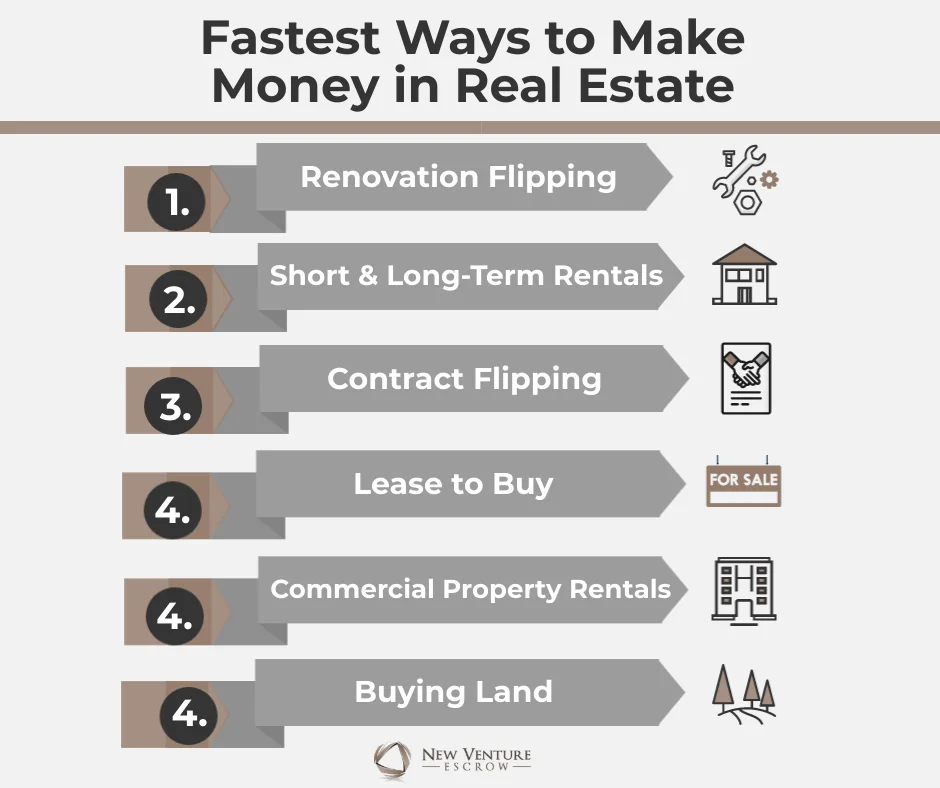
This comprehensive guide will explore the diverse methods for earning revenue through real estate, from traditional rental income to more dynamic strategies like flipping and wholesaling. We will delve into the critical aspects of market analysis, financing, property management, and long-term wealth building, equipping you with the insights needed to navigate this rewarding yet complex landscape. By demystifying the process and outlining actionable steps, we aim to empower you to embark on your real estate investment journey with confidence and a clear understanding of how to turn brick and mortar into a robust financial future.
Understanding the Foundations of Real Estate Investment
Before diving into specific strategies, a solid grasp of the foundational principles of real estate investment is crucial. This involves understanding what makes real estate an attractive asset class, how to evaluate potential opportunities, and critically assessing your own financial readiness. Without this foundational knowledge, even the most promising ventures can lead to costly mistakes.
The Allure of Real Estate: Appreciation, Cash Flow, and Tax Advantages
The enduring appeal of real estate stems from its multi-faceted benefits. Appreciation refers to the increase in property value over time, driven by factors like inflation, economic growth, and local demand. While not guaranteed, historically, real estate has shown a strong upward trend. Cash flow is the net income generated by a property after all expenses (mortgage, taxes, insurance, maintenance) are paid. Positive cash flow provides a consistent stream of income, making rental properties particularly attractive. Finally, real estate offers numerous tax advantages, including deductions for mortgage interest, property taxes, operating expenses, and depreciation. These benefits can significantly reduce an investor’s taxable income, enhancing overall returns. Furthermore, real estate offers a degree of leverage, allowing investors to control a valuable asset with a relatively small down payment, amplifying potential returns on equity.
Market Research and Due Diligence: Location, Trends, and Valuation
Successful real estate investment hinges on meticulous market research and thorough due diligence. Location is paramount; properties in desirable areas with strong job markets, good schools, and amenities tend to perform better. Investors must analyze local market trends, including population growth, employment rates, vacancy rates, average rental prices, and recent sales data. Tools like Zillow, Redfin, and local MLS (Multiple Listing Service) provide valuable data. Valuation involves determining a property’s true worth. This can be done through comparative market analysis (CMA), which compares the subject property to similar recently sold properties, or by using income-based valuation methods for rental properties. Understanding zoning laws, potential for future development, and local economic forecasts are also critical components of comprehensive due diligence, ensuring the investment aligns with long-term goals and market realities.
Assessing Your Financial Readiness: Capital, Credit, and Risk Tolerance
Before making any commitments, a realistic assessment of your financial standing is essential. Capital refers to the funds available for down payments, closing costs, and initial renovations. While various financing options exist, having a substantial down payment can improve loan terms and reduce monthly expenses. Your credit score plays a vital role in securing favorable financing; a higher score typically translates to lower interest rates. Beyond capital and credit, understanding your personal risk tolerance is crucial. Real estate investments involve inherent risks, such as market downturns, unexpected repairs, and difficult tenants. Investors must be prepared for potential vacancies, maintenance costs, and market fluctuations. A clear understanding of your financial capacity and comfort level with risk will help you choose suitable investment strategies and avoid overextending yourself.
Popular Strategies for Profiting from Real Estate
Once the foundations are understood, investors can explore various strategies, each with its own risk-reward profile and operational demands. The choice of strategy often depends on an investor’s capital, time availability, and financial goals.
Buy and Hold: Rental Properties for Passive Income
The buy and hold strategy involves purchasing a property with the intention of renting it out for an extended period, generating consistent rental income. This is often considered a long-term investment strategy focused on cash flow and appreciation. Investors can choose from residential properties (single-family homes, multi-family units, condos) or commercial properties (retail, office, industrial). Key to success is selecting properties in high-demand rental markets with good potential for appreciation and managing them efficiently. While it offers the promise of passive income, it requires capital for down payments, ongoing maintenance, and effective tenant management. This strategy is ideal for those seeking stable income and long-term wealth accumulation, offering protection against inflation and significant tax benefits through depreciation.
Fix and Flip: Short-Term Gains Through Renovation
The fix and flip strategy is a more active, short-term approach where investors purchase undervalued properties, renovate them to increase their value, and then sell them quickly for a profit. This strategy demands a keen eye for potential, strong project management skills, and a solid understanding of construction costs and market demand. Profits are generated from the difference between the purchase price plus renovation costs and the higher selling price, less all associated fees and holding costs. Success in flipping relies heavily on accurate cost estimations, efficient project execution, and a robust understanding of what buyers in a specific market are looking for. It carries higher risks, including unexpected repair costs, market downturns during the renovation period, and difficulty in selling, but also offers the potential for significant returns in a shorter timeframe.
Real Estate Wholesaling: Connecting Buyers and Sellers
Real estate wholesaling is a low-capital entry point into real estate investment that doesn’t involve buying or renovating properties. Wholesalers act as intermediaries, finding distressed properties at below-market prices, securing them under contract, and then assigning that contract to a cash buyer for a fee. The wholesaler never actually takes ownership of the property, minimizing financial risk. This strategy requires strong negotiation skills, a deep understanding of local market values, and a robust network of cash buyers. The profit comes from the “assignment fee” charged to the end buyer. While it offers quick returns and requires minimal upfront capital, it demands constant effort in lead generation, relationship building, and rapid deal execution.
Real Estate Investment Trusts (REITs): Diversification Without Direct Ownership
For those who want exposure to real estate without the complexities of direct ownership and management, Real Estate Investment Trusts (REITs) offer an excellent alternative. REITs are companies that own, operate, or finance income-producing real estate across various property types (apartments, shopping centers, hotels, offices, etc.). They are often publicly traded on major stock exchanges, making them highly liquid and accessible. By investing in REITs, individuals can diversify their portfolios, gain exposure to commercial real estate, and receive regular dividends, as REITs are legally required to distribute at least 90% of their taxable income to shareholders annually. This strategy provides a way to earn income and benefit from real estate appreciation without the hands-on responsibilities of property management, though returns are subject to stock market fluctuations.
House Hacking: Living for Less and Investing
House hacking is a strategy where an investor buys a multi-unit property (e.g., a duplex, triplex, or four-plex) and lives in one unit while renting out the others. The rental income from the other units helps to cover, or even fully offset, the mortgage payments, effectively allowing the owner to live for free or at a significantly reduced cost. This strategy provides an excellent entry point into real estate investment, as it allows individuals to leverage owner-occupant mortgage programs (like FHA loans) which often require lower down payments. Beyond the cost savings, house hacking allows the owner to gain experience as a landlord, build equity, and potentially acquire additional properties faster due to reduced living expenses and increased savings. It’s a pragmatic approach for beginners to step into the real estate market while simultaneously reducing their primary housing costs.
Financing Your Real Estate Ventures
Securing the right financing is often the most critical hurdle for aspiring real estate investors. Understanding the various options available, from traditional bank loans to more creative solutions, can significantly impact the feasibility and profitability of your investments.

Traditional Mortgages: Conventional, FHA, VA Loans
Traditional mortgages from banks and credit unions are the most common financing method. Conventional loans are not backed by the government and typically require good credit and a down payment of 10-20% or more. They offer competitive interest rates and flexible terms. FHA loans are government-insured mortgages that require lower down payments (as low as 3.5%) and are more lenient on credit requirements, making them ideal for first-time buyers or those with less capital. However, they require mortgage insurance premiums. VA loans are available to eligible service members, veterans, and surviving spouses, offering 0% down payment and no mortgage insurance, making them an incredibly powerful tool for qualifying individuals. Understanding the specific requirements and benefits of each loan type is crucial for choosing the most advantageous path for your investment property.
Creative Financing: Seller Financing, Hard Money Loans
Beyond traditional routes, creative financing options can unlock opportunities, especially for those with less conventional qualifications or for specific deal types. Seller financing (or owner financing) occurs when the seller acts as the bank, lending the buyer the money to purchase the property. This can be beneficial for both parties: buyers might secure better terms or a property they otherwise couldn’t finance, while sellers can earn interest and defer capital gains taxes. Hard money loans are short-term, asset-based loans typically provided by private investors or companies, secured by the property itself rather than the borrower’s credit score. They have higher interest rates and fees but offer quick funding and flexibility, making them suitable for fix-and-flip projects where speed is critical. While riskier, these options can bridge gaps where traditional financing isn’t feasible.
Partnering and Syndication: Pooling Resources for Larger Deals
For larger or more complex real estate ventures, partnering and syndication allow investors to pool their resources, expertise, and capital. Partnering typically involves two or more individuals jointly investing in a property, sharing the profits and risks. This can be an effective way to enter the market with less individual capital or to combine complementary skills (e.g., one partner brings capital, another brings renovation expertise). Real estate syndication is a process where a group of investors combines funds to purchase and manage a large property or portfolio of properties. A sponsor or general partner typically manages the deal, while limited partners contribute capital. This allows individual investors to access institutional-grade assets they couldn’t afford on their own, benefiting from professional management and diversification, though it often involves longer hold periods and less direct control.
Managing Your Real Estate Portfolio
Acquiring properties is just the beginning. Effective management is crucial for maximizing cash flow, maintaining property value, and ensuring the long-term profitability of your real estate investments. Poor management can quickly erode returns and create unnecessary headaches.
Property Management: Self-Management vs. Professional Services
One of the most significant decisions for buy-and-hold investors is how to manage their properties. Self-management means the investor handles all aspects: tenant screening, rent collection, maintenance, and repairs. This saves on management fees but demands significant time, effort, and expertise. It’s often viable for investors with one or two properties nearby. For those with multiple properties, properties far from home, or simply a desire for a more passive approach, hiring professional property management services is often the better choice. Property managers handle day-to-day operations, tenant relations, and maintenance, typically for a percentage of the monthly rent. While it adds an expense, it can save time, reduce stress, and potentially lead to better tenant retention and higher occupancy rates, ultimately optimizing overall returns.
Tenant Acquisition and Retention Strategies
Securing reliable tenants and keeping them long-term is vital for consistent cash flow and minimizing vacancy costs. Tenant acquisition involves effective marketing of vacant units, thorough background checks (credit, criminal, eviction history), and clear lease agreements. High-quality tenants who pay on time and take care of the property are an asset. Tenant retention strategies are equally important. This includes prompt responses to maintenance requests, clear communication, fostering a good landlord-tenant relationship, and sometimes offering incentives for lease renewals. A high tenant turnover rate leads to lost income during vacancies, advertising costs, cleaning expenses, and potential repairs, significantly impacting profitability. Proactive management and a focus on tenant satisfaction can drastically improve the financial performance of rental properties.
Maintenance and Capital Improvements: Protecting Your Asset
Regular maintenance is non-negotiable for preserving property value and ensuring tenant satisfaction. This includes routine checks of HVAC systems, plumbing, electrical, and landscaping. Proactive maintenance can prevent minor issues from escalating into costly major repairs. Beyond routine upkeep, capital improvements are enhancements that increase a property’s value, extend its useful life, or adapt it to modern standards. Examples include kitchen or bathroom remodels, roof replacements, or energy-efficient upgrades. While these require an upfront investment, they can justify higher rents, attract better tenants, and significantly boost the property’s appreciation over time. Balancing immediate repair needs with strategic long-term improvements is key to effective portfolio management and maximizing asset value.
Building Long-Term Wealth and Exit Strategies
Real estate investment is often a marathon, not a sprint. Strategic planning for long-term wealth building and understanding effective exit strategies are crucial for realizing maximum returns and cementing your financial legacy.
Compounding Returns and Portfolio Diversification
The power of compounding returns is a cornerstone of long-term real estate wealth. As properties appreciate and cash flow increases, investors can reinvest profits, acquire additional properties, or pay down existing mortgages faster, accelerating equity growth. This snowball effect can significantly multiply wealth over decades. Portfolio diversification is equally important. Rather than putting all your eggs in one basket, spreading investments across different property types (residential, commercial), locations, or investment strategies can mitigate risk and smooth out returns. For instance, combining rental properties with REIT investments, or having properties in different cities, can protect against localized downturns and provide stability.
Strategic Refinancing and Equity Extraction
As a property’s value increases and equity builds, investors can employ strategic refinancing to optimize their financial position. A cash-out refinance allows owners to borrow against their accumulated equity, converting it into liquid cash that can be used for other investments, debt consolidation, or further capital improvements. This is a powerful tool for leveraging existing assets to acquire more properties without selling. Alternatively, a rate-and-term refinance can secure a lower interest rate or a more favorable loan term, reducing monthly payments and increasing cash flow. Understanding when and how to leverage your equity through refinancing can accelerate wealth creation and allow for continuous portfolio expansion.
Selling Your Property: Maximizing Returns
Eventually, most investors will consider selling a property to realize gains, reallocate capital, or simplify their portfolio. Maximizing returns when selling involves careful timing and preparation. Understanding market conditions is critical; selling in a seller’s market typically yields higher prices. Property staging, minor cosmetic upgrades, and professional photography can significantly enhance appeal and command a better price. Furthermore, investors should be aware of capital gains taxes and explore options like a 1031 exchange, which allows investors to defer capital gains taxes by reinvesting the proceeds from a sale into a “like-kind” property, thereby continuing to grow their real estate wealth tax-efficiently.
Estate Planning and Generational Wealth
Real estate’s tangibility and consistent value make it an excellent asset for estate planning and building generational wealth. Properly structuring property ownership through trusts or other legal entities can ensure a smooth transition of assets to heirs, minimize tax burdens, and protect assets from probate. By effectively planning, investors can pass on a legacy of income-generating properties that continue to provide financial security for future generations. This long-term perspective underscores real estate’s power not just for personal financial gain, but as a vehicle for creating lasting family prosperity and financial independence across generations.
Making money from real estate is a journey that requires continuous learning, strategic planning, and adaptive execution. From understanding market fundamentals and selecting the right investment strategies to mastering financing and property management, each step is crucial. By embracing the diverse opportunities available and committing to a professional, insightful approach, investors can harness the enduring power of real estate to build substantial wealth and achieve their financial aspirations.
aViewFromTheCave is a participant in the Amazon Services LLC Associates Program, an affiliate advertising program designed to provide a means for sites to earn advertising fees by advertising and linking to Amazon.com. Amazon, the Amazon logo, AmazonSupply, and the AmazonSupply logo are trademarks of Amazon.com, Inc. or its affiliates. As an Amazon Associate we earn affiliate commissions from qualifying purchases.