
The transition from a traditional W-2 employee to a freelancer, independent contractor, or small business owner is often hailed as a journey toward professional freedom. However, that freedom comes with a significant shift in financial responsibility. In a traditional employment setting, the “pay-as-you-go” tax system is automated through payroll withholding. For those in the entrepreneurial space, the burden of calculating and remitting taxes falls squarely on the individual.
Failure to navigate this system correctly can lead to unexpected liquidity crises or, worse, significant penalties from the Internal Revenue Service (IRS). Fortunately, the digital age has streamlined the process. Making estimated tax payments online is no longer just a convenience; it is a strategic financial practice that ensures compliance and protects your cash flow. This guide explores the “how” and “why” of online tax payments, providing a professional roadmap for managing your quarterly obligations.

1. Understanding the Mechanics of Estimated Tax Obligations
The United States tax system operates on a “pay-as-you-go” basis. This means the government expects to receive tax revenue as you earn income throughout the year, rather than in one lump sum on April 15th. For individuals whose income is not subject to withholding—such as interest, dividends, alimony, self-employment income, capital gains, and prizes—estimated tax payments are the primary mechanism for meeting this requirement.
Who is Required to Pay?
Generally, you must make estimated tax payments if you expect to owe at least $1,000 in taxes for the current year after subtracting your withholding and refundable credits. This applies to sole proprietors, partners, and S-corporation shareholders. Corporations generally have a lower threshold, typically needing to make estimated payments if they expect to owe $500 or more. If you are still working a part-time W-2 job while building a side hustle, you may be able to avoid estimated payments by increasing your withholding on your W-2, but for full-time entrepreneurs, quarterly filings are usually unavoidable.
The Critical Importance of the Quarterly Schedule
The IRS divides the year into four payment periods, each with its own specific due date. It is a common misconception that these dates fall exactly every three months. Typically, the deadlines are:
- Q1 (Jan 1 – March 31): Due April 15
- Q2 (April 1 – May 31): Due June 15
- Q3 (June 1 – Aug 31): Due September 15
- Q4 (Sept 1 – Dec 31): Due January 15 of the following year
Missing these deadlines, even if you pay in full at the end of the year, can result in underpayment penalties. Paying online ensures that your payment is timestamped and processed faster than mail-in vouchers, providing an essential layer of digital proof for your records.
2. Navigating the Digital Payment Ecosystem
The IRS has significantly modernized its infrastructure, offering several secure portals for making payments. Choosing the right portal depends on your business structure and how frequently you need to make payments.
IRS Direct Pay: The Gold Standard for Individuals
For most freelancers and sole proprietors, IRS Direct Pay is the most efficient tool. It allows you to pay your individual income tax directly from your checking or savings account without any processing fees.
- Verification: To use Direct Pay, you must verify your identity using information from a tax return filed within the last five to ten years.
- Ease of Use: There is no registration required. You simply select the reason for payment (Estimated Tax), the form (1040-ES), and the tax year.
- Immediate Confirmation: Once the transaction is complete, you receive a confirmation number instantly. In the world of personal finance, this “receipt” is your primary defense in the event of a clerical error at the IRS.
The Electronic Federal Tax Payment System (EFTPS)
While Direct Pay is convenient for one-off payments, EFTPS is the professional choice for business owners and those with complex tax lives. This is a free service provided by the Department of the Treasury.
- Registration Required: Unlike Direct Pay, EFTPS requires a registration process that involves receiving a PIN via physical mail, which can take five to seven days.
- Batching and Scheduling: EFTPS allows you to schedule payments up to 365 days in advance. From a cash flow management perspective, this is invaluable. You can sit down in January and schedule all four quarterly payments based on your projected income, ensuring you never miss a deadline.
- Historical Tracking: EFTPS maintains a comprehensive history of your payments for up to 16 months, making it easier for your accountant to reconcile your books during tax season.
Digital Wallets and Credit Card Options
For those looking to leverage financial tools for rewards, the IRS uses third-party payment processors to accept debit and credit cards, as well as digital wallets like PayPal and Click to Pay. While this can be a way to “churn” credit card points or manage a temporary cash crunch, it comes with a caveat: processing fees. These fees usually range from 1.82% to 1.98%. From a strict money-management standpoint, paying via bank transfer (Direct Pay or EFTPS) is usually the superior choice to avoid eroding your margins.

3. Strategic Calculation and the Safe Harbor Rule
The most daunting aspect of making estimated payments is determining how much to pay. Pay too little, and you face penalties; pay too much, and you are essentially giving the government an interest-free loan that could have been better utilized in a high-yield savings account or reinvested in your business.
Utilizing Form 1040-ES
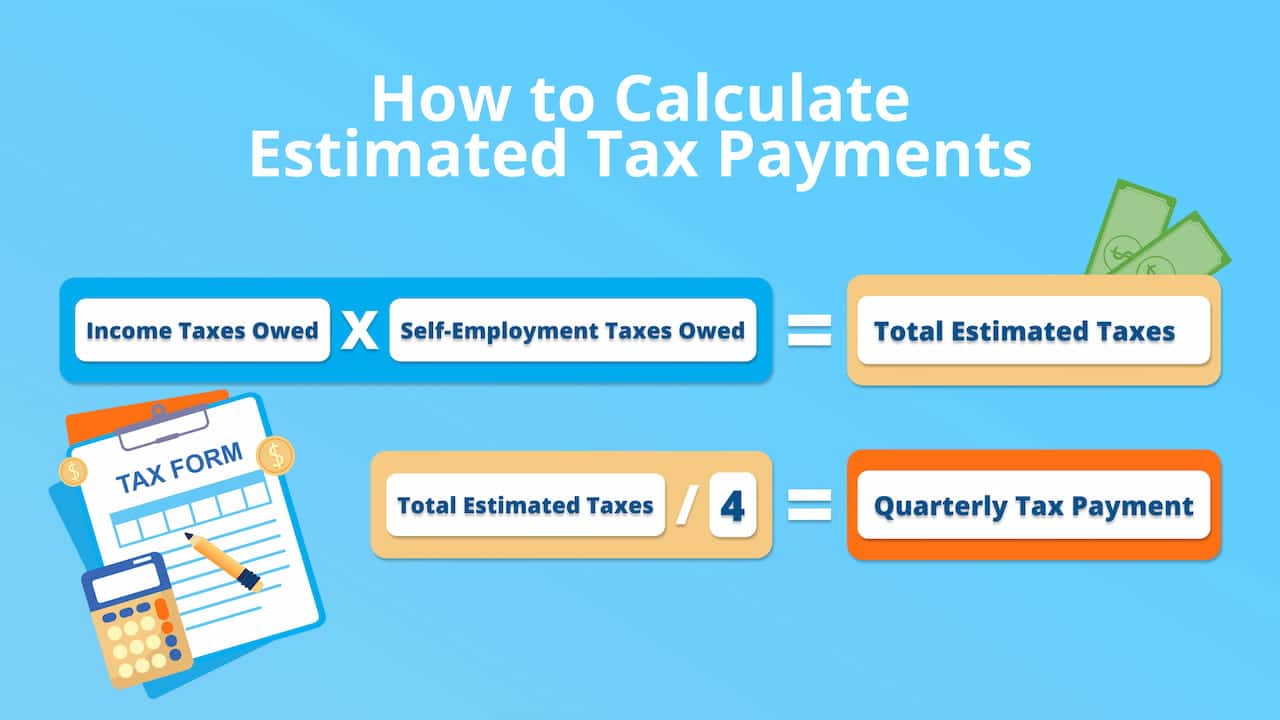
The IRS provides Form 1040-ES, which includes a worksheet to help you estimate your tax liability. You must account for not only income tax but also self-employment tax (which covers Social Security and Medicare). A professional tip for those with fluctuating income is to recalculate your estimates each quarter. If your business has a stellar Q1 but a slow Q2, your payments should reflect that reality to preserve your liquidity.
Leveraging the “Safe Harbor” Rule
To avoid the underpayment penalty, the IRS provides “Safe Harbor” guidelines. Generally, you will not face a penalty if you pay at least:
- 90% of the tax you owe for the current year, or
- 100% of the tax shown on your return for the prior year (whichever is smaller).
For high-income earners (those with an adjusted gross income of over $150,000), the 100% rule increases to 110%. Following the Safe Harbor rule is the most conservative and effective way to manage your tax risk. By paying 100% (or 110%) of last year’s tax liability divided by four, you are protected from penalties even if your income doubles in the current year.
4. Integrating Tax Compliance into Your Financial Workflow
Making the payment is only half the battle. To maintain a healthy financial ecosystem, you must integrate these payments into your broader accounting and cash flow strategy.
The “Sinking Fund” Method for Taxes
One of the most effective personal finance strategies for business owners is the creation of a dedicated tax savings account. Every time you receive a payment from a client, immediately transfer a fixed percentage (usually 25% to 30%) into a high-yield savings account. This ensures that when the quarterly deadline arrives, the funds are already cordoned off from your operating capital. In today’s interest rate environment, holding those funds in a high-yield account until the payment date allows you to earn a small “rebate” on your future tax bill.
Digital Record-Keeping and Automation
In the event of an audit, the burden of proof lies with the taxpayer. When you make an online payment, save the confirmation PDF directly into a dedicated “Taxes [Year]” folder in your cloud storage (such as Google Drive or Dropbox).
Furthermore, consider using accounting software like QuickBooks, Xero, or FreshBooks. These tools can often link directly to your bank accounts to track income and expenses in real-time, providing you with a “Estimated Tax” widget that updates your liability as you earn. This level of digital integration removes the guesswork and reduces the “tax season anxiety” that plagues many entrepreneurs.
5. Optimizing Cash Flow and Avoiding Penalties
Strategic money management is about timing and precision. By utilizing the online payment methods discussed, you gain a level of control that traditional mail-in methods cannot offer.
The “Last Minute” Advantage
When paying by check via mail, you must account for postal delays and manual processing times, often requiring you to send funds days or weeks early. With online payments, you can keep your money in your own interest-bearing accounts until the very day it is due. An online payment made on the evening of April 15th is considered timely, allowing you to maximize your internal liquidity.
Avoiding Common Digital Pitfalls
While online systems are robust, they are not infallible. Users should be wary of:
- Phishing Scams: The IRS will never initiate contact via email or text to demand an estimated tax payment. Always navigate directly to
IRS.govrather than clicking on links in messages. - Duplicate Payments: If an online system seems to hang or lag during a transaction, do not repeatedly click “Submit.” Check your email for a confirmation or wait 24 hours to see if the transaction appears in your bank statement.
- Incorrect Tax Year: A common error is applying a payment to the current calendar year instead of the previous year’s extension (or vice versa). Always double-check the “Tax Period” dropdown menu before finalizing.
By mastering the online payment portals and adopting a disciplined approach to quarterly calculations, you transform tax compliance from a looming threat into a routine administrative task. In the realm of professional finance, consistency is the key to longevity. Using these digital tools allows you to focus less on the mechanics of the IRS and more on the growth and profitability of your ventures.
aViewFromTheCave is a participant in the Amazon Services LLC Associates Program, an affiliate advertising program designed to provide a means for sites to earn advertising fees by advertising and linking to Amazon.com. Amazon, the Amazon logo, AmazonSupply, and the AmazonSupply logo are trademarks of Amazon.com, Inc. or its affiliates. As an Amazon Associate we earn affiliate commissions from qualifying purchases.