
The United States tax system operates on a “pay-as-you-go” principle. This means the Internal Revenue Service (IRS) requires taxpayers to pay most of their tax liability during the year as income is earned, rather than in one lump sum during the annual filing season in April. For traditional employees, this is handled through payroll withholding. However, for entrepreneurs, freelancers, investors, and those with significant non-wage income, the responsibility shifts to the individual in the form of quarterly estimated tax payments.
Navigating this requirement is a cornerstone of sound financial management. Failing to account for these payments can lead to liquidity crises, unexpected debt, and costly underpayment penalties. Understanding the mechanics of how to make these payments, who is required to do so, and how to calculate the correct amounts is essential for maintaining a healthy business and personal balance sheet.
Understanding the Requirement: Who Must Pay Estimated Taxes?
The IRS generally requires individuals to make estimated tax payments if they expect to owe at least $1,000 in tax for the current year after subtracting their withholding and refundable credits. This rule applies to various types of earners who do not have a standard employer-employee relationship where taxes are automatically deducted.
The Self-Employed and the Gig Economy
Freelancers, independent contractors, and sole proprietors are the most common groups required to pay estimated taxes. Because no employer is withholding Social Security, Medicare, or income tax from their checks, these individuals must act as their own “payroll department.” This includes not only the standard income tax but also the self-employment tax, which covers the employer and employee portions of FICA.
Investors and High-Net-Worth Individuals
Even those with full-time W-2 jobs may need to make estimated payments if they have substantial secondary income sources. This includes dividends, interest, capital gains from the sale of assets, and rental income. If your investment portfolio generates significant returns that aren’t covered by your primary job’s withholding, you may find yourself crossing the $1,000 threshold quickly.
Corporate and Partnership Structures
Different rules apply depending on business structure. S corporation shareholders and partners in a partnership generally make estimated tax payments on their share of the business income. C corporations, on the other hand, must make estimated payments if they expect to owe $500 or more in tax for the year. For the individual business owner, the “pass-through” nature of many modern entities means that business success translates directly into a personal estimated tax obligation.
Calculating Your Liability: How Much Do You Owe?
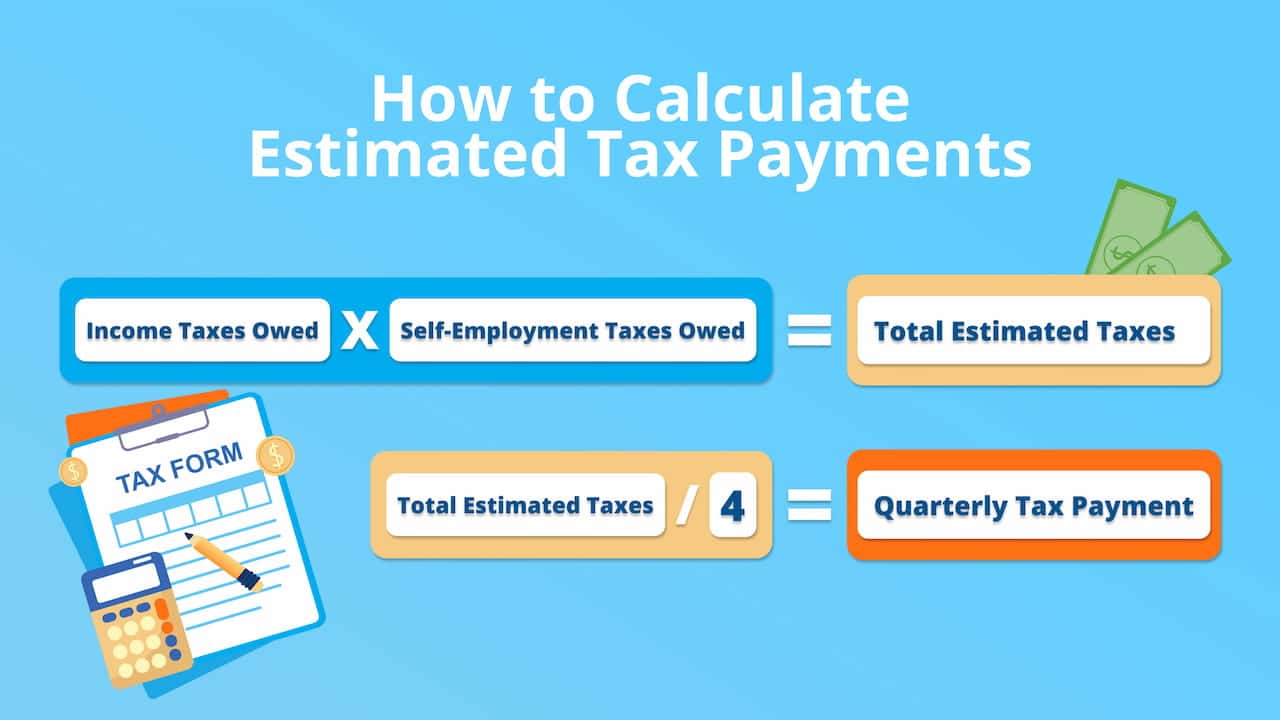
Determining the exact amount to pay each quarter can be challenging, particularly for businesses with fluctuating seasonal income. However, the IRS provides a framework to help taxpayers avoid penalties while maintaining cash flow.
Using Form 1040-ES
To calculate estimated tax, taxpayers use Form 1040-ES, Estimated Tax for Individuals. This worksheet helps you estimate your expected adjusted gross income, taxable income, taxes, deductions, and credits for the year. It is advisable to use the previous year’s tax return as a baseline, adjusting for any known changes in income or tax law.
The Safe Harbor Rule
One of the most important concepts in personal finance regarding taxes is the “Safe Harbor” rule. To avoid an underpayment penalty, you generally must pay at least 90% of the tax for the current year or 100% of the tax shown on the return for the prior year, whichever is smaller. For high-income earners—those with an adjusted gross income of more than $150,000 ($75,000 if married filing separately)—the prior-year threshold increases to 110%.
By aiming for the 100% (or 110%) mark of the previous year’s liability, taxpayers can “lock in” a penalty-free status regardless of how much their income grows in the current year. This strategy provides significant peace of mind for rapidly scaling businesses.
Factoring in Self-Employment Tax
For those in the “Money” niche who are building their own brands or side hustles, the self-employment tax is a critical variable. This tax rate is 15.3%, consisting of 12.4% for social security and 2.9% for Medicare. When calculating quarterly payments, it is vital to account for this 15.3% on top of the standard federal income tax brackets. Neglecting this is the most common reason new entrepreneurs face a surprise tax bill.
The Quarterly Calendar: Critical Deadlines to Avoid Penalties
Estimated tax payments are not truly “quarterly” in the sense of every three months. The schedule is slightly staggered, and missing a deadline—even by a single day—can result in the IRS assessing interest and penalties.
The Four Installment Periods
The payment schedule for the calendar year is typically broken down as follows:
-
April 15: Covers income earned from January 1 through March 31.
-
June 15: Covers income earned from April 1 through May 31.
-
September 15: Covers income earned from June 1 through August 31.
-
January 15 (of the following year): Covers income earned from September 1 through December 31.
If these dates fall on a weekend or legal holiday, the deadline is pushed to the next business day. It is a best practice to set digital reminders and treat these dates as non-negotiable business milestones.
Handling Income Fluctuations
Not everyone earns income evenly throughout the year. A retail business may earn 70% of its revenue in the fourth quarter, while a consultant might land a massive contract in May. In these cases, taxpayers can use the “annualized income installment method.” This allows you to pay smaller amounts in the early quarters when income is low and larger amounts in later quarters when income spikes, without being penalized for the smaller early payments. This requires filing Form 2210 with your annual return to show the IRS that your payments matched the timing of your income.
Payment Methods: Navigating IRS Digital Portals
The IRS has modernized its payment infrastructure significantly over the last decade. There are now several efficient ways to send funds, ranging from direct bank transfers to credit card payments.
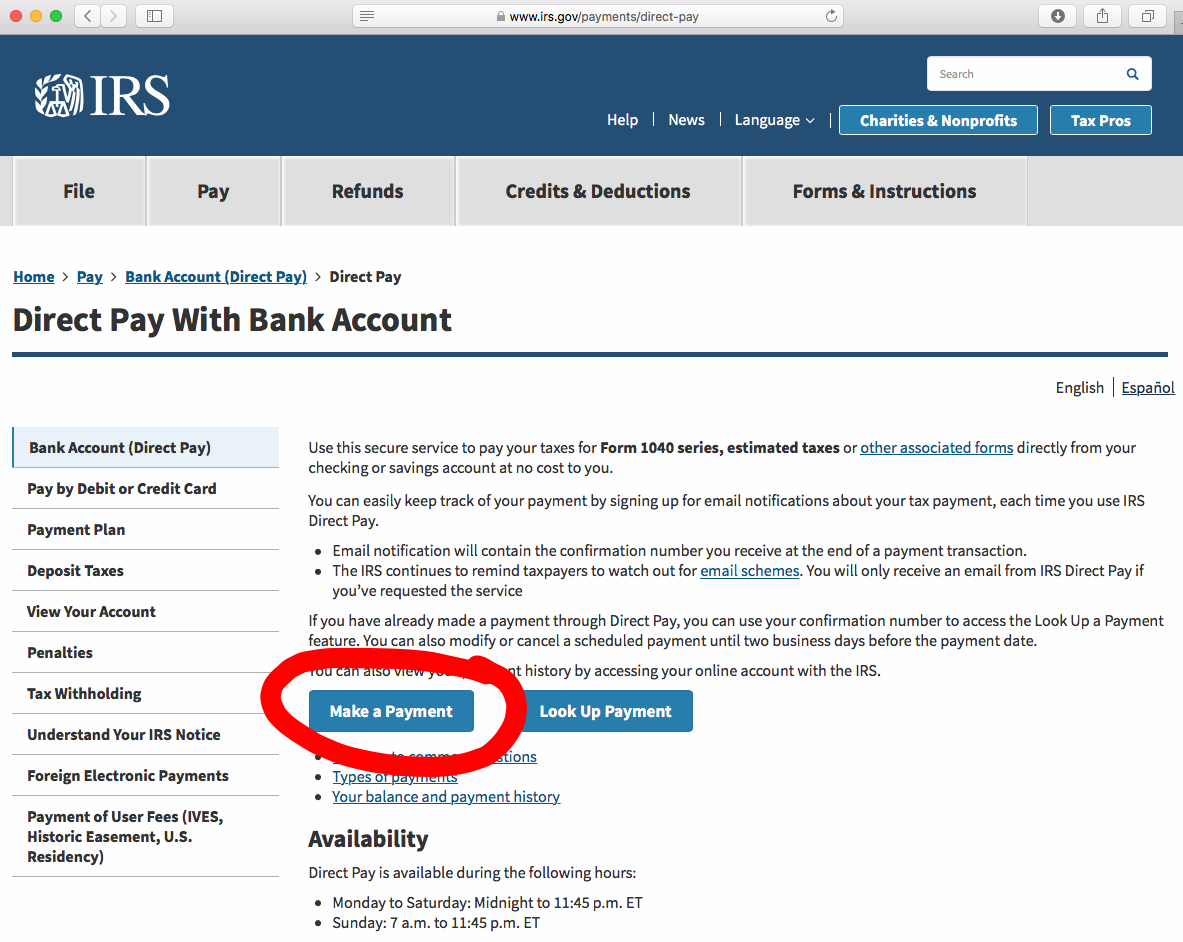
IRS Direct Pay
For individuals, IRS Direct Pay is the most seamless option. This service allows you to pay directly from your checking or savings account without any fees. You receive an immediate confirmation number, which is vital for your financial records. When using this service, you must specify the reason for payment (Estimated Tax), the form (1040-ES), and the tax year.
The Electronic Federal Tax Payment System (EFTPS)
EFTPS is a free service provided by the Department of the Treasury. While it requires an initial registration process and the mailing of a PIN, it is highly recommended for business owners and high-volume investors. EFTPS allows you to schedule payments up to 365 days in advance, providing an “automated” approach to tax management. It also maintains a comprehensive history of all payments made over the past 16 months, which simplifies the process of reconciling books at year-end.
Mobile and Card Options
The IRS2Go app is the official mobile app of the IRS and offers a convenient way to make payments on the move. Additionally, taxpayers can pay via credit or debit card through third-party processors. While the IRS does not charge a fee for this, the processors do. From a financial strategy perspective, this is usually only advisable if the rewards or points earned on the card outweigh the processing fee (typically around 1.8% to 2%), or if a taxpayer needs a short-term “bridge” to manage cash flow.
Strategic Financial Planning for Tax Season
Making estimated payments is more than just a regulatory hurdle; it is an exercise in cash flow management. Effective financial planning ensures that the money is available when the deadline arrives, preventing the need to dip into emergency funds or take on high-interest debt to satisfy the IRS.
Creating a Tax Sinking Fund
The most effective way to manage estimated taxes is to treat them as a recurring business expense rather than a quarterly surprise. Many successful entrepreneurs set up a separate high-yield savings account—a “tax sinking fund.” Every time a client pays an invoice or a dividend is received, 25% to 30% of that gross amount is immediately transferred into this account. This ensures that the money is earning interest for the taxpayer, not the government, until the very moment the quarterly payment is due.
Adjusting for Significant Life Events
Financial circumstances can change rapidly. A significant loss in the stock market, the birth of a child (yielding new tax credits), or a major capital expenditure for a business can all lower your tax liability. Conversely, the sale of a property or a windfall can increase it. It is wise to review your “estimated vs. actual” income at the midpoint of the year (June) to adjust your remaining two payments. Overpaying results in an interest-free loan to the government, while underpaying results in penalties; the goal is to hit the “Safe Harbor” sweet spot.
The Role of Professional Advice
While software and IRS worksheets are helpful, the nuances of the tax code—especially regarding the Qualified Business Income (QBI) deduction or complex investment structures—often require professional oversight. Working with a Certified Public Accountant (CPA) or a tax strategist can help you optimize your payments. They can provide a “tax projection” that takes into account your entire financial picture, ensuring that your quarterly payments are accurate and that you are taking advantage of every legal deduction available to lower that liability.
By mastering the “how” and “why” of estimated tax payments, you shift from a reactive financial posture to a proactive one. This discipline is what separates casual earners from sophisticated investors and business owners who understand that managing the “outflow” of taxes is just as important as generating the “inflow” of revenue.
aViewFromTheCave is a participant in the Amazon Services LLC Associates Program, an affiliate advertising program designed to provide a means for sites to earn advertising fees by advertising and linking to Amazon.com. Amazon, the Amazon logo, AmazonSupply, and the AmazonSupply logo are trademarks of Amazon.com, Inc. or its affiliates. As an Amazon Associate we earn affiliate commissions from qualifying purchases.