
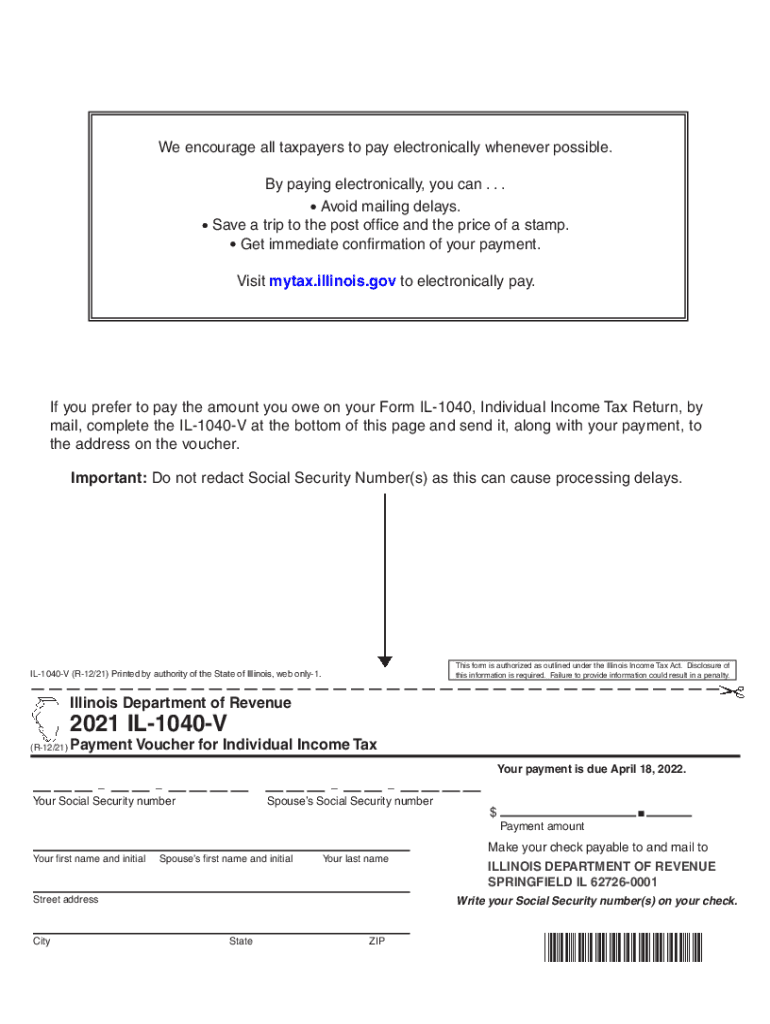
The Internal Revenue Service (IRS) Form 1040-V, also known as the Payment Voucher, is a critical document for millions of American taxpayers who find themselves with a balance due at the end of the fiscal year. While the traditional method of mailing a paper check alongside a physical voucher remains an option, the shift toward a digital-first economy has transformed the way tax obligations are settled. Understanding how to make a 1040-V payment online is no longer just a matter of convenience; it is a vital skill for financial management, ensuring accuracy, security, and timely compliance with federal tax laws.

As the IRS continues to modernize its infrastructure, the opportunities for digital payment have expanded significantly. Moving away from physical mail reduces the risk of lost documents, eliminates postal delays, and provides an immediate digital paper trail that can be invaluable during future audits or financial planning sessions. This guide explores the multifaceted landscape of online 1040-V payments, detailing the tools available to taxpayers and the strategic reasons why a digital approach is superior for modern personal finance.
The Evolution of Tax Payments: From Paper Vouchers to Digital Efficiency
Historically, Form 1040-V was a small tear-off slip at the bottom of a tax instruction booklet. A taxpayer would write a check, attach the voucher, and send it through the United States Postal Service. This method, while functional, was riddled with potential points of failure. Checks could be lost in transit, vouchers could be separated from their respective payments, and the time lag between mailing and processing often left taxpayers in a state of uncertainty regarding their account status.
The transition to online payments represents a paradigm shift in financial transparency. When you make a 1040-V payment online, you are essentially bypassing the manual data entry phase that IRS employees must perform for physical mail. This direct integration into the IRS system minimizes human error and ensures that the funds are credited to the correct tax year and Social Security number almost instantaneously. For the taxpayer, this means greater control over cash flow and the ability to schedule payments down to the minute, avoiding the “check is in the mail” anxiety that often accompanies the April filing deadline.
Furthermore, the digital shift aligns with broader trends in personal finance management. Most modern banking apps and financial software are designed to integrate with digital receipts. By opting for an online payment, a taxpayer can easily archive confirmation numbers and digital receipts into their personal accounting software, creating a seamless financial record that lasts far longer than a carbon copy of a check.
Navigating the Primary Channels for Online 1040-V Payments
The IRS offers several distinct platforms for settling a balance due. Choosing the right one depends on your specific financial needs, your preferred method of payment (bank transfer vs. credit card), and whether you require the ability to schedule recurring payments for future tax years.
IRS Direct Pay: The Gold Standard for Individual Payers
For the vast majority of individual taxpayers, IRS Direct Pay is the most efficient and cost-effective method for making a 1040-V payment. This service allows you to pay your tax bill directly from a checking or savings account without any additional processing fees. The beauty of Direct Pay lies in its simplicity; it does not require a pre-registered account or a complex login process.
Direct Pay is structured to guide the user through a verification process based on previous tax filings. By using data from a return filed within the last five to six years, the IRS can confirm your identity and ensure the payment is linked to the correct taxpayer profile. This “guest checkout” style of payment makes it the go-to choice for those who want to settle their 1040-V obligations quickly and move on with their financial life.
EFTPS: The High-Volume Alternative
The Electronic Federal Tax Payment System (EFTPS) is a more robust, account-based system designed for individuals and businesses that have frequent interaction with the IRS. While Direct Pay is perfect for a one-time 1040-V balance, EFTPS is better suited for taxpayers who need to manage estimated tax payments or have complex payroll tax obligations.
EFTPS requires a formal enrollment process, which includes receiving a PIN via physical mail. While this adds a layer of initial friction, the platform offers superior tracking features and the ability to schedule payments up to 365 days in advance. For a taxpayer looking to automate their 1040-V payment as part of a larger, year-round financial strategy, EFTPS provides a level of granular control that other systems cannot match.
Third-Party Processors: When Credit is Preferred

While the IRS does not directly accept credit or debit cards, they authorize several third-party payment processors to handle these transactions. This is a popular option for taxpayers who wish to earn reward points, travel miles, or cash back on their tax payments. However, this convenience comes at a cost. These processors charge a percentage-based convenience fee, which can range from 1.87% to nearly 4% depending on the provider.
From a personal finance perspective, using a credit card for a 1040-V payment should be a calculated decision. If the value of the rewards earned exceeds the convenience fee, it can be a savvy move. Additionally, if a taxpayer is temporarily illiquid but expects a windfall shortly after the tax deadline, the credit card option provides a way to avoid IRS late-payment penalties, which are often higher than the credit card interest for a short period.
A Comprehensive Walkthrough of the Direct Pay Process
To successfully navigate an online 1040-V payment via Direct Pay, one must follow a specific sequence of steps designed to ensure security and accuracy. Understanding these stages can demystify the process and prevent common errors that lead to payment rejection.
Phase One: Defining Your Payment
The first step in the online process is selecting the “Reason for Payment.” For a standard 1040-V situation, you would select “Balance Due.” It is crucial to then select the correct “Apply Payment To” option, which for individual income taxes is “1040, 1040A, 1040EZ.” Finally, you must select the appropriate tax year. A common mistake is selecting the current calendar year instead of the year for which the taxes were actually filed. For example, if you are paying in April 2024 for the 2023 tax year, you must select 2023.
Phase Two: Identity Verification
Because you are not logging into a traditional account, the IRS uses a “look-back” method to verify your identity. You will be asked to provide your name, Social Security number, and filing status as they appeared on a previous year’s tax return. This is a critical security measure. If the data you enter does not perfectly match the IRS records for that specific “verification year,” the system will not allow you to proceed. It is helpful to have a copy of your prior-year return handy to ensure the address and spelling are identical to what the IRS has on file.
Phase Three: Entering Payment Details and Finalizing
Once verified, you will enter your bank routing number and account number. The system allows you to schedule the payment for a future date (up to the filing deadline) or process it immediately. After reviewing the details, you will receive a confirmation number. This number is your “digital receipt” and is the most important piece of evidence you have to prove that you fulfilled your tax obligation.
Strategic Financial Considerations and Digital Security
Making a 1040-V payment online is not just a technical task; it is a financial decision that should be integrated into your broader wealth management strategy. For instance, the timing of your payment matters. Even if you file your taxes in February, the IRS allows you to schedule your payment for the actual deadline in April. This allows you to keep your money in a high-yield savings account for an extra two months, earning interest on funds that would otherwise be sitting in the government’s coffers.
Security is another vital consideration. When paying online, always ensure you are on a legitimate “.gov” website. Phishing scams frequently target taxpayers during tax season, using fake websites that mimic the IRS payment portals. Always type “irs.gov” directly into your browser rather than clicking on links in emails or text messages. Furthermore, avoid making tax payments over public Wi-Fi networks, as these are vulnerable to interception. Using a secure, private connection or a VPN is a best practice for any digital financial transaction of this magnitude.
Overcoming Common Hurdles in the Online Payment Process
Even with a streamlined system, taxpayers may encounter obstacles. One of the most frequent issues is a “duplicate payment” error, which occurs if a user clicks the submit button multiple times or refreshes the page during processing. If you are unsure if a payment went through, always check your email for a confirmation or look at your bank’s pending transactions before attempting a second payment.
Another common hurdle involves “mismatched information” during the verification phase. This often happens to taxpayers who have recently moved or changed their filing status (e.g., from Single to Married Filing Jointly). If the IRS system does not recognize your current information, try using data from an older return (up to five or six years back) that the system might still have as its primary verification point.
By leveraging these online tools, taxpayers can transform a stressful annual obligation into a routine financial task. The ability to pay a 1040-V online offers a level of precision and speed that paper vouchers simply cannot match, providing a solid foundation for responsible and modern financial citizenship. Whether you choose the direct bank transfer of Direct Pay, the structured environment of EFTPS, or the rewards-focused path of credit card processors, the digital route is the most effective way to manage your tax liabilities in the 21st century.
aViewFromTheCave is a participant in the Amazon Services LLC Associates Program, an affiliate advertising program designed to provide a means for sites to earn advertising fees by advertising and linking to Amazon.com. Amazon, the Amazon logo, AmazonSupply, and the AmazonSupply logo are trademarks of Amazon.com, Inc. or its affiliates. As an Amazon Associate we earn affiliate commissions from qualifying purchases.